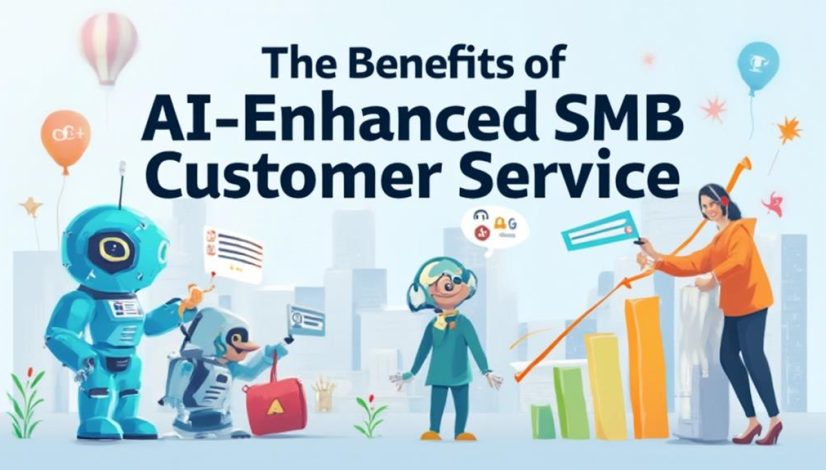
The Benefits of AI-Enhanced SMB Customer Service
AI-enhanced customer service revolutionizes small and medium-sized businesses (SMBs) by delivering rapid response times, personalized interactions, and 24/7 availability. With AI, SMBs can address inquiries promptly, improving customer satisfaction and loyalty. Enhanced personalization through data analysis enables tailored service offerings that resonate with customer preferences, driving sales growth. Additionally, AI reduces operational costs by automating routine tasks, allowing staff to focus on complex issues. By leveraging data-driven insights, businesses can fine-tune their strategies, ensuring a more engaged customer base. Explore how embracing AI can elevate your service and transform the customer experience.
Key Takeaways
- AI enhances response times for SMBs, quickly resolving customer inquiries and fostering trust and loyalty.
- Personalization driven by AI boosts customer satisfaction by tailoring interactions and recommendations to individual preferences.
- Integrating AI reduces operational costs by automating routine tasks and enabling efficient resource allocation.
- AI provides 24/7 availability, ensuring constant customer support and reducing communication barriers across language differences.
- Data-driven insights from AI allow SMBs to analyze customer behaviors, improving service strategies and increasing overall customer satisfaction.
Improved Response Times

In the domain of customer service, the speed at which inquiries are addressed can greatly impact customer satisfaction and loyalty. During a time when consumers expect immediate responses, a business's ability to manage automated inquiries plays a pivotal role in delivering exceptional service.
By leveraging AI technology, small and medium-sized businesses can greatly enhance their response times, ensuring that customer questions are not just met with efficiency, but also with accuracy.
The integration of AI-driven solutions allows businesses to handle a higher volume of inquiries simultaneously. This proactive engagement enables companies to identify frequently asked questions and provide instant, automated responses, freeing human agents to focus on more complex issues.
The immediacy of this approach directly correlates to an increase in customer satisfaction, as individuals no longer experience long wait times for basic inquiries.
Moreover, rapid response times foster a sense of trust and reliability in a brand. By making every effort to respond swiftly, businesses signal to their customers that their needs are acknowledged and prioritized.
This responsiveness not only strengthens customer loyalty but also encourages positive word-of-mouth, ultimately contributing to a brand's growth.
Enhanced Personalization
Customized experiences have become essential in the competitive landscape of customer service, particularly for small and medium-sized businesses (SMBs). As consumers increasingly seek interactions tailored to their preferences and behaviors, leveraging AI-driven technologies allows SMBs to provide enhanced personalization that can foster loyalty and increase engagement.
Through advanced behavior analysis, AI systems can gather and interpret vast amounts of customer data, identifying patterns that inform more meaningful interactions. These insights empower SMBs to comprehend customer desires and expectations, moving beyond generic responses to initiate personalized conversations.
Instead of simply addressing a customer's current inquiry, businesses can predict future needs, effectively establishing a connection that is both proactive and attuned to individual preferences.
AI enables dynamic recommendations, allowing businesses to suggest products, services, or solutions tailored to each customer's unique history and interactions. This level of customization not only improves customer satisfaction but increases sales opportunities, as recommendations resonate with customers on a personal level.
Cost Efficiency

Cost efficiency is a paramount advantage of AI-enhanced customer service for SMBs, enabling significant reductions in operational expenses.
By automating routine tasks and providing intelligent support, businesses can allocate resources more effectively, ensuring that human capital is focused on higher-value activities.
This strategic resource optimization not only maximizes productivity but also enhances overall service quality, leading to increased customer satisfaction.
Reduced Operational Expenses
Many small and medium-sized businesses (SMBs) are discovering that integrating AI into their customer service strategies can lead to significant reductions in operational expenses. By employing advanced automation tools, SMBs can streamline numerous customer interactions and reduce reliance on extensive human resources. This not only enhances efficiency but also minimizes costs associated with employee training and management.
AI systems handle routine inquiries and provide immediate support, allowing staff to focus on more complex tasks that require a human touch. The result is a more balanced workload that optimizes both human and technological resources.
Additionally, AI's analytical capabilities enable businesses to identify trends in customer behavior, allowing for smarter decision-making and tailored service offerings that resonate with customers, all while conserving operational budgets.
Moreover, through AI's ability to continuously learn and improve, SMBs save on long-term training expenses as the technology evolves to meet changing demands. These savings not only alleviate financial pressure but also empower businesses to reinvest in growth initiatives, fueling a cycle of innovation that aligns with SMBs' desire for freedom and adaptability in an ever-evolving marketplace.
Streamlined Resource Allocation
The strategic deployment of AI technologies enables businesses to achieve streamlined resource allocation, enhancing overall cost efficiency. By automating routine tasks, AI frees up valuable employee time, allowing staff to be redirected toward high-impact activities.
This resource optimization not only improves productivity but also fosters a work environment where employees can focus on innovation and customer engagement, essential for achieving freedom in their roles.
AI can assist in identifying skill gaps within teams, informing targeted staff training initiatives. This tailored approach maximizes the effectiveness of training programs, ensuring each employee acquires relevant skills that enhance service delivery.
The result is a more competent workforce capable of maneuvering the complexities of customer service challenges.
Moreover, AI analytics provide real-time insights into resource allocation, enabling organizations to make data-driven decisions. By understanding service demand patterns, businesses can adjust staffing levels appropriately, avoiding overstaffing or understaffing scenarios.
This flexibility supports financial health, facilitating a culture where resources are utilized wisely while maintaining high service standards.
In leveraging AI for streamlined resource allocation, small and medium-sized businesses can not only enhance their operational efficiency but also cultivate an empowered workforce dedicated to delivering exceptional customer service.
24/7 Availability
In today's fast-paced digital landscape, businesses must provide round-the-clock support to meet customer expectations.
Leveraging AI technology enables quick response times and enhances global reach, ensuring that customers receive timely assistance regardless of their location.
This level of availability not only boosts customer satisfaction but also positions SMBs for competitive advantage in a rapidly evolving marketplace.
Round-the-Clock Support
Around-the-clock support has become an essential expectation for small and medium-sized businesses (SMBs) endeavoring to enhance customer satisfaction and retention. In today's fast-paced world, customers demand 24/7 accessibility to services, allowing them to engage with brands whenever it suits their needs.
This level of support is not just a luxury; it's a necessity that sets businesses apart in a highly competitive marketplace.
AI-enhanced customer service provides SMBs with the tools to achieve this round-the-clock support while maintaining a personal touch. By leveraging intelligent chatbots and virtual assistants, businesses can guarantee proactive engagement with customers, addressing their inquiries or concerns at any hour.
This availability fosters a sense of trust and reliability, empowering customers to feel valued regardless of when they reach out.
Moreover, AI can facilitate the understanding of customer behaviors, enabling SMBs to tailor their support strategies effectively. This not only streamlines operations but also strengthens customer relationships, promoting brand loyalty.
In the field of customer service, embracing round-the-clock support through AI technology is vital for SMBs looking to thrive in an environment where customer expectations continue to evolve.
Quick Response Times
Enhancing customer experience through quick response times has become a crucial aspect of service excellence for small and medium-sized businesses (SMBs). In an increasingly fast-paced marketplace, customers seek immediate solutions and engagement.
Leveraging AI-powered tools, SMBs can achieve quicker response rates, leading to heightened customer satisfaction.
Automated interactions are essential in this pursuit. They allow businesses to provide instant answers to common inquiries, reducing wait times and enabling customers to receive important information without delay. This efficient use of AI not only streamlines customer service but also frees up valuable human resources to tackle more complex issues.
Moreover, proactive engagement driven by AI can anticipate customer needs, allowing businesses to preemptively address concerns before they escalate. This foresight builds trust and demonstrates a commitment to customer satisfaction, as clients feel valued and understood.
In a landscape where choice and speed dictate customer loyalty, embracing AI-enhanced customer service models guarantees that SMBs remain competitive. Quick response times foster a conversation that respects the customer's time, empowering them with knowledge and support that reflects their desire for efficiency and freedom.
Global Reach Benefits
AI-driven customer service not only elevates response times but also considerably expands the global reach of small and medium-sized businesses (SMBs). In an increasingly interconnected world, this technological advancement allows SMBs to break traditional boundaries and tap into new markets with ease.
By leveraging AI, businesses can deliver exceptional support across diverse cultures, enhancing their cultural adaptability to cater to varied customer expectations. This global reach enables market expansion that was previously unattainable for many SMBs.
Automated systems can provide assistance in multiple languages, ensuring that communication barriers are reduced and customer satisfaction is elevated. Additionally, AI tools can analyze customer data for insights on regional preferences, allowing businesses to tailor their offerings accordingly.
The freedom to scale operations without overwhelming human resources empowers SMBs to innovate and thrive on a larger stage. As they embrace these capabilities, companies can focus on strategic growth initiatives rather than merely responding to customer inquiries.
Ultimately, AI-enhanced customer service transforms not just how SMBs serve their customers but also how they envision their place in the global marketplace, fostering a culture of adaptability and resilience.
Data-Driven Insights

In today's competitive landscape, harnessing data-driven insights is essential for small and medium-sized businesses (SMBs) looking to elevate their customer service. The ability to analyze and interpret data not only streamlines operations but also facilitates a deeper understanding of customer behavior, allowing businesses to respond more effectively to their clients' needs.
Utilizing predictive analytics, SMBs can identify patterns and trends in customer interactions, enabling them to anticipate demands with remarkable accuracy. This foresight empowers businesses to proactively address potential issues before they escalate, thereby avoiding negative experiences that could lead to diminished customer loyalty. By examining historical data and relevant metrics, SMBs can tailor their services, ensuring that they meet or exceed customer expectations.
Moreover, leveraging these insights encourages personalized marketing strategies, allowing businesses to connect with customers on a fundamental level. Understanding what drives customer behavior not only enhances engagement but also fosters a sense of freedom for clients as they feel valued and understood.
Investing in data-driven insights enhances an SMB's capacity to remain agile and responsive in a dynamic market. The integration of AI tools facilitates data collection and analysis, transforming raw information into actionable strategies.
Increased Customer Satisfaction
Customer satisfaction is a pivotal element in the success of small and medium-sized businesses (SMBs), serving as a key indicator of overall performance and customer loyalty. During a time when consumers expect responsiveness and personalization, AI-enhanced customer service provides SMBs with the tools needed to meet and exceed these expectations.
Utilizing AI technologies allows businesses to analyze customer feedback efficiently. This data-driven approach helps identify common pain points, enabling businesses to tailor their offerings and improve service delivery. By understanding customer sentiments, SMBs can implement more effective loyalty programs that resonate with their audience.
For instance, AI can facilitate the creation of personalized rewards based on individual purchasing behavior, which fosters a deeper emotional connection to the brand.
Moreover, AI-driven chatbots and virtual assistants provide immediate support, addressing customer inquiries around the clock. This level of accessibility notably reduces response times and enhances the overall service experience.
Satisfied customers are more likely to share their positive experiences, driving organic growth through word-of-mouth recommendations—an invaluable asset for SMBs operating on tighter marketing budgets.
Frequently Asked Questions
How Does AI Handle Complex Customer Queries Effectively?
AI effectively handles complex customer queries by employing natural language processing (NLP) and machine learning algorithms.
NLP enables AI systems to understand and interpret human language, facilitating more accurate and context-aware responses. Meanwhile, machine learning algorithms continuously learn from interactions, improving their ability to resolve intricate issues over time.
This combination empowers businesses to provide efficient solutions, ensuring that customer inquiries are addressed swiftly, thereby enhancing satisfaction and fostering customer loyalty.
What Types of Businesses Can Benefit From Ai-Enhanced Customer Service?
Various types of businesses can greatly benefit from AI-enhanced customer service.
Retail businesses can optimize inventory management and personalize shopping experiences.
Healthcare providers can streamline patient interactions and enhance appointment scheduling.
E-commerce platforms can provide immediate assistance, improving conversion rates.
Hospitality services can offer tailored recommendations and efficient booking processes.
Can AI Improve Employee Productivity in Customer Service Roles?
Indeed, AI can markedly improve employee productivity in customer service roles, coinciding with the pursuit of operational efficiency and employee satisfaction.
By automating routine tasks and providing real-time insights, AI enhances response times and reduces workload, allowing employees to focus on complex inquiries.
This not only fosters a more engaged workforce but also cultivates an environment where professionals feel empowered, ultimately resulting in higher productivity levels and an enriched customer experience.
What Technologies Are Involved in Implementing AI Customer Service Solutions?
Implementing AI customer service solutions involves several key technologies.
Natural language processing (NLP) enables machines to understand and interpret human language effectively. Machine learning algorithms facilitate adaptive responses over time, enhancing service efficiency.
Chatbot frameworks provide the infrastructure for automated interactions, while sentiment analysis tools empower businesses to gauge customer emotions and adjust responses accordingly.
Together, these technologies create a dynamic, responsive customer service environment that caters to individual needs while streamlining operational processes.
How Do Customers Generally Respond to AI Interactions Versus Human Interactions?
Customers exhibit varied responses to AI interactions compared to human interactions, often delineated by individual preferences for interaction styles.
While many appreciate the efficiency and immediacy of AI, particularly for straightforward queries, others value the empathetic and complex problem-solving abilities of human representatives.
Ultimately, customer satisfaction hinges on effective balance; addressing interaction preferences is essential for businesses aiming to enhance engagement and foster loyalty, ensuring that the needs of all customers are met.
Conclusion
In an era reminiscent of the Industrial Revolution's transformative impacts, the integration of AI in small to medium-sized business (SMB) customer service heralds a new age of efficiency and engagement. Enhanced response times and 24/7 availability signify a shift toward customer-centric operations, while data-driven insights and personalization foster deeper relationships. Ultimately, the adoption of AI-driven solutions not only streamlines costs but also elevates customer satisfaction, propelling SMBs toward enduring success in an increasingly competitive landscape.