
AI for SMBs: Automating Routine Tasks for Better Efficiency
AI technology is transforming how small and medium-sized businesses (SMBs) operate by automating routine tasks that often consume valuable time and resources. Techniques such as machine learning and natural language processing enable SMBs to enhance operational efficiency and decision-making capabilities through data-driven insights. Key areas for automation include administrative functions, financial processes, and customer service. This strategic integration not only streamlines workflows but also markedly reduces costs and minimizes errors. As SMBs increasingly adopt AI solutions, understanding their impact and implementation strategies will be essential for maintaining a competitive edge in today's dynamic marketplace. Insights on this journey await.
Key Takeaways
- AI enhances SMB efficiency by automating routine tasks, allowing employees to focus on high-value activities and strategic initiatives.
- Implementing AI can lead to significant cost reductions and time savings by streamlining administrative and financial processes.
- The integration of AI tools enables better data management, providing valuable insights for improved decision-making and operational efficiency.
- Successful AI adoption requires assessing organizational needs, employee training, and a structured rollout to minimize risks and maximize effectiveness.
- Ongoing evaluation of AI's impact on efficiency fosters adaptability, ensuring that SMBs stay competitive in an evolving marketplace.
Understanding AI in Business

Understanding AI in business necessitates a thorough examination of its underlying technologies and applications. AI fundamentals encompass a variety of techniques, including machine learning, natural language processing, and neural networks, which enable systems to analyze data, learn patterns, and make predictions. These technologies serve as the backbone for automating processes that can enhance decision-making and operational efficiency within organizations.
Business integration of AI requires a strategic approach to effectively incorporate these technologies into existing workflows. This involves evaluating current processes, identifying pain points, and determining how AI can provide solutions that align with organizational goals. A systematic integration of AI facilitates improved data management, enabling companies to harness vast amounts of information for practical insights.
Additionally, the integration process should consider scalability and flexibility, ensuring that AI systems can adapt to evolving business needs. Organizations must also prioritize user training and change management, fostering an environment where employees can embrace AI tools and leverage their capabilities effectively.
Moreover, ethical considerations and governance frameworks should be established to guide AI implementation, as these factors contribute greatly to sustaining innovation while respecting user autonomy.
Key Benefits of AI Automation
AI automation offers significant advantages for small and medium-sized businesses (SMBs), primarily through time savings and cost reduction.
By streamlining repetitive tasks and enhancing operational efficiency, AI enables organizations to allocate resources more effectively.
Consequently, these efficiencies can lead to improved productivity and a competitive edge in the marketplace.
Time Savings
Numerous studies indicate that implementing AI automation can considerably reduce the time spent on routine tasks, allowing small and medium-sized businesses (SMBs) to allocate resources more efficiently.
The integration of AI technologies facilitates enhanced time management by streamlining workflows, thereby minimizing manual efforts associated with repetitive activities such as data entry, scheduling, and inventory management.
AI's capability to process vast amounts of data instantaneously greatly contributes to productivity enhancement.
By automating these routine tasks, employees can redirect their focus toward more strategic initiatives that require human creativity and critical thinking.
This shift not only optimizes individual productivity but also fosters a culture of innovation within the organization.
Moreover, improved time management through AI not only liberates valuable hours but also guarantees that deadlines are met with increased reliability.
Cost Reduction
Frequently, small and medium-sized businesses (SMBs) experience significant cost reductions through the implementation of AI automation. By leveraging AI technologies, SMBs can undertake detailed cost analysis that illuminates inefficiencies within their operations. This analytical approach allows businesses to identify areas where manual processes incur excessive labor costs or resource usage, thereby facilitating informed decisions about resource allocation.
AI-driven tools automate routine tasks—ranging from customer service inquiries to inventory management—leading to substantial savings in operational expenses. In addition, these solutions can contribute to budget optimization by providing real-time insights into spending patterns and forecasting future financial needs. With improved predictability, SMBs can adapt their budgets dynamically, ensuring they remain agile in the face of market fluctuations.
Additionally, AI can enhance supplier negotiations by analyzing market trends and pricing data, further driving down costs. Ultimately, the integration of AI automation fosters a more cost-effective operational framework, enabling SMBs to redirect financial resources toward innovation and growth initiatives.
As businesses embrace these technologies, the resulting cost efficiencies not only improve profitability but also empower them to compete more effectively in a rapidly evolving marketplace.
Types of Tasks to Automate
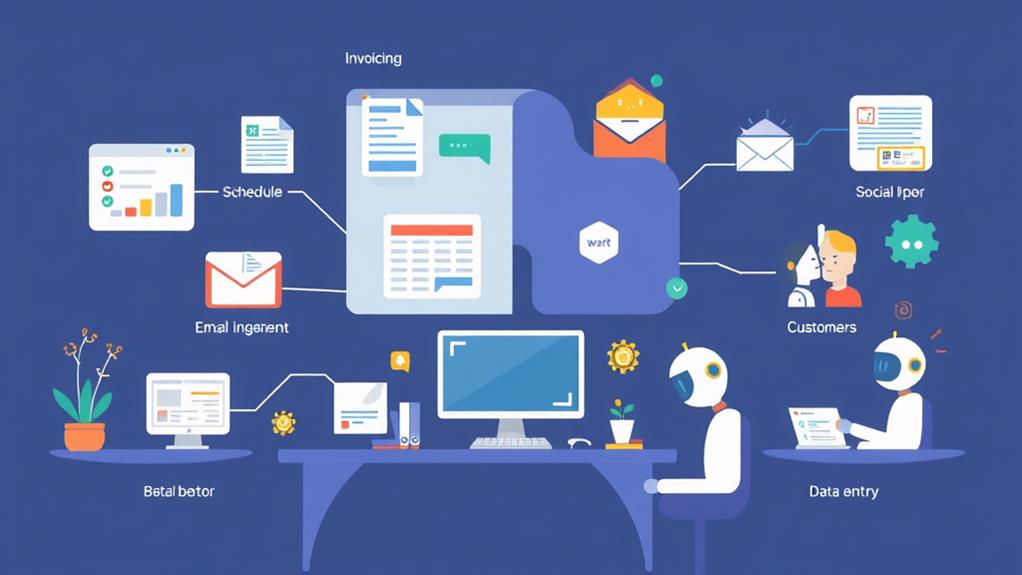
In the domain of AI implementation for small and medium-sized businesses (SMBs), identifying specific tasks suitable for automation is critical.
Administrative task automation can enhance operational efficiency, while financial process streamlining reduces the potential for errors and increases accuracy.
Understanding these task categories enables SMBs to strategically allocate resources and improve overall productivity.
Administrative Task Automation
As businesses endeavor for efficiency, automating administrative tasks has emerged as a strategic imperative, enabling small and medium-sized enterprises (SMBs) to optimize operations. Administrative functions such as data entry, appointment scheduling, and document management are prime candidates for automation.
By implementing advanced AI solutions, SMBs can achieve workflow optimization, considerably reducing time spent on routine tasks and allowing employees to focus on strategic initiatives. Task prioritization becomes more streamlined as automation systems analyze workloads and allocate resources effectively, enhancing productivity and operational consistency.
Through process standardization, businesses can guarantee that tasks are executed uniformly, minimizing errors and promoting data accuracy. Furthermore, by integrating various systems, organizations can facilitate seamless communication and data exchange, further enhancing resource allocation.
Employee engagement is fostered when staff can devote their time to high-value activities rather than mundane chores. Frequent workflow analysis provides insights into task performance, identifying opportunities for efficiency gains.
Ultimately, automating administrative tasks empowers SMBs to harness technological advancements, leading to improved operational performance and a competitive edge in today's dynamic market landscape.
Financial Process Streamlining
Automating financial processes has become a key focal point for SMBs seeking to enhance efficiency and accuracy in their operations. By leveraging advanced financial software, these enterprises can streamline critical tasks such as transaction processing and invoice automation. This not only accelerates payment cycles but also improves cash flow management, ensuring that businesses have the liquidity required to thrive.
Data integration plays a significant role in financial process streamlining, enabling the consolidation of disparate financial data sources into a cohesive system. Such integration enhances compliance management by ensuring that all financial activities are aligned with regulatory requirements, mitigating risks of non-compliance.
Budgeting automation represents another critical area of focus, allowing SMBs to allocate resources more effectively and respond to market demands with agility. Additionally, the use of reporting tools facilitates real-time performance analysis, enabling businesses to make informed decisions.
Payroll systems can also be automated, reducing manual errors and freeing up valuable human resources for more strategic tasks. Moreover, robust expense tracking systems allow for precise monitoring of expenditures, fostering financial discipline and accountability.
Collectively, these automated processes empower SMBs, providing them with the tools necessary for sustainable growth.
AI Tools for SMBs
The rise of artificial intelligence (AI) has opened up new avenues for small and medium-sized businesses (SMBs) to enhance operational efficiency and improve decision-making. With the increasing variety of AI tools available, SMBs must navigate a complex landscape to select the most suitable solutions that align with their specific needs and resources.
AI adoption challenges often arise, particularly in the areas of budgeting, resource allocation, and skill development. Effective AI tool selection is essential; decision-makers must assess the capabilities and limitations of available tools while prioritizing user experience.
Detailed AI training resources are necessary to empower employees and facilitate smooth integration. Various AI integration methods, including APIs and cloud-based solutions, should be evaluated to guarantee seamless deployment within existing workflows.
Furthermore, conducting thorough AI vendor evaluation is vital to ascertain the reliability, service quality, and compatibility of tools with current systems. Scalability options within selected AI tools should also be considered, as a solution that adapts to business growth is invaluable.
Security considerations must not be overlooked; SMBs should confirm that chosen solutions safeguard customer data and adhere to industry standards.
Ultimately, an informed approach to AI tool selection can provide SMBs with the agility and efficiency they seek, allowing them to focus on amplifying their core competencies.
Implementation Strategies for AI
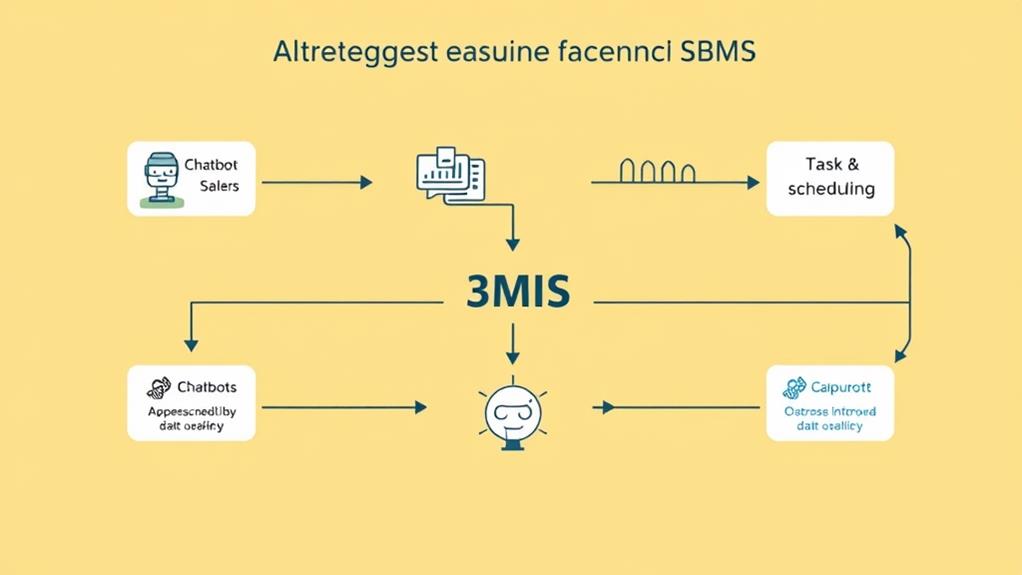
Implementing artificial intelligence (AI) within small and medium-sized businesses (SMBs) requires a strategic approach that balances technological capabilities with organizational readiness. To harness the full potential of AI while guaranteeing operational efficiency and maintaining compliance with data privacy regulations, SMBs must adopt well-defined implementation strategies.
1. Assessment of Organizational Needs: Begin by evaluating specific business processes that could benefit from AI automation.
Prioritize areas where repetitive tasks hinder productivity and assess the potential ROI of implementing AI solutions.
2. Employee Training and Involvement: Training employees on new AI tools is critical for effective integration.
Engage staff in training programs that focus not only on how to use AI applications but also on understanding the implications for data privacy and security. Their involvement will foster a culture of innovation and facilitate smoother changes.
3. Choosing the Right Technology: Selecting AI tools that align with your business objectives is essential.
Conduct thorough research to identify platforms that comply with data privacy laws and provide robust features tailored for SMB requirements.
These strategies guarantee a structured rollout of AI technologies, maximizing their effectiveness while minimizing potential risks.
Case Studies of Successful Automation
Across various industries, small and medium-sized businesses (SMBs) have embraced automation to enhance operational efficiency and drive growth. Numerous success stories demonstrate how these businesses have effectively navigated the complexities of automation challenges to achieve transformative results.
For instance, a regional logistics company implemented an automated inventory management system, reducing human error and greatly optimizing stock levels. This shift resulted in a 30% decrease in operational costs and improved delivery times, illustrating the tangible benefits that automation can provide.
Another remarkable example is a marketing agency that adopted AI-driven analytics tools to automate the reporting process. Previously, data collation took hours, but with the new system, reports are generated in real-time, freeing up creative personnel to focus on strategy rather than administrative tasks. This change not only increased employee satisfaction but also improved the agency's service delivery, leading to a 20% rise in client retention.
However, it's crucial to acknowledge that these success stories come with their share of automation challenges. Resistance to change, initial financial outlays, and the need for training are typical barriers that SMBs face. Overcoming these obstacles necessitates a robust strategic plan and a commitment to workforce engagement throughout the automation journey.
Ultimately, the positive case studies from SMBs reveal that with careful implementation and consideration of human factors, automation can yield substantial advantages, enabling nimble organizations to thrive in increasingly competitive markets.
Measuring AI Impact on Efficiency

Evaluating the impact of AI on operational efficiency is critical for SMBs seeking to maximize their return on investment. To guarantee a thorough understanding of AI's effectiveness, organizations must engage in rigorous impact assessment and establish clear efficiency metrics. This requires developing a solid framework for productivity analysis that encompasses various facets of performance tracking and data integration.
To measure the efficacy of AI-driven initiatives, SMBs should consider the following key strategies:
- Establish Baselines: Identify and document existing performance levels before AI implementation. This serves as a foundation for future comparison and ROI evaluation.
- Conduct Benchmarking: Regularly benchmark processes against industry standards to ascertain improvements attributable to AI interventions. Such comparisons can reveal significant shifts in workflow optimization.
- Analyze Return on Investment: Calculate savings in labor costs and time efficiencies gained post-deployment. Analyzing this data reveals genuine productivity improvements and informs future investments in AI technology.
Integrating these methodologies will empower SMBs to track the success of their AI initiatives effectively.
With an emphasis on process benchmarking and efficiency metrics, organizations can derive actionable insights that propel them towards greater operational effectiveness.
Ultimately, the ongoing evaluation of AI's impact will foster an adaptable and resilient business structure, enabling SMBs to navigate the dynamic market landscape with confidence.
Future Trends in AI for SMBs
As we look toward the future, an estimated 80% of small and medium-sized businesses (SMBs) are expected to integrate AI technologies into their operations within the next five years. This surge in technology integration signals a transformative shift influenced by AI advancements that promise not only enhanced efficiency but also unprecedented scalability potential.
Future predictions suggest that SMBs will leverage sophisticated automation tools tailored to their unique operational needs, facilitating a granular level of customization options that were previously inaccessible.
The industry impact will be profound as AI emerges as a cornerstone for competitive advantage. Businesses poised to adopt these technologies will experience significant workforce evolution, where routine tasks become automated, allowing human talent to focus on strategic initiatives and creative problem-solving.
However, this change raises pivotal ethical considerations; it mandates a careful balance between automation and the humane treatment of labor, ensuring that job displacement is addressed through reskilling and upskilling initiatives.
As AI continues to evolve and mature, the emphasis will increasingly be on advanced analytics and predictive modeling, empowering SMBs to make data-driven decisions that fuel growth.
By harnessing these innovations, companies can not only streamline operations but also align their strategic objectives with market demands.
The commitment to technology integration will ultimately define the trajectory of SMBs in the coming landscape, as those who embrace AI will likely emerge as leaders in their respective sectors, prepared to navigate an ever-changing business environment with agility and foresight.
Frequently Asked Questions
How Much Does AI Implementation Typically Cost for Smbs?
The cost of AI implementation for small and medium-sized businesses varies considerably based on factors such as project scope and complexity.
Effective budgeting for automation requires an understanding of various AI pricing strategies, which may include subscription models, one-time licenses, or usage-based fees.
Typically, businesses should allocate budgetary resources for initial setup, ongoing maintenance, and potential scalability, ensuring an all-encompassing approach to leveraging AI technology for enhanced operational efficiency and innovation.
What Skills Are Needed to Manage AI Tools Effectively?
Steering through the complexities of AI tools is akin to mastering a sophisticated instrument; one must possess both technical prowess and a keen understanding of musical theory.
Effective management of AI tools necessitates strong data literacy skills, enabling professionals to interpret and utilize data efficiently.
Additionally, strategic tool selection is essential, as the right tools amplify capabilities while mitigating risks.
Together, these competencies foster an agile environment, promoting innovation and adaptability in an increasingly data-driven landscape.
How Long Does It Take to See Results From AI Automation?
The implementation timeline for AI automation varies considerably based on the complexity of the tasks and the quality of the data involved.
Typically, organizations may begin to see preliminary results within a few weeks; however, substantial improvements often require several months of continuous refinement and adjustment.
To gauge success accurately, it is essential to establish clear performance metrics that align with organizational goals, enabling effective monitoring and evaluation of the automation's impact.
Can AI Tools Integrate With Existing Business Software?
In a symphony, every instrument must harmonize for a perfect performance.
Similarly, AI tools face compatibility challenges when integrating with existing business software.
However, numerous integration success stories exist, showcasing the transformative potential of AI when effectively combined with legacy systems.
Careful evaluation of software architecture and adherence to established protocols can facilitate seamless integration, enabling businesses to harness the full power of AI while maintaining operational continuity and enhancing performance.
What Are the Risks of Relying on AI for Automation?
Relying on AI for automation presents several risks.
Key concerns include data privacy, as sensitive information may be exposed through inadequate security measures.
Additionally, job displacement may occur as automation replaces human roles, potentially leading to socioeconomic imbalances.
Technology dependence is another critical factor, as businesses may find themselves vulnerable to system failures.
Conclusion
The integration of AI into small and medium-sized businesses (SMBs) has demonstrated significant potential for enhancing operational efficiency. For instance, research indicates that implementing AI-driven automation can lead to a productivity increase of up to 40%, allowing organizations to allocate resources more effectively. As SMBs continue to embrace these technologies, the future landscape will likely reflect higher levels of efficiency and innovation, fostering competitive advantages and contributing to sustainable growth in various industries.