AI for Smbs: Enhancing Customer Support With Chatbots
AI-driven chatbots are transforming customer support for small and medium-sized businesses (SMBs) by enhancing efficiency and reducing costs. Offering 24/7 availability, these chatbots improve response times and service consistency, fostering strong customer relationships. By integrating seamlessly with existing systems, they enhance user experience through quick, accurate responses and personalized interactions. In addition, chatbots facilitate self-service options, empowering customers to resolve issues independently. As businesses continue to evolve, leveraging chatbots can lead to improved operational efficiency and customer satisfaction. Explore further to discover how these innovative tools can elevate your customer support strategy.
Key Takeaways
- Chatbots improve customer support for SMBs by providing 24/7 availability and immediate responses, enhancing overall customer satisfaction.
- AI-driven chatbots leverage natural language processing for personalized interactions, resulting in a more human-like customer experience.
- Implementing chatbots reduces costs by handling multiple inquiries simultaneously while lowering maintenance expenses compared to traditional support systems.
- Integration with existing systems, such as CRMs, ensures smooth deployment and maximizes the benefits of chatbots within business operations.
- Measuring chatbot performance through user feedback and metrics helps identify areas for improvement and ensure alignment with business goals.
Understanding Chatbots
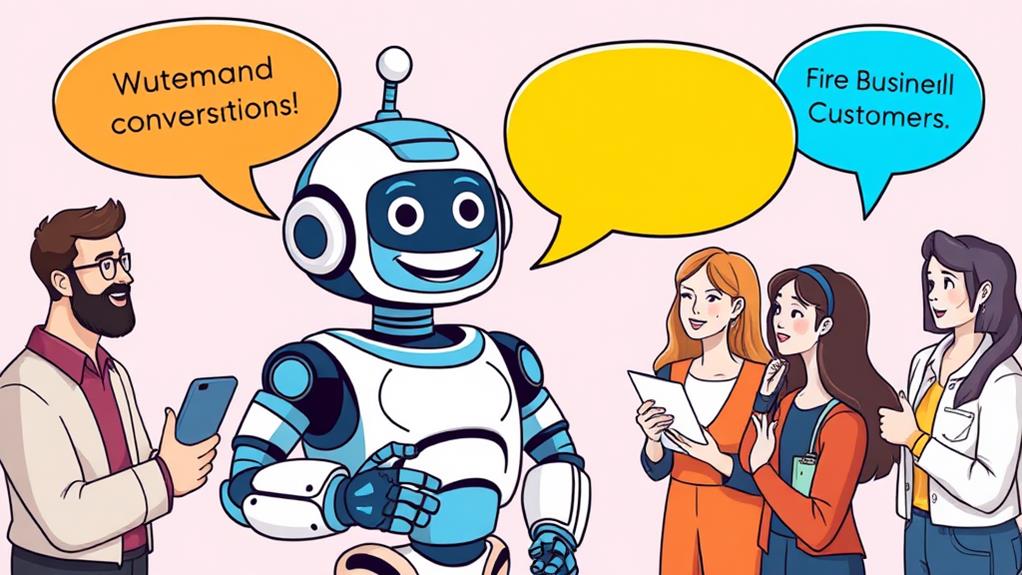
In today's digital landscape, approximately 80% of businesses have begun to incorporate chatbots into their customer service strategies, a proof of their growing importance. These sophisticated tools streamline communication by automating interactions and enhancing user experience, making them invaluable for modern businesses.
Understanding chatbot types is essential for choosing the right solution that aligns with your unique needs.
Chatbots can be broadly categorized into two types: rule-based and AI-driven. Rule-based chatbots follow predefined scripts and respond to specific keywords or phrases, offering predictable yet limited interaction. They excel in addressing straightforward inquiries but may falter with complex questions.
Conversely, AI-driven chatbots leverage natural language processing and machine learning, enabling them to understand and respond to user conversations more dynamically. This adaptability greatly enhances the user experience, as customers often prefer engaging in natural conversations rather than rigid exchanges.
Adopting chatbots not only optimizes response times but also provides businesses with the freedom to allocate resources more effectively. With chatbots handling routine inquiries, customer service representatives can focus on more nuanced and demanding tasks, thereby fostering a more productive environment.
Benefits of Chatbots for SMBs
Chatbots offer a range of compelling benefits for small and medium-sized businesses (SMBs), transforming customer support channels.
By providing increased response efficiency, cost-effective solutions, and 24/7 availability, they empower SMBs to enhance customer satisfaction while optimizing resources.
Embracing this technology can drive growth, enabling businesses to compete more effectively in today's fast-paced market.
Increased Response Efficiency
Enhancing customer support through the implementation of chatbots greatly boosts response efficiency for small and medium-sized businesses (SMBs). By leveraging advanced algorithms, these intelligent systems considerably reduce response time, allowing businesses to offer quicker query resolution. This immediacy enhances customer satisfaction, fostering a positive experience that elevates user engagement.
Chatbots deliver service consistency, addressing common inquiries without fatigue or errors. They can seamlessly handle feedback collection, providing valuable insights for continuous improvement. Furthermore, the integration of multilingual support breaks down language barriers, expanding the customer base and enhancing engagement across diverse demographics.
Effective personalization strategies empower chatbots to tailor interactions based on individual user preferences, making customers feel valued and understood. Additionally, well-designed escalation processes guarantee that complex issues are promptly managed by human agents, maintaining a balance between automation and personal touch.
While training requirements for chatbots may initially seem intimidating, the long-term benefits far outweigh the investment. By embracing this technology, SMBs not only streamline operations but also cultivate lasting customer relationships, driving their growth in an increasingly competitive landscape.
Ultimately, chatbots stand as an invaluable asset in the quest for operational efficiency and superior customer service.
Cost-Effective Solutions
Implementing chatbots not only improves response efficiency but also serves as a cost-effective solution for small and medium-sized businesses (SMBs). By integrating affordable tools, SMBs can optimize their customer support without breaking the bank. The pricing models available cater to various budget considerations, allowing businesses to choose options that best fit their financial constraints.
When conducting a thorough ROI analysis, it becomes evident that the initial implementation costs of chatbots are often minimal compared to the long-term savings. By reducing the need for extensive customer service teams, companies can allocate valuable resources to other critical areas, enhancing overall efficiency.
Moreover, chatbots offer impressive service scalability; they can handle multiple inquiries simultaneously, ensuring that no customer feels neglected. Maintenance expenses are also considerably lower than traditional customer support systems, making chatbots an attractive option for those looking to minimize operational costs.
User accessibility is enhanced as chatbots provide immediate responses, elevating customer satisfaction without the associated overhead. By harnessing the power of chatbots, SMBs can create a sustainable model that drives success while freeing them to focus on growth and innovation.
24/7 Availability
In today's fast-paced digital landscape, 24/7 availability has become an essential expectation for customers seeking support. Small to medium-sized businesses (SMBs) can no longer afford to adhere to traditional business hours; instead, they must embrace current availability trends that prioritize customer accessibility.
Implementing chatbots as part of available strategies allows SMBs to provide uninterrupted support, ensuring that customer inquiries and issues are addressed promptly, regardless of the time of day.
Chatbots effectively bridge the gap between customer needs and business capability by automating responses to frequently asked questions and common service requests. This level of availability not only enhances customer satisfaction but also cultivates loyalty, as clients appreciate the immediate attention they receive.
Additionally, utilizing chatbots frees human agents to concentrate on more complex inquiries, thereby maximizing resource optimization.
Key Features of Effective Chatbots
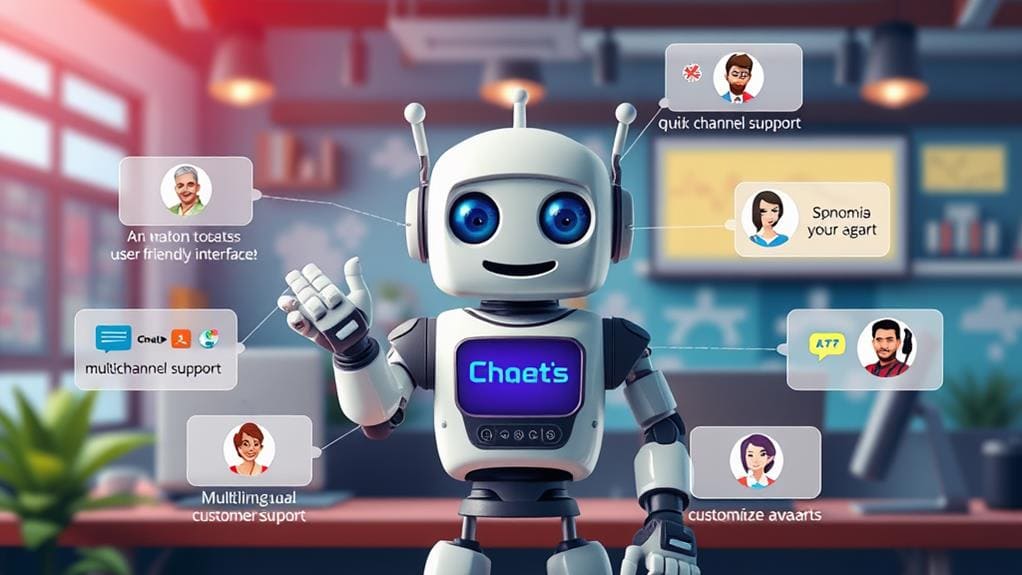
Effective chatbots possess several key features that greatly elevate customer support for small and medium-sized businesses (SMBs). The cornerstone of an effective chatbot is its ability to enhance the user experience by offering quick and accurate responses to customer inquiries. A well-designed conversational interface is vital, as it allows users to engage naturally, making interactions feel seamless and human-like.
Customizable options enable businesses to tailor chatbots to their specific brand voice and customer needs, increasing relevance and satisfaction. Furthermore, with multi-language support, chatbots can cater to diverse customer bases, breaking down language barriers and expanding market reach.
Integration capabilities with existing systems enhance efficiency, allowing businesses to capture and analyze user feedback effectively. Training datasets play a pivotal role in refining chatbot performance, as they equip the AI with the necessary knowledge to address user queries intelligently.
To guarantee robust interaction, effective chatbots must incorporate security measures to protect sensitive customer information, fostering trust and reliability. Performance metrics are essential for evaluating how well chatbots serve their purpose.
Integrating Chatbots Into Existing Systems
The successful deployment of chatbots relies not only on their core features but also on their ability to integrate seamlessly into existing systems. For small and medium-sized businesses (SMBs), effective chatbot integration strategies are essential to enhance customer support while minimizing disruption. A thorough system compatibility assessment lays the groundwork for this integration, ensuring that the chatbot can work harmoniously with current software applications, databases, and communication tools.
To start, organizations should evaluate their existing infrastructure to identify potential challenges and opportunities for improvement. This assessment not only highlights areas where the chatbot can add value but also reveals any necessary adjustments to existing systems to enable compatibility.
For instance, if an SMB utilizes a Customer Relationship Management (CRM) system, the chatbot can be programmed to pull data directly from it, providing personalized assistance to customers.
Moreover, adopting clear integration strategies, such as using open APIs or cloud-based solutions, can facilitate smoother communication between the chatbot and the existing systems. By embracing flexible technology solutions, SMBs can foster an environment of agility and responsiveness that addresses customer inquiries more effectively.
Ultimately, the goal is to create a cohesive user experience that aligns with the business's overall objectives. A well-integrated chatbot not only delights customers but also empowers employees to focus on more complex tasks, thereby paving the way for a liberated, innovative workplace.
With careful planning and strategic foresight, integrating chatbots can become a transformative leap toward elevated customer engagement.
Best Practices for Chatbot Deployment

Successfully deploying chatbots requires a strategic approach, beginning with the definition of clear objectives that align with your business goals.
Additionally, ensuring natural conversations enhances the customer experience, fostering trust and satisfaction.
Define Clear Objectives
Establishing well-defined objectives is a fundamental step in deploying chatbots for customer support in small and medium-sized businesses (SMBs). By defining clear objectives, businesses can guarantee goal alignment across various departments, paving the way for a seamless integration of chatbots into their operations. This clarity not only enhances the chatbot's functionality but also strengthens the overall customer experience.
To maximize the effectiveness of your chatbot, it is essential to set specific, measurable performance metrics. These metrics will guide your evaluation process, allowing you to assess how well the chatbot meets customer needs and fulfills business goals. For instance, tracking response time, customer satisfaction ratings, and resolution rates provides vital insights into the chatbot's performance and areas for improvement.
Moreover, aligning your chatbot's objectives with broader company goals helps maintain a focus on customer-centric initiatives, fostering trust and loyalty among your clientele.
Ensure Natural Conversations
Achieving clear objectives sets the foundation for an impactful chatbot implementation, but ensuring natural conversations is equally essential for effective customer engagement. A chatbot must demonstrate context awareness to interpret user queries accurately, fostering a seamless conversational flow. This approach enhances user engagement and encourages customers to seek assistance freely, knowing they will be understood.
To implement natural interactions effectively, consider the following best practices:
- Tone adaptation: Match the chat's tone to your brand's voice for authentic communication.
- Response personalization: Tailor responses based on user data, history, and preferences.
- Language understanding: Employ sophisticated algorithms that grasp nuances and dialects, ensuring clarity in exchanges.
- Emotional intelligence: Integrate responsiveness to users' emotions, helping to create a connection.
- Feedback loops: Establish systems for capturing user feedback, refining the chatbot's performance over time.
Measuring Chatbot Performance
How can businesses effectively determine the success of their chatbots in enhancing customer support? The answer lies in a thorough approach to measuring chatbot performance through specific metrics and user insights.
Businesses must leverage user feedback to gain valuable perspectives on the chatbot experience. By collecting and analyzing this feedback, organizations can identify areas for improvement and track user engagement over time.
Performance metrics, such as response accuracy and satisfaction scores, serve as vital indicators of a chatbot's effectiveness. High response accuracy guarantees that users receive relevant answers promptly, while satisfaction scores provide tangible evidence of how well the chatbot meets customer expectations.
Consistent data analysis allows businesses to uncover trends and actionable insights, enabling them to refine their chatbots continuously.
Encouraging user engagement is essential for fostering a positive interaction. Tools that monitor conversation length and frequency help gauge user interest and reveal what prompts engagement.
By developing improvement strategies rooted in customer insights, businesses can create a dynamic feedback loop that empowers them to adapt and enhance their chatbot capabilities.
Ultimately, measuring chatbot performance is about more than just numbers; it's about fostering an environment where customer interactions are seamless and information flows freely.
As the digital landscape evolves, businesses that invest in understanding and improving their chatbots will set themselves apart, enhancing customer support and driving long-term success.
Common Challenges and Solutions
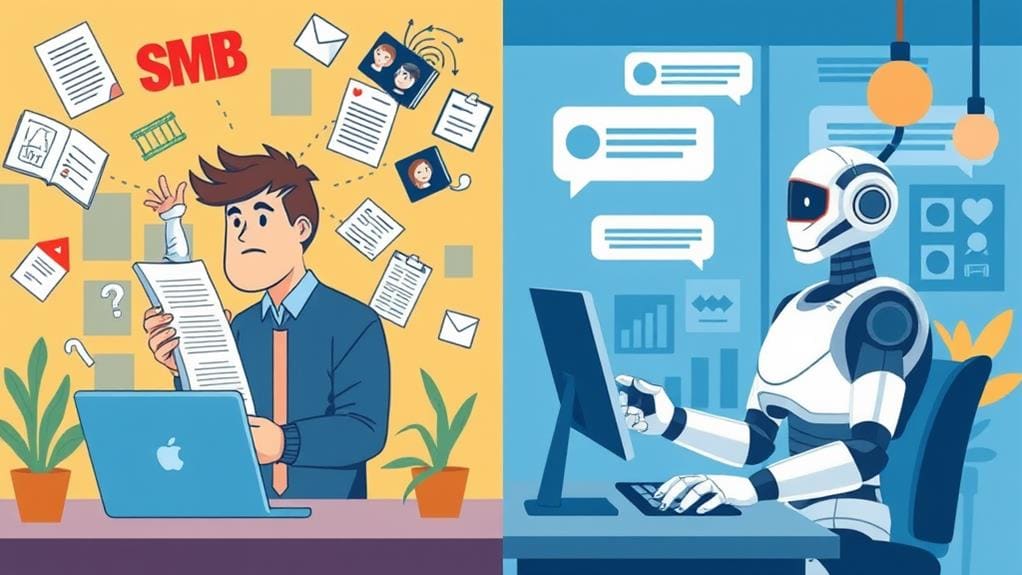
Despite the transformative potential of chatbots in customer support, various challenges can hinder their effectiveness. To guarantee these digital assistants enhance user experience and contribute to customer retention, businesses must address several common obstacles.
- Scalability challenges: As your business grows, integrating chatbots into an expanding infrastructure can strain existing systems.
- Technology adoption: Resistance from support staff towards new technology can limit chatbot utilization.
- Integration hurdles: Seamlessly embedding chatbots with CRM systems and other tools is essential for cohesive communication.
- Security concerns: Confirming data privacy while utilizing chatbots requires robust security measures to build trust with customers.
- Limited training resources: A deficiency in available materials hampers ideal bot performance, potentially compromising user satisfaction.
To tackle these issues, organizations can implement targeted strategies. First, prioritize technology adoption by involving support staff in the chatbot integration process, fostering a sense of ownership.
Second, invest in extensive training resources that empower employees to harness the full capabilities of chatbots. Additionally, regular user feedback can identify pain points and guide improvements, guaranteeing the bots evolve according to customer needs.
Addressing security concerns is significant; businesses must proactively implement measures that safeguard data privacy, demonstrating a commitment to customer trust.
Future Trends in Chatbot Technology
As we look ahead, the evolution of chatbot technology presents exciting opportunities for small and medium-sized businesses (SMBs) to revolutionize customer support. Emerging advancements, including voice recognition and emotional intelligence, are set to enhance user interactions, fostering an environment of greater understanding and empathy.
As chatbots increasingly employ machine learning algorithms, they will offer heightened user personalization, tailoring responses that resonate with individual customers' preferences and needs.
In addition, the trend towards multilingual support enables businesses to engage a broader audience, breaking down language barriers and enhancing customer satisfaction. Predictive analytics will empower SMBs to anticipate customer queries, providing proactive solutions and reducing response times.
Additionally, as self-service options become more sophisticated, customers will find it easier to resolve issues independently, driving efficiency in the support process.
Contextual understanding is another critical trend, allowing chatbots to grasp the nuances of conversations and deliver relevant information. This fosters a seamless experience, as customers feel understood and valued.
Integration flexibility will guarantee that chatbots can work harmoniously within existing systems, streamlining operations and facilitating enhanced communication channels.
Lastly, with data security becoming an increasing concern, future chatbot platforms will prioritize safeguarding user information, ensuring trust and compliance.
Frequently Asked Questions
What Industries Are Most Benefitted by Chatbots in Customer Support?
Chatbots greatly benefit various industries, enhancing customer support and engagement.
In the retail industry and e-commerce platforms, they provide immediate assistance, driving sales and improving customer satisfaction.
The healthcare sector leverages chatbots for appointment scheduling and patient inquiries, while travel services utilize them for bookings and travel updates.
Financial services and telecommunications companies rely on chatbots for account management and troubleshooting, ensuring efficient service delivery.
Each sector experiences increased operational efficiency and improved customer experiences.
How Much Does It Cost to Implement a Chatbot for My Business?
When considering chatbot implementation, one must evaluate various aspects: functionality, scalability, and pricing models.
Typically, implementation costs can range from a few hundred to several thousand dollars, depending on customization and complexity. Basic bots may follow a subscription or pay-per-use pricing model, while advanced solutions often require upfront investments and ongoing maintenance fees.
Ultimately, understanding these factors empowers businesses to make informed decisions, enhancing customer engagement without compromising budgetary freedom.
Can Chatbots Handle Multiple Languages or Just One?
Chatbots possess the ability to handle multiple languages, showcasing impressive multilingual capabilities.
This functionality greatly enhances user experience by accommodating users from diverse linguistic backgrounds. Implementing a multilingual chatbot fosters inclusivity, ensuring that all customers feel valued and understood.
What Is the Average Response Time for a Chatbot?
Imagine a nimble dancer gliding across the stage; this embodies the efficient response time of a chatbot.
Typically, chatbots can respond in mere seconds, greatly enhancing chatbot efficiency and elevating user satisfaction. Instantaneous replies create a seamless interaction, freeing users from prolonged wait times.
Can Chatbots Learn and Adapt to Customer Behavior Over Time?
Yes, chatbots can indeed learn and adapt to customer behavior over time through advanced behavior analysis and adaptive learning techniques.
By monitoring interactions and analyzing patterns, these intelligent systems refine their responses and improve user experiences. This capability enables chatbots to anticipate customer needs and deliver personalized support.
As a result, organizations can foster stronger relationships with their clientele, enhancing satisfaction and loyalty while optimizing overall operational efficiency.
Conclusion
The integration of chatbots within small and medium-sized businesses (SMBs) represents a transformative shift in customer support capabilities. With studies indicating that 80% of businesses plan to utilize chatbots by 2024, the potential for enhanced customer engagement, cost reduction, and operational efficiency is substantial. Embracing chatbot technology not only addresses the immediate needs of customer interactions but also positions SMBs for a competitive advantage in an increasingly digital marketplace. Future advancements promise to further amplify these benefits.