
AI for SMBs: Improving Workflow and Efficiency
Artificial Intelligence (AI) is transforming how small and medium-sized businesses (SMBs) approach workflow and efficiency. By automating routine tasks and utilizing data-driven insights, AI streamlines operations and reduces costs. Key areas for implementation include customer service, inventory management, and personalized marketing strategies. Tools like Trello and HubSpot facilitate task management and enhance collaboration. Measuring efficiency improvements through key performance indicators helps businesses assess AI's impact. While challenges such as budget constraints and cultural resistance exist, strategic planning and employee engagement can pave the way for successful adoption. Exploring further reveals more strategies to harness AI effectively.
Key Takeaways
- AI streamlines operations, enhancing efficiency and allowing staff to focus on more complex tasks.
- Predictive analytics enables data-driven decision-making, optimizing inventory and improving customer engagement.
- Workflow automation tools like Zapier and Trello facilitate task management and collaboration, boosting productivity.
- Continuous data analysis through real-time reporting fosters agility and proactive strategies in market response.
- Implementing AI requires strategic planning and stakeholder involvement to ensure successful integration and scalability.
Benefits of AI for SMBs
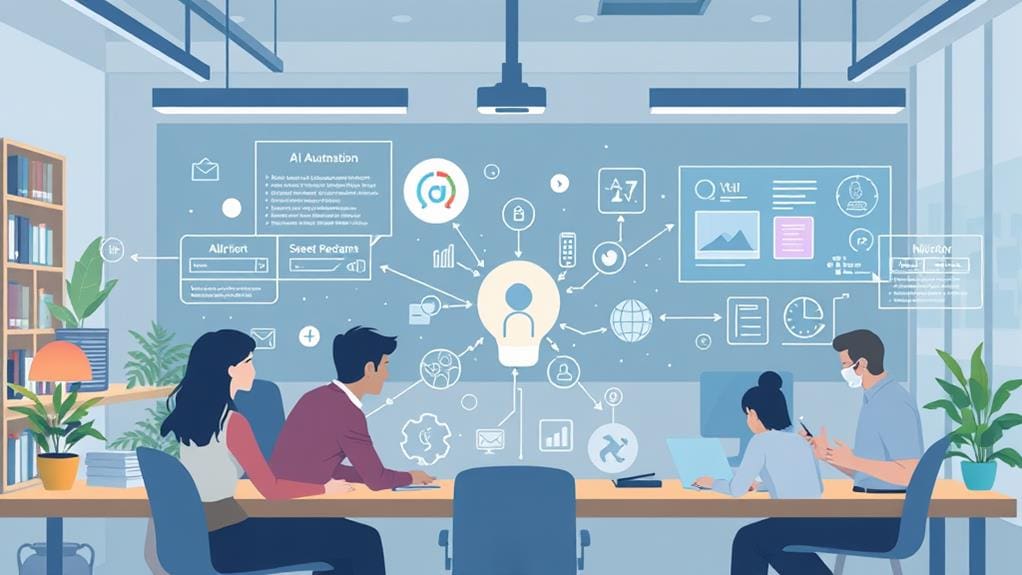
Harnessing the power of artificial intelligence (AI) can greatly enhance the operational efficiency of small and medium-sized businesses (SMBs). The integration of AI technologies not only streamlines various processes, but it also fosters significant cost savings through automation and optimized workflows. By reducing manual labor, SMBs can allocate resources more effectively, thereby improving both their bottom line and their competitive advantage.
Moreover, AI aids in elevating customer engagement through personalized marketing strategies. By analyzing customer data, businesses can tailor their offerings to meet the specific preferences of their audience. This level of personalization boosts customer satisfaction and loyalty, which are essential for sustainable growth.
Additionally, AI enhances employee productivity by providing decision-making support through data-driven insights. With access to precise analytical tools, employees can make more informed choices promptly, leading to faster problem resolution and increased overall efficiency.
The scalability potential of AI technology is another significant benefit. As SMBs grow, AI solutions can adapt to their evolving needs without requiring substantial additional investments. This scalability guarantees that businesses can maintain their operational fluency, no matter their size.
Lastly, effective risk management becomes attainable with AI-driven predictive analytics. By anticipating market shifts and potential threats, organizations can implement proactive strategies, safeguarding their interests while fostering a culture of innovation.
Identifying Key Areas for AI
Identifying key areas for AI implementation is essential for small and medium-sized businesses (SMBs) seeking to maximize their investment in technology. By recognizing where AI can be most beneficial, businesses can enhance workflow efficiency and overall performance.
Below are four critical areas where AI can drive significant improvements:
- Customer Service: AI-driven chatbots and virtual assistants can handle routine inquiries, enabling staff to focus on more complex tasks. This enhances user experience and boosts customer satisfaction.
- Inventory Management: AI algorithms can predict stock levels and optimize ordering processes, reducing waste and ensuring that products meet consumer demand. This leads to improved vendor relations and tightened financial forecasting.
- Marketing Strategies: AI tools analyze consumer behavior patterns to create personalized marketing campaigns. These strategies increase engagement and drive sales optimization, catering directly to customer preferences.
- Employee Training and Project Collaboration: AI-efficient platforms can tailor training materials based on individual needs, facilitating continuous learning. Additionally, AI enhances project collaboration through intelligent scheduling and task management capabilities, improving team productivity.
Implementing AI in these key areas empowers SMBs to streamline operations and stay competitive.
Additionally, attention must be paid to cybersecurity measures to protect sensitive data as AI systems evolve. As businesses adapt to these technologies, they can foster a proactive culture, ensuring that the potential of AI is fully realized, ultimately leading to sustainable growth in an ever-evolving marketplace.
Popular AI Tools for SMBs

As small and medium-sized businesses (SMBs) increasingly seek to enhance their operational efficiency, the adoption of AI tools becomes essential.
Workflow automation solutions, enhanced data analysis capabilities, and task management tools are driving this transformation, enabling SMBs to streamline processes and make informed decisions.
Workflow Automation Solutions
In today's fast-paced business environment, small and medium-sized businesses (SMBs) increasingly rely on workflow automation solutions to enhance efficiency and streamline operations.
By leveraging robotic process automation (RPA) and other workflow optimization techniques, SMBs can eliminate repetitive tasks, reduce errors, and free up valuable human resources for more strategic initiatives.
Here are four popular workflow automation solutions that can help SMBs thrive:
- Zapier: Connects various applications to automate repetitive tasks without any coding knowledge, allowing seamless workflow integration.
- Trello: Offers visual project management tools that enhance collaboration and automate task assignments, ensuring project milestones are consistently met.
- HubSpot: Provides a thorough inbound marketing platform that incorporates email marketing automation, CRM integration, and analytics, optimizing lead management.
- Integromat: A user-friendly platform that connects apps and automates workflows to facilitate simple data transfers and task executions without developer intervention.
Implementing these solutions empowers SMBs to focus on growth while harnessing advanced technologies to create a more productive environment.
As these businesses embrace automation, they reveal potential efficiencies that can drive sustainable success.
Enhanced Data Analysis
The ability to harness data effectively has become a game-changer for small and medium-sized businesses (SMBs) seeking to gain a competitive edge. Enhanced data analysis strategies, powered by AI tools, allow SMBs to reveal valuable insights from their vast amounts of data. By utilizing data visualization techniques, businesses can create intuitive dashboards that simplify complex information, aiding in informed decision-making.
Predictive analytics enables SMBs to anticipate future trends, enhancing performance forecasting and improving customer segmentation. This targeted approach not only boosts sales but also strengthens customer relationships by aligning services with specific needs.
Additionally, real-time reporting allows businesses to track performance metrics instantaneously, fostering agility in response to market changes. Trend analysis and risk assessment techniques help SMBs stay ahead of their competitors by identifying potential threats and opportunities.
Data mining also supports these initiatives by uncovering hidden patterns within datasets, which can be particularly useful for market research and competitive benchmarking.
Incorporating these AI-driven methodologies, SMBs can transform raw data into actionable insights, enabling them to optimize operations, enhance customer satisfaction, and ultimately drive growth. Embracing enhanced data analysis is essential for thriving in today's data-driven landscape.
Task Management Tools
Effective task management is essential for small and medium-sized businesses (SMBs) aiming to enhance productivity and streamline operations.
With the increasing complexity of projects and a growing team dynamic, utilizing AI-driven task management tools can greatly improve both individual and collaborative task management. These tools not only assist in organizing tasks but also employ task prioritization techniques to maximize efficiency.
Here are four popular AI task management tools suitable for SMBs:
- Trello: This visual tool allows teams to organize projects on boards, enabling efficient tracking and adjustments.
- Asana: A robust platform that fosters collaboration, Asana helps in breaking down work, assigning tasks, and setting deadlines.
- Monday.com: Known for its customization options, this tool can adapt to various workflows and improve team collaboration.
- ClickUp: It provides flexible task management features, including reminders and integrations, making it a thorough solution for SMBs.
Implementing these tools can result in streamlined workflows, better accountability, and enhanced communication.
Ultimately, this facilitates a more productive work environment that fosters growth and success.
Implementing AI Solutions
Implementing AI solutions in small and medium-sized businesses (SMBs) is a multifaceted process that requires strategic planning and clear objectives. The successful integration of AI technologies hinges on well-defined AI integration strategies tailored to the unique needs of the organization. Companies should first identify specific areas where AI can provide the most value, such as automating routine tasks, enhancing data analysis, or improving customer interactions.
An essential component of this implementation is evaluating cost considerations. SMBs often operate with limited budgets, making it vital to conduct a thorough cost-benefit analysis before adopting any AI solution. This involves not only evaluating the upfront costs of technology acquisition but also considering ongoing expenses related to maintenance, support, and potential training requirements for staff.
Furthermore, companies should explore scalable AI solutions to accommodate growth without significant additional investments. By leveraging cloud-based tools, SMBs can reduce infrastructure costs while still accessing cutting-edge technology.
Stakeholder involvement is another significant facet of implementing AI solutions. Engaging employees in the planning and execution phases can foster a culture of innovation and facilitate smoother shifts. Training programs and feedback loops will guarantee that staff members feel empowered rather than threatened by AI integration.
Ultimately, the key to implementing AI in SMBs lies in a structured approach that prioritizes strategic objectives, cost management, and employee engagement, creating a foundation for sustainable growth and enhanced operational efficiency.
Measuring AI Impact on Efficiency
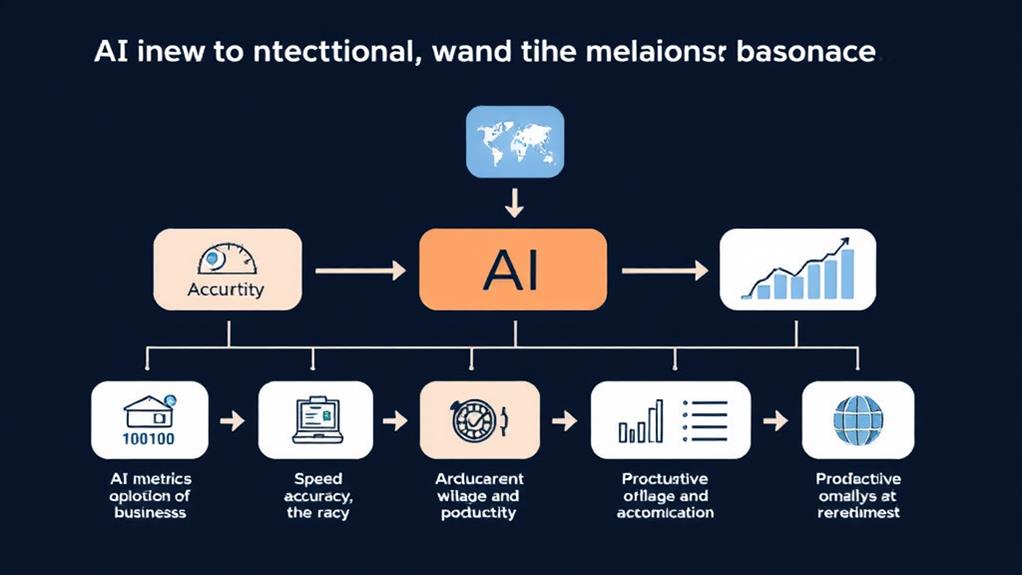
To effectively measure the impact of AI on efficiency in small and medium-sized businesses (SMBs), establishing clear Key Performance Indicators (KPIs) is essential.
These metrics provide data-driven insights that allow organizations to evaluate the performance enhancements driven by AI solutions.
Key Performance Indicators
Measuring the impact of artificial intelligence (AI) on efficiency is essential for small and medium-sized businesses (SMBs) aiming to optimize their operations.
By establishing key performance indicators (KPIs), companies can effectively track their progress and make informed decisions. The right performance metrics serve as growth indicators, allowing SMBs to quantify the benefits of AI implementations.
Here are four critical KPIs to evaluate:
- Process Automation Rate: This measures the percentage of tasks automated by AI solutions, highlighting efficiency improvements.
- Time Savings: Evaluating the reduction in time spent on specific tasks can provide insight into operational enhancements.
- Cost Reduction: Monitoring changes in operational costs directly linked to AI initiatives can illuminate financial benefits.
- Customer Satisfaction Scores: Analyzing feedback and satisfaction levels helps gauge the impact of AI-enhanced processes on customer experience.
Data-Driven Insights
Data-driven insights play an essential role in evaluating the impact of artificial intelligence (AI) on the efficiency of small and medium-sized businesses (SMBs). By leveraging extensive data visualization tools, SMBs can convert complex data sets into intuitive visuals that enhance understanding and decision-making.
Predictive analytics further empower these businesses by forecasting trends, enabling proactive strategies that align with market demands. Customer segmentation, a vital aspect of driving personalized marketing approaches, allows SMBs to tailor their offerings and enhance customer satisfaction.
Coupled with operational metrics, these insights inform resource allocation and streamline processes for peak performance. Automated reporting simplifies the analysis of vast data pools, promoting agility and responsiveness without overburdening staff.
Moreover, implementing robust data governance guarantees that data integrity is maintained, allowing for accurate performance benchmarking against established industry standards. This systematic evaluation helps SMBs identify areas for improvement, fostering a culture of continuous enhancement.
Fundamentally, data-driven insights equip SMBs with the tools needed to monitor their AI initiatives effectively, paving the way for sustained efficiency and growth in a competitive landscape.
Overcoming Challenges in Adoption
Many small and medium-sized businesses (SMBs) find themselves steering through a complex landscape when it comes to adopting artificial intelligence (AI) technologies. To successfully navigate these challenges, SMBs must be aware of several key factors that can influence their AI journey.
- Cultural Resistance: Employees may inherently resist changes brought about by new technologies. Tackle this issue by fostering an open environment for dialogue and guaranteeing that staff feels comfortable voicing their concerns.
- Budget Constraints: Limited financial resources can hinder effective implementation. Establish a clear budget that prioritizes spending on technology with the highest potential ROI while exploring partnerships or grants that can alleviate costs.
- Training Challenges: Many employees may lack the necessary technology literacy to fully engage with AI tools. Offer extensive training programs and ongoing support to enhance skills, making sure your workforce embraces the technology rather than shying away from it.
- Integration Complexities: Integrating new AI systems with existing processes can be intimidating. Adopt a phased approach to change management, carefully evaluating integration points to minimize disruption and guarantee a smooth changeover.
Future Trends in AI for SMBs
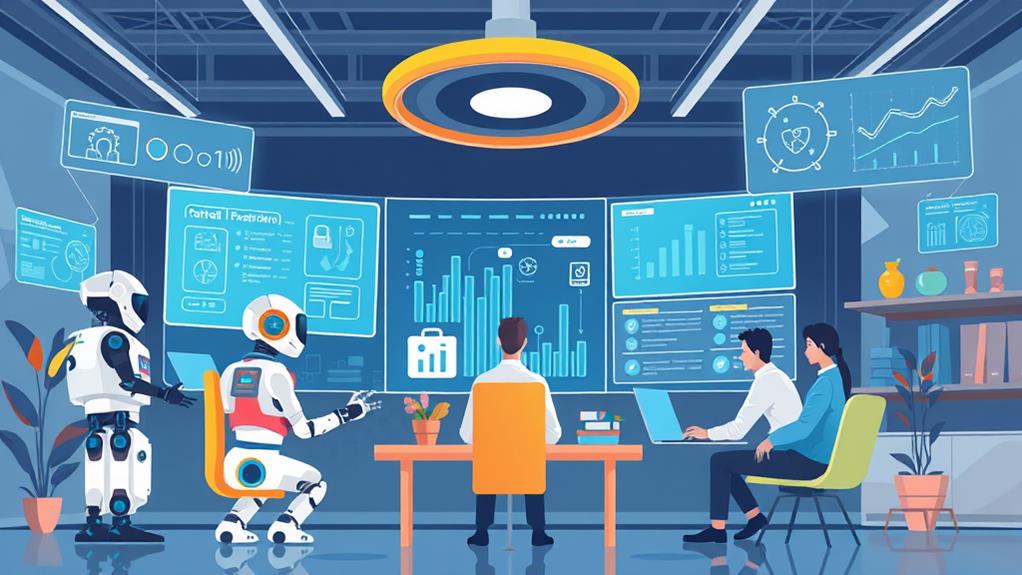
Anticipating the future of artificial intelligence (AI) in small and medium-sized businesses (SMBs) reveals a landscape ripe with transformative potential. As emerging technologies continue to evolve, businesses are increasingly turning to predictive analytics and machine learning to enhance operational efficiency and customer experience.
These tools equip SMBs to analyze vast amounts of data, enabling the delivery of personalized marketing strategies that resonate with individual customer needs.
One of the key trends shaping AI in SMBs is the integration of industry-specific solutions tailored to address unique challenges and opportunities. By adopting targeted approaches, businesses can navigate scalability challenges without compromising on quality or customer satisfaction.
Integration strategies will play a significant role in ensuring seamless incorporation of AI technologies into existing workflows, driving workforce transformation as employees adapt to new tools and capabilities.
However, with great power comes great responsibility. AI ethics will gain prominence as SMBs must grapple with data privacy and algorithmic bias. Establishing ethical guidelines will not only build consumer trust but also foster a sustainable framework for innovation.
As we look ahead, it is vital for SMBs to remain vigilant regarding advancements in AI. By embracing emerging technologies, they can harness their potential to not just compete but excel in a rapidly changing market landscape.
Ultimately, SMBs that prioritize thoughtful integration and ethical considerations will be best positioned to thrive, leveraging AI as a catalyst for growth and enhanced customer satisfaction.
Frequently Asked Questions
What Industries Can Benefit the Most From AI Technologies?
Industries poised to gain markedly from AI technologies include healthcare, with automation enhancing patient care and operational efficiency.
Retail can leverage analytics for improved inventory management and customer insights.
Manufacturing stands to benefit from optimization techniques that streamline production.
In finance, AI aids in accurate forecasting.
Additionally, marketing personalization enhances consumer engagement, while customer service capabilities improve response times.
How Much Does Implementing AI Typically Cost for Smbs?
Implementing AI can resemble planting an orchard; the initial investment in saplings and maintenance is substantial, yet the long-term harvest is rewarding.
For small to medium businesses (SMBs), the cost typically involves a significant initial investment ranging from $8,000 to $300,000, depending on the technology's complexity.
Additionally, ongoing expenses—including updates, support, and training—should be factored in.
Ultimately, the decision should align with the SMB's long-term strategic goals and financial capabilities.
Are There Any Legal Concerns With Using AI in Business?
The utilization of artificial intelligence in business raises significant legal concerns, particularly regarding data privacy and intellectual property.
Businesses must navigate complex regulations that protect user data while ensuring compliance with local and international laws.
Furthermore, as AI systems generate content or utilize existing works, the risk of infringing on intellectual property rights increases.
Companies must implement robust policies to mitigate these risks, safeguarding their operations and maintaining consumer trust amidst evolving legal landscapes.
Can AI Replace Human Employees Entirely?
The relationship between AI and human employment resembles a complex dance, where each partner plays a vital role.
While AI can automate repetitive tasks, its limitations in human creativity and emotional intelligence highlight the necessity for collaboration.
Rather than completely replacing employees, AI has the potential for job displacement but can also serve as a tool for employee augmentation.
Ethical considerations must guide this integration, ensuring a future where technology enhances human capabilities rather than diminishes them.
What Skills Are Needed to Manage AI Tools Effectively?
Effectively managing AI tools necessitates a combination of skills that include data analysis and tool integration.
Proficiency in data analysis allows professionals to interpret AI-generated insights accurately, driving informed decision-making.
Simultaneously, a strong capability in tool integration guarantees that various AI systems work harmoniously within existing workflows.
This dual skill set empowers individuals to leverage AI technologies strategically, enhancing both operational efficiency and fostering a culture of innovation in their organizations.
Conclusion
In the evolving landscape of small and medium-sized businesses (SMBs), the integration of artificial intelligence represents a beacon of potential, illuminating pathways to enhanced workflow and efficiency. By steering through the currents of AI adoption, SMBs can harness tools that serve as compasses, directing efforts towards optimized operations. The journey may present obstacles, yet the horizon of future advancements promises growth and innovation, molding a robust ecosystem where adaptability and technology collaboratively thrive.