
AI for SMBs: Streamlining Operations for Success
AI serves as a transformative asset for small and medium-sized businesses (SMBs), enabling them to streamline operations and optimize resources. By automating routine tasks, AI allows employees to focus on higher-value activities, enhancing operational efficiency. Predictive analytics and data-driven decision-making improve responsiveness to market changes and customer needs. Moreover, AI tools facilitate collaboration and real-time insights, leading to better inventory management and reduced costs. Embracing AI fosters a culture of innovation and employee satisfaction. To fully access these benefits, understanding effective implementation strategies is essential for sustainable growth in a competitive landscape.
Key Takeaways
- AI enhances operational efficiency by automating routine tasks, allowing employees to focus on strategic initiatives that drive innovation and growth.
- Implementing AI tools can significantly lower operational costs through optimized inventory management and predictive analytics for better financial forecasting.
- AI-driven analytics empower data-informed decision-making, enabling SMBs to respond swiftly to market changes and emerging trends.
- Advanced collaboration tools and performance metrics facilitate improved workforce engagement and measure the impact of AI on productivity.
- Prioritizing employee training and structured change management strategies ensures seamless technology integration and fosters ownership of AI initiatives.
Understanding AI for SMBs

Artificial intelligence (AI) has emerged as a transformative force for small and medium-sized businesses (SMBs), offering unprecedented opportunities to enhance efficiency and drive growth. However, a lack of understanding surrounding AI often leads to misconceptions that can stymie its integration into business processes.
These misunderstandings range from the belief that AI is solely for large enterprises with extensive resources to the notion that implementing AI necessitates a complete overhaul of existing systems.
The reality is that AI integration can be a scalable endeavor, tailored to the specific needs and contexts of SMBs. With advanced algorithms and machine learning tools now accessible and affordable, even smaller companies can leverage AI to optimize operations. Functions such as customer relationship management, inventory tracking, and predictive analytics can be seamlessly integrated, allowing SMBs to make informed decisions based on data-driven insights, rather than intuition alone.
Moreover, misconceptions often overlook the iterative nature of AI implementation. Businesses can start with small-scale projects, gradually evaluating the impact and refining their approach before expanding the AI footprint. This iterative method not only minimizes risk but also empowers decision-makers with actionable intelligence, paving the way for future innovations.
Understanding the nuances of AI allows SMBs to navigate this technological landscape with confidence, helping to dismantle barriers posed by misconceptions. Ultimately, an informed perspective on AI integration equips SMBs to harness its full potential, transforming challenges into avenues for growth and adaptation in an ever-evolving marketplace.
Key Benefits of AI Implementation
The implementation of AI in small and medium-sized businesses (SMBs) presents significant advantages, particularly in enhancing operational efficiency and productivity.
By automating routine tasks, organizations can streamline processes, thereby allowing employees to focus on strategic initiatives that drive innovation.
Additionally, AI technologies offer cost reduction opportunities, enabling SMBs to allocate resources more effectively and improve their overall competitive standing in the market.
Enhanced Efficiency and Productivity
Implementing AI technologies empowers small and medium-sized businesses (SMBs) to streamline operations, enhance productivity, and ultimately gain a competitive edge in an increasingly digital landscape.
The integration of AI tools facilitates process optimization, allowing SMBs to analyze workflows and identify inefficiencies. By automating routine tasks, businesses can free up valuable human resources, enabling their workforce to focus on more strategic activities that require creativity and critical thinking.
Furthermore, AI fosters enhanced workforce collaboration by providing tools that facilitate communication and data sharing across teams. This improved synergy enables faster decision-making and fosters an environment where innovation can thrive.
AI-driven analytics also empower businesses to make data-informed decisions, thereby enhancing responsiveness to market changes and customer needs.
The adaptability of AI technologies guarantees that SMBs can tailor solutions to fit unique operational challenges, positioning them for sustainable growth.
As these businesses harness the power of AI, they can achieve a seamless alignment between tasks and workforce capabilities, reinforcing a culture of continuous improvement.
Ultimately, the adoption of AI not only enhances efficiency but also cultivates a proactive approach toward business operations, guaranteeing that SMBs are well-equipped to navigate the complexities of a dynamic market environment.
Cost Reduction Opportunities
Harnessing the potential of AI technologies can greatly lower operational costs for small and medium-sized businesses (SMBs). By integrating advanced solutions such as cloud computing, predictive analytics, and workforce optimization, SMBs can enhance their cost efficiency and streamline operations.
The implementation of AI-driven tools enables businesses to make informed decisions, ultimately reducing expenditure and allocating resources more effectively.
SMBs can benefit from AI implementation through:
- Automated financial forecasting: Reducing the time and errors in budgeting and financial planning.
- Enhanced inventory control: Minimizing excess stock and lowering warehousing costs through precise demand predictions.
- Improved supply chain transparency: Providing real-time insights that strengthen negotiation and procurement strategies.
- Proactive risk management: Identifying potential disruptions before they impact the bottom line.
- Tailored employee training: Optimizing resources by focusing on areas that notably improve performance.
Incorporating these functionalities allows SMBs to achieve operational transparency while fostering an environment conducive to ongoing technology integration.
With a strategic focus on reducing costs, businesses gain the freedom to invest and innovate, paving the way for sustainable growth.
Automating Routine Tasks
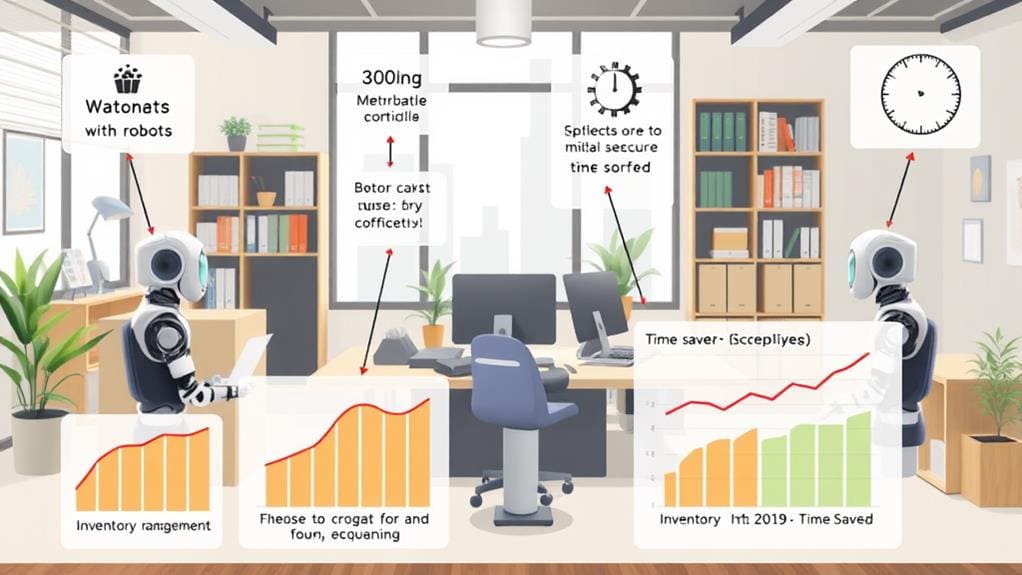
The automation of routine tasks presents significant advantages for small and medium-sized businesses (SMBs), including increased operational efficiency and reduced human error.
By leveraging cutting-edge tools designed to streamline processes, SMBs can free up valuable resources, allowing teams to focus on strategic initiatives.
The integration of AI-driven solutions not only enhances productivity but also fosters a more innovative workplace environment.
Benefits of Automation
Automation serves as a game-changer for small and medium-sized businesses (SMBs), providing a pathway to enhance efficiency and reduce operational costs.
By automating routine tasks, SMBs can tackle common automation challenges and dispel prevalent automation myths that hinder progress. The consistent application of automation technologies can not only lead to savings but also empower teams to focus on strategic initiatives.
Here are some significant benefits of automation for SMBs:
- Increased Efficiency: Streamlines repetitive tasks, allowing employees to concentrate on higher-value activities.
- Cost Reduction: Lowers operational costs by minimizing human error and optimizing resource allocation.
- Improved Accuracy: Enhances precision in task execution, reducing discrepancies and improving overall service quality.
- Scalability: Offers the flexibility to scale operations seamlessly as the business grows without proportionately increasing headcount.
- Enhanced Employee Satisfaction: Reduces mundane workload, allowing employees to engage in more fulfilling and creative tasks.
Tools for Efficiency
In the quest for operational excellence, leveraging advanced tools designed for efficiency is essential for small and medium-sized businesses (SMBs) aiming to automate routine tasks. By implementing collaboration tools and integrated communication platforms, SMBs can greatly enhance their employee engagement and streamline project management workflows.
Utilizing robust project management software facilitates workflow optimization, allowing teams to focus on high-value activities rather than mundane processes. Additionally, these tools provide crucial time tracking functions, ensuring accurate resource allocation and improving overall productivity. By capturing performance metrics, organizations can identify bottlenecks and measure the impact of automation on their operations.
Moreover, the adoption of innovative automation technologies fosters a culture of freedom and creativity, enabling employees to concentrate on strategic initiatives. This empowerment leads to increased job satisfaction and retention, essential for any growing business.
As SMBs continue to navigate the complexities of modern operations, integrating these efficiency tools offers a strategic advantage, ensuring they remain competitive in a rapidly evolving marketplace. Adopting a thorough approach to automating routine tasks not only enhances operational efficiency but also propels businesses toward sustained success.
Enhancing Customer Experiences
Numerous small and medium-sized businesses (SMBs) are leveraging artificial intelligence (AI) to considerably enhance customer experiences, positioning themselves competitively in crowded markets. The integration of AI-driven solutions allows these businesses to engage more effectively with customers, ensuring personalized interactions that resonate with their needs and preferences.
AI tools offer a suite of capabilities that enable SMBs to transform customer experiences, facilitating real-time customization and feedback utilization. Key strategies include:
- Personalized Marketing: Tailoring marketing efforts based on individual customer history and preferences, leading to increased conversion rates.
- Chatbots and Virtual Assistants: Providing 24/7 support to answer queries and resolve issues, improving customer satisfaction and loyalty.
- Sentiment Analysis: Analyzing customer feedback to identify and address pain points in real time, fostering a more responsive business approach.
- Predictive Analytics: Anticipating customer needs and behaviors to offer proactive solutions, enhancing engagement and retention.
- Customer Journey Mapping: Utilizing AI to track and analyze customer interactions across various touchpoints, creating seamless experiences.
Incorporating these innovative strategies not only enriches customer interactions but also builds a robust feedback loop that SMBs can use to refine their offerings.
By understanding and responding to customer feedback efficiently, SMBs can adapt quickly, thereby maintaining a dynamic market presence.
During a time when customer experience often eclipses product quality, AI serves as a pivotal component in crafting compelling experiences that drive growth and nurture relationships in an increasingly fluid marketplace.
Data-Driven Decision Making

Data-driven decision making has emerged as an essential strategy for small and medium-sized businesses (SMBs) aiming to thrive in competitive landscapes. By leveraging data effectively, SMBs can evolve from traditional intuition-based approaches to more robust methodologies grounded in empirical evidence. This shift is increasingly crucial in a time when business environments are influenced by rapidly changing consumer behaviors and market dynamics.
At the core of data-driven decision making lies predictive analytics, an innovative tool that allows businesses to forecast future trends based on historical data. Through advanced algorithms, SMBs can uncover valuable insights about customer preferences, operational efficiencies, and potential market opportunities. This predictive capability enables organizations to anticipate changes and adapt strategies proactively, facilitating a culture of agility and informed decision making.
Moreover, the use of data visualization techniques enhances the interpretability of complex datasets, enabling stakeholders to grasp key insights quickly. Visualization tools transform raw data into intuitive graphical representations, streamlining comprehension and enabling better collaboration among teams.
For SMBs, this means that employees at all levels can engage with data, fostering an environment where insights drive actions.
Best Practices for Adoption
Successful adoption of data-driven practices within SMBs hinges on a few critical best practices that guarantee effective implementation and sustained engagement. These practices lay the groundwork for a cultural shift that embraces innovation, ultimately leading to continuous improvement and operational success.
- Change Management: Implement structured change management strategies to facilitate user adoption and reduce resistance. Establish a clear vision for the shift.
- Employee Training: Invest in extensive employee training programs, ensuring that staff are equipped with the necessary skills to harness new technologies effectively.
- Stakeholder Engagement: Actively involve stakeholders across all levels of the organization, fostering a sense of ownership and commitment to the implementation process.
- Technology Integration: Prioritize seamless technology integration to minimize disruptions while enhancing workflow efficiency. Select tools that align with existing systems and improve performance metrics.
- Risk Assessment: Develop a robust risk assessment framework to identify potential barriers early in the adoption process, allowing for preemptive action.
Feedback loops are crucial for gathering insights that can inform iterative changes and adaptations throughout the adoption journey.
Additionally, establishing performance metrics to monitor progress not only helps in gauging success but also facilitates data-driven decision-making.
By fostering a culture receptive to innovation and emphasizing flexibility in operations, SMBs can navigate the complexities of technology adoption, ultimately setting the stage for enduring growth.
The balance between technical advancement and human engagement is essential, ensuring that every stakeholder feels empowered within the evolving landscape of AI-driven operations.
Frequently Asked Questions
What Are the Initial Costs of Implementing AI in Small Businesses?
The initial costs of implementing AI in small businesses encompass several factors, primarily the initial investment in software options and necessary hardware.
Ongoing expenses, including subscription fees and maintenance costs, must also be considered.
Training costs for staff to effectively utilize AI systems may present additional financial implications.
Integration challenges often arise, necessitating technical support.
As businesses contemplate these expenditures, they should weigh potential return expectations against the long-term benefits of increased efficiency and productivity.
How Can SMBS Measure the Success of AI Implementation?
To effectively measure the success of AI implementation, SMBs should establish clear performance metrics tailored to their goals.
Key indicators might include productivity rates, customer satisfaction levels, and operational efficiencies.
Conducting a thorough ROI analysis will also provide valuable insights, evaluating the financial benefits relative to implementation costs.
Are There Specific Industries Where AI Is More Beneficial for Smbs?
In a vivid tapestry of innovation, specific industries such as retail, healthcare, and marketing stand out for their substantial gains from AI adoption.
Retail analytics illuminates consumer behavior, while healthcare optimization enhances patient outcomes and streamlines operations.
Additionally, marketing automation refines targeted campaigns, boosting engagement.
Customer support benefits from AI's capacity to provide instantaneous responses, fostering satisfaction.
Each of these sectors thrives on AI's potential, enabling businesses to amplify operational efficiency and customer experience.
What Common Challenges Do SMBS Face When Adopting Ai?
Small and medium-sized businesses (SMBs) often encounter several challenges when adopting new technologies, such as AI.
Key issues include integration barriers that hinder seamless implementation within existing systems, skill gaps that limit workforce capability, and budget constraints that impact investment capacity.
Additionally, successful technology adoption necessitates effective change management practices and process alignment to guarantee that organizational objectives are met.
Addressing these challenges is vital for maximizing the potential of AI innovations.
How Can SMBS Ensure Data Privacy While Using AI Solutions?
How can organizations foster customer trust in an era of increasing data breaches?
To guarantee data privacy while utilizing AI solutions, SMBs should implement robust data encryption practices and adhere to compliance regulations, such as GDPR.
Additionally, investing in thorough employee training can enhance awareness and reduce the likelihood of human error.
Conclusion
To summarize, the integration of artificial intelligence into small and medium-sized businesses (SMBs) presents transformative opportunities. By harnessing the power of automation, enhancing customer engagement, and leveraging data-driven insights, SMBs can greatly streamline processes and bolster productivity. Future-focused firms that embrace AI solutions will ultimately achieve competitive advantages, facilitating sustainable success in an increasingly digital marketplace. The intelligent implementation of AI not only promises progress but also positions SMBs for prosperous growth in the modern economy.