AI for SMBs: Unlocking New Opportunities for Growth
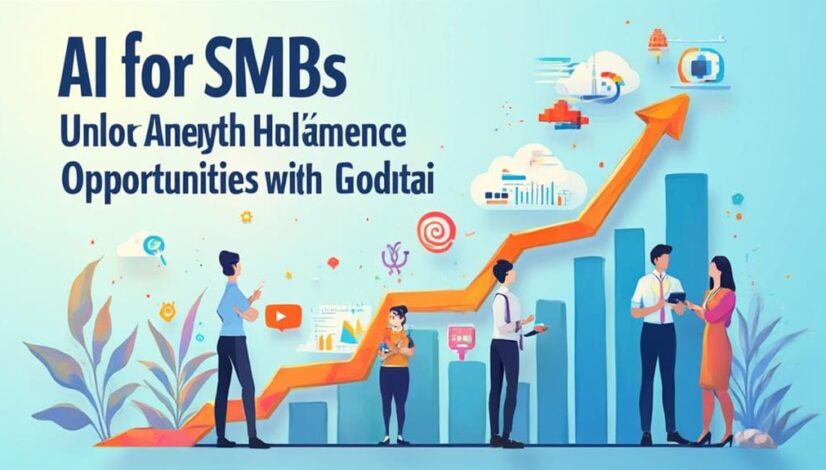
AI is revolutionizing the way small and medium-sized businesses (SMBs) operate, revealing substantial growth opportunities. By automating routine tasks and streamlining operations, AI enhances efficiency and allows teams to focus on strategic initiatives. Additionally, data-driven insights bolster decision-making, enabling SMBs to better understand their customers and adapt to market shifts. Innovative marketing strategies, powered by AI, optimize engagement and drive brand loyalty. As competition intensifies, those who embrace AI will not only improve resource management but also gain a significant edge in their industries. Discovering further applications and implications can expose more pathways for success.
Key Takeaways
- AI adoption boosts operational efficiency through automation, allowing SMBs to focus on strategic initiatives rather than routine tasks.
- Enhanced decision-making processes are facilitated by AI-driven data analysis, providing insights that inform better business strategies.
- AI-powered customer insights enable personalized engagement and improved customer satisfaction by understanding behaviors and preferences.
- Streamlined operations through AI-driven resource management contribute to cost reduction and optimal inventory levels.
- Future trends in AI highlight the importance of AI literacy, ethical practices, and emerging technologies reshaping SMB operations for sustainable growth.
Understanding AI for SMBs

In the evolving landscape of modern business, understanding artificial intelligence (AI) is essential for small and medium-sized businesses (SMBs) aiming to remain competitive. While the fundamentals of AI offer promising avenues for efficiency and innovation, SMBs often face unique challenges that can impede effective implementation.
Common misconceptions about AI—such as believing it is exclusively for large enterprises—may deter smaller organizations from exploring its potential.
To harness AI effectively, SMBs must navigate various implementation hurdles, including technology integration and cost considerations. These businesses may struggle with budgeting for AI solutions, often fearing the expenses will outweigh the benefits.
Training needs also surface as vital in this situation; employees must develop the skills necessary to work alongside AI systems effectively.
Furthermore, addressing data privacy is paramount as SMBs often handle sensitive customer information. They must develop robust protocols to safeguard such data while leveraging AI technology.
By understanding industry-specific applications of AI, SMBs can explore how AI systems can be tailored to their operational requirements, enhancing productivity.
Success stories from other SMBs that have successfully integrated AI illustrate the transformative potential of these technologies. By learning from these examples, SMBs can strategically consider how AI can empower them to overcome obstacles and innovate within their market.
Ultimately, a deep, nuanced understanding of AI can position SMBs to not only survive but thrive in a rapidly changing business environment.
Benefits of AI Adoption
Adopting AI technologies offers small and medium-sized businesses (SMBs) a tangible pathway to markedly improve operational efficiency.
By automating repetitive tasks and optimizing processes, AI not only enhances productivity but also frees up valuable resources for strategic initiatives.
Additionally, AI's data-driven insights facilitate better decision-making, empowering SMBs to make informed choices that foster growth and adaptability in a competitive landscape.
Improved Efficiency Gains
Harnessing the power of artificial intelligence can transform the operational landscape for small and medium-sized businesses (SMBs), leading to substantial efficiency gains. When integrating AI, process automation becomes paramount, allowing SMBs to streamline labor-intensive tasks and eliminate redundancies. This shift not only results in productivity boosts but also amplifies time savings, enabling teams to focus on core business activities.
Furthermore, AI facilitates workflow improvements, systematically enhancing operational excellence. By leveraging technology integration, businesses can guarantee smoother changes across departments, driving greater collaboration. Task prioritization is optimized as AI algorithms assess and allocate resources more effectively, making certain that critical initiatives receive the attention they deserve.
To gauge success, performance metrics and efficiency benchmarks become essential tools in measuring the impact of AI adoption. As SMBs track these indicators, they can make informed adjustments to refine processes continually.
Consequently, the ongoing evaluation of efficiency gains empowers organizations to adapt swiftly to evolving market demands, assuring sustainable growth. Embracing AI not only enhances day-to-day operations but also positions SMBs strategically for future endeavors in an increasingly competitive landscape.
Enhanced Decision-Making Processes
The integration of artificial intelligence into decision-making processes represents a pivotal advancement for small and medium-sized businesses (SMBs), fostering a data-driven culture that enhances strategic planning.
By leveraging AI, SMBs can harness data-driven insights to navigate their operational landscapes more effectively, making informed choices that align with market dynamics.
AI-powered algorithms analyze vast amounts of data to reveal patterns and trends, enabling businesses to engage in strategic forecasting. This predictive approach allows SMBs to anticipate market shifts, optimize inventory management, and personalize customer experiences, ensuring a competitive edge in a rapidly changing environment.
Furthermore, AI facilitates scenario analysis, where businesses can simulate various outcomes based on different strategic decisions, thereby reducing risks associated with uncertain market conditions.
The result is a streamlined decision-making process that empowers SMBs to respond swiftly and accurately to evolving challenges.
Embracing AI not only enhances operational efficiency but also cultivates an environment where innovation thrives, ultimately unlocking new opportunities for growth.
AI-Powered Customer Insights

In today's rapidly evolving business landscape, many small and medium-sized businesses (SMBs) are discovering the transformative potential of AI-powered customer insights. These insights enable SMBs to navigate the complexities of consumer behavior and preferences, creating a competitive edge in their respective markets.
By leveraging AI technologies, businesses can conduct detailed customer segmentation, allowing them to identify distinct groups based on demographic insights and purchasing patterns. Predictive analytics plays an essential role in anticipating future customer behaviors, while sentiment analysis provides invaluable feedback on customer sentiments regarding products and services.
This combination enables more effective trend identification that can guide marketing strategies and product development. Additionally, behavior tracking facilitates an understanding of customer journeys, enriching engagement metrics and fostering deeper relationships with clientele.
The ability to offer personalized recommendations based on individual preferences enhances customer satisfaction and loyalty, directly impacting revenue growth. Continuous market forecasting enables SMBs to stay ahead of industry trends and shifts, ensuring they can adapt strategically.
Establishing feedback loops allows businesses to refine their offerings and user experience, creating a responsive and dynamic approach to customer engagement. In amalgamating these diverse insights, SMBs can cultivate strategies that not only meet customer needs but also anticipate them, paving the way for sustained growth and innovation.
Streamlining Operations With AI
As small and medium-sized businesses (SMBs) increasingly adopt AI technologies, the potential for streamlining operations becomes apparent.
By automating routine tasks, enhancing data analysis, and optimizing resource management, businesses can not only increase efficiency but also allocate valuable resources to strategic initiatives.
This essential transformation enables SMBs to remain competitive in a rapidly changing market landscape.
Automating Routine Tasks
How can small and medium-sized businesses (SMBs) effectively harness AI to streamline operations? The integration of AI-driven workflow automation tools represents a transformative avenue for SMBs, allowing them to automate routine tasks and enhance overall efficiency.
By deploying these tools, businesses can alleviate manual workloads, enabling employees to focus on higher-value activities that drive growth.
Implementing task prioritization strategies in conjunction with AI automation not only optimizes resource allocation but also seeks to enhance productivity. For instance, AI can analyze patterns in workload distribution and recommend which tasks to prioritize, ensuring that critical deadlines are met without sacrificing quality.
This strategic approach provides teams with the clarity they need to operate more effectively in fast-paced environments.
Furthermore, automation tools can handle repetitive tasks such as data entry, scheduling, and customer inquiries, thereby freeing up valuable human resources.
As a result, SMBs can foster a culture of innovation and adaptability, allowing for quicker responses to market changes and customer demands.
Ultimately, embracing automation is not just about efficiency; it is about empowering teams to pursue creative solutions that reveal new opportunities for growth.
Enhancing Data Analysis
The adoption of AI-driven workflow automation not only alleviates routine tasks but also paves the way for enhanced data analysis. Through advanced data mining techniques, small and medium-sized businesses (SMBs) can derive actionable insights that inform strategic decision-making.
AI enables real-time reporting, allowing organizations to monitor performance metrics at a granular level, thereby facilitating trend analysis and enabling swift responses to market shifts.
Data integration becomes seamless with AI, consolidating disparate data sources for robust customer segmentation and in-depth analysis. This holistic view supports predictive analytics that forecast customer behavior, enhancing marketing efforts and ultimately driving growth.
In addition, employing anomaly detection mechanisms empowers businesses to identify irregular patterns in data, minimizing risks and optimizing operational efficiency.
Effective data governance is vital in this landscape, ensuring compliance and the integrity of insights gained. By leveraging data visualization techniques, SMBs can present complex data in comprehensible formats that empower teams to make informed decisions.
In a landscape where agility equates to success, embracing AI for enhanced data analysis not only frees resources but also reveals new growth opportunities, enabling organizations to thrive in a competitive environment.
Optimizing Resource Management
Amidst the increasing complexity of operations, optimizing resource management through AI has emerged as a cornerstone strategy for small and medium-sized businesses (SMBs). Leveraging advanced algorithms for resource allocation allows businesses to streamline operations, ensuring that both human and material resources are utilized efficiently.
AI enhances inventory management by predicting demand patterns, thereby minimizing excess stock and associated costs.
Workforce optimization is another area where AI makes a significant impact, facilitating better time management and enhancing employee productivity. By analyzing performance metrics, businesses can identify skill gaps and allocate training resources effectively, leading to improved capacity planning.
Furthermore, AI-driven budget forecasting supports strategic financial decision-making, enabling SMBs to align their investments with growth opportunities. Project tracking tools powered by AI allow firms to monitor progress in real-time, making it easier to pivot and respond to market shifts.
In the intricate web of the supply chain, AI technologies can drive cost reduction through predictive analytics, reducing wastage while ensuring timely delivery.
Ultimately, embracing AI for resource management not only fosters operational efficiency but also empowers SMBs with the agility needed for sustainable growth in an ever-evolving marketplace.
Innovative Marketing Strategies
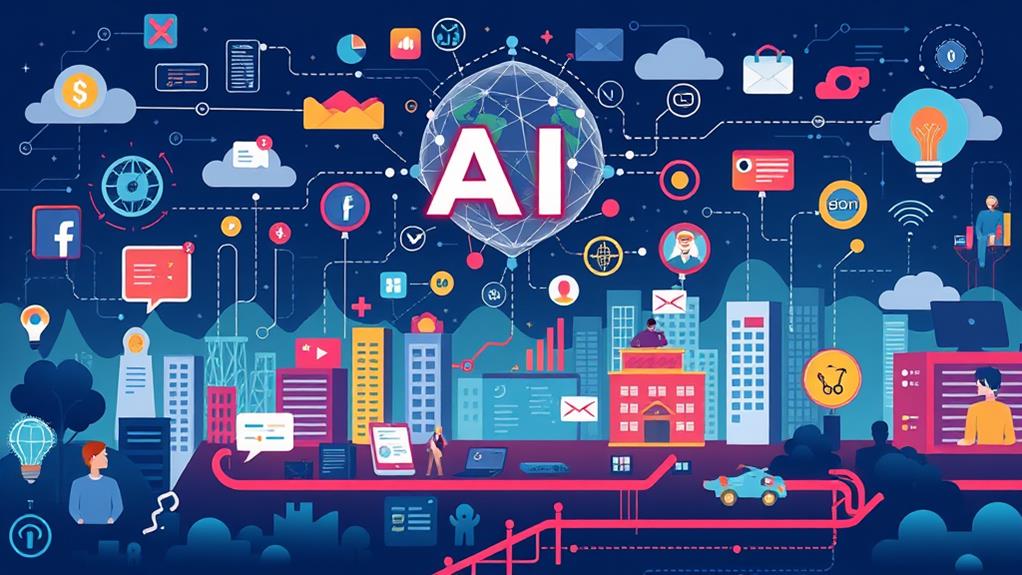
In an increasingly competitive landscape, small and medium-sized businesses (SMBs) must adopt innovative marketing strategies to capture and retain their target audiences effectively. By harnessing advanced technologies and data-driven insights, SMBs can differentiate themselves and foster deeper customer connections.
Content personalization stands at the forefront of these strategies, allowing businesses to curate tailored messages that resonate with individual preferences. Coupled with targeted advertising, this approach guarantees that marketing efforts reach the right audiences at the most impactful moments.
Social media automation further amplifies these efforts, enabling SMBs to engage consistently and strategically across multiple platforms.
Predictive analytics aids in understanding customer behavior, facilitating refined market segmentation that empowers businesses to identify and cater to specific niches. This knowledge enhances customer engagement and loyalty, paving the way for effective email marketing campaigns that nurture and convert leads.
Moreover, the rise of video marketing allows SMBs to encapsulate their brand storytelling in compelling formats that captivate and inform viewers. By collaborating with influencers through partnerships, businesses tap into established trust and credibility, thereby expanding their reach and influence within their target markets.
Ultimately, these innovative marketing strategies not only drive visibility but also cultivate brand loyalty, positioning SMBs for sustainable growth. Embracing the freedom that comes with intelligent marketing practices can open new opportunities, guaranteeing that heritage and innovation coexist harmoniously in the quest for excellence.
Enhancing Decision-Making Processes
How can small and medium-sized businesses (SMBs) leverage data-driven insights to enhance their decision-making processes? By harnessing the power of advanced analytics and cognitive computing, SMBs can adopt a strategic approach to decision-making that transcends traditional methodologies. This involves utilizing a myriad of tools and frameworks to guarantee that every choice is grounded in solid, quantifiable data.
Key strategies include:
- Predictive Analytics: Anticipate market trends and customer behavior.
- Scenario Modeling: Test various outcomes to understand potential impacts.
- Risk Assessment: Identify vulnerabilities and prepare mitigation plans.
- Strategic Forecasting: Align business objectives with future expectations.
- Performance Metrics: Establish benchmarks to measure success.
Utilizing collaborative tools enhances communication across departments, allowing for real-time analysis and shared insights. By implementing decision frameworks that incorporate trend analysis, businesses can make informed choices that drive efficiency and growth.
Furthermore, data-driven insights enable SMBs to evaluate their market positioning and adjust strategies dynamically. The use of advanced analytics in conjunction with a proactive, freedom-oriented approach encourages a culture of innovation, where every team member can contribute insights reflective of the company's vision.
Ultimately, refining these decision-making processes fosters a robust environment ripe for sustainable growth and resilience in ever-changing markets.
Future Trends in AI for SMBs
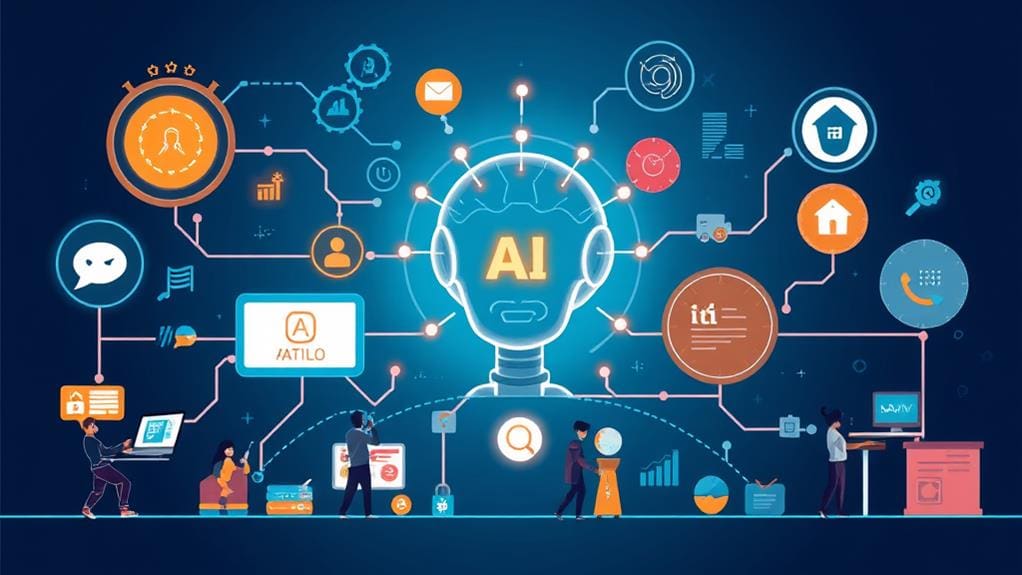
What emerging technologies will shape the landscape of AI for small and medium-sized businesses (SMBs) in the coming years? As we anticipate these developments, SMBs must navigate several trends that will redefine their operational frameworks.
Significantly, AI integration challenges will remain a critical concern. These hurdles, such as data interoperability and technical expertise, will necessitate robust AI literacy programs to equip employees with the necessary skill sets.
Ethical AI considerations are also rising to prominence. As more businesses adopt AI technologies, maintaining transparency and fairness in algorithm-driven decisions becomes increasingly essential, particularly in industry-specific applications where biases can have substantial consequences.
Surveillance and employee monitoring must be approached with care to foster an environment of trust and creativity while mitigating potential workforce impact.
Moreover, cost implications associated with AI deployment will drive strategic decisions. SMBs will need to invest prudently, balancing the potential for enhanced user experience with the realities of operating within tighter budgets.
As competition intensifies, the competitive landscape shifts, prompting businesses to leverage AI for differentiation and operational efficiency.
Ultimately, the future of AI for SMBs will be characterized by a conscientious approach to technology adoption. Companies that embrace ethical considerations and invest in workforce education will not only reveal new capabilities but also position themselves advantageously within their markets.
Frequently Asked Questions
How Can SMBS Start Integrating AI Into Their Existing Systems?
To effectively integrate AI into their existing systems, small and medium-sized businesses (SMBs) should adopt targeted AI integration strategies that align with their operational goals.
Initiating pilot projects can showcase AI's potential while minimizing risk. By focusing on automated decision-making in key areas, such as customer service and inventory management, SMBs can enhance efficiency and responsiveness.
Gradually scaling these initiatives will empower businesses to leverage AI's capabilities, fostering adaptability and growth in a competitive landscape.
What Are Some Low-Cost AI Solutions for Small Businesses?
In today's digital landscape, finding low-cost AI solutions can feel like discovering buried treasure.
Small businesses can leverage numerous free AI tools to enhance operations without breaking the bank. Options like chatbots, virtual assistants, and automated marketing platforms enable affordable automation, allowing businesses to streamline processes effectively.
Are There Specific Industries Benefiting More From AI Adoption?
Various industries are reaping significant benefits from AI adoption. In healthcare, advancements enhance patient outcomes, while retail analytics optimize inventory management.
Manufacturing efficiency improves through predictive maintenance, and financial forecasting allows for better strategic planning. Additionally, marketing personalization increases engagement, enhancing customer experience.
In customer service, AI offers immediate support, while agriculture optimization boosts crop yields. Finally, logistics management streamlines supply chains, underscoring the transformative potential of AI across sectors.
How Can Data Privacy Be Maintained While Using Ai?
In a world where data flows like a relentless river, maintaining data privacy while utilizing AI is paramount. Organizations must implement stringent data encryption and guarantee user consent at every phase.
Adhering to compliance regulations and employing transparent algorithms can mitigate risks. Conducting thorough risk assessments further guides the ethical considerations of AI use.
Data anonymization and robust privacy frameworks are essential strategies to safeguard user information, empowering businesses to harness AI responsibly.
What Skills Do Employees Need to Effectively Use AI Tools?
To effectively use AI tools, employees require diverse AI skillsets encompassing data analysis, tool selection, and the ability to interpret algorithmic outputs.
Employee training is essential in developing a thorough understanding of AI functionalities and ensuring users are equipped to leverage these technologies strategically.
Conclusion
In the constantly changing landscape of business, the adoption of artificial intelligence presents small and medium-sized businesses with an array of transformative opportunities. By embracing AI tools and strategies, these enterprises can optimize operations, enhance customer engagement, and open new avenues for growth. As the proverbial phoenix rises from the ashes, SMBs too can rise above traditional constraints, leveraging technology to navigate an increasingly competitive marketplace and secure their place in the future economy.