
AI Implementation: A Must for SMB Competitiveness
AI implementation is vital for small and medium-sized businesses (SMBs) seeking to enhance their competitive edge. By leveraging advanced technologies like machine learning and predictive analytics, SMBs can improve customer engagement and operational efficiency. Integrating AI allows firms to automate routine tasks, optimize decision-making, and adapt to market changes swiftly. However, careful evaluation of business needs and selection of appropriate AI tools are essential for successful integration. Addressing challenges, such as ensuring compatibility and managing costs, can transform these obstacles into opportunities for growth. To maximize benefits, understanding strategic approaches to implementation is key for sustained success.
Key Takeaways
- AI enhances customer engagement through personalized marketing, fostering brand loyalty and improving overall customer experience for SMBs.
- Workforce automation increases efficiency by managing repetitive tasks, allowing SMBs to allocate resources to higher-value activities.
- A strategic evaluation of processes helps identify areas for AI integration, enhancing operational efficiency and facilitating data-driven decision-making.
- User-friendly AI tools lower the barrier for adoption, enabling SMBs without technical expertise to leverage advanced technologies for competitive advantage.
- Measuring AI impact through robust metrics helps businesses assess performance, adapt strategies, and maintain a competitive edge in evolving markets.
Understanding AI for SMBs
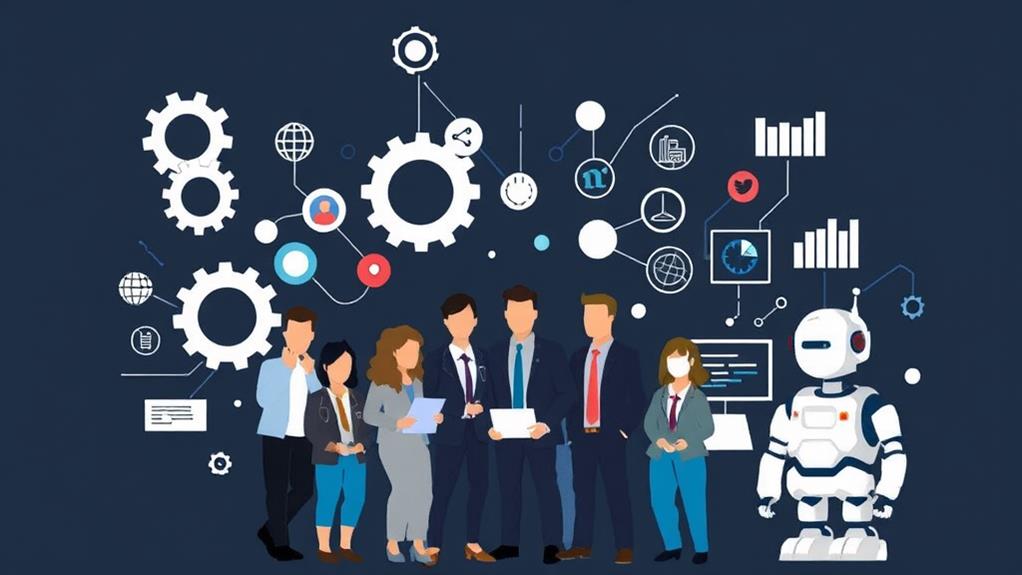
Artificial Intelligence (AI) has emerged as a transformative force in the business landscape, particularly for small and medium-sized businesses (SMBs) seeking to enhance their competitive edge. Despite the growing interest, many SMBs hold misconceptions about AI, stemming from myths that often oversimplify its capabilities.
Understanding AI basics is essential; it encompasses a range of technologies including machine learning, natural language processing, and predictive analytics, all designed to optimize operations and improve decision-making.
However, the landscape is fraught with potential pitfalls. AI limitations, such as data dependency and inherent biases, pose challenges that must be navigated thoughtfully. Effective AI integration requires a clear grasp of AI terminology, enabling SMBs to communicate strategies and expectations transparently across teams.
Current AI trends indicate a rise in user-friendly platforms, which are pivotal for businesses lacking extensive technical expertise.
Moreover, addressing AI security and ethics is paramount. SMBs must be vigilant about safeguarding sensitive data while ensuring that their AI applications adhere to ethical guidelines, thereby maintaining consumer trust.
The exploration of these dimensions allows SMBs not only to harness AI but to do so responsibly. As innovation in AI application continues to evolve, staying abreast of these factors will empower SMBs to leverage AI strategically, avoiding common pitfalls and maximizing their potential in an increasingly competitive market.
Benefits of AI Adoption
The adoption of AI can liberate significant advantages for SMBs, enhancing operational efficiency and driving innovative solutions. Leveraging AI technologies allows small and medium-sized businesses to gain a competitive edge through streamlined processes and advanced analytical capabilities.
- Boosted Customer Engagement
- Enhanced Personalized Marketing
- Improved Workforce Automation
AI enables a more data-driven approach to customer engagement, utilizing tools like predictive analytics to anticipate customer needs and preferences. This fosters personalized marketing strategies that resonate with clients, resulting in deeper brand loyalty and increased conversion rates.
In addition, workforce automation catalyzes efficiency by handling repetitive tasks, allowing teams to focus on strategic priorities that facilitate innovation acceleration and growth.
By integrating AI, SMBs can also achieve operational scalability, responding dynamically to market changes and customer demands. Predictive analytics provides invaluable insights for informed decision-making, enhancing risk management through proactive identification of threats and anomalies.
Enhanced collaboration tools powered by AI can streamline communication both within teams and with customers, creating a synergistic environment that fuels creativity and productivity.
In our rapidly evolving market landscape, AI adoption isn't merely an option—it's an essential strategy for SMBs to remain relevant and competitive. Embracing these technologies empowers businesses to harness their full potential, driving forward-thinking initiatives in customer service and operational strategies, ultimately liberating a new era of freedom to innovate and thrive.
Identifying Key Areas for AI

Identifying critical areas for AI integration is essential for SMBs seeking operational efficiency improvements and enhanced data-driven decision making.
By strategically evaluating current processes and data utilization, businesses can pinpoint opportunities where AI technologies can optimize workflows and inform strategic insights.
This proactive approach guarantees that AI investments yield maximum competitive advantage and drive sustainable growth.
Operational Efficiency Improvements
Operational efficiency is increasingly becoming a critical competitive differentiator for small and medium-sized businesses (SMBs) in today's fast-paced market.
To harness the full potential of AI, SMBs need to focus on key operational areas where AI-driven technologies can lead to significant improvements.
- Process Automation: Streamlining repetitive tasks allows for greater employee productivity and effective task delegation.
- Resource Optimization: AI can analyze resource allocation and consumption patterns, leading to enhanced time management and cost reduction.
- Collaborative Workflow Tools: Implementing scalable solutions that foster better collaboration enhances overall performance enhancement.
Data-Driven Decision Making
Leverage the power of data to transform decision-making processes within small and medium-sized businesses (SMBs), enabling a proactive approach to identifying growth opportunities and mitigating risks.
Data-driven decision-making harnesses data analytics, ensuring that every business strategy is supported by empirical evidence. By utilizing predictive modeling, SMBs can forecast market trends, allowing for timely adjustments in resource allocation to stay ahead of competitors.
Gaining deep customer insights through data not only enhances product development but also fine-tunes marketing strategies. Performance metrics derived from analytics shed light on operational efficiencies, empowering decision-makers to focus on high-impact areas.
Conducting thorough competitive analysis becomes feasible, offering clarity on positioning within the market landscape.
Moreover, effective risk assessment is crucial; predictive data tools can identify vulnerabilities before they escalate, thereby safeguarding business continuity.
Ultimately, a culture of data-centric decision-making fosters innovation and agility within SMBs, equipping them with the tools necessary for sustainable competitive advantage.
Choosing the Right AI Tools
Selecting the appropriate AI tools requires a strategic assessment of specific business needs to guarantee alignment with organizational goals.
Evaluating tool features guarantees that the chosen solutions can effectively address these needs while integrating seamlessly into existing workflows.
Additionally, careful consideration of budget constraints is essential to maintain financial sustainability while investing in innovative technologies.
Assess Business Needs
In a rapidly evolving business landscape, evaluating organizational needs is vital for identifying the AI tools that will drive competitive advantage for small and medium-sized businesses (SMBs). This requires a strategic assessment aligned with their business goals, guaranteeing that the chosen technology resonates with employee engagement and customer feedback.
- Analyze market trends to determine industry-specific demands.
- Assess technology readiness, including existing infrastructure and skillsets.
- Confirm resource allocation aligns with anticipated ROI.
Conducting a competitive analysis is fundamental; understanding what tools competitors employ will provide insights into potential gaps or opportunities. Engaging stakeholders in this evaluation fosters buy-in, confirming that all levels of the organization understand and support the AI initiatives.
By defining clear objectives rooted in the organization's goals, SMBs can focus on tools capable of enhancing efficiency and innovation. This process not only paves the way for tailored solutions but also empowers teams to adapt, thereby cultivating a culture of continuous improvement.
Ultimately, proper assessment of business needs not only leads to effective AI implementation but also positions SMBs to thrive in today's dynamic market.
Evaluate Tool Features
Having established a clear understanding of business needs, the next logical step involves a meticulous evaluation of AI tool features. This process should center on key attributes such as tool usability and feature integration, which underpin a successful AI implementation.
Usability is essential; tools must be intuitive and user-friendly to promote engagement among team members, regardless of their technical expertise. A tool that offers seamless navigation encourages adoption and minimizes resistance, fostering a culture of innovation within the organization.
Feature integration is equally significant; selected AI tools should easily integrate with existing systems and workflows to maximize their utility. Compatibility is important to avoid disruptions and inefficiencies. In addition, prioritize tools that provide adaptability—flexible features enable SMBs to scale their AI solutions as market conditions evolve.
Moreover, it is essential to evaluate the breadth and depth of features offered by potential tools, ensuring they align with your strategic objectives. By conducting a thorough assessment, businesses can select AI solutions that not only address their current needs but also foster long-term growth and competitiveness in an increasingly digital landscape.
Embracing the right AI tools ultimately empowers SMBs to navigate their unique challenges with agility and confidence.
Consider Budget Constraints
Budget considerations play an essential role in the selection of AI tools for small and medium-sized businesses (SMBs), as financial constraints can greatly impact the implementation process.
Accurate budget allocation and thorough cost analysis allow SMBs to identify tools that align with their unique needs and financial capabilities.
When evaluating AI solutions, consider the following:
- Funding options: Explore grants or partnerships that can subsidize initial costs.
- Pricing strategies: Look for tiered pricing models that scale with business growth.
- Expense tracking: Implement systems to monitor ongoing costs related to AI maintenance and updates.
Effective financial planning and resource management are crucial when defining investment priorities for AI adoption.
By analyzing potential returns on investment against budget limitations, SMBs can strategically choose solutions that enhance their competitive edge.
Engaging in meticulous expense tracking will also provide insights into whether the selected tools yield value aligned with organizational goals.
As SMBs embrace innovation through AI, prioritizing budgetary discipline becomes imperative for sustainable growth and ensuring that the technology serves as a catalyst for business success.
Implementation Strategies for Success

How can small and medium-sized businesses (SMBs) effectively navigate the complexities of AI implementation to enhance their competitiveness? A thoughtfully structured implementation strategy is paramount. This begins with careful risk assessment, identifying potential hurdles while taking proactive measures to mitigate them. A vital component of success lies in securing stakeholder buy-in; engaging key players guarantees alignment with the broader company vision.
The next step involves technology integration, making certain that AI systems are compatible with existing processes. Pilot projects can play an important role here, allowing for experimentation on a smaller scale and facilitating immediate user feedback that can inform adjustments.
Engaging in employee training fosters a culture of understanding and proficiency, empowering staff to harness AI tools effectively. Moreover, change management is essential to smooth shifts, helping teams adapt to new workflows and minimizing resistance.
Implementing a continuous improvement approach enables SMBs to refine AI strategies based on ongoing performance metrics and insights. Comparing efforts against industry benchmarks offers valuable perspectives, guiding enhancements and optimizing resource allocation.
Overcoming Common Challenges
Charting the landscape of AI implementation often presents a myriad of challenges for small and medium-sized businesses (SMBs). These hurdles can deter ambitious executives from harnessing the full potential of AI, ultimately impacting competitiveness.
However, by strategically addressing these challenges, SMBs can transform obstacles into opportunities.
- Seamless technology integration
- Thorough employee training
- Managing initial costs and scaling
One prominent challenge is effective technology integration. SMBs often lack the robust infrastructure needed to incorporate AI solutions seamlessly into existing systems. To combat this, leaders should invest in scalable solutions that are compatible with their current technology stack, ensuring fluidity and minimizing disruptions.
Another concern is the necessity for thorough employee training. The shift to AI-driven practices may generate resistance among staff due to unfamiliarity. To foster a culture of innovation, businesses must prioritize ongoing training programs that equip employees with the necessary skills to navigate new technologies confidently.
Consider leveraging blended learning techniques, which combine digital modules with hands-on workshops to enhance learning engagement.
Lastly, managing initial costs while planning for long-term scalability is essential. Smart financial management, including phased implementation and the pursuit of alternative funding sources, can alleviate cash flow issues.
By taking a strategic approach to these challenges, SMBs can not only mitigate risk but also forge a competitive edge, ensuring sustainable growth in an increasingly automated landscape.
Embracing the freedom AI offers will distinguish forward-thinking companies from their less agile counterparts.
Measuring AI Impact on Business
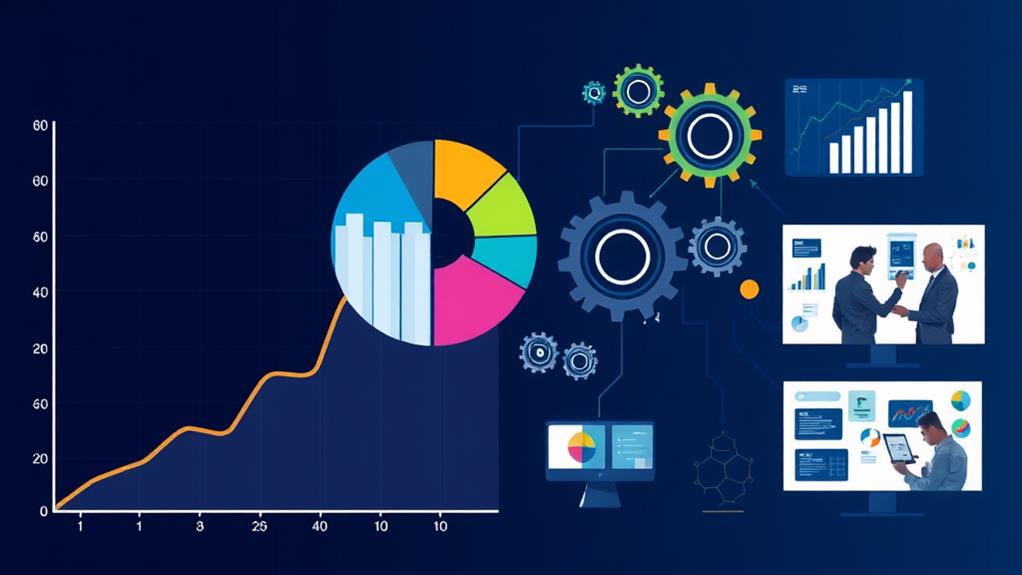
To fully capitalize on AI investments, SMBs must establish robust metrics for measuring their impact on business performance. Effective AI metrics provide a framework for performance indicators that align with strategic business outcomes, serving as crucial tools for continuous improvement and innovation. By identifying critical success factors, SMBs can develop a structured ROI analysis that reveals the tangible benefits of AI integration.
Impact assessments should focus on key areas such as customer engagement, operational efficiency, and revenue growth. Leveraging data analytics allows businesses to pinpoint trends and behaviors that inform decision-making processes and enhance market responsiveness. For instance, analyzing customer interactions can provide insights into satisfaction levels and preferences, ultimately driving higher engagement rates and loyalty.
Moreover, understanding market trends by monitoring competitor performance can strengthen an SMB's competitive advantage, identifying opportunities for differentiation in a crowded marketplace. It is important to evaluate not only immediate business outcomes but also long-term growth potential, fostering a culture of adaptability and resilience in an ever-evolving economic landscape.
To achieve a thorough understanding of AI's impact, businesses should employ a balanced mix of quantitative and qualitative assessments. Integrating feedback loops ensures that metrics evolve alongside market dynamics and organizational goals, enabling SMBs to remain agile and competitive.
To conclude, establishing clear AI metrics is not just about measuring performance; it's about forging a pathway to enduring success and relevance in the digital age.
Frequently Asked Questions
What Are the Initial Costs Associated With AI Implementation for Smbs?
The initial costs associated with AI implementation for small and medium-sized businesses (SMBs) encompass several elements.
To begin with, businesses must allocate budget for technology assessment, ensuring compatibility of new systems with existing infrastructure.
This initial investment also includes software licensing, hardware upgrades, and potential training for staff.
Additionally, ongoing maintenance and support should be factored in, making a thorough cost analysis essential for strategic decision-making in adopting AI solutions effectively.
How Can SMBS Ensure Data Security During AI Integration?
To guarantee data security during AI integration, small and medium-sized businesses (SMBs) must adopt a multi-faceted approach.
Implementing robust data encryption protocols is essential for safeguarding sensitive information against unauthorized access.
Additionally, thorough employee training programs focusing on data security best practices will empower staff to recognize threats and adhere to established protocols.
What Skills Are Needed for an SMB to Manage AI Tools?
To effectively manage AI tools, small and medium-sized businesses (SMBs) require a blend of skills, including AI literacy to understand and leverage technology appropriately.
Technical training guarantees staff can operate AI systems proficiently, while change management skills facilitate the adaptation to new processes and workflows.
Additionally, strategic tool selection is essential, as it involves evaluating and choosing AI solutions that align with the organization's objectives and employee capabilities, fostering an innovative environment.
How Long Does It Typically Take to See AI Results?
How can organizations accurately gauge the effectiveness of artificial intelligence within their operations?
The AI timeline for realizing tangible results typically spans from a few months to several years, depending on implementation complexity and industry.
Result measurement should prioritize benchmarks aligned with strategic goals.
Companies that adopt a deliberate approach in refining AI tools often experience more significant and timely outcomes, ultimately enhancing their operational efficiency and decision-making processes.
Are There Funding Options Specifically for SMB AI Initiatives?
Funding options for small and medium-sized businesses (SMBs) pursuing AI initiatives include various grant opportunities and strategic investment strategies.
Government programs and private sector grants offer financial support tailored specifically for technology development and innovation projects.
Additionally, SMBs can explore venture capital or angel investment to bolster their AI capabilities.
Conclusion
In the competitive landscape of small and medium-sized businesses (SMBs), the integration of artificial intelligence resembles planting a seed that, with careful nurturing, promises a bountiful harvest. Embracing AI not only drives efficiency and innovation but also positions SMBs to adapt to dynamic market conditions. Success hinges on strategic implementation, overcoming challenges, and continuously measuring impact. Ultimately, those who invest in AI will cultivate resilience and thrive, reaping the rewards of a transformative technological ecosystem.