
AI Implementation: What SMBs Need to Know
AI implementation is essential for small and medium-sized businesses (SMBs) aiming to improve efficiency and remain competitive. It starts with understanding AI basics, such as machine learning and natural language processing, to align technology with business objectives. Evaluating current resources is critical, as is identifying relevant AI tools that fit specific needs. Budgeting effectively for initial and ongoing costs guarantees financial viability. Developing a robust training strategy prepares the team for AI adoption. Finally, establishing metrics to measure success and addressing challenges enhances implementation. To better navigate these elements, discover further insights into optimizing your AI strategy.
Key Takeaways
- Understand core AI technologies like machine learning, NLP, and computer vision for strategic business integration.
- Identify key business objectives and performance metrics to align AI initiatives with organizational goals.
- Assess current resources, including technology, workforce skills, and budget, to support AI implementation.
- Research and select AI tools that meet specific business needs while ensuring cost-efficiency and scalability.
- Establish an AI governance framework to ensure ethical practices, compliance, and effective change management.
Understanding AI Basics

Artificial Intelligence (AI) encompasses a range of technologies that enable machines to mimic human intelligence, with applications including machine learning, natural language processing, and computer vision.
At the core of AI are machine learning and deep learning, which utilize algorithms and neural networks to learn from vast amounts of data. This learning allows machines to recognize patterns, make predictions, and automate processes—essential capabilities for small and medium-sized businesses (SMBs) seeking to enhance efficiency and innovation.
Natural language processing (NLP) enables computers to interpret and generate human language, facilitating improved customer interaction through chatbots and virtual assistants. Additionally, computer vision empowers machines to analyze visual data, paving the way for advancements in robotics integration and smart surveillance systems.
These tools can notably transform how SMBs operate, offering insights through data mining and predictive analytics.
However, while embracing AI technologies, businesses must navigate ethical considerations, such as algorithm bias that may arise from flawed training data. It is vital for SMBs to guarantee that AI implementations are built on fair and unbiased frameworks to foster trust and equity in their operations.
As the landscape of AI continues to evolve, understanding these fundamental components will enable SMBs to make informed decisions regarding AI adoption and harness its potential.
Assessing Your Business Needs
To successfully implement AI, small and medium-sized businesses must first identify their key business objectives.
This involves evaluating current resources and capabilities, as well as analyzing industry trends that may impact their operations.
Identify Key Business Objectives
Identifying key business objectives is essential for small and medium-sized businesses (SMBs) looking to implement AI effectively. Establishing clear objectives enables goal alignment, which enhances strategic planning and bolsters competitive advantage.
To maximize the impact of AI, consider the following objectives:
- Enhance Performance Metrics: Define the metrics that matter most to your success. AI should be directed towards measurable outcomes that enlighten your progress.
- Boost Stakeholder Engagement: Guarantee that every department is on board. Engage stakeholders to better understand their perspectives on how AI can address their unique needs.
- Optimize Resource Allocation: Identify where AI can be most beneficial to drive innovation and streamline operations. Focus on areas with scalability potential that align with your vision for growth.
Incorporating AI requires sound risk assessment and change management strategies, guaranteeing that implementation aligns with long-term objectives.
A thoughtful approach can transform AI into a critical innovation driver, allowing your SMB to navigate a dynamic landscape while securing freedom and flexibility in decision-making.
Ultimately, focusing on key objectives reveals opportunities for sustained success and scalability in your enterprise.
Evaluate Current Resources Available
Evaluating the current resources available is an essential step for SMBs keen to implement AI solutions effectively. This process begins with a thorough technology evaluation that identifies existing hardware and software assets, allowing for informed resource allocation tailored to specific AI initiatives.
Conducting a skills inventory of your workforce will highlight existing capabilities and gaps that could potentially hinder operational readiness.
Next, an infrastructure examination is critical, ensuring that your current setup supports the demands of AI technologies. A budget analysis further aids in determining financial viability and identifying potential cost-saving measures in vendor selection and technology procurement.
Moreover, businesses must account for compliance considerations, particularly data governance and security protocols, to mitigate risks associated with AI adoption.
Lastly, maintaining an up-to-date software inventory is essential for understanding which tools are available and analyzing their compatibility with new AI systems.
Analyze Industry Trends Impact
A thorough analysis of industry trends is essential for SMBs aiming to harness AI effectively and align it with their specific business needs. Understanding the nuances of market dynamics and the competitive landscape enables businesses to identify collaboration opportunities and evaluate technology adoption patterns.
Consider the following when evaluating your business needs:
- Consumer Behavior: Invest time understanding how technological advancements impact your target audience's preferences and expectations.
- Regulatory Considerations: Stay informed about evolving regulations regarding data privacy and ethical implications to guarantee compliance and build trust.
- Industry Benchmarks: Analyze industry benchmarks to measure your performance against peers, fostering innovation adoption for sustained growth.
Identifying Relevant AI Tools

Identifying relevant AI tools begins with a clear understanding of your business needs, guiding you toward solutions that align with your objectives.
Researching available options guarantees that you are aware of the tools that can effectively address these needs.
Additionally, evaluating the implementation costs is vital for making informed decisions that balance innovation and budget constraints.
Assessing Business Needs
To successfully implement AI tools, small and medium-sized businesses (SMBs) must first conduct a thorough evaluation of their unique needs and challenges.
This evaluation process involves engaging key stakeholders to gather insights and align expectations across the organization. By understanding the specific requirements of your business, you can map out the potential impact of AI implementation.
Consider the following three essential factors when evaluating your business needs:
- Operational Efficiency: Identify areas where AI could streamline processes, reducing time and costs.
- Customer Engagement: Examine how AI tools can enhance interaction with your customers, leading to increased satisfaction and loyalty.
- Data Management: Analyze your current data systems to determine how AI can help in data analysis and decision-making.
Researching Available Solutions
Exploring the diverse array of AI tools available on the market is essential for SMBs aiming to enhance their operations. Understanding various AI solution types allows businesses to identify tools that align with their specific needs and goals. A thorough vendor comparison is imperative in this process; it helps to assess solution scalability, ensuring that chosen tools can grow with the business.
Integration challenges are a frequent concern for SMBs. It is important to select AI tools that offer seamless integration with existing systems to avoid operational disruptions. Additionally, prioritizing user experience can lead to higher adoption rates among staff, enhancing overall effectiveness.
Cost efficiency is another key consideration, where businesses should weigh initial investments against long-term savings. Customization options play a significant role, as tailoring solutions can address unique business needs. Strong support services can further bolster the success of AI implementation, offering guidance throughout the deployment timeline.
Evaluating Implementation Costs
After gathering insights on available AI solutions, the next step involves evaluating the implementation costs associated with selected tools. This process is essential to guarantee a smart investment that aligns with your goals. Conducting a thorough cost analysis will reveal potential costs, allowing for informed vendor selection.
Consider these factors carefully:
- Initial Investment: Assess the purchase or subscription costs of AI tools.
- Ongoing Maintenance Expenses: Determine the costs of regular updates, support, and potential infrastructure needs.
- Scalability Considerations: Evaluate how easily the technology can grow with your business.
Additionally, analyze the expected investment return by estimating project timelines and conducting a risk assessment—both significant to guaranteeing long-term value.
Thorough technology integration into your existing systems is critical to avoid unexpected pitfalls.
Incorporating AI represents not just a cost but an opportunity for freedom—freedom to innovate, streamline processes, and expand capabilities.
Budgeting for AI Projects
Budgeting for AI projects requires careful planning and strategic foresight, as the costs can vary considerably based on the technology and resources involved. A thorough cost estimation should encompass not only initial investments but also maintenance costs, as these can accumulate over time.
Understanding funding sources is critical; whether seeking internal financing, grants, or partnerships can greatly impact budget flexibility. Return analysis should be conducted to guarantee that anticipated benefits justify expenditures. This includes evaluating project timelines and identifying potential quick wins to maintain stakeholder engagement.
It is essential to incorporate risk management strategies to mitigate unforeseen expenses that may arise during implementation. Vendor selection plays a crucial role in budgetary considerations; comparing options based on experience, pricing models, and service agreements can deliver long-term savings.
Additionally, scalability considerations should align with future growth plans, allowing for adaptive budgeting as your business evolves alongside AI technology. Training investments represent another important aspect; staff must be equipped to effectively utilize new systems.
Furthermore, compliance regulations cannot be overlooked, as meeting legal requirements may necessitate additional budgeting.
Building an AI Strategy
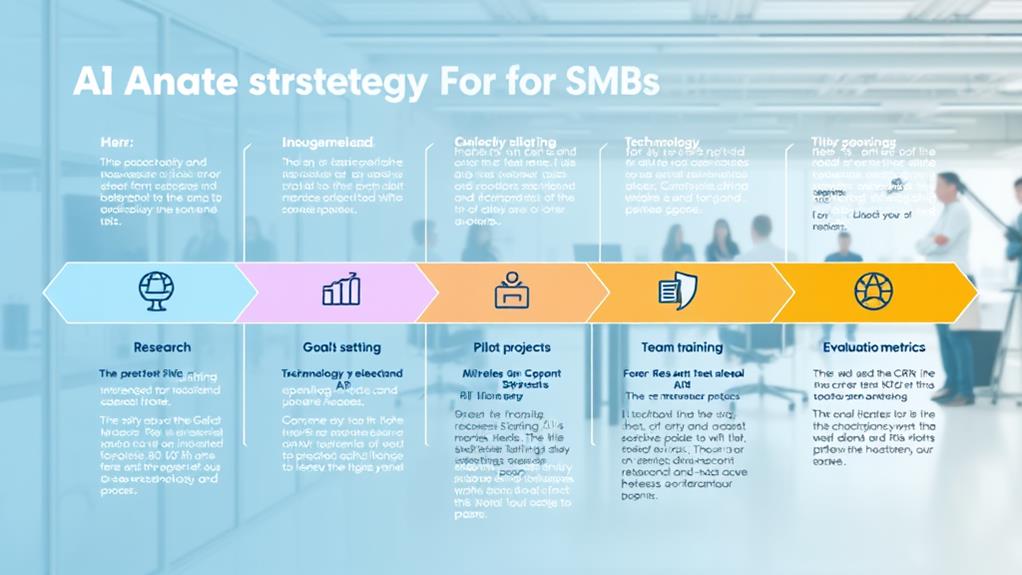
How can small-to-medium businesses (SMBs) effectively harness the power of artificial intelligence (AI) while aligning it with their overall business objectives? The development of a robust AI strategy is essential for guaranteeing that AI initiatives not only enhance operational efficiency but also create value.
Here are three crucial components to take into account when building this strategy:
- AI Governance Frameworks: Establish a clear governance framework to guide AI usage, guaranteeing compliance with ethical considerations and addressing potential risks.
- Stakeholder Involvement: Engage key stakeholders throughout the planning process to foster cultural alignment. Their insights will drive better change management and adoption of AI solutions.
- Scalability Planning: Design strategies that accommodate growth. Your AI initiatives should start small but be adaptable, allowing for seamless scalability.
To further enhance your AI strategy, emphasize the integration of performance metrics to measure success and user experience to verify tools are intuitive.
Prioritize risk assessment to mitigate any unforeseen challenges that could disrupt business continuity.
Ultimately, by marrying AI initiatives with a thorough strategy encompassing integration strategies and managing change effectively, SMBs can access transformative benefits and navigate the ever-evolving landscape of technology.
A proactive approach grounded in clear objectives will empower your organization to thrive while maintaining a commitment to ethical practices and stakeholder engagement.
Ensuring Data Quality
Ensuring data quality is pivotal for the successful implementation of AI in small and medium-sized businesses.
Effective data collection practices must be established to gather accurate and relevant information, while continuous quality monitoring helps maintain integrity over time.
Data Collection Practices
The integrity of an organization's data collection practices is essential for driving successful AI implementation among small and medium-sized businesses (SMBs). To cultivate an environment of trust and innovation, it is imperative to prioritize high-quality data collection, especially amid evolving compliance regulations.
Here are three key considerations that every SMB should keep in mind:
- Data Privacy: Making certain that customer data is collected ethically, with their explicit consent, is non-negotiable.
- Data Governance: Implementing clear policies for data storage and integration guarantees that information is easily accessible and dependable.
- Data Security: Protecting data against breaches is essential; safeguarding sensitive information fosters customer confidence and loyalty.
In a world driven by information, ethical considerations in data practices can greatly enhance your business's reputation. By embracing robust data collection practices that respect privacy and compliance regulations, SMBs can secure reliable data sources and protect data storage—all necessary for effective AI applications.
Such diligence not only drives technological advancement but also celebrates the freedom that comes with empowered decision-making.
Continuous Quality Monitoring
Achieving high-quality data is an ongoing process that demands vigilant oversight, particularly as SMBs harness AI technologies. Continuous quality monitoring is essential for guaranteeing data integrity, enabling businesses to remain agile and responsive to changing market dynamics.
By implementing automated reporting systems, SMBs can gather real-time feedback on performance metrics, facilitating timely adjustments to empower enhanced user experience and improved customer satisfaction.
Effective error detection mechanisms play a pivotal role in process optimization, allowing organizations to identify and rectify data discrepancies before they escalate. This proactive approach not only safeguards data accuracy but also guarantees adherence to compliance standards, thereby mitigating potential legal risks.
Moreover, system integration allows for seamless data flows across various applications, enhancing the reliability of information available for decision-making. This cohesive environment fosters collaboration while providing a clear view of performance indicators essential for sustained growth.
Training Your Team

Empowering your workforce with AI knowledge is essential for seamless adoption and effective utilization of new technologies in small and medium-sized businesses (SMBs). A well-trained team not only enhances integration but also drives innovation and productivity.
To initiate a successful training program, consider the following steps:
- Conduct Skill Assessments: Identify the current knowledge gaps within your team. Understanding each member's proficiency allows for targeted role assignments that align with their strengths and the organization's needs.
- Facilitate Team Workshops: Organize engaging workshops, where employees can learn the intricacies of AI applications through hands-on activities. These sessions foster knowledge sharing and peer engagement, creating an enthusiastic learning environment.
- Leverage Learning Resources: Invest in extensive resources, from online courses to expert consultations, that cater to different skill levels. Establish robust support systems that encourage continuous learning and adaptability to rapidly evolving technologies.
Training timelines should be strategically defined to maintain momentum. Incorporate regular performance evaluations to assess progress and adjust training programs accordingly.
Additionally, prioritize technology integration through practical applications, ensuring that your team can effectively leverage AI tools daily.
Measuring AI Success
Successful implementation of AI in small and medium-sized businesses relies not only on training the workforce but also on establishing clear metrics to evaluate its impact. Organizations must develop performance metrics that align with their strategic objectives to measure AI's effectiveness accurately. Key success indicators, such as operational efficiency and customer satisfaction, offer insights into how AI initiatives are contributing to overall business goals.
ROI analysis plays an essential role in understanding the financial benefits derived from AI investments. By comparing the costs associated with deployment to the resulting gains, SMBs can assess the long-term impact of their AI strategies. Additionally, gathering user feedback is critical for refining AI systems and guaranteeing they meet the needs of staff and customers alike.
Scalability assessment further evaluates how well AI solutions can adapt to growing demands. By benchmarking results against industry standards, businesses can identify competitive advantages that AI adoption may yield. This strategic oversight enables informed decisions regarding future investments and expansions.
Ultimately, measuring AI success is an ongoing process. SMBs must remain vigilant in monitoring these metrics to guarantee that AI continues to deliver value.
As businesses harness the power of AI, consistent evaluation and adjustments based on performance metrics will empower them to thrive in an ever-evolving market landscape. Embracing this data-driven approach not only fosters innovation but also paves the way for sustainable growth and enduring competitive advantage.
Overcoming Implementation Challenges
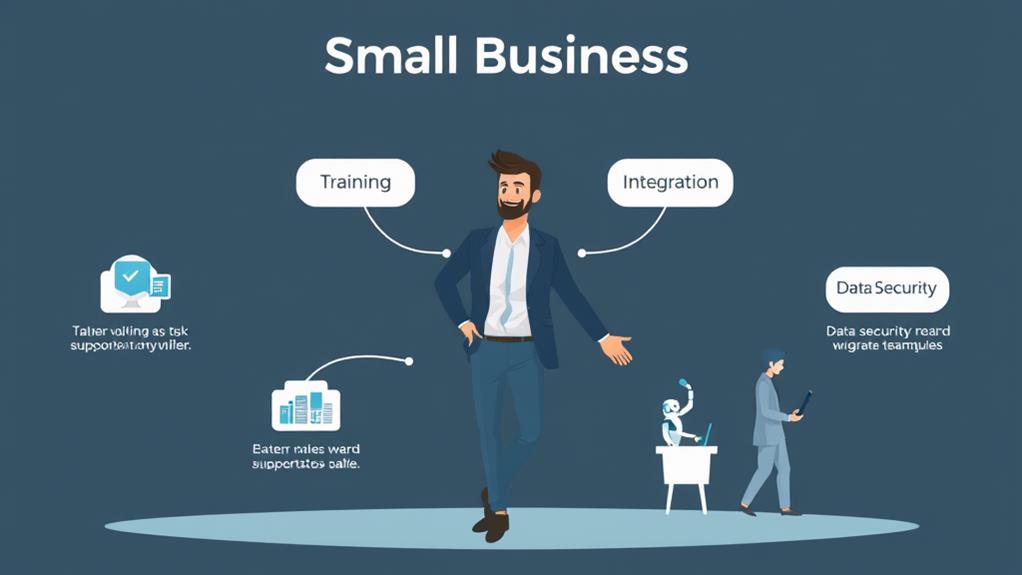
Maneuvering the complexities of AI implementation poses significant challenges for small and medium-sized businesses (SMBs). The endeavor often requires a transformative shift in operations that can be intimidating without the right strategies in place.
Success hinges on effective change management and stakeholder engagement, ensuring that every voice contributes to a shared vision for AI integration.
To navigate these challenges effectively, consider the following essential areas:
- User Adoption: Ensuring team members are on board and engaged with new AI technologies is critical. This requires robust training programs and clear communication strategies to illustrate the value these tools provide.
- Resource Allocation: Adequate resource allocation is necessary for both the short and long term. Whether it involves financial investment or human capital, a well-defined budget and project timelines help manage expectations and mitigate risks.
- Support Systems: Establish feedback loops and support systems that promote continuous improvement. Regular check-ins can foster an environment where team members feel valued and motivated to share insights about the AI system's performance.
Exploring Future Trends
As technology continues to advance at an unprecedented pace, small and medium-sized businesses (SMBs) must stay ahead of emerging trends in artificial intelligence (AI) to remain competitive. One key trend is the rise of industry-specific applications of AI, which personalize solutions for distinct sectors, enabling SMBs to utilize targeted tools tailored to their needs.
However, with these innovations come ethical considerations. SMBs must navigate regulatory compliance issues, guaranteeing that their AI practices do not inadvertently infringe on user privacy or fairness.
Scalability challenges will also arise as companies implement these technologies; businesses must develop robust integration methods to guarantee seamless adoption across all departments. Effective user adoption strategies will be essential to mitigate resistance and foster a culture that embraces AI enhancements.
Furthermore, the future job impacts of AI will be significant. SMBs should proactively identify innovation opportunities where technology can augment human roles rather than replace them, thereby maintaining a harmonious balance between efficiency and employment.
By focusing on the competitive advantages of AI, such as improved decision-making and operational efficiency, businesses can strategically position themselves in the market.
Ultimately, SMBs that anticipate and adapt to these emerging technologies will not only overcome obstacles but also open unprecedented avenues for growth and success, securing their place in an increasingly digitized landscape.
To thrive, these businesses must remain agile and committed to continuous learning and adaptation.
Frequently Asked Questions
How Can I Find Qualified AI Professionals for My Smb?
To find qualified AI professionals for your SMB, consider employing targeted AI recruitment strategies.
Leverage AI hiring platforms to streamline the process and explore freelance AI experts for flexible solutions.
Networking for AI within local communities and utilizing university AI collaborations can uncover emerging talent.
Additionally, seek candidates with AI certification programs to guarantee competency.
Don't overlook the potential of remote AI professionals who can expand your talent pool considerably.
What Are Common Misconceptions About AI in Small Businesses?
In the domain of small business, AI myths often loom larger than reality, clouding judgment on its potential.
Many misunderstand AI's capabilities, believing it to be an expensive luxury rather than a strategic asset. Cost concerns can deter innovation, while perceived implementation challenges are frequently overstated.
Embracing AI's true value can empower SMBs to enhance efficiency, drive growth, and ultimately, secure their freedom in a competitive landscape.
Let informed choices illuminate the path ahead.
Can AI Tools Work Without a Large Data Set?
AI tools can indeed function without vast data sets; however, their effectiveness largely depends on data quality.
Small businesses can achieve meaningful insights by focusing on high-quality, relevant data for model training. Even with limited data, well-designed algorithms can identify patterns and deliver value.
The key lies in leveraging existing data intelligently, ensuring accuracy and relevance to maximize the potential of AI implementation while preserving operational efficiency and innovation.
How Do I Ensure My AI Investment Is Scalable?
Imagine planting a seed that grows into a towering tree; to guarantee your AI investment flourishes, leverage AI growth strategies that focus on scalable solutions.
Assess your infrastructure, choosing technologies that can adapt as your needs evolve.
Additionally, prioritize initiatives that allow for incremental scaling, aligning your AI capabilities with business goals.
What Role Does Company Culture Play in AI Adoption?
Company culture considerably influences the successful adoption of AI technologies.
Cultural alignment guarantees that employees understand and embrace the change, fostering an environment conducive to innovation. High employee engagement is essential, as motivated staff are more likely to champion AI initiatives and contribute proactively.
Conclusion
In summary, the integration of artificial intelligence within small and medium-sized businesses promises to be a transformative journey. By steering through the complexities of AI implementation and aligning technological capabilities with business objectives, organizations can harness the power of innovation. Like a skilled craftsman, careful planning and execution will shape the future landscape of these enterprises, fostering resilience and adaptability in an increasingly digital world. The potential rewards are immense, heralding a new era of efficiency and growth.