How AI Can Help SMBs Automate Administrative Tasks
AI is revolutionizing how small and medium-sized businesses (SMBs) handle administrative tasks, leading to significant improvements in efficiency and accuracy. By automating repetitive processes such as document management, invoice processing, and customer follow-ups, SMBs can free up valuable time for their teams to focus on strategic initiatives. AI tools streamline operations, reduce human error, and provide instant access to data, thereby accelerating decision-making. Additionally, the integration of AI enhances communication and workflow across departments. Embracing these technologies not only drives productivity but also positions businesses to adapt swiftly to evolving market demands. Discover how these innovations can transform your business landscape.
Key Takeaways
- AI automates repetitive tasks, enhancing efficiency and allowing SMBs to focus on strategic initiatives instead of mundane activities.
- Streamlined communication and automated scheduling reduce time spent on coordination, improving overall operational efficiency.
- Invoice processing and document management automation expedite approval and retrieval processes, reducing human errors and enhancing accuracy.
- AI tools help prioritize tasks based on urgency, ensuring critical responsibilities are addressed promptly by teams.
- Seamless integration of AI systems enhances existing workflows and enables scalable solutions aligned with business growth.
Understanding AI in Business
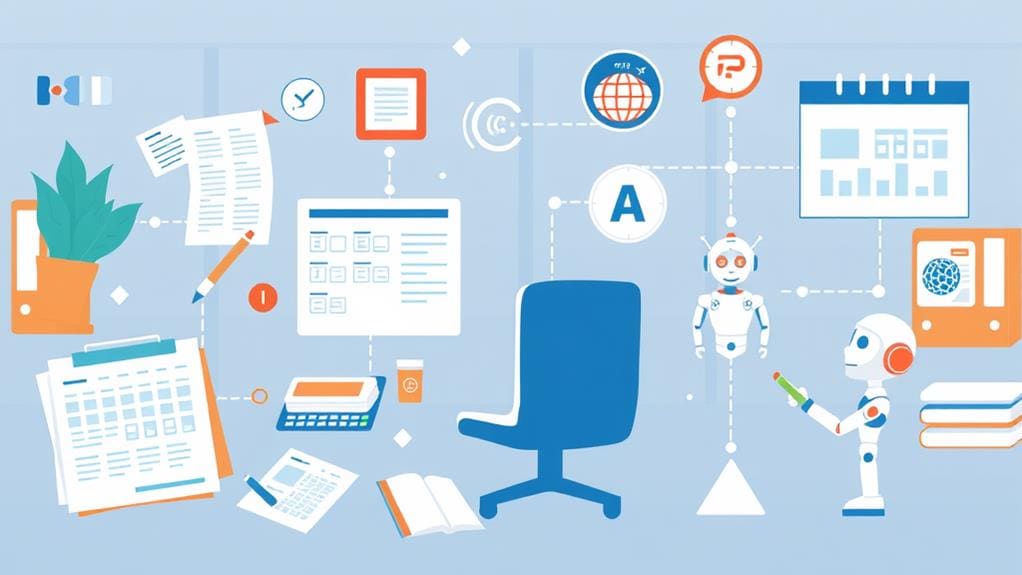
In today's fast-paced business environment, understanding artificial intelligence (AI) is no longer a luxury but a necessity for small and medium-sized businesses (SMBs) aiming to maintain a competitive edge. AI fundamentals such as machine learning and data analysis are revolutionizing the way SMBs approach decision-making and operational efficiency. By harnessing business intelligence tools, companies can reveal valuable insights that drive innovation trends and inform automation strategies.
The adoption of AI-driven technologies facilitates a transformative approach to digital transformation, allowing SMBs to streamline processes and enhance productivity. This evolution presents both opportunities and challenges, specifically regarding workforce implications. As automation becomes prevalent, there is a pressing need for businesses to upskill employees to work alongside AI systems, promoting a culture of continuous learning and adaptability. This not only empowers the workforce but also preserves the human element within an increasingly digital landscape.
To stay competitive, SMBs must be proactive in embracing these technological advancements. By understanding the intricacies of AI and its impact on their operational model, businesses can position themselves to effectively leverage automation to their advantage.
Fostering a culture of technology adoption is essential in driving operational efficiencies that yield long-term benefits and sustainable growth. Ultimately, mastering AI is essential for SMBs looking to not just survive but thrive. Integrated effectively, AI can be a powerful enabler of competitive advantage, equipping businesses with the tools they need to navigate the complexities of modern markets.
Benefits of AI Automation
AI automation offers remarkable benefits for small and medium-sized businesses, particularly in enhancing efficiency and reducing operational costs.
By streamlining repetitive tasks, businesses can save valuable time while also achieving greater accuracy and consistency in their processes.
Embracing AI not only boosts productivity but also positions SMBs for sustainable growth in an increasingly competitive landscape.
Time Savings and Efficiency
Leveraging AI for task automation can dramatically enhance the operational efficiency of small and medium-sized businesses (SMBs). By streamlining repetitive tasks, AI provides the much-needed flexibility to focus on growth and innovation.
With improved time management and workflow optimization, SMBs can experience significant time savings and increased productivity. Here are some notable benefits:
- Reduced manual workloads: Automating data entry and administrative tasks frees up valuable human resources.
- Faster decision-making: Instant access to data-driven insights allows for timely business decisions.
- Streamlined communication: AI-powered tools help manage emails and schedules, guaranteeing seamless interaction within teams.
- Task prioritization: AI identifies urgent tasks, helping teams to focus on what truly matters.
- Enhanced scalability: As businesses grow, automated processes guarantee consistent productivity without the need for proportional workforce increases.
In a world where every minute counts, AI empowers SMBs to reclaim precious time. This newfound efficiency not only boosts morale but also enhances the company's ability to adapt and thrive in a competitive landscape.
Embracing AI automation can reveal the potential for business owners seeking holistic growth and greater operational autonomy.
Cost Reduction Strategies
Effective automation not only enhances operational efficiency but also plays a pivotal role in reducing overall costs for small and medium-sized businesses (SMBs). By employing AI-driven solutions, SMBs can revolutionize their budget management practices, enabling more accurate and timely expense tracking. This results in informed decision-making that helps avoid unnecessary expenditures.
AI tools assist in resource allocation, ensuring that personnel are assigned strategically to tasks based on their skills and workload, contributing to workforce optimization. This means fewer resources are wasted, leading to substantial cost savings.
Additionally, with the help of AI, businesses can streamline processes that were once cumbersome, reducing overhead and improving turnaround times.
Moreover, AI enhances vendor negotiations by analyzing historical spending data, allowing businesses to leverage insights for better terms and prices.
Improved Accuracy and Consistency
A significant advantage of implementing automation in SMBs is the enhanced accuracy and consistency that AI-driven solutions provide. By leveraging AI technology, businesses can experience significant improvements in their administrative processes, ultimately leading to increased operational efficiency and reduced risks.
Key benefits of improved accuracy and consistency include:
- Error Reduction: Minimizing human errors in data entry and processing guarantees high-quality outcomes.
- Data Validation: Assures that the information used across various systems is accurate and reliable.
- Process Standardization: Establishes uniform procedures that enhance operational coherence and reduce variances.
- Task Synchronization: Facilitates the seamless integration of tasks across departments, enabling better collaboration.
- Workflow Optimization: Streamlined processes lead to quicker turnaround times and ultimately higher productivity.
The integration of AI not only supports quality assurance and compliance monitoring but also enhances decision support, allowing SMBs to make informed choices with confidence.
As a result, by embracing automation, businesses free themselves from the burdens of inconsistencies, steering them toward a future of sustainable growth and success.
Common Administrative Tasks to Automate
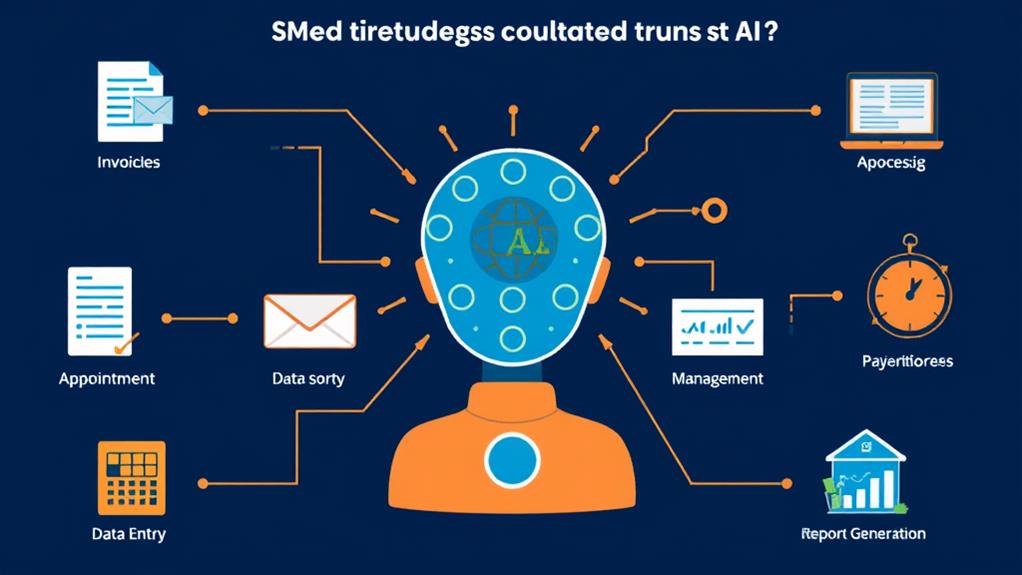
Many small and medium-sized businesses (SMBs) face the challenge of managing repetitive administrative tasks that can consume valuable time and resources. By automating common administrative duties, SMBs can liberate their workforce to focus on strategic initiatives that drive growth and innovation.
One of the most significant areas for automation is document management, where AI can streamline the storage, retrieval, and sharing of files, reducing human error and increasing accessibility. Invoice processing can similarly benefit from automation by expediting the approval and payment processes, guaranteeing timely cash flow.
Scheduling meetings often results in back-and-forth communications; however, AI tools can seamlessly arrange appointments, providing a hassle-free experience for employees and clients alike. Additionally, automating customer follow-ups guarantees effective communication while freeing up schedule time that can be better spent enhancing client relationships.
Data entry and email sorting are notorious for consuming precious time. By employing AI solutions, businesses can reduce manual input and effectively manage incoming messages, prioritizing important communications.
Automation also enhances report generation, providing real-time insights that inform decision-making without the burden of extensive manual labor. Compliance tracking is another cornerstone, with AI guaranteeing that all regulations are met without constant human oversight.
Task reminders and project updates can be automated, keeping teams aligned and motivated. By embracing automation in these common administrative tasks, SMBs can reclaim time, elevate productivity, and ultimately achieve greater business freedom.
AI Tools for SMBs
Harnessing the power of artificial intelligence, small and medium-sized businesses (SMBs) can access a variety of tools designed to simplify operations and enhance efficiency.
The integration of AI software enables SMBs to automate administrative responsibilities, allowing them the freedom to focus on growth and strategic objectives.
Here are key AI tools to reflect upon:
- Virtual assistants: Automate routine tasks, handling everything from scheduling to responding to customer interactions, thereby improving both productivity and satisfaction.
- Task management solutions: Streamline project tracking and resource allocation, ensuring your team stays organized and aligned on priorities.
- Workflow optimization tools: Enhance processes through intelligent automation, allowing for smoother shifts and improved performance across departments.
- Data analysis applications: Derive actionable insights from large datasets, enabling informed decision-making and effective employee training strategies.
- Customer interaction platforms: Leverage AI to personalize outreach and improve engagement, resulting in a more loyal customer base.
Implementing AI Solutions
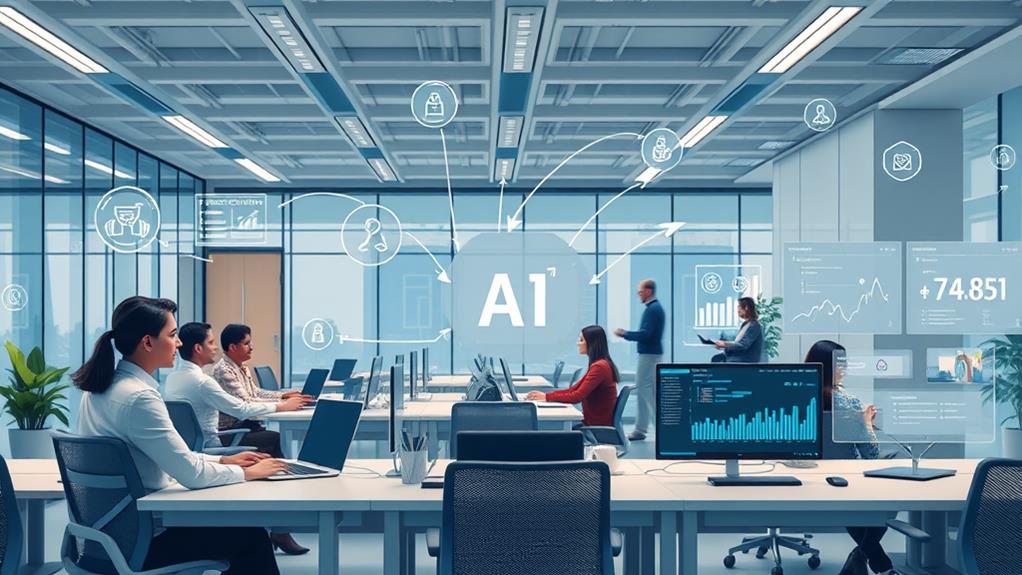
Implementing AI solutions in small and medium-sized businesses (SMBs) requires careful consideration of the right tools that align with specific operational needs.
Equally important is ensuring seamless integration with existing systems to maximize efficiency and minimize disruption.
Choosing the Right Tools
Selecting the right tools for automating tasks with AI can greatly enhance the operational efficiency of small and medium-sized businesses (SMBs).
To find the best fit, it's important to establish clear tool selection criteria. Prioritizing user-friendly interfaces will guarantee that your team can adapt quickly and efficiently.
Consider these key factors when choosing your AI solutions:
- Scalability: Confirm that the tools can grow alongside your business needs.
- Integration capabilities: Look for options that can seamlessly connect with your existing processes.
- Cost-effectiveness: Analyze pricing structures to maximize your budget without sacrificing quality.
- Support and training: Opt for solutions that offer robust customer support and training resources to facilitate smooth implementation.
- Customization options: Evaluate tools that allow you to tailor features to meet your unique business requirements.
Integration With Existing Systems
Finding the right tools is only the beginning; integrating AI solutions into your existing systems is where the real value is realized. Achieving seamless system compatibility between your AI tools and legacy systems is essential. Companies often face integration challenges, such as ensuring data synchronization and establishing API connectivity. By addressing these issues upfront, you create a robust foundation for your AI implementation.
To enhance workflow optimization, consider how scalable your new software is. Effective software scalability allows your AI systems to evolve alongside your business, accommodating growth without extensive reconfigurations.
Additionally, user training plays a pivotal role in leveraging the full potential of AI. A well-trained workforce can troubleshoot integration hurdles and capitalize on new efficiencies ushered in by AI solutions.
The convergence of advanced technology with existing processes empowers small and medium-sized businesses to operate with greater freedom. By investing time and resources into thoughtful integration, you not only alleviate administrative burdens but also position your organization for a future defined by creativity and innovation.
Embrace this opportunity to redefine your operational landscape and elevate your business to new heights.
Measuring Impact on Productivity
Evaluating the impact of AI on productivity within small and medium-sized businesses (SMBs) can reveal significant insights into operational efficiency and workforce optimization. By measuring productivity metrics effectively, organizations can make informed decisions that promote both employee engagement and superior output. The integration of AI technologies facilitates workflow optimization, ensuring that resources are allocated to the most essential tasks.
To gauge the true impact of AI on productivity, consider the following factors:
- Performance tracking: Regularly assess employee output measurement to identify enhancements in efficiency.
- Task prioritization: Implement AI to help prioritize tasks that maximize impact and minimize wasted effort.
- Time management: Evaluate how AI tools assist in managing deadlines and project timelines, creating a more balanced workload.
- Resource allocation: Analyze the changes in how resources—be it time, personnel, or finances—are utilized with the support of automation.
- Employee engagement: Measure changes in team morale and job satisfaction as AI reduces mundane tasks, allowing employees to focus on strategic initiatives.
With AI automating repetitive work, SMBs can harness their full potential, paving the way for innovation and growth. The liberation from tedious tasks not only boosts productivity but also fosters a culture of creativity and entrepreneurial spirit.
Consequently, measuring the impact of AI is vital for SMBs looking to thrive in a competitive landscape, empowering them to make data-driven adjustments and achieve lasting success.
Future of AI in SMB Operations

The future of artificial intelligence in small and medium-sized business operations promises to revolutionize how these organizations function, revealing new levels of efficiency and innovation. As AI trends continue to evolve, SMBs are positioned to harness these technologies for improved adaptability in an ever-changing market landscape.
The transformation of the workforce is a crucial aspect of this evolution. With automating routine tasks and leveraging AI-powered solutions, employees can focus on strategic initiatives, driving creativity and engagement. This workforce transformation leads to enhanced decision-making processes, powered by data-driven insights that inform strategies and optimize performance.
Incorporating AI will also reveal new opportunities for process innovation, enabling SMBs to streamline operations and react more swiftly to market demands. Automated workflows minimize human error and enhance accuracy, allowing businesses to scale swiftly while maintaining an edge over competitors.
Furthermore, AI can greatly improve customer engagement through personalized experiences. By analyzing customer behavior and feedback, AI systems facilitate tailored marketing strategies that resonate more effectively.
As SMBs embrace scalability solutions, they can adapt their offerings and services seamlessly, ensuring they meet the diverse needs of their clientele.
Frequently Asked Questions
How Much Does AI Automation Typically Cost for Smbs?
The cost of AI automation for small and medium-sized businesses (SMBs) varies considerably based on the complexity of the solution and scope of implementation.
Generally, SMBs should conduct a cost comparison of various vendors, considering initial setup, ongoing maintenance, and potential savings.
Effective budget allocation is essential; investing wisely in AI can lead to enhanced productivity and reduced operational costs, ultimately cultivating a greater sense of freedom in business management and decision-making.
Can AI Solutions Integrate With Existing Software Systems?
AI solutions can indeed integrate with existing software systems; however, companies must navigate integration challenges and guarantee software compatibility.
The process often demands careful planning and possibly custom adjustments to maintain seamless communication between platforms.
By addressing these potential hurdles proactively, businesses can harness AI's transformative capabilities while preserving the strengths of their current infrastructure, ultimately achieving increased efficiency and operational freedom.
Embracing this integration can greatly enhance overall productivity and innovation.
What Training Is Required for Employees Using AI Tools?
Ah, the age-old debate: training employees to confidently wield AI tools or simply throwing them into the deep end and hoping they float.
Employee readiness and tool familiarity are paramount; without proper training, even the most sophisticated AI could become an expensive paperweight.
A structured program emphasizing hands-on experience and ongoing support will empower employees, enhancing productivity and fostering a culture of innovation.
After all, equipping teams for success is truly the key to freedom in the workplace.
Are There Specific Industries That Benefit More From AI Automation?
Certain industries derive greater advantage from AI automation due to their unique operational demands.
For instance, sectors like healthcare and finance showcase industry-specific applications that streamline processes, enhance accuracy, and improve service delivery. Notable automation success stories in these fields illustrate significant cost savings and efficiency gains.
Embracing AI empowers organizations to focus on strategic initiatives, ultimately fostering innovation and allowing employees to pursue more meaningful and fulfilling work.
How Long Does It Take to See Results From AI Implementation?
The implementation timeline for AI initiatives can considerably vary depending on project complexity and organizational readiness.
Typically, businesses may begin to observe expected outcomes within three to six months post-implementation. This period allows for systems setup, staff training, and initial adjustments.
However, substantial transformations may require ongoing refinement, making patience and persistence paramount for achieving profound, long-lasting benefits.
Embracing AI ultimately empowers organizations with enhanced efficiency and autonomy in decision-making processes.
Conclusion
The integration of artificial intelligence into small and medium-sized businesses represents a pivotal shift in operational efficiency. Coincidentally, as automation alleviates the burden of administrative tasks, it also cultivates an environment where creativity and strategic thinking can flourish. This duality emphasizes the transformative potential of AI: not merely as a tool for efficiency, but as a catalyst for innovation and growth. Embracing AI solutions positions SMBs to navigate an increasingly competitive landscape with agility and foresight.