
How AI Can Help SMBs Improve Decision-Making Processes
AI enhances decision-making processes for small and medium-sized businesses (SMBs) by streamlining operations and providing data-driven insights. It automates routine tasks, allowing employees to focus on higher-value activities while minimizing errors. Advanced data analysis identifies inefficiencies and forecasts risks, facilitating proactive measures. Additionally, AI personalizes customer interactions and optimizes resource allocation, which can lead to improved customer loyalty and satisfaction. Successful implementations show significant operational improvements, with some businesses reporting up to a 30% reduction in costs. By leveraging AI strategically, SMBs can cultivate a culture of continuous improvement and adaptability, revealing further insights along the way.
Key Takeaways
- AI enhances strategic planning by providing data-driven insights to inform competitive strategies and resource allocation.
- Predictive analytics allows SMBs to anticipate market trends and customer behaviors for proactive decision-making.
- Automating routine decisions minimizes errors and frees up resources for more complex problem-solving tasks.
- AI streamlines operations through workflow optimization, reducing bottlenecks and improving overall efficiency.
- Personalized customer engagement driven by AI insights fosters loyalty and addresses specific consumer needs effectively.
Understanding AI's Role in SMBs

Understanding AI's role in small and medium-sized businesses (SMBs) involves analyzing its transformative impact on decision-making processes. The integration of artificial intelligence (AI) enhances strategic planning capabilities, allowing SMBs to bolster their competitive advantage. By adopting AI-driven tools, these organizations can optimize workflows, reducing time spent on routine tasks and allowing employees to focus on higher-value initiatives.
AI integration fosters cost reduction through process automation, minimizing operational inefficiencies that often burden SMBs. For instance, data-driven insights help identify areas for savings, influencing innovation strategies that align with market demands. This encourages a culture of continuous improvement and adaptive change management, critical for thriving in dynamic environments.
Moreover, employee training is paramount during AI technology adoption. Providing team members with the skills necessary to navigate AI applications not only empowers them but also enhances overall productivity. An informed workforce fosters better decision-making, as employees gain confidence in utilizing AI tools that drive insights into customer behavior and market trends.
Ultimately, the effective use of AI enhances SMBs' ability to foresee challenges and capitalize on opportunities, streamlining operational structures to respond proactively rather than reactively. This shift toward intelligent decision-making enables businesses to embrace innovation strategies that lay the groundwork for sustainable growth.
Consequently, understanding the multifaceted role of AI in SMBs is essential for leaders seeking to harness its potential to radically transform how they operate, innovate, and compete in an increasingly digital economy.
Data Analysis and Insights
In the domain of small and medium-sized businesses (SMBs), data analysis and insights serve as essential drivers for informed decision-making. The advent of artificial intelligence (AI) greatly enhances this process, enabling firms to leverage data more effectively.
By integrating AI technologies, SMBs can harness vast amounts of data to uncover trends, optimize operations, and predict consumer behavior. This transformation is largely facilitated through the application of sophisticated data visualization techniques and machine learning algorithms.
The incorporation of AI-powered data analysis can yield several key benefits for SMBs:
- Enhanced Decision-Making: By converting complex datasets into visual formats, managers can quickly interpret data and make timely decisions.
- Increased Operational Efficiency: Machine learning algorithms can analyze historical data to identify inefficiencies, allowing businesses to streamline processes.
- Personalized Customer Insights: AI algorithms can segment customer data, enabling tailored marketing strategies that resonate with target audiences.
- Risk Management: Data analysis can help SMBs detect anomalies and forecast potential risks, fostering proactive measures.
Predictive Analytics for Future Trends

Predictive analytics plays a vital role in identifying market patterns that can inform strategic decision-making for SMBs.
By leveraging historical data and advanced algorithms, businesses can enhance their competitive analysis, enabling them to anticipate shifts in consumer behavior and industry trends.
This proactive approach not only optimizes resource allocation but also positions SMBs to capitalize on emerging opportunities effectively.
Identifying Market Patterns
Market dynamics are often characterized by complexity and unpredictability, necessitating sophisticated tools for effective navigation. For small and medium-sized businesses (SMBs), leveraging AI for identifying market patterns is pivotal in understanding shifts in consumer behavior and enhancing market segmentation.
Predictive analytics offers insights that empower informed decision-making, leading to better-targeted strategies.
To harness the full potential of predictive analytics in identifying market patterns, SMBs should consider the following strategies:
- Data Collection: Gather thorough data from diverse sources to enrich the analysis, including sales trends, social media activity, and customer feedback.
- Segmentation Analysis: Employ advanced algorithms to segment the market based on demographics, purchasing habits, and preferences, thereby refining target audiences.
- Trend Forecasting: Utilize machine learning models to identify emerging trends by analyzing historical data and recognizing patterns that predict future consumer behavior.
- Scenario Planning: Implement simulations that evaluate various market conditions, enabling proactive strategies that adapt to potential changes.
Enhancing Competitive Analysis
To maintain a competitive edge in today's dynamic business landscape, small and medium-sized businesses (SMBs) must enhance their competitive analysis through the application of predictive analytics. By leveraging advanced data algorithms, SMBs can gain critical insights into market positioning and identify trends that shape the competitive landscape.
Predictive analytics enables SMBs to conduct thorough competitor benchmarking, allowing them to assess their rivals' strengths and weaknesses effectively. This data-driven approach not only helps in identifying where competitors excel but also highlights opportunities for strategic differentiation. For instance, using forecasting models can reveal shifts in consumer preferences, enabling SMBs to adapt their offerings proactively.
Furthermore, predictive analytics aids in recognizing underlying relationships within market data, which can better inform decision-making processes. SMBs can anticipate market fluctuations and adjust their strategies accordingly, minimizing risks associated with market entry or expansion.
Ultimately, the effective use of predictive analytics equips SMBs with the tools necessary to refine competitive analysis, ensuring they stay ahead in an ever-evolving marketplace. By embracing these insights, SMBs can foster resilience and innovation while achieving sustained growth.
Automating Routine Decisions
By leveraging artificial intelligence, small and medium-sized businesses (SMBs) can greatly enhance their decision-making processes through the automation of routine tasks. Automation not only streamlines workflows but also reduces human error, freeing up valuable resources for more critical strategic initiatives.
By employing AI-driven solutions, SMBs can establish robust decision frameworks that facilitate consistent outcomes while minimizing the risks associated with algorithmic bias.
The implementation of automated decision-making can manifest in several key areas:
- Data Processing: AI tools can analyze large volumes of data swiftly, identifying patterns and trends that may not be evident through manual analysis, thereby driving informed decisions.
- Inventory Management: Automation aids in effectively managing stock levels by predicting inventory needs based on historical sales data and market trends, thereby reducing holding costs and minimizing stockouts.
- Employee Scheduling: AI can streamline workforce allocation by interpreting demand forecasts and employee availability, thereby enhancing operational efficiency while improving employee satisfaction.
- Customer Segmentation: Automated tools can segment customers based on behavioral data, enabling tailored marketing strategies and personalized outreach.
While SMBs adopt these advancements, they must remain vigilant against potential algorithmic biases that could skew decision-making.
Establishing solid decision frameworks that incorporate ethical guidelines will guarantee that automation benefits all stakeholders involved. In this way, SMBs can maintain a competitive edge and foster an agile, responsive business environment that ultimately drives growth and innovation.
Enhancing Customer Experiences
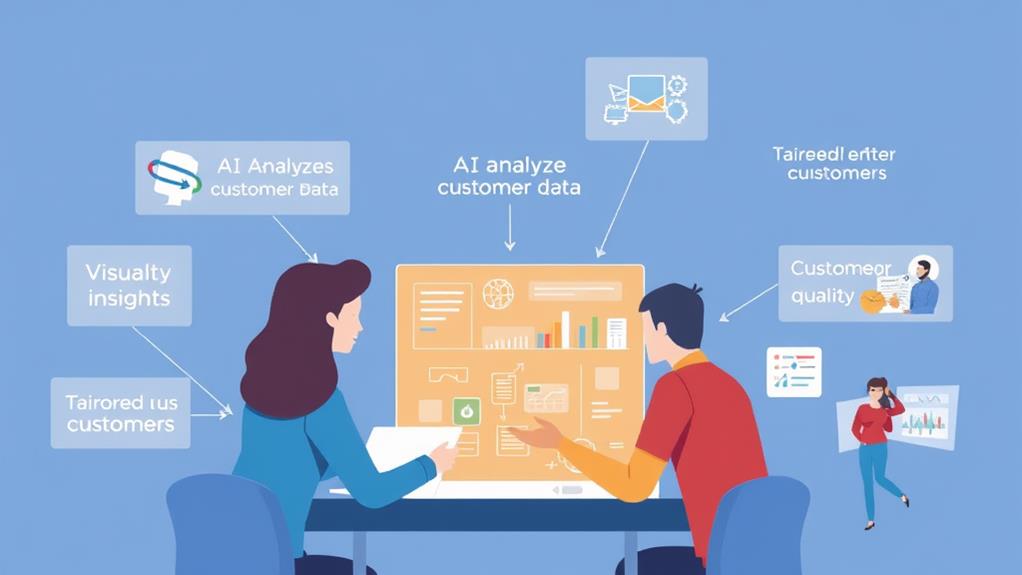
The automation of routine decision-making not only improves operational efficiencies but also lays the groundwork for enhancing customer experiences. By leveraging AI-driven customer feedback analysis, small and medium-sized businesses (SMBs) can gain insights into customer needs and preferences, allowing for targeted experience optimization. This approach enables SMBs to deploy effective engagement strategies tailored to their audience, creating a personalized service experience.
Service personalization is essential for fostering customer loyalty. Through advanced journey mapping and touchpoint evaluation, businesses can identify key interactions that shape customer perception. By analyzing satisfaction metrics, SMBs can fine-tune every aspect of the customer journey, ensuring that each touchpoint reinforces positive engagement.
Additionally, integrating support automation enhances response time and enriches customer interactions, providing immediate assistance and facilitating smoother experiences. AI also plays a crucial role in monitoring interaction analysis, enabling businesses to understand real-time customer sentiments and needs.
This data can inform loyalty programs, ensuring they resonate with customers and drive repeat engagement. When customers feel their needs are understood and valued, their satisfaction metrics improve, leading to increased retention rates and advocacy.
Ultimately, the strategic implementation of AI in enhancing customer experiences equips SMBs with the tools needed to thrive in competitive markets. By focusing on data-driven insights, businesses can build a robust framework for customer loyalty, resulting in a sustainable path for long-term growth and success.
Risk Management and Mitigation
In an increasingly complex business landscape, effective risk management and mitigation strategies are essential for small and medium-sized businesses (SMBs) seeking to protect their assets and guarantee operational continuity.
Leveraging artificial intelligence (AI) can greatly enhance these strategies, enabling SMBs to evaluate risks with greater precision and sound decision frameworks.
SMBs can benefit from AI-driven processes across several critical areas:
- Risk Assessment: AI tools can automate the identification and evaluation of potential risks, allowing businesses to more accurately determine their risk tolerance and prioritize actions accordingly.
- Vulnerability Analysis: By analyzing historical data, AI enhances vulnerability assessments by pinpointing specific weaknesses in the organization's operations, thereby informing targeted intervention strategies.
- Compliance Monitoring: Advanced AI algorithms can secure compliance by continuously monitoring regulations and organizational practices, thereby minimizing legal exposure and fostering a culture of accountability.
- Crisis Response and Scenario Planning: AI enables businesses to simulate various crisis scenarios, adopting a proactive approach to crisis management.
Streamlining Operations and Processes
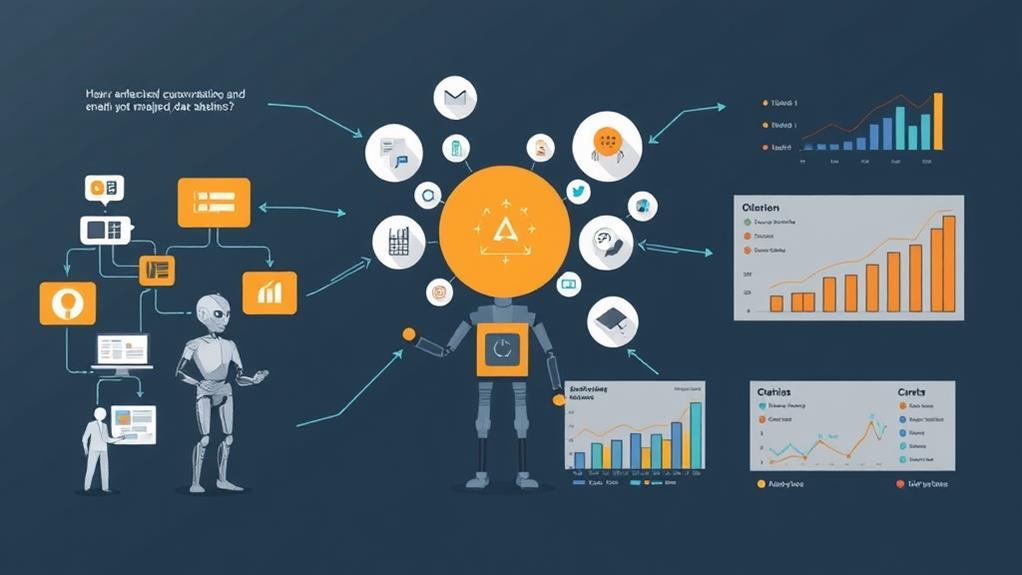
Streamlining operations and processes is critical for small and medium-sized businesses (SMBs) to enhance efficiency and competitiveness.
Implementing automation for routine tasks can greatly reduce manual errors and free up resources, allowing staff to focus on higher-value activities.
Additionally, leveraging advanced data analysis tools can provide actionable insights, leading to stronger decision-making and improved operational performance.
Automating Routine Tasks
Reducing manual workload through the automation of routine tasks has become an essential strategy for small and medium-sized businesses (SMBs) seeking to enhance operational efficiency. By leveraging artificial intelligence, SMBs can experience significant efficiency improvement, allowing them to focus on strategic initiatives rather than repetitive processes.
Key aspects of automating routine tasks include:
- Task Delegation: AI systems can automate mundane duties, ensuring employees focus on complex, value-added activities that enhance employee engagement and satisfaction.
- Workflow Optimization: Streamlined processes foster enhanced collaboration and reduce bottlenecks, leading to improved overall performance and operational consistency.
- Time Savings: By reallocating resources from routine tasks to more critical functions, businesses can realize considerable time savings and deliver timely service to clients.
- Process Consistency: Automation reduces the risk of human error, ensuring a consistent approach across operations and maintaining quality control.
In adopting service automation, SMBs can enhance resource allocation, increase productivity, and ultimately drive growth while maintaining a desire for operational freedom.
Such strategic moves not only facilitate better decision-making but also empower teams to innovate and adapt swiftly in a competitive landscape.
Enhancing Data Analysis
Many small and medium-sized businesses (SMBs) face challenges in making informed decisions due to the overwhelming volume of data generated daily. Leveraging AI technologies can greatly enhance data analysis, enabling SMBs to decode complex information efficiently. By implementing machine learning algorithms, businesses can identify patterns and trends within their data that may otherwise go unnoticed.
Data visualization tools complement these advancements by transforming raw data into intuitive graphical formats, allowing stakeholders to grasp insights quickly. This combination not only streamlines decision-making processes but also enhances operational agility.
For instance, predictive analytics powered by machine learning can forecast customer behaviors and market trends, equipping SMBs with the foresight to adapt strategies proactively. In addition, visualization techniques facilitate clearer communication of complex data, promoting collaboration among teams and empowering them to act based on empirical evidence rather than intuition alone.
In a competitive landscape, the ability to harness data effectively can be pivotal. By investing in AI-driven data analysis solutions, SMBs can optimize their operations, ultimately leading to more informed decisions and sustained growth.
Consequently, integrating these technologies fosters a culture of data-driven decision-making that frees SMBs from resource constraints.
Personalization Through AI
Personalization, a critical driver of customer engagement and loyalty, has been revolutionized by advancements in artificial intelligence. By harnessing AI, small and medium-sized businesses (SMBs) can gain deeper insights into customer preferences, enabling them to adopt more effective customer segmentation strategies and deliver tailored marketing campaigns. This data-driven approach not only enhances customer satisfaction but also maximizes ROI.
The capabilities of AI in personalization can be outlined as follows:
- Enhanced Customer Segmentation: AI algorithms analyze vast amounts of data to create more precise customer segments based on behavior, demographics, and preferences. This granularity allows businesses to target their efforts strategically.
- Real-Time Data Processing: AI systems can process and analyze customer interactions in real-time, enabling SMBs to adjust strategies quickly and engage customers based on their immediate needs and behaviors.
- Predictive Analytics: By leveraging machine learning, businesses can predict future customer behavior. This foresight assists in anticipating customer needs and enhancing product recommendations.
- Tailored Marketing Campaigns: AI-driven tools allow marketers to develop highly tailored messages for specific segments, thereby increasing the relevance of marketing efforts and driving higher engagement rates.
In this rapidly evolving landscape, SMBs that adopt AI for personalization can foster deeper connections with consumers, resulting in increased brand loyalty and competitive advantage.
As customers seek authentic experiences, embracing AI-powered personalization is no longer optional; it is essential for sustainable growth.
Success Stories of AI Implementation
As businesses increasingly integrate AI technologies, numerous small and medium-sized enterprises (SMBs) have experienced significant transformations and enhanced operational efficiencies. AI case studies highlight how businesses across various industries, such as retail and logistics, have successfully adopted these technologies to streamline processes, improve customer engagement, and ultimately drive profitability.
Testimonials from SMBs showcase the remarkable performance metrics achieved post-implementation, including up to 30% reductions in operational costs and 25% increases in customer satisfaction ratings.
Despite promising outcomes, many firms face implementation challenges. A frequent obstacle is employee training, essential for maximizing the potential of newfound technologies. Strategic partnerships with AI providers have proven beneficial in overcoming these hurdles, offering assistance in technology adoption while ensuring a seamless integration process.
Industry comparisons reveal that businesses leveraging AI innovations are generally more competitive, enjoying better market positioning relative to peers. Additionally, the innovation impact extends beyond mere cost savings; it cultivates a culture of continuous improvement guided by data-driven insights.
Ultimately, the successful AI implementation stories among SMBs reflect a broader narrative of resilience and adaptability. By maneuvering challenges and harnessing the support of strategic partners, these enterprises have not only transformed their decision-making processes but also set the stage for future growth.
This evolving landscape underscores the critical importance of embracing technology in a dynamic marketplace, highlighting the vast potential for those willing to innovate.
Frequently Asked Questions
What Are Common Misconceptions About AI in Small to Medium Businesses?
Common misconceptions surrounding AI in small to medium businesses often stem from widespread AI myths.
Many believe that AI is solely accessible to large enterprises due to cost and expertise barriers. In reality, advancements in technology have democratized AI accessibility, allowing SMBs to leverage affordable, user-friendly solutions.
Additionally, fears about AI replacing human jobs overshadow its potential as a collaborative tool that enhances decision-making processes, ultimately fostering growth and innovation within these organizations.
How Can SMBS Choose the Right AI Tools for Their Needs?
Selecting the appropriate AI tools for small and medium-sized businesses (SMBs) requires a methodical assessment of specific SMB needs. Organizations should begin by defining their objectives clearly, followed by conducting a thorough market analysis of available solutions.
Evaluating key features, user-friendliness, and scalability of AI tools against operational requirements is essential. In addition, seeking testimonials and case studies can provide insights into successful implementations, ensuring alignment with business goals and facilitating strategic decision-making.
What Initial Steps Should SMBS Take for AI Implementation?
Initiating the journey of AI implementation is akin to charting a course through uncharted waters.
The initial steps for SMBs involve meticulous data collection to establish a robust foundation. This data acts as the lighthouse, guiding informed decisions.
Additionally, employee training is essential, as it equips the workforce with the necessary skills to harness AI effectively.
Together, these elements create a harmonious environment where innovation flourishes and operational efficiency thrives.
How Does AI Impact Employee Roles and Responsibilities?
AI fundamentally reshapes employee roles and responsibilities by enhancing autonomy and facilitating role evolution.
As organizations integrate AI technologies, employees are increasingly empowered to focus on high-value tasks, leveraging data-driven insights for strategic decision-making.
This shift fosters a culture of continuous learning, where roles adapt to encompass innovative problem-solving and collaboration with AI systems.
Ultimately, the dynamic landscape encourages greater employee engagement and satisfaction, aligning workforce capabilities with evolving business objectives.
What Are the Costs Associated With Integrating AI in Smbs?
Ironically, the path to liberation through AI integration isn't without its costs.
Small and medium-sized businesses may face considerable integration expenses, including software acquisition, training, and system adjustments.
However, these upfront costs should be viewed in light of potential long-term savings that AI can generate, such as enhanced operational efficiency and reduced labor costs.
A thorough cost-benefit analysis is essential to guarantee that the benefits outweigh the immediate financial outlay.
Conclusion
The integration of artificial intelligence within small and medium-sized businesses (SMBs) demonstrates a transformative potential that is difficult to overlook. As decision-making processes evolve through enhanced data analysis, predictive analytics, and automation, a compelling question emerges: what unseen opportunities lie ahead for those who embrace this technological shift? The ability to not only optimize operations but also provide personalized customer experiences positions AI as a critical factor in determining the future success of SMBs in an increasingly competitive landscape.