
How AI Can Help SMBs Improve Market Forecasting
AI markedly enhances market forecasting for small and medium-sized businesses (SMBs) by processing extensive data sets to identify trends and patterns. Machine learning algorithms generate predictive models using historical data, while real-time analytics allow for agile responses to market changes. AI also improves data accuracy and integration, minimizing human error and enhancing decision-making capabilities. By leveraging advanced technologies like natural language processing and data mining, SMBs can gain valuable consumer insights and optimize their marketing strategies. Understanding these tools and methodologies can empower businesses to navigate uncertainties more effectively and improve forecasting precision. Discovering more can provide deeper insights.
Key Takeaways
- AI enhances market forecasting by processing large data sets to reveal hidden insights and trends more efficiently than traditional methods.
- Predictive analytics using historical data allows SMBs to anticipate customer behavior and market shifts, improving sales forecasting accuracy.
- Real-time analytics enable instant data access, supporting agile responses to market fluctuations and enhancing customer segmentation for targeted marketing strategies.
- Advanced data visualization transforms complex data into clear narratives, aiding strategic decision-making and allowing for informed resource allocation.
- Machine learning models continually refine forecasts by integrating new data, ensuring SMBs maintain a competitive advantage in uncertain environments.
Understanding Market Forecasting

Market forecasting is a critical tool for small and medium-sized businesses (SMBs) endeavoring to navigate the complexities of a dynamic economic landscape. By leveraging relevant data, businesses can identify market trends that influence consumer behavior, aiding them in strategic decision-making.
Essential economic indicators, such as GDP growth and unemployment rates, provide insights into broader economic conditions that affect purchasing power and demand.
A thorough competitive analysis enables SMBs to assess market segmentation and uncover opportunities for differentiation. Understanding seasonal fluctuations can further refine sales projections, ensuring that price adjustments align with anticipated demand. For instance, retail SMBs may experience heightened demand during holidays, prompting them to devise targeted pricing strategies to maximize profitability.
Demand forecasting plays a pivotal role in operational efficiency; accurate predictions enable businesses to allocate resources effectively, minimizing excess inventory while ensuring product availability.
By establishing industry benchmarks, SMBs can compare their performance to competitors, refining their strategies to better align with market expectations.
Incorporating these elements into a cohesive market forecasting framework allows SMBs to make informed decisions that enhance their competitiveness. Ultimately, adopting a data-driven approach to market forecasting empowers SMBs to thrive in an ever-evolving business landscape, reducing uncertainty and providing a roadmap for sustainable growth.
Consequently, understanding market forecasting is not merely a business tactic; it is an essential strategy for fostering long-term success and realizing the freedom to innovate and expand within the marketplace.
The Role of AI in Analytics
Artificial Intelligence (AI) is revolutionizing the domain of analytics for small and medium-sized businesses (SMBs) by enabling the processing and interpretation of vast data sets with unprecedented speed and accuracy. This innovation allows SMBs to leverage extensive data streams for informed decision-making, thereby enhancing their competitive edge.
The integration of AI in analytics delivers multiple benefits, specifically through the use of AI models that refine data processing techniques. By adopting capabilities such as machine learning and algorithm optimization, SMBs can uncover valuable insights that might otherwise remain hidden.
Key roles for AI in analytics include:
- Trend Analysis: AI algorithms can analyze historical data to recognize patterns that inform future market trends, helping SMBs anticipate changes in consumer behavior.
- Data Visualization: Utilizing advanced data visualization tools, AI translates complex data into digestible formats, making it easier for stakeholders to interpret key findings.
- Risk Assessment: Through statistical methods and predictive analytics, AI aids in identifying potential risks, enabling SMBs to devise strategies that mitigate adverse impacts on performance metrics.
Furthermore, cloud computing enhances the capability of AI analytics by providing scalable storage and processing power. This synergy empowers SMBs to continually adapt to changing market dynamics, ultimately fostering resilience and growth.
The ability to synthesize consumer behavior data through AI-driven analytics offers SMBs the autonomy and insight necessary to thrive in an increasingly competitive landscape.
Types of AI Technologies Used
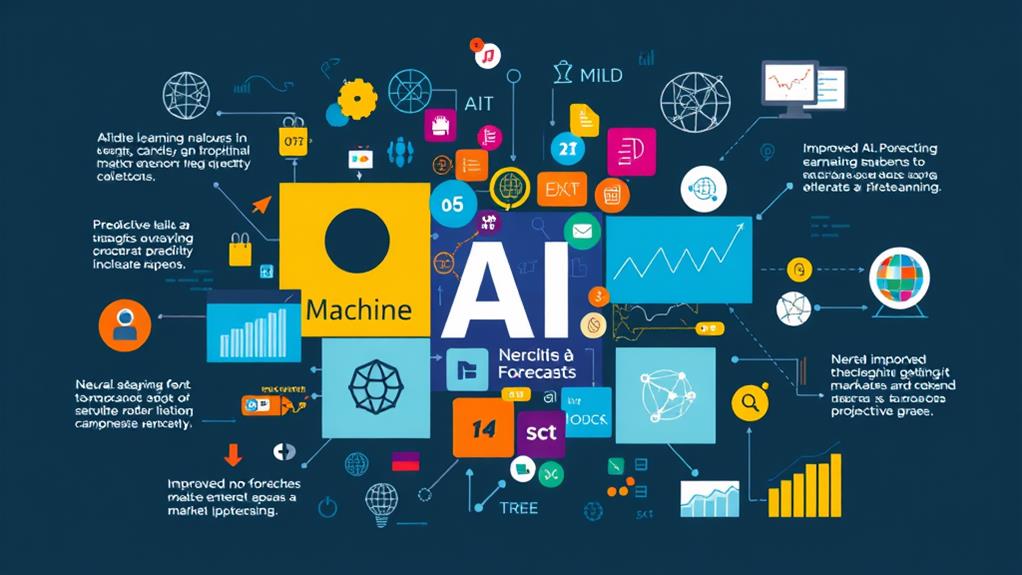
Several key AI technologies are currently transforming how small and medium-sized businesses (SMBs) operate across various sectors. Machine learning plays a crucial role in enhancing market forecasting, enabling SMBs to analyze historical data and generate predictive models with high accuracy. By employing deep learning algorithms and neural networks, businesses can uncover complex patterns in data that traditional methods might overlook.
Natural language processing (NLP) enhances client interactions by analyzing customer feedback and extracting meaningful insights through sentiment analysis. This allows SMBs to adapt their strategies based on customer perceptions. Additionally, data mining techniques enable companies to sift through vast datasets, revealing hidden correlations and trends essential for effective market positioning.
Computer vision is another emerging AI technology that can improve product quality and operational efficiency. With advanced imaging systems, SMBs can conduct real-time inspections of products and automate quality control processes.
Robotic process automation (RPA) streamlines repetitive tasks, allowing teams to focus on strategic decision-making rather than mundane operational activities.
Furthermore, reinforcement learning can optimize pricing strategies by adapting in real-time to market conditions, ensuring that SMBs remain competitive. Algorithm optimization enhances all AI functions by making them more efficient and effective, ensuring rapid adaptability to changing market dynamics.
The integration of these technologies not only empowers SMBs to make informed decisions but also equips them to navigate the complexities of the modern economy with greater agility.
Data Collection and Management
Effective data collection and management are critical for small and medium-sized businesses (SMBs) seeking to enhance operational efficiency and decision-making.
AI technologies facilitate streamlined data integration, ensuring that information from various sources is cohesively brought together, and they greatly improve data accuracy by minimizing human errors.
In addition, the application of real-time analytics provides SMBs with immediate insights, empowering timely responses to market conditions and consumer behavior.
Streamlined Data Integration
How can small and medium-sized businesses (SMBs) harness the power of AI to facilitate data collection and management?
Streamlined data integration is a pivotal component of effective market forecasting, addressing prevalent integration challenges while ensuring seamless access to diverse data sources. By leveraging advanced AI technologies, SMBs can overcome data silos and enhance workflow optimization.
Consider the following benefits of streamlined data integration:
- API Utilization: APIs facilitate communication between different systems, promoting system compatibility and enabling businesses to integrate disparate data sources effortlessly.
- Cloud Solutions: Utilizing cloud-based platforms allows for scalable solutions that can adapt to a company's evolving needs while ensuring robust security considerations.
- Automation Benefits: Automating data collection processes reduces manual errors and accelerates the flow of information, empowering SMBs to make informed decisions based on timely data.
Enhanced Data Accuracy
Achieving enhanced data accuracy is essential for SMBs as they navigate the complexities of data collection and management. By leveraging advanced AI technologies, businesses can implement effective data validation processes that considerably improve source reliability. Ensuring that data originates from accurate sources not only leads to error reduction but also strengthens the foundation upon which statistical models and trend analysis are built.
The integration of AI further bolsters quality assurance through automated checks and balances that monitor data integrity throughout its lifecycle. Utilizing historical data in conjunction with robust statistical models allows SMBs to glean actionable insights, enhancing their market forecasting capabilities. These capabilities are particularly valuable when applied to data visualization techniques, transforming raw numbers into comprehensible narratives that guide decision-making.
Moreover, the continuous refinement of data collection practices driven by AI principles helps address inconsistencies, ensuring that businesses can make strategic choices based on reliable information.
The combination of enhanced data accuracy, effective data management strategies, and commitment to quality presents SMBs with a competitive advantage in an increasingly data-driven marketplace.
Real-Time Analytics Benefits
The immediacy of real-time analytics offers a transformative advantage for SMBs in today's fast-paced business environment. By providing immediate insights, SMBs can leverage data visualization and more effectively adapt to shifting market trends. The ability to analyze data as it is collected empowers businesses to make informed decisions quickly, enhancing their competitive edge.
Key benefits of real-time analytics include:
- Trend Identification: Instant access to data allows for the identification of emerging trends, essential for proactive maneuvering in dynamic markets.
- Customer Segmentation: Real-time insights enable SMBs to segment their customer base more effectively, leading to tailored marketing strategies and improved customer engagement.
- Risk Assessment: The capacity for scenario modeling helps SMBs assess risks in various market conditions, allowing for agile responses to potential challenges.
Moreover, integrating real-time analytics into business intelligence frameworks improves sales forecasting and performance metrics, contributing to strategic planning.
Ultimately, by harnessing these advanced capabilities, SMBs can optimize resources and drive sustainable growth, capitalizing on the freedom that informed decision-making affords.
Predictive Analytics for SMBs
A substantial number of small and medium-sized businesses (SMBs) are increasingly leveraging predictive analytics to enhance decision-making processes and optimize operations. By employing predictive modeling techniques, these businesses can analyze historical data to identify patterns and trends that can inform future actions.
For example, trend analysis allows SMBs to anticipate shifts in customer preferences and market dynamics, thereby facilitating proactive demand planning and sales forecasting.
Furthermore, risk assessment capabilities inherent in predictive analytics enable SMBs to evaluate potential challenges and opportunities within their operational landscapes. This allows for informed customer segmentation, tailoring marketing strategies to meet specific demographic needs and preferences.
Incorporating marketing optimization techniques, SMBs can refine their campaigns, ensuring that resources are allocated efficiently to maximize return on investment.
The benefits extend to performance metrics as well, allowing businesses to gauge the effectiveness of their strategies and make necessary adjustments.
Scenario simulation provides a powerful tool for testing various business conditions, with SMBs able to assess the potential impact of different strategies and decisions before implementation.
Enhancing Decision-Making Processes
Utilizing predictive analytics sets the stage for deeper enhancements in decision-making processes among SMBs. By leveraging data-driven insights, businesses can transform raw data into actionable strategies, ultimately facilitating more informed and agile choices. The integration of AI enables a more nuanced understanding of market dynamics, allowing SMBs to align their operations with evolving consumer behaviors.
To optimize decision-making, SMBs should focus on the following key areas:
- Data Integration: Centralizing data from various sources provides a thorough view of market trends and customer preferences, guaranteeing that decision-makers have access to the most relevant information.
- Scenario Analysis: Employing predictive modeling allows decision-makers to explore various business scenarios and their potential impacts, fostering proactive strategic planning. This helps SMBs adapt to uncertainties swiftly while minimizing risks.
- Performance Metrics: Establishing clear key performance indicators (KPIs) based on predictive analytics guarantees that SMBs measure success effectively and adjust their strategies as needed. Tracking these metrics provides invaluable feedback into what works and what doesn't.
Incorporating these elements allows SMBs to build a robust framework for steering through the complexities of modern markets.
Ultimately, the capability to derive actionable insights from data transforms decision-making, empowering businesses to seize opportunities and respond to challenges with confidence. By embedding predictive analytics into their core practices, SMBs can achieve sustainable growth and maintain a competitive edge in their respective industries.
Case Studies of Successful Implementation
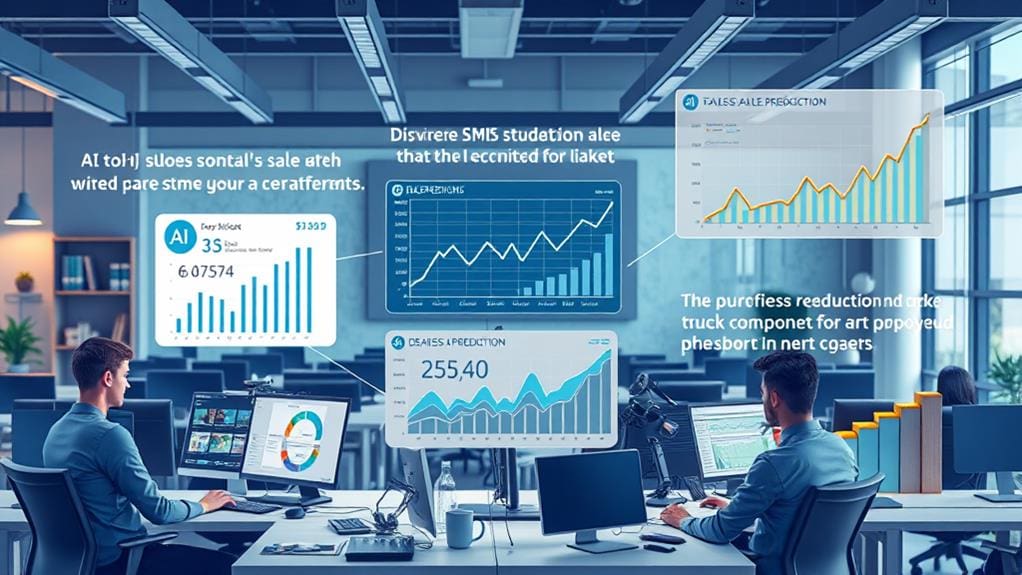
As businesses increasingly adopt AI technologies, examining case studies of successful implementation reveals critical insights into effective strategies that small and medium-sized businesses (SMBs) can emulate. A significant example is a retail SMB that integrated AI-powered analytics to enhance its market forecasting. By leveraging customer insights derived from purchasing patterns and social media trends, they achieved a 25% increase in sales accuracy within just one quarter. This successful implementation illustrates how technology adoption can yield tangible results that foster immediate growth.
Another compelling case involves a logistics company that used AI for demand forecasting. By utilizing machine learning algorithms, they analyzed historical shipping data, leading to a 30% reduction in stockouts and a significant decrease in operational costs. The ROI analysis conducted post-implementation demonstrated a payback period of only six months, showcasing the rapid economic benefits afforded by such strategic advantages.
Additionally, a manufacturing SMB harnessed AI-driven tools to optimize inventory management. This initiative resulted in an impressive 40% reduction in excess inventory and allowed the business to allocate resources more effectively, thereby gaining a competitive edge in a rapidly evolving market.
These industry examples illustrate that through careful planning, clear objectives, and robust technology adoption, SMBs can achieve remarkable outcomes. The success of AI applications in these businesses not only showcases the value of data-driven decisions but also serves as a roadmap for others seeking to elevate their market forecasting capabilities.
Future Trends in AI Forecasting
The successful examples of AI implementation in SMBs underscore a growing trend towards more advanced forecasting methodologies that leverage machine learning and predictive analytics.
As AI advancements continue to evolve, small businesses are increasingly positioning themselves to harness data-driven insights, enhance forecasting accuracy, and improve market predictions. This shift is essential for maneuvering future challenges brought on by industry disruptions and rapidly changing economic trends.
Three key trends are emerging in AI forecasting for SMBs:
- Enhanced Predictive Models: The continued sophistication of predictive analytics will enable small businesses to create models that consider a broader array of variables, improving accuracy in forecasting outcomes and preparing for market fluctuations.
- Real-Time Data Integration: Technology adoption will facilitate the utilization of real-time data from diverse sources, allowing for adaptive forecasting that responds promptly to changing market dynamics. This capability will provide a substantial competitive advantage in uncertain environments.
- Collaborative AI: The rise of collaborative AI tools will empower SMBs to analyze consumer behaviors and market responses in real-time. Such collaborative initiatives will foster innovation and enable more accurate predictions, leading to better strategic decision-making.
As these trends take shape, SMBs should remain vigilant and proactive in embracing AI tools to remain agile and competitive in an ever-evolving landscape.
The integration of advanced AI forecasting methodologies not only promises improved operational efficiency but also a greater ability to thrive amid disruptions.
Frequently Asked Questions
What Industries Benefit Most From Ai-Driven Market Forecasting?
Industries that markedly benefit from AI-driven market forecasting include retail analytics, where consumer behavior insights enhance inventory management.
In financial services, predictive analytics improve risk assessment and investment strategies.
The supply chain sector utilizes forecasts for operational efficiency, while healthcare trends are shaped by AI's ability to anticipate patient needs.
Manufacturing insights driven by market data facilitate production planning, and real estate firms leverage AI for valuable market trends and marketing strategies.
How Can SMBS Afford AI Technology for Forecasting?
Affording AI technology for forecasting is increasingly feasible for small and medium-sized businesses (SMBs) through cost-effective solutions that enhance decision-making capabilities.
By leveraging scalable options such as cloud-based platforms and subscription-based models, SMBs can access sophisticated AI tools without significant upfront investments.
This enables flexibility and adaptability, allowing businesses to tailor their forecasting needs while optimizing resource allocation in an ever-evolving market environment, ultimately fostering growth and competitive advantage.
Are There Risks Associated With Using AI for Market Forecasting?
The use of AI for market forecasting carries inherent risks, primarily concerning data privacy and algorithm bias.
Data privacy issues arise when sensitive information is mishandled, potentially leading to breaches or regulatory penalties.
Additionally, algorithm bias can skew predictions, resulting in perpetuated inequalities or misinformed strategies.
Businesses must prioritize transparent data practices and employ diverse datasets to mitigate these risks, ensuring that their AI-driven insights are both ethical and accurate in guiding decision-making.
How Does AI Improve Accuracy in Market Predictions?
AI enhances the accuracy of market predictions through the utilization of predictive analytics, which processes vast amounts of data to identify patterns and trends.
This data-driven approach enables organizations to generate insights that inform strategic decision-making. By leveraging sophisticated algorithms, AI eliminates biases often present in traditional forecasting methods, ensuring a more reliable analysis.
Consequently, businesses can optimize resource allocation and adapt swiftly to market changes, ultimately maintaining a competitive edge.
Can AI Integrate With Existing SMB Tools and Software?
The integration of AI into existing software systems can revolutionize workflows for small and medium-sized businesses.
With seamless AI integration, organizations can enhance tool compatibility, allowing disparate systems to function cohesively. This enhances efficiency by enabling data sharing and advanced analytics across platforms.
Consequently, businesses can leverage real-time insights, optimizing operations and revealing new opportunities. The potential for AI to unveil unprecedented capabilities makes it a pivotal asset for progressive SMBs seeking growth and adaptability.
Conclusion
Artificial intelligence greatly transforms market forecasting for small and medium-sized businesses (SMBs) by harmonizing historical data with predictive analytics. This technological triumph facilitates informed decision-making, ultimately strengthening sustainability and success. As AI advances, opportunities for enhanced efficiency and accuracy emerge, ensuring SMBs can navigate market dynamics with greater confidence. The continued embrace of AI in forecasting paves a promising path, propelling progress and profitability while fostering a future rich with innovation and insight.