
How AI Can Help SMBs Navigate Market Challenges
AI equips small and medium-sized businesses (SMBs) with essential tools to tackle market challenges efficiently. By harnessing predictive analytics, SMBs can identify customer behavior patterns and tailor offerings, boosting satisfaction and revenue. AI also streamlines operations, automating processes to enhance productivity and reduce costs. In addition, it enables real-time competitive landscape monitoring, allowing businesses to adjust strategies promptly. Personalization at scale deepens customer connections, making engagement more effective. Ultimately, integrating AI not only drives operational efficiency but also future-proofs SMBs against emerging threats, paving the way for sustainable growth in a dynamic market. Explore further to discover additional insights.
Key Takeaways
- AI-powered predictive analytics enables SMBs to make informed decisions by revealing customer behavior patterns and improving sales predictions.
- Competitive landscape monitoring using AI tools helps SMBs understand market trends and refine pricing strategies through competitor benchmarking.
- Personalization at scale drives deeper customer engagement, tailored marketing, and improved user experiences based on data-driven insights.
- Workflow automation through AI enhances operational efficiency, streamlining processes and freeing up employee time for higher-priority tasks.
- AI integration supports scalability and risk management while promoting innovation and improving talent acquisition processes in SMBs.
Understanding the SMB Landscape

In the dynamic world of small and medium-sized businesses (SMBs), understanding the landscape is essential for leveraging opportunities and overcoming challenges. SMBs are frequently faced with a myriad of challenges, including fluctuating market trends and tightening funding options. To thrive, these enterprises must adopt strategic growth strategies that not only address immediate concerns but also position them favorably for the future.
Technology adoption is a double-edged sword for many SMBs. While integrating new technologies can lead to transformative changes, the pressure of keeping pace can be intimidating. Embracing digital transformation allows businesses to enhance customer segmentation, ultimately leading to more effective targeting and improved customer experiences. This not only strengthens brand positioning but also builds loyalty in an increasingly competitive market.
Moreover, regulatory impacts must not be overlooked. SMBs often grapple with complex regulations that can limit operational flexibility. Effective workforce management, aligned with compliance, becomes essential in managing human resources efficiently while maximizing output.
In this evolving landscape, agility is a cornerstone of success. SMBs that proactively monitor market dynamics and adapt their strategies gain a critical advantage. By harnessing innovative funding options, investing in technology, and maintaining a keen awareness of both customer needs and regulatory frameworks, SMBs can navigate their challenges effectively.
Ultimately, a thorough understanding of the SMB landscape enables these businesses to not only survive but thrive, achieving the freedom to explore new avenues for growth.
AI-Powered Market Analysis
AI-powered market analysis equips small and medium-sized businesses (SMBs) with predictive analytics insights that drive informed decision-making.
By evaluating trends and consumer behaviors, these innovative tools enable SMBs to gain a competitive edge in a dynamic market landscape.
Additionally, monitoring the competitive environment allows businesses to strategically position themselves, ensuring they remain responsive to industry shifts and consumer demands.
Predictive Analytics Insights
Leveraging predictive analytics enables small and medium-sized businesses (SMBs) to access valuable insights that drive strategic decision-making and enhance market positioning. By analyzing data trends, SMBs can discern patterns in customer behavior, allowing them to tailor offerings to meet specific needs effectively. This targeted approach not only improves customer satisfaction but also supports accurate sales predictions, directly impacting revenue growth.
Market forecasting powered by predictive analytics allows businesses to identify emerging opportunities and potential risks through meticulous risk assessment. Consequently, SMBs can optimize resource allocation, guaranteeing that they allocate personnel and financial resources judiciously.
Operational efficiency is further enhanced via data-driven inventory management, which mitigates excess stock and reduces costs.
Additionally, sophisticated financial modeling provided by predictive analytics helps SMBs project future financial outcomes, enhancing their capacity for informed strategic planning. Staffing optimization, informed by predictive insights, guarantees that businesses are neither overstaffed nor understaffed, promoting a balanced, efficient workforce.
Competitive Landscape Monitoring
Understanding the competitive landscape is vital for SMBs endeavoring to thrive in today's dynamic market environment. AI-powered tools can greatly enhance competitive landscape monitoring, providing invaluable insights that foster strategic decision-making.
Through trend identification, businesses can pinpoint emerging patterns affecting their sectors, bolstering market positioning. The ability to conduct competitor benchmarking enables SMBs to evaluate their performance relative to industry peers, identifying strengths and weaknesses through SWOT analysis. This analysis is essential for refining pricing strategies and enhancing brand awareness, ensuring differentiation in crowded markets.
AI also facilitates robust market segmentation, allowing SMBs to tailor offerings to specific customer groups. By analyzing consumer preferences and behaviors, businesses can craft targeted campaigns, driving engagement and loyalty.
Additionally, thorough threat assessment using AI tools allows SMBs to stay one step ahead of potential disruptions, enabling proactive strategies that safeguard their market presence.
Enhancing Customer Engagement

In today's competitive landscape, enhancing customer engagement is vital for SMBs looking to thrive.
Leveraging AI-driven personalization at scale allows businesses to tailor their interactions, fostering deeper connections with customers.
Additionally, predictive analytics insights empower SMBs to anticipate customer needs and preferences, driving more effective engagement strategies.
Personalization at Scale
Personalization at scale has become a game-changer for small and medium-sized businesses (SMBs), enabling them to foster deeper customer relationships and enhance engagement. By leveraging customer segmentation, SMBs can effectively group their audience based on specific characteristics, allowing for tailored messaging that resonates. This strategic approach not only improves user experience but also guarantees that businesses connect meaningfully with their customers throughout the customer journey.
Utilizing data-driven insights and behavioral analysis, SMBs can craft dynamic pricing models and targeted promotions that reflect real-time adjustments in market demand. By continuously monitoring engagement metrics, businesses gain a clearer understanding of customer preferences and behaviors, enabling them to refine their offerings. This proactive strategy cultivates a more personalized user experience, ultimately driving customer loyalty.
Incorporating advanced analytics, SMBs can capitalize on the opportunity to understand their clientele in a nuanced way, fostering deeper connections. Personalization at scale is more than a trend; it's a strategic imperative for SMBs seeking to differentiate themselves in competitive markets.
Predictive Analytics Insights
Harnessing the capabilities of predictive analytics enables small and medium-sized businesses (SMBs) to take customer engagement to new heights. By leveraging trend forecasting, SMBs can anticipate shifts in customer behavior, allowing them to tailor their marketing strategies effectively. This foresight not only enhances customer relationships but also fosters loyalty.
Predictive analytics empowers SMBs in risk assessment and performance optimization, enabling better resource allocation to meet customer demands. Through strategic market segmentation, businesses can identify niches and target specific audiences, increasing the relevance of their offerings.
In addition, sales prediction and demand forecasting provide valuable insights, helping SMBs optimize their inventory management to reduce costs and meet customer expectations. Financial modeling allows businesses to simulate various scenarios, ensuring they stay agile in a dynamic market landscape.
Ultimately, the integration of predictive analytics transforms how SMBs engage with their customers, turning insights into actionable strategies. By understanding customer behavior and trends, businesses can strengthen their position in the marketplace, ultimately achieving sustained growth and freedom to innovate.
Embracing these technologies is not just a competitive advantage; it's a pathway to lasting success.
Streamlining Operations With AI
Streamlining operations with AI presents an invaluable opportunity for small and medium-sized businesses (SMBs) to enhance efficiency and reduce costs. By employing AI-driven solutions, companies can implement workflow automation that transforms routine processes into seamless, efficient operations. This form of automation not only saves time but also allows employees to focus on higher-value tasks, ultimately boosting employee productivity.
Furthermore, AI facilitates process optimization by analyzing workflows to identify bottlenecks and inefficiencies. This leads to improved task management, where resources are allocated more strategically, ensuring that team members' strengths are aligned with the tasks at hand. This targeted resource allocation can greatly enhance overall performance.
In the domain of supply chain management, AI plays a critical role in streamlining operations. By leveraging data integration, businesses can gain a holistic view of their inventory management, enabling timely and informed decisions. AI algorithms can forecast inventory needs, greatly reducing waste and improving turnover rates.
Moreover, as SMBs embrace these technologies, they gain the agility to adapt to market changes swiftly. The visibility and insights provided by AI-driven systems empower businesses to respond proactively to shifts in demand, ultimately leading to greater competitiveness in the marketplace.
Predictive Analytics for Decision-Making

Leveraging predictive analytics empowers small and medium-sized businesses (SMBs) to make informed decisions that drive strategic growth. By utilizing data trends, SMBs can gain insights into customer behavior, market fluctuations, and operational efficiencies that inform their business strategies.
Predictive analytics employs sophisticated forecasting models that analyze historical data and identify patterns, enabling SMBs to anticipate future outcomes with greater accuracy.
As market dynamics evolve, the ability to predict trends can be a differentiator for SMBs aiming for competitive advantage. For instance, understanding seasonal demand variations through predictive analytics can help businesses optimize inventory levels, minimize waste, and enhance customer satisfaction.
This capability to forecast potential challenges or opportunities allows SMBs to pivot their strategies effectively, ensuring they remain agile and responsive.
Moreover, predictive analytics facilitates better resource allocation. By analyzing data trends, SMBs can determine which products or services yield the highest ROI and focus their efforts accordingly.
This strategic insight supports decision-making that not only enhances profitability but also reinforces the entrepreneurial spirit of SMBs, empowering them to navigate the complexities of their respective markets with confidence.
Cost Reduction Strategies
Successful small and medium-sized businesses (SMBs) frequently seek effective cost reduction strategies to enhance profitability and secure sustainability in competitive markets. By leveraging technology and innovative approaches, these businesses can create a leaner operational structure that not only reduces costs but also fosters growth and adaptability.
One essential strategy for cost reduction is automating processes. By integrating automation tools, SMBs can streamline workflows, minimize repetitive tasks, and ultimately free up valuable employee time, allowing staff to focus on higher-priority projects.
Additionally, optimizing resources is imperative. Companies can assess their current assets and personnel, making sure they are effectively deployed to maximize their impact while reducing overhead costs.
Improving efficiency is another tactic that cannot be overlooked. By analyzing current operations, businesses can identify bottlenecks and areas for improvement, which can lead to increased productivity.
Another aspect is managing expenses through meticulous budgeting. By integrating robust budgeting tools, SMBs can better track spending and identify potential savings opportunities.
Furthermore, SMBs can increase productivity while minimizing waste by adopting a culture of continuous improvement. Regular training and investing in employee development will elevate skillsets, empowering workers to contribute more effectively.
Finally, streamlining budgeting processes guarantees that businesses maintain precise control over their expenses, allowing for timely adjustments as market conditions fluctuate.
Incorporating these cost reduction strategies enables SMBs to thrive in their respective industries while maintaining a competitive edge.
Future-Proofing SMBS With AI
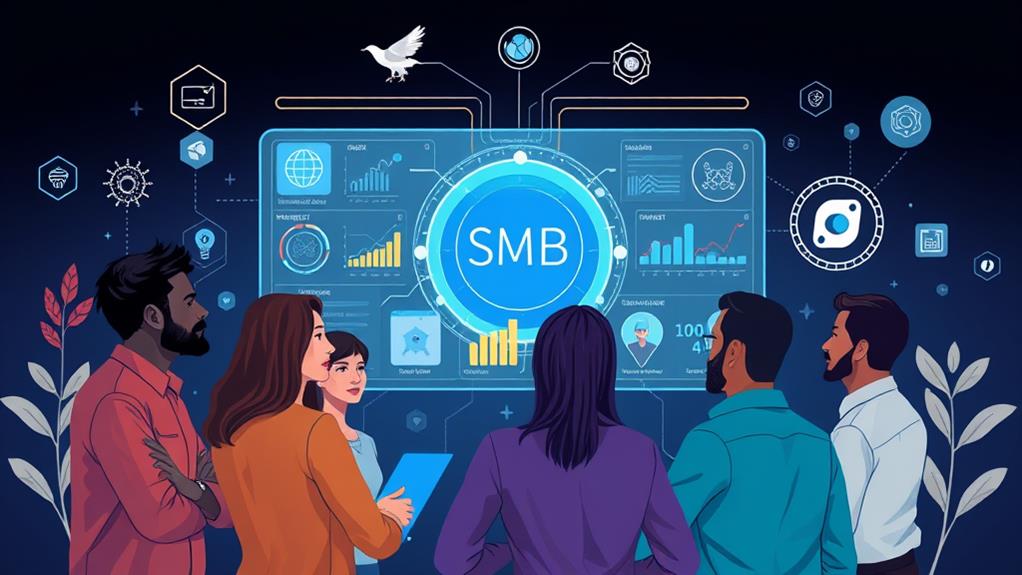
The integration of artificial intelligence (AI) into small and medium-sized businesses (SMBs) represents a pivotal shift in how these organizations can adapt to future challenges and opportunities. By implementing AI solutions, SMBs can achieve AI scalability, allowing them to scale operations efficiently without the proportional increase in overhead costs. This scalability fosters workforce optimization, enabling teams to focus on high-value tasks while routine processes are automated.
Beyond operational efficiencies, AI bolsters risk management by providing advanced analytics that help identify potential vulnerabilities within the business. Such insights empower SMBs to implement proactive measures, thereby reducing risks associated with market fluctuations and operational disruptions.
Additionally, the incorporation of AI accelerates innovation, driving the development of new products and services that meet evolving customer demands. However, to fully leverage these benefits, SMBs must prioritize data governance, ensuring that the data driving AI initiatives is accurate, secure, and compliant.
Strategic alignment between technology and business goals is essential, facilitating the effective utilization of AI to enhance agility. Furthermore, AI plays a pivotal role in talent acquisition, identifying the right candidates more efficiently while supporting diversity and inclusion efforts.
Frequently Asked Questions
What Types of SMBS Can Benefit From AI Technologies?
Various types of small and medium-sized businesses (SMBs) stand to gain considerably from AI technologies.
Retail businesses can enhance customer experiences through personalized recommendations, while service industries can optimize scheduling and resource allocation.
E-commerce platforms benefit from AI-driven analytics for sales forecasting and inventory management.
Manufacturing firms can improve production efficiency through predictive maintenance, and health care providers can leverage AI for patient management and diagnostic accuracy, thereby fostering operational resilience and growth.
How Quickly Can SMBS Implement AI Solutions Effectively?
The swift integration of AI solutions in small and medium-sized businesses resembles a race against the clock, yet the journey can be navigated with strategic foresight.
The implementation timeline varies, typically ranging from weeks to months, contingent upon the complexity of the solution and the adequacy of resource allocation.
Prioritizing digital literacy and aligning staff capabilities with technology can hasten this shift, ultimately enabling businesses to embrace innovation while retaining their independence and agility.
What Are Common Misconceptions About AI for Smbs?
Common misconceptions about AI for small and medium-sized businesses (SMBs) include beliefs surrounding its accessibility, affordability, and complexity.
Many assume AI implementation is prohibitively expensive and requires extensive training. In reality, advancements have made AI solutions more accessible and affordable than ever.
Additionally, while some perceive AI as complex, many tools are user-friendly, allowing SMBs to leverage technology effectively without extensive training.
Ultimately, this empowers them to innovate and thrive in competitive markets.
Are There Risks Associated With Using AI for Smbs?
The allure of artificial intelligence can sometimes mask inherent risks, akin to a double-edged sword.
SMBs face challenges such as data privacy breaches, which can jeopardize customer trust. Additionally, implementation costs can escalate unexpectedly, straining budgets.
Skill gaps among employees may hinder effective utilization, while ethical concerns regarding bias and decision-making processes can pose significant dilemmas.
A thoughtful approach is essential to navigate these complexities while harnessing AI's potential for growth and innovation.
How Can SMBS Measure the Success of AI Adoption?
Measuring the success of AI adoption in small and medium-sized businesses (SMBs) requires the establishment of clear success metrics tailored to specific business objectives.
Key indicators may include operational efficiency, revenue growth, and customer satisfaction.
However, adoption challenges such as integration complexity and employee resistance must be addressed.
Conclusion
The integration of artificial intelligence into small and medium-sized businesses (SMBs) presents a transformative opportunity to effectively navigate market challenges. With 70% of SMBs acknowledging the benefits of AI in enhancing operational efficiency, the adoption of AI strategies is integral to sustaining competitive advantage. By leveraging advanced technologies, SMBs can mitigate risks, improve customer relationships, and optimize resource allocation, ultimately leading to a robust framework for enduring growth and resilience in a dynamic business environment.