
How AI Is Reshaping SMB Product and Service Offerings
AI is redefining small and medium-sized businesses (SMBs) by enhancing operational efficiency, personalizing customer experiences, and facilitating data-driven decision-making. Automation of routine tasks minimizes errors and allows employees to concentrate on strategic initiatives. Personalized marketing, fueled by predictive analytics, fosters customer loyalty and satisfaction by tailoring interactions to individual preferences. Additionally, AI accelerates product development through rapid prototyping and user feedback analysis. By leveraging these technologies, SMBs can gain a competitive edge, enabling them to respond adeptly to market shifts. There is much more to explore about the transformative impact of AI on SMB operations.
Key Takeaways
- AI optimizes workflows in SMBs, streamlining operations and enhancing productivity through task automation and improved resource allocation.
- Personalized marketing driven by AI enhances customer engagement, loyalty, and conversion rates through targeted efforts and dynamic content adaptation.
- Data analytics enable SMBs to make informed decisions, optimize strategies, and anticipate market trends for competitive advantage.
- AI integration in product development accelerates processes, allowing for rapid iterations and user feedback utilization to refine offerings.
- Ethical considerations in AI adoption ensure responsible data use and compliance, promoting trust and sustainability in SMB operations.
Understanding AI in SMBs

As small and medium-sized businesses (SMBs) increasingly embrace technological advancements, understanding the role of artificial intelligence (AI) in this scenario becomes vital. The fundamentals of AI reveal its transformative potential, particularly in SMB applications that can streamline operations, improve customer interaction, and enhance decision-making processes.
However, successful technology adoption demands a critical assessment of both the opportunities and challenges that AI brings to the table.
It is important to reflect on ethical considerations in AI deployment. Ethical frameworks can help SMBs navigate complex decisions, ensuring responsible use of data and algorithmic operations. Additionally, organizations must be cognizant of cost implications, including initial investments in technology and ongoing maintenance costs, which can vary greatly across different industry standards.
Integration challenges present another layer of complexity. As AI tools are incorporated into existing systems, SMBs must address scalability issues and potential innovation barriers that arise from legacy systems.
Training resources become paramount as workforces adapt to AI-enhanced environments; qualified training programs can empower employees to effectively leverage AI capabilities, minimizing resistance to change.
Streamlining Operations With Automation
The integration of artificial intelligence into SMB operations presents a considerable opportunity for automation, enhancing efficiency and productivity. By employing AI-backed solutions, businesses can achieve robust workflow optimization that redefines how tasks are executed. Task automation technologies streamline repetitive processes, resulting in noteworthy gains in process efficiency that not only free up valuable time but also minimize human error.
Key benefits of automating SMB operations include:
- Routine simplification: Automated systems take over mundane tasks, allowing employees to focus on strategic initiatives.
- Time savings: By optimizing internal workflows, companies can substantially reduce project turnaround times.
- Cost reduction: Enhanced resource management leads to better allocation of assets, contributing to overall financial health.
Moreover, operational scalability is accomplished when businesses can grow and adapt with the seamless integration of automated solutions. These technologies empower SMBs to operate more collaboratively by confirming that systems integration facilitates smooth changes and innovative practices across departments.
The path toward productivity enhancement is clearer with automation. As businesses harness these advanced technologies, they can allocate human resources toward higher-value projects, fostering creativity and strategic problem-solving.
Embracing AI in streamlining operations not only guarantees competitive advantage, but also speaks to a desire for freedom from menial tasks—allowing for the exploration of new opportunities for growth and innovation. In this evolving landscape, the ability to transform operations through automation is indispensable for any SMB aiming to thrive in today's dynamic marketplace.
Enhancing Customer Experience

As businesses increasingly adopt AI technologies, enhancing customer experience emerges as a critical priority.
Personalized interactions powered by AI tools allow SMBs to tailor their services and communications to individual client needs, fostering loyalty and satisfaction.
Additionally, predictive analytics offer valuable insights into customer behavior, enabling proactive engagement and improved service delivery.
Personalized Interactions Through AI
Transforming the way businesses engage with their customers, personalized interactions through AI are revolutionizing the customer experience landscape. By leveraging advanced algorithms, companies can develop a deeper understanding of their clientele, enabling a more targeted approach to customer segmentation. This strategic focus allows businesses to tailor offerings and communications, enhancing the relevance of their services and products.
Several key benefits emerge from this innovative approach:
- Enhanced Customer Loyalty: Personalized experiences foster a sense of connection, encouraging repeat business.
- Dynamic Pricing Models: AI enables firms to implement dynamic pricing strategies that respond to market demands, ensuring competitive positioning while maximizing revenue.
- Real-Time Adaptability: AI systems facilitate immediate adjustments to marketing tactics based on customer behavior, further personalizing interactions.
As small and medium-sized businesses (SMBs) embrace AI technologies, the potential for increased customer engagement and satisfaction grows exponentially.
By prioritizing personalized interactions, these organizations can not only meet customer expectations but also carve out a distinctive brand identity that resonates in a crowded marketplace.
Embracing this transformation is essential for SMBs seeking to thrive in an increasingly competitive environment.
Predictive Analytics for Insights
Predictive analytics serves as a powerful tool for small and medium-sized businesses (SMBs), offering valuable insights that greatly enhance the customer experience. By utilizing data forecasting, SMBs can anticipate customer needs and preferences, leading to improved service delivery.
Trend identification allows businesses to stay ahead of market shifts, effectively adapting their offerings based on changing consumer behaviors.
With advanced customer segmentation techniques, predictive analytics empowers SMBs to tailor their marketing strategies, ensuring that communications resonate with specific audience segments. Market predictions derived from performance analytics can optimize sales strategies, boosting conversions and customer satisfaction.
Additionally, behavior analysis uncovers insights into purchasing patterns, enhancing demand forecasting efforts and minimizing stockouts.
Furthermore, risk assessment tools associated with predictive analytics enable SMBs to navigate uncertainties, allowing for proactive inventory management. By aligning resources and stock levels with anticipated demand, businesses can reduce waste and increase profitability.
In summation, the integration of predictive analytics not only refines operational efficacy but also fosters deeper customer relationships, ultimately transforming the customer experience into a more personalized and engaging journey.
Through these insights, SMBs can achieve remarkable growth while maintaining flexibility in today's dynamic marketplace.
Personalized Marketing Strategies
Personalized marketing strategies have emerged as a critical component for small and medium-sized businesses (SMBs) looking to enhance customer engagement and drive sales. By leveraging artificial intelligence (AI), these businesses can create tailored experiences that resonate with individual customer preferences.
At the heart of this approach is customer segmentation, which allows SMBs to categorize their audience into distinct groups based on demographics, behaviors, and purchasing patterns. This targeted methodology guarantees that marketing efforts are both relevant and impactful.
Dynamic content further amplifies the effectiveness of personalized marketing. By utilizing AI algorithms, SMBs can deliver content that adapts to the user's interaction history and preferences, creating a fluid and engaging customer experience. This capability not only drives higher engagement rates but also cultivates brand loyalty, as customers feel understood and valued.
Key benefits of implementing personalized marketing strategies include:
- Increased Conversion Rates: By serving customers relevant content, businesses see a higher likelihood of conversion.
- Enhanced Customer Relationships: Personalized interactions foster a stronger bond between the brand and its audience.
- Optimized Marketing Spend: Targeting specific segments reduces wasted resources and increases return on investment.
Data-Driven Decision Making
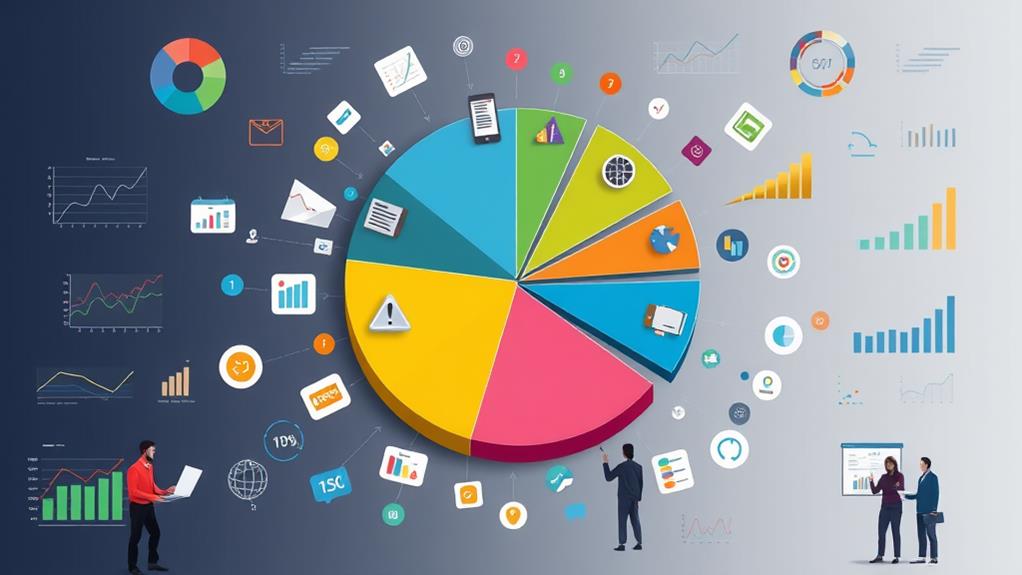
Data-driven decision making has become a cornerstone for small and medium-sized businesses (SMBs) looking to thrive in a competitive landscape.
By leveraging enhanced market analysis and predictive trends, SMBs can make informed choices that optimize their strategies and resources.
This analytical approach not only streamlines resource allocation but also positions businesses to respond proactively to market shifts.
Enhanced Market Analysis
Marketplace dynamics are evolving at an unprecedented rate, and small to medium-sized businesses (SMBs) must adapt to stay competitive. Enhanced market analysis, fueled by sophisticated AI tools, empowers SMBs to make data-driven decisions that optimize their strategies. Utilizing market segmentation strategies, businesses can target specific customer groups effectively, while consumer behavior analysis allows for deeper insights into purchasing patterns, adapting offerings accordingly.
Key elements of enhanced market analysis include:
- Competitive landscape evaluation to identify market positioning
- Pricing strategy optimization based on data analytics
- Demand prediction models to anticipate customer needs
Demographic insights enable SMBs to tailor their products and services to meet the specific preferences of their audience.
Additionally, trend forecasting techniques provide foresight into upcoming market shifts, aiding in market entry strategies and timely adjustments.
Finally, a thorough brand positioning analysis coupled with continuous monitoring of sales performance metrics guarantees that businesses stay aligned with customer expectations and maintain a strong market presence.
Embracing these advanced analytical approaches equips SMBs with the tools necessary to navigate a complex marketplace and achieve sustainable growth.
Predictive Trend Insights
An increasing number of small to medium-sized businesses (SMBs) are leveraging predictive trend insights to enhance their decision-making processes. This strategic approach enables SMBs to harness thorough data analytics for effective trend forecasting, a critical capability in understanding shifts in consumer behavior.
By utilizing AI-based algorithms, businesses gain access to expansive datasets that reveal patterns and emerging trends within their target markets. Predictive analytics help SMBs to anticipate customer needs, enabling them to adapt their offerings efficiently.
This not only fosters an environment where informed decisions thrive but also allows businesses to respond proactively to changing market dynamics. As consumer behavior becomes increasingly complex, the ability to accurately predict future trends helps SMBs stay competitive and relevant.
Moreover, integrating predictive trend insights into the decision-making framework equips these businesses with a powerful tool for developing innovative strategies. By understanding the nuances of consumer behavior, companies can tailor their products and services to meet evolving demands, ultimately leading to increased customer satisfaction and loyalty.
Embracing this data-driven mindset empowers SMBs to navigate uncertainties and forge a path toward sustained growth in a dynamic marketplace.
Streamlined Resource Allocation
With the increasing reliance on predictive trend insights, SMBs are also discovering the importance of streamlined resource allocation to optimize their operations.
This strategic approach, driven by data-informed decisions, enables businesses to enhance resource optimization and achieve significant cost efficiency. By utilizing AI and advanced analytics, SMBs can better assess their resource distribution and identify areas where adjustments can be made for maximum impact.
Key benefits of streamlined resource allocation include:
- Enhanced planning accuracy: Accurate data analysis helps businesses forecast their needs more effectively.
- Reduced waste: Identifying unnecessary expenditures ensures that resources are employed where they are most valuable.
- Improved agility: A responsive allocation system allows SMBs to pivot quickly to seize emerging opportunities.
As SMBs embrace these data-driven methodologies, they empower their teams to make informed choices that promote sustainability and growth.
The integration of AI into resource allocation processes not only simplifies operational complexity but also cultivates an environment where companies can hone their competitive edge, guaranteeing they thrive in an ever-evolving marketplace.
AI in Product Development
In today's competitive landscape, businesses are increasingly leveraging artificial intelligence to streamline their product development processes. AI-driven prototyping enables teams to create digital models rapidly, allowing for swift adjustments based on real-time data. The integration of machine learning further enhances this process, as algorithms can analyze vast user feedback data to inform design modifications, guaranteeing that products quickly meet market demands.
The agility of development processes has improved substantially, with AI facilitating rapid iteration cycles. Teams can embrace agile methodologies more effectively, responding to user needs through iterative design improvements.
Collaborative design tools powered by AI encourage cross-functional teamwork, fostering an environment where creativity flourishes during virtual brainstorming sessions. Such platforms not only unify ideas but also amplify innovation acceleration, essential in today's fast-paced market.
Moreover, AI supports the implementation of design thinking methodologies, guiding teams in empathizing with users, defining problems, ideating solutions, prototyping, and testing rapidly. This systematic approach not only leads to creative solutions but also guarantees that they are cost-effective, reducing the risks associated with traditional development strategies.
Competitive Advantage Through AI
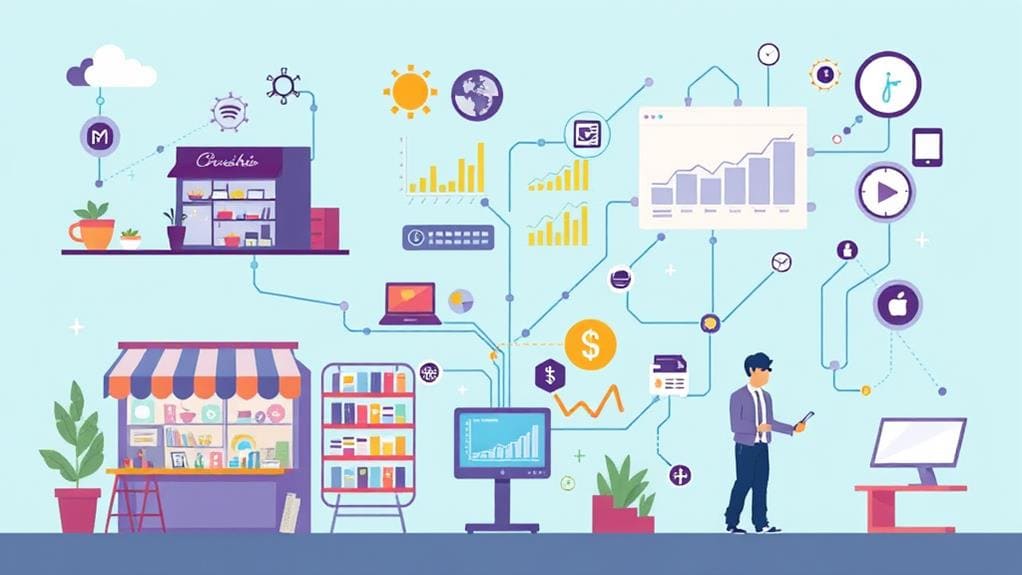
Numerous small and medium-sized businesses (SMBs) are discovering that the strategic integration of artificial intelligence can create a significant competitive advantage in the marketplace. By harnessing AI differentiation strategies, these organizations can effectively position themselves against larger competitors, allowing them to serve their target markets with precision and agility.
AI technologies enable SMBs to streamline operations, enhance customer experiences, and foster innovation. Through extensive competitive landscape analysis, businesses can identify gaps in service delivery and tailor their offerings to meet specific consumer needs, allowing them to stand out in crowded markets.
Additionally, AI-driven insights help SMBs anticipate market trends and customer preferences, fostering nimble adaptations to improve their value propositions. The advantages of effectively utilizing AI extend beyond improved efficiency; they also enhance strategic decision-making and operational resilience.
- Personalized Customer Experiences: AI enables SMBs to offer tailored services that resonate with individual customers, increasing loyalty and brand recognition.
- Data-Driven Insights: Leveraging AI for analytics empowers SMBs to make informed decisions, optimizing marketing strategies and resource allocation.
- Enhanced Operational Efficiency: Automating routine tasks allows SMBs to allocate resources toward innovative initiatives, driving growth without significant overhead.
Future Trends in AI for SMBs
As the competitive landscape continues to evolve, small and medium-sized businesses (SMBs) are poised to capitalize on emerging trends in artificial intelligence to additionally enhance their market positioning. Looking ahead, several key trends will shape the future of AI for SMBs, profoundly impacting operational efficiency and strategic growth.
One of the foremost considerations is AI ethics, particularly as SMBs navigate challenges associated with data utilization. Establishing transparent integration strategies will be vital to guarantee compliance while empowering employees to embrace innovative technologies.
Moreover, as automation and AI analytics become commonplace, SMBs must address workforce impact and the need for upskilling. This requires careful planning to meet evolving training requirements while minimizing resistance to change.
Cost considerations will also play an integral role in defining the adoption of AI solutions. While the initial investment may pose scalability issues for some SMBs, long-term savings and enhanced productivity can yield significant returns. Firms must weigh immediate costs against potential operational efficiencies.
Additionally, security concerns associated with emerging technologies must not be overlooked; a robust cybersecurity framework is essential to secure proprietary data.
Implementation timelines will need to be strategic, as SMBs must balance the urgency of integration with the preparedness of their workforce and infrastructure.
Frequently Asked Questions
How Can SMBS Start Integrating AI With Limited Resources?
Integrating AI with limited resources requires a strategic approach.
Small and medium-sized businesses can start by leveraging cost-effective solutions, focusing on user-friendly platforms that demand minimal technical expertise.
Incremental integration through pilot programs allows for gradual adoption, ensuring resource allocation aligns with business priorities.
Additionally, utilizing available AI tools helps in evaluating impact and optimizing operations without overwhelming existing systems.
This method empowers businesses to innovate while maintaining control over their resources.
What Ethical Considerations Should SMBS Keep in Mind With AI Usage?
When integrating AI solutions, small and medium-sized businesses (SMBs) must prioritize ethical considerations.
Key areas include bias mitigation to guarantee equitable outcomes, establishing transparency standards that convey how AI processes data, and implementing accountability frameworks to track AI decisions.
Additionally, obtaining user consent is essential in fostering trust and maintaining privacy.
Are There Specific Industries Where AI Adoption Is More Beneficial for Smbs?
AI adoption yields significant benefits across various industries, particularly in retail, healthcare, and manufacturing. These sectors experience a substantial industry impact through enhanced operational efficiency and customer engagement.
However, adoption challenges such as integration complexities and workforce training must be addressed to fully harness AI's potential. By strategically maneuvering through these hurdles, SMBs can leverage AI technologies to innovate their services and improve competitive positioning, ultimately driving growth in an increasingly dynamic market landscape.
How Do SMBS Ensure Data Privacy When Using AI Technologies?
Many small and mid-sized businesses (SMBs) fear that adopting AI technologies may compromise their data privacy.
To address this concern, SMBs should implement robust data encryption practices and develop thorough compliance strategies aligned with industry regulations.
By prioritizing data protection measures, they can adeptly mitigate risks associated with AI deployment while ensuring customer trust.
Ultimately, embracing these strategies allows SMBs to leverage AI's benefits without sacrificing their commitment to data privacy and ethical standards.
What Training Is Needed for Employees to Work Alongside AI Tools?
To effectively work alongside AI tools, employees must undergo training that enhances both their technical and analytical skillsets. This includes developing AI literacy, which encompasses a fundamental understanding of AI principles, data interpretation, and its ethical implications.
Additionally, training should focus on interdisciplinary collaboration, fostering adaptability in dynamic environments. Empowering employees with these competencies enables them to leverage AI technology effectively, ultimately enhancing organizational productivity and innovation while promoting a culture of continuous learning.
Conclusion
The integration of artificial intelligence within small and medium-sized businesses (SMBs) illustrates a transformative journey, enhancing efficiency and engagement across various dimensions. By adopting AI-driven strategies, SMBs not only streamline operations but also foster personalized interactions with customers, ultimately positioning themselves competitively in the marketplace. Embracing this technological advancement proves essential for SMBs aiming to thrive in an ever-evolving landscape. As AI continues to advance, its potential to reshape offerings remains profound, suggesting a promising future for proactive SMBs.