How AI Is Revolutionizing Product Development in SMBS
AI is revolutionizing product development in small and medium-sized businesses (SMBs) by streamlining processes and fostering innovation. It utilizes machine learning to analyze historical data, guiding feature development and enhancing market research. Automated prototyping accelerates the design phase, enabling rapid iterations and cost reduction. Improved collaboration tools facilitate real-time communication and project management, breaking down silos. Predictive analytics transforms raw data into actionable insights, optimizing resource allocation and informing strategic decisions. These advancements not only strengthen customer engagement but also position SMBs for competitive leadership. Further exploration reveals how these trends are shaping the future of product development.
Key Takeaways
- AI enhances product development by automating repetitive tasks, allowing designers to focus on creativity and innovation.
- Machine learning analyzes consumer data trends, informing targeted product features and market strategies.
- Real-time collaboration tools foster team connectivity and streamline project management, improving efficiency in product development.
- Predictive analytics transform raw data into actionable insights, enhancing forecasting and strategic planning for market shifts.
- Automated prototyping and design validation accelerate the product lifecycle, enabling rapid adjustments based on user feedback.
Understanding AI in Product Development
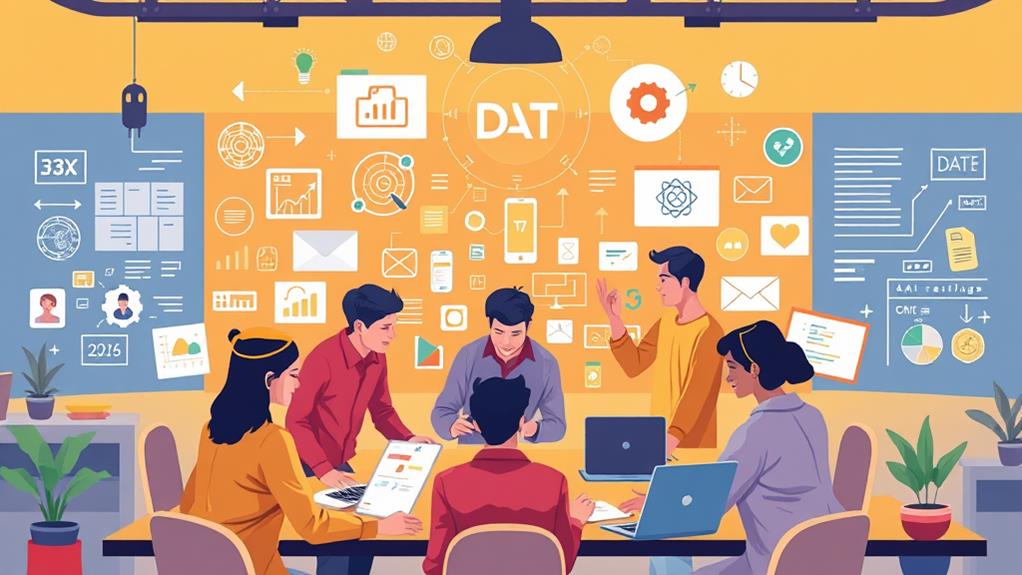
In the dynamic landscape of product development, artificial intelligence (AI) has emerged as a transformative force, reshaping how companies innovate and streamline their processes. Central to this evolution are machine learning applications that leverage vast datasets to improve decision-making and enhance design processes. By analyzing historical data, machine learning algorithms can uncover patterns and trends that inform product features, maximizing relevance and user experience.
Automated prototyping is another notable advancement driven by AI. This technology enables rapid generation of prototypes, which greatly reduces the time and cost associated with traditional development cycles. By utilizing AI, companies can explore multiple design iterations simultaneously, allowing for a more flexible approach that can adapt to changing market conditions or consumer preferences.
Rapid iterations enabled by automated prototyping not only enhance creativity but also democratize the design process, paving the way for innovative solutions that may have been overlooked in more conventional frameworks.
Furthermore, the integration of AI in product development fosters collaboration across teams, as it streamlines communication and optimizes resource allocation. This collaborative environment naturally encourages a culture of experimentation and adaptation, essential for organizations aiming to maintain their competitive edge.
As AI continues to evolve, its ability to augment human capabilities will redefine the boundaries of product development, empowering small and medium-sized businesses to innovate freely and effectively in a rapidly changing marketplace. The marriage of machine learning applications and automated prototyping is just the beginning of a new era characterized by agility, efficiency, and creativity.
Enhanced Market Research Techniques
The integration of AI technologies in product development extends beyond design and prototyping; it greatly enhances market research techniques as well. By leveraging advanced algorithms, SMBs can gain deep insights into consumer behavior, which aids in crafting more targeted strategies.
AI-powered data visualization tools make complex datasets more understandable, allowing businesses to quickly identify patterns and trends that might be overlooked in traditional analyses.
Competitive analysis is transformed with AI's ability to process vast amounts of information from various sources. This offers SMBs a clearer view of their positioning relative to peers, ensuring that they can adapt swiftly to shifting market dynamics.
Additionally, trend forecasting supported by machine learning models provides predictive insights that help companies stay ahead of the curve.
Demographic insights collected through AI-driven sentiment analysis contextualize user experiences, transforming raw data into actionable findings. This process enables the development of user personas that resonate with specific target segments.
Market segmentation becomes more sophisticated as AI allows for granular categorizations based on nuanced behavioral attributes.
In addition, aligning product initiatives with industry benchmarks is now more feasible. SMBs can utilize innovation mapping to align their products with emerging trends, enhancing value propositions.
Ultimately, the application of AI in market research not only uncovers critical data but also empowers SMBs to make informed decisions that foster innovation and growth, setting the stage for long-term success in an increasingly competitive landscape.
Streamlined Design Processes
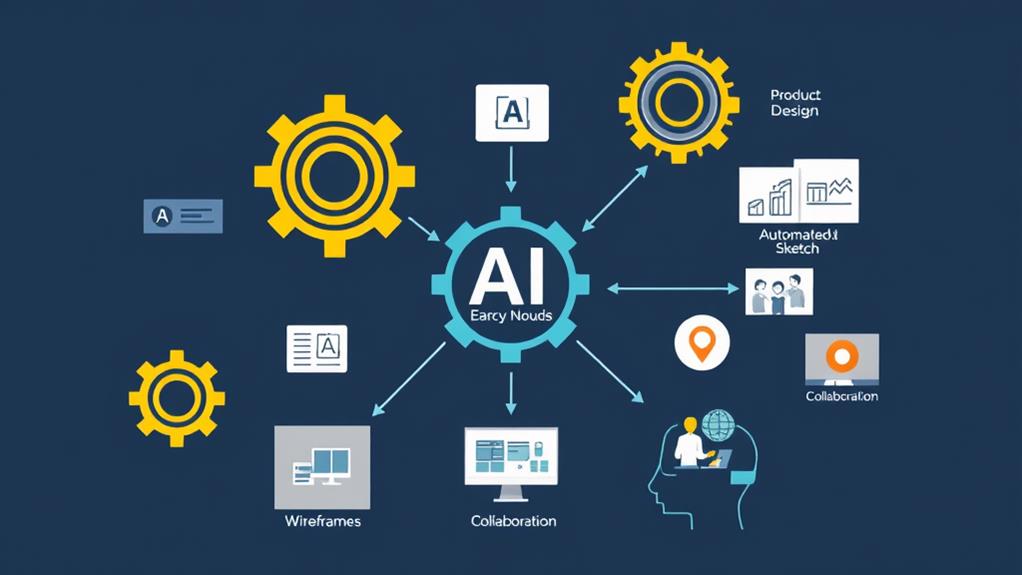
Streamlined design processes benefit greatly from the integration of AI technologies, which automate repetitive tasks and enhance collaboration among teams. This alleviation of manual effort allows designers to focus on more creative aspects, fostering innovation essential for competitive success.
By employing automated prototyping, firms can rapidly create and iterate on product designs, considerably reducing the time from concept to prototype. This efficiency not only speeds up the design phase but also enables more frequent testing and refinement of ideas.
Moreover, AI-driven tools facilitate design validation, a critical component in the product development cycle. These technologies analyze performance data and user feedback in real time, alerting teams to discrepancies and potential issues before they escalate. As a result, the overall quality of the design is improved, ensuring that final products align more closely with market needs and expectations.
Furthermore, the use of AI in these processes establishes a data-driven foundation for decision-making. By synthesizing vast amounts of information and predicting outcomes, AI empowers teams to make informed choices that enhance both creativity and functionality.
This capability fosters an environment where designers feel liberated to experiment, knowing that rigorous analysis backs their creative pursuits.
Improved Collaboration and Communication
The integration of AI technologies greatly enhances team connectivity, fostering a more collaborative environment.
By streamlining project management and facilitating real-time data sharing, teams can work more efficiently and effectively toward common objectives.
This transformation not only accelerates the product development lifecycle but also improves overall communication among team members.
Enhanced Team Connectivity
Effective collaboration and communication are essential cornerstones in modern product development, especially when integrating artificial intelligence tools into team workflows. The shift towards enhanced team connectivity enables businesses to embrace remote brainstorming and virtual workshops, greatly improving engagement and participation across diverse teams.
Utilizing collaborative tools such as digital whiteboards allows for real-time brainstorming, fostering an environment of creative problem solving. Hybrid meetings have become a staple, providing opportunities for both onsite and remote team members to contribute equally. This inclusivity not only promotes workflow optimization but also strengthens team engagement by encouraging knowledge sharing and interactive feedback.
AI systems can analyze discussions and highlight key points, resulting in a more efficient exchange of ideas and reducing the cognitive load on participants. Furthermore, integrating AI-driven tools helps identify patterns in team interactions, suggesting superior methodologies for future sessions.
Consequently, the combination of these technologies enhances the overall effectiveness of product development teams. By emphasizing connectivity and communication, organizations foster a culture where collaborative efforts can thrive, ultimately contributing to innovative solutions and accelerated project outcomes.
Streamlined Project Management
Adopting AI technologies in project management considerably enhances collaboration and communication within product development teams. By leveraging AI, teams can effectively implement agile methodologies, which are paramount for responding swiftly to market changes and customer feedback. This proactive approach allows for a clear delineation of roles and responsibilities, fostering a culture of accountability and collaboration among team members.
AI streamlines resource allocation by identifying ideal assignments based on individual strengths and availability. This not only maximizes efficiency but also guarantees that projects remain on schedule, reducing the risk of bottlenecks.
Additionally, AI-driven tools facilitate real-time updates, enabling team members to communicate their progress and any challenges they encounter. This transparency nurtures a sense of ownership and shared purpose, further enhancing camaraderie.
Moreover, AI enhances decision-making processes by providing data analytics and insights, guiding teams towards more informed choices. As a result, product development cycles become more fluid and adaptive, allowing small and medium businesses (SMBs) to thrive in competitive environments.
The integration of AI in project management ultimately leads to a more dynamic and engaged workforce, moving SMBs closer to their goals of innovation and excellence.
Real-Time Data Sharing
While traditional communication methods often hinder the flow of information, real-time data sharing empowered by AI technology greatly enhances collaboration within product development teams. This innovation allows for seamless data synchronization across various platforms, ensuring that all team members access updated and accurate information.
As teams work concurrently on projects, the need for instantaneous access to data becomes critical in driving efficiency. Information accessibility is paramount in fostering an environment where creativity and productivity can thrive.
By implementing AI-driven solutions, small and medium-sized businesses (SMBs) can break down silos, allowing for effective communication and timely decision-making. Real-time sharing of project updates, design iterations, and stakeholder feedback reduces delays and mitigates the frustration often associated with conventional communication barriers.
Additionally, leveraging AI tools for real-time data sharing empowers teams to analyze information collectively, enhancing their ability to respond to market changes swiftly. Consequently, this agility not only facilitates better alignment among team members but also strengthens the overall product development process.
Ultimately, the integration of real-time data sharing transforms how SMBs approach product development, enabling them to compete more effectively in an increasingly dynamic marketplace.
Predictive Analytics for Decision-Making
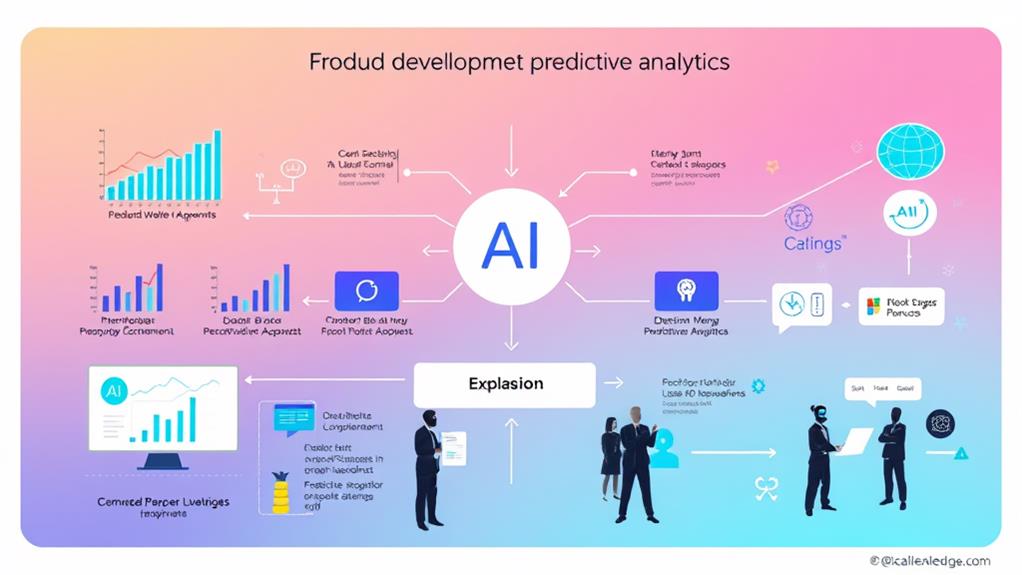
Predictive analytics has emerged as a pivotal tool in product development, transforming raw data into actionable insights for decision-making. By leveraging data-driven insights, small and medium-sized businesses (SMBs) can enhance their ability to forecast trends and adapt to market shifts. This capability allows organizations to not only predict future product performance but also to align offerings with evolving consumer preferences.
Trend forecasting is essential for remaining competitive in today's fast-paced market. Utilizing predictive analytics, businesses can analyze historical data trends and anticipate future innovations, enabling them to stay one step ahead of competitors. Moreover, risk evaluation becomes more robust when data models simulate various market conditions, helping companies identify potential pitfalls before they escalate.
Resource optimization is another significant advantage of predictive analytics. By evaluating current operations and forecasting demand, businesses can allocate their resources more effectively, minimizing waste and maximizing efficiency. Additionally, competitive analysis becomes seamless as organizations leverage predictive models to benchmark performance against industry standards, ensuring they remain agile in their strategies.
Through scenario modeling, businesses can visualize different market outcomes based on varying inputs. This foresight aids in strategic planning, allowing decision-makers to weigh potential risks and rewards with greater accuracy.
To conclude, predictive analytics empowers SMBs to make informed decisions, drive innovation, and ultimately secure a competitive edge in product development, paving the way for sustainable growth in an increasingly data-driven landscape.
Customer Feedback Integration
Integrating customer feedback into product development is crucial for creating offerings that truly resonate with consumers. In today's fast-paced market, businesses, especially small and medium-sized businesses (SMBs), must leverage customer insights to drive innovation and enhance product relevance.
AI-powered customer sentiment analysis tools enable companies to efficiently sift through vast amounts of consumer data, identifying trends and pain points that might otherwise go unnoticed. By analyzing feedback from multiple channels—such as social media, surveys, and reviews—AI can provide a thorough view of customer preferences and expectations.
This analysis not only highlights areas for improvement but also uncovers opportunities for new product features or entirely new offerings tailored to consumer desires. To further capitalize on these insights, feedback loop optimization is critical.
This approach involves establishing continuous touchpoints with customers, allowing businesses to swiftly implement changes and measure the outcomes. By creating an agile feedback mechanism, SMBs can iterate on their products rapidly, ensuring they remain competitive and attuned to the evolving market landscape.
Moreover, integrating customer feedback fosters a sense of community and connection between businesses and consumers. Engaging with customers not only empowers them but also builds brand loyalty.
Ultimately, as AI continues to revolutionize product development, the ability to effectively integrate customer insights will distinguish agile SMBs from less responsive competitors, making it a crucial strategy for sustainable growth.
Future Trends in AI and SMBs

As customer feedback integration becomes increasingly essential for product development, small and medium-sized businesses (SMBs) are positioned to harness future advancements in artificial intelligence (AI) to enhance their operations.
The anticipated trends in AI adoption will likely streamline processes, bolster SMB scalability, and foster competitive advantages that were previously unattainable.
Emerging AI technologies can greatly accelerate innovation by enabling rapid prototyping and real-time adjustments based on user data. This ability allows SMBs to remain agile and responsive to market demands, ensuring that products remain relevant and appealing.
Moreover, AI's role in cost reduction cannot be understated; automation tools can optimize resource allocation, decreasing overhead while improving operational efficiency.
As technology integration progresses, the differentiation of market offerings will be driven by SMBs harnessing AI insights to create unique value propositions. Enhanced customer engagement through predictive analytics and personalized recommendations will create deeper connections with clients, fostering brand loyalty.
Additionally, skill enhancement initiatives, empowered by AI, will equip employees with sophisticated tools that streamline workflows and augment decision-making capabilities. This not only boosts productivity but also cultivates a culture of continuous improvement.
Frequently Asked Questions
What Types of AI Tools Are Best for SMB Product Development?
To enhance product development in small and medium-sized businesses (SMBs), effective AI tools include machine learning algorithms for data analysis, predictive analytics for forecasting trends, and design automation for efficient prototyping.
Utilizing user feedback mechanisms strengthens product iterations, while thorough market research tools guarantee alignment with consumer needs.
Additionally, AI facilitates concept validation, enabling SMBs to refine their offerings before launch, thereby fostering innovation and adaptability in a competitive landscape.
How Can AI Improve Product Testing and Quality Assurance?
Recent surveys indicate that 30% of product failures stem from inadequate testing processes.
AI greatly enhances product testing and quality assurance through automated testing solutions, reducing human error and expediting the testing cycle.
Furthermore, predictive analytics allows organizations to foresee potential defects by analyzing historical data, enabling proactive interventions.
What Are the Costs Associated With Implementing AI in Product Development?
Implementing AI in product development entails several costs, primarily comprising initial investment in technology and potential long-term savings through enhanced efficiency.
Organizations face integration challenges related to existing systems, necessitating careful software selection and robust data management strategies.
Additionally, training requirements for personnel to effectively utilize AI tools can contribute to upfront costs.
Ultimately, a thorough cost-benefit analysis is essential to assess the total financial implications and strategic advantages of AI deployment.
How Do Privacy Concerns Affect AI Use in Smbs?
In the domain of artificial intelligence, privacy concerns act as a double-edged sword, cutting through innovation while safeguarding consumer rights.
SMBs must navigate data security and regulatory compliance, ensuring user consent and addressing ethical considerations. Upholding customer trust hinges on transparent measures, as stakeholders increasingly demand clarity.
As these businesses harness AI's potential, a robust framework that respects privacy will not only comply with regulations but also foster enduring relationships with their clientele.
Can AI Help With Environmental Sustainability in Product Development?
Artificial intelligence can greatly enhance environmental sustainability in product development by optimizing the selection of sustainable materials and improving energy efficiency.
AI algorithms analyze extensive data on material performance and environmental impact, guiding organizations towards eco-friendly alternatives.
Additionally, AI-driven simulations can identify energy-efficient manufacturing processes, reducing carbon footprints.
Conclusion
In conclusion, the innovative embrace of artificial intelligence by small and medium-sized businesses (SMBs) acts as a catalyst for transformative growth in product development. By facilitating enriched market research, streamlining design processes, and enhancing collaboration, AI emerges as a silent partner, guiding informed decision-making through predictive analytics and customer feedback integration. As the horizon of technological advancement continues to expand, the trajectory of AI promises to illuminate new pathways for SMBs, fostering resilience and adaptability in an ever-evolving marketplace.