
How to Build a Marketing Strategy for Product Differentiation
To build an effective marketing strategy for product differentiation, begin by defining your unique selling proposition (USP), which highlights what sets your product apart. Next, analyze your target market—understanding their demographics and psychographics will refine your messaging. Conduct competitor research to identify market gaps and innovation opportunities. Develop a compelling brand story that resonates emotionally with your audience and creates trust. Select the right marketing channels to maximize reach and engagement. Finally, continually test, gather feedback, and adapt your strategy based on performance metrics. This holistic approach not only sharpens your competitive edge but enhances customer loyalty and satisfaction. Explore further to uncover additional insights.
Key Takeaways
- Define a unique selling proposition (USP) that highlights the distinct benefits and value of your product compared to competitors.
- Conduct thorough analysis of your target market using demographic and psychographic data to create a comprehensive audience persona.
- Perform competitor research to identify strengths, weaknesses, and market gaps that your product can address effectively.
- Develop a compelling brand story that aligns your USP with the values and desires of your audience for greater emotional engagement.
- Utilize diverse marketing channels, including social media and email, to reach your audience and enhance brand visibility.
Define Your Unique Selling Proposition

Identifying your Unique Selling Proposition (USP) is essential for differentiating your brand in a crowded marketplace. A well-defined USP not only highlights your value proposition but also communicates the unique aspects of your offers that resonate deeply with potential customers.
During a time when choices abound, understanding and articulating your distinct advantages is crucial for establishing a loyal customer base.
To create an effective USP, you must consider the specific customer benefits that your product or service delivers. What makes your offering significant in the lives of your customers? By analyzing the needs, desires, and pain points of your target demographic, you can tailor your messaging to illuminate how your product addresses their unique challenges.
This alignment creates a powerful connection that inspires trust and loyalty.
Moreover, a strong USP empowers your brand to stand out amidst fierce competition. It solidifies your identity and fosters an emotional resonance that captures the hearts of consumers who value authenticity and innovation.
Aim to articulate your USP in a way that not only emphasizes what you offer but also why it matters. For an audience that desires freedom, frame your benefits in terms that highlight empowerment and choice, ensuring that your message is not just heard but felt.
Analyze Your Target Market
Understanding your target market is an essential element of any successful marketing strategy. It is imperative to explore deeply into customer behavior and preferences, as this insight enables brands to craft messages that resonate profoundly. The process of market segmentation allows you to categorize your audience based on shared characteristics, such as demographics, purchasing habits, and lifestyle choices. This understanding is not merely academic; it fuels the engine of innovation and differentiation.
When you analyze your target market, consider what motivates your customers. Are they driven by ethical considerations, yearning for sustainability, or perhaps enticed by convenience and speed? By recognizing these factors, you can tailor your offerings to meet their specific desires. This precision aids in creating a unique selling proposition that speaks directly to their needs, ensuring your product stands out in a crowded marketplace.
Furthermore, segmenting your market helps to identify niches that competitors may overlook. By addressing the desires of these specific groups, you cultivate a loyal customer base that appreciates your brand's commitment to meeting their unique needs. This strategic approach not only enhances customer satisfaction but also fosters lasting relationships grounded in trust and authenticity.
Ultimately, analyzing your target market equips you with the knowledge to navigate the complexities of consumer preference. This enables you to transcend the traditional transactional model and engage customers on a deeply personal level, paving the way for successful product differentiation in an ever-evolving marketplace.
Conduct Competitor Research

To effectively position your brand in a competitive landscape, thorough competitor research is essential.
By analyzing competitor offerings, businesses can uncover both strengths and weaknesses, allowing for strategic differentiation.
Additionally, identifying market gaps not only highlights opportunities for innovation but also enables companies to meet unfulfilled consumer needs, thereby enhancing their value proposition.
Analyze Competitor Offerings
Analyzing competitor offerings is a crucial step in crafting a successful marketing strategy, as it enables businesses to identify their unique value propositions in a crowded marketplace.
Understanding your competitors' strengths and weaknesses helps to refine your product positioning and differentiate your brand. To gain actionable insights, consider the following areas:
- Feature Comparisons: Evaluate the key features of your competitors' products. Identify areas where you can innovate or offer additional value that resonates with customer demographics.
- Pricing Strategies: Analyze their pricing models to understand how they balance affordability with perceived value. This insight helps you strategically position your pricing to attract brand loyalty.
- Promotional Tactics: Assess their marketing campaigns and promotional efforts. Understanding their approach can help you develop compelling tactics that leverage current market trends and appeal to your target audience.
Identify Market Gaps
A thorough approach to identifying market gaps is essential for businesses aiming to carve out a competitive advantage. Conducting meticulous competitor research reveals not only what is currently offered but also discloses unmet customer needs that are ripe for exploration. By analyzing competitors' strengths and weaknesses, businesses can pinpoint areas where they can innovate.
Moreover, staying attuned to emerging trends is imperative. Trends highlight shifting consumer preferences and behaviors, which can signal opportunities for differentiation. For instance, if a sector lacks sustainable options, a brand that prioritizes eco-friendly practices can capture attention and loyalty.
To succeed, it is significant to collect data through surveys, social media analysis, and industry reports, evaluating how competitors address customer pain points. Look for patterns or gaps in product offerings—whether in features, pricing, or accessibility.
Identifying these nuances allows businesses to position their products distinctly, aligning offerings with evolving customer desires. In an increasingly competitive market, leveraging insights from competitor research empowers brands to innovate boldly, fulfilling unaddressed needs and establishing a lasting presence.
Empower your brand to flourish by seeking out and filling these gaps.
Develop Your Brand Story
A well-crafted brand story begins with a clear definition of your unique selling proposition, ensuring that your message stands out in a crowded marketplace.
Understanding your target audience is essential, as it shapes the narrative that resonates with their values and desires.
Define Unique Selling Proposition
While developing your brand story, it is essential to define your Unique Selling Proposition (USP), as this will serve as the cornerstone of your marketing strategy. A strong USP not only distinguishes your product from competitors but also aligns with the customer needs that drive purchasing decisions.
By articulating the unique features of your product, you foster a gripping narrative that resonates with your audience's desires for freedom and individuality.
To effectively define your USP, consider the following:
- Identify Customer Needs: Understand the problems your customers face and how your product can provide solutions.
- Highlight Product Features: Showcase distinct features that set your product apart, ensuring they directly address customer needs and preferences.
- Craft a Compelling Narrative: Tie your USP into a cohesive brand story that communicates your mission and the values that underpin your product.
Identify Target Audience
Effective marketing hinges on knowing precisely who your target audience is; defining this group is essential for developing a compelling brand story. A nuanced understanding of your audience allows for meaningful engagement, fostering a connection that resonates deeply with potential consumers.
Begin with a meticulous demographic analysis, examining age, gender, income, and geographic location. This foundational data provides insight into who your audience is, setting the stage for further exploration.
However, demographic profiling alone is inadequate. Explore psychographic profiling to uncover the values, interests, and lifestyles that shape your audience's behavior. Understanding motivations and desires is key to crafting a narrative that aligns with their aspirations for freedom and self-expression.
By weaving together both demographic analysis and psychographic insights, you cultivate an audience persona that represents the essence of your ideal customer.
This thorough approach not only informs your marketing strategies but also helps create a brand story that speaks to the heart of your audience. In doing so, you empower them to connect with your product on a personal level, ultimately leading to a stronger brand loyalty and engagement.
Understanding your audience is the cornerstone of any successful marketing strategy.
Craft Compelling Narrative
Understanding your audience lays the groundwork for crafting a compelling narrative that resonates with them on multiple levels.
A well-crafted brand story taps into the desires and values of potential consumers, fostering a deeper emotional connection.
To effectively implement storytelling techniques in your marketing strategy, consider these three pivotal elements:
- Authenticity: Ascertain your story reflects genuine experiences and values, establishing trust and credibility in your brand.
- Relatability: Develop characters, scenarios, or challenges that mirror your audience's experiences, helping them see themselves within your narrative.
- Purpose: Clearly define the mission behind your brand, invoking a sense of shared values that align with the desires for freedom and individuality.
Create Compelling Messaging

Compelling messaging is essential in differentiating your brand in a crowded marketplace. To effectively resonate with your audience, it is vital to first understand customer pain points—those deep-seated challenges and frustrations your potential customers face. By addressing these pain points, you open the door to an emotional connection, positioning your brand as a solution provider.
Utilize storytelling techniques to craft narratives that embody your value proposition, making the benefits of your product clear and relatable. This narrative should align seamlessly with your brand voice, guaranteeing that every message delivers consistent and recognizable tone alignment across all platforms.
Effective communication isn't just about what you say; it's also about how you visually package that message. Maintain a strong visual identity that reinforces your messaging, so your audience instantly recognizes your brand when they encounter it.
To guarantee your messaging resonates, identify your target demographics—understanding their values and preferences allows for tailored engagement strategies that resonate more deeply.
Consistent messaging cultivates trust and familiarity, which are essential for reinforcing your brand's position in the market.
Select Marketing Channels
Selecting the right marketing channels is essential for achieving ideal reach and engagement with your target audience. A well-thought-out selection not only enhances your visibility but also allows for deeper connections with consumers who seek differentiated products.
Understanding your target audience's preferences and behaviors will guide you in choosing channels that resonate with them.
Consider the following marketing channels when crafting your strategy:
- Social Media: Platforms like Instagram and LinkedIn facilitate direct interaction and community engagement, fostering brand loyalty and outreach through organic and paid campaigns.
- Influencer Partnerships: Collaborating with industry influencers can expand your reach exponentially. Their established trust with followers can enhance your brand's credibility and widen your audience.
- Email Marketing: This timeless method allows for personalized communication. Utilizing effective SEO strategies in your emails can drive traffic back to your site, ensuring that your messages reach your audience consistently.
In addition to these channels, employing content marketing and direct outreach will create a holistic approach that encourages engagement.
Consider leveraging affiliate programs to tap into existing networks and event marketing to showcase your product in a live format, enabling hands-on experiences that tell your brand's story.
Implement Testing and Feedback
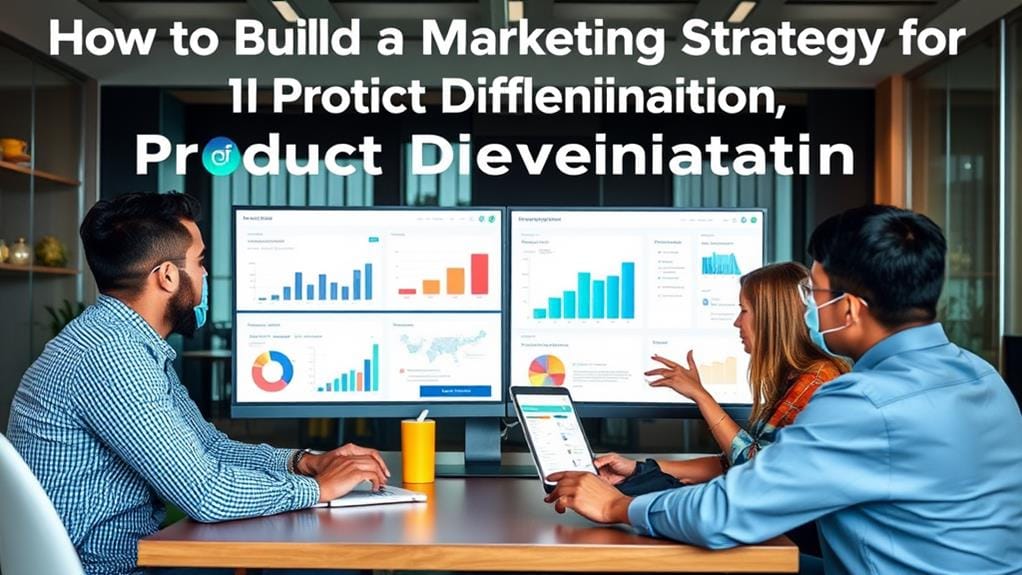
Implementing a robust system for testing and gathering feedback is a critical step in refining your marketing strategy. The foundation of an effective product differentiation approach lies in the systematic acquisition of customer insights.
Employing varying testing methods, such as usability testing and A/B testing, allows organizations to uncover invaluable data about how consumers interact with their products. These insights guide strategic marketing decisions, ensuring that product features resonate with the intended audience.
Utilizing advanced survey techniques enhances the ability to create detailed feedback loops, which are essential for continuous improvement. By engaging customers throughout the product journey, brands can gather impressions and preferences that directly inform product iterations.
It's not merely about collecting data; it's about understanding how users experience your offering and identifying pain points worth addressing.
Furthermore, establishing a culture of feedback encourages users to share their thoughts openly, enabling more transparent customer relationships. This openness can lead to innovative adjustments that enhance the overall user experience.
The interplay between testing and feedback enables organizations not only to be reactive but also to adopt a proactive stance in their marketing strategies.
Ultimately, the ability to make data-driven decisions based on real customer interactions empowers brands to refine their product offerings and tailor their marketing strategies effectively.
Embrace a thorough approach to testing and feedback, and you will uncover the keys to elevating your product's uniqueness in a competitive landscape.
Measure Performance Metrics
Building on the feedback and insights gained from testing, measuring performance metrics is essential for understanding the effectiveness of your marketing strategy. Effective metrics tracking serves as the backbone of performance analysis, revealing key indicators that communicate the health of your approach.
Through data visualization, stakeholders can quickly grasp complex data, enabling informed decision-making based on thorough insights.
To successfully measure performance metrics, consider the following steps:
- Define Key Performance Indicators (KPIs): Establish specific metrics that align with your goals. These can include customer engagement rates, conversion rates, and brand awareness levels.
- Utilize Reporting Tools: Leverage advanced reporting tools to collect and analyze data efficiently. This automation can enhance accuracy, allowing for timely evaluations and improvements.
- Conduct ROI Assessments: Regularly review your return on investment to ascertain the financial efficacy of your marketing efforts. Benchmark comparisons against industry standards will clarify your position and guide recalibrations when necessary.
Ultimately, success measurement needs to be an ongoing process. Consistent performance analysis will not only highlight areas of strength but also reveal opportunities for growth.
Adapt and Evolve Strategy

In today's rapidly changing market landscape, the ability to adapt and evolve your marketing strategy is not just beneficial but vital for sustained success. For businesses aiming for product differentiation, the dynamic interplay between shifting market trends and customer engagement is essential. Companies must prioritize flexibility, allowing their strategies to pivot in response to real-time data and consumer feedback.
Understanding market trends is not merely about identifying fads; it involves a keen analysis of socioeconomic factors, technological advancements, and customer preferences. A well-informed marketing strategy employs this intelligence to resonate with target audiences while staying ahead of competitors.
By embracing an agile approach, brands can effectively engage customers at every touchpoint, ensuring messages remain relevant and personalized.
Furthermore, fostering strong customer engagement provides valuable insights that can inform necessary adjustments. When customers feel heard and valued, they are more likely to contribute feedback that drives innovation.
This dialogue not only strengthens brand loyalty but also positions companies as forward-thinking entities willing to evolve.
Frequently Asked Questions
How Can I Identify Gaps in My Product Offerings?
Identifying gaps in your product offerings requires a thorough competitor analysis and attentive customer feedback.
Begin by evaluating competitors' strengths and weaknesses to uncover unmet needs in the market. Simultaneously, solicit and analyze customer feedback, which can reveal potential enhancements or entirely new product ideas.
What Tools Can Assist in Analyzing Customer Behavior?
In the intricate tapestry of consumer interaction, understanding customer behavior reveals hidden patterns and preferences.
Tools like Google Analytics and Hotjar serve as prisms, refracting the customer journey into actionable insights through behavior analytics.
These platforms track engagement, revealing where attention lingers or falters, consequently illuminating opportunities for deeper connection.
How Often Should I Revisit My Marketing Strategy?
Revisiting your marketing strategy is essential for maintaining competitiveness in a dynamic market. A frequency assessment should ideally occur quarterly, allowing for timely adjustments based on market trends and customer feedback.
Additionally, a thorough strategy evaluation on an annual basis facilitates deeper analysis, ensuring alignment with overall business goals. This proactive approach not only supports innovation but also empowers an organization to respond adeptly, ultimately fostering a culture of freedom and adaptability in decision-making.
When Is the Right Time to Pivot My Marketing Approach?
Determining the right time to pivot your marketing approach hinges on recognizing key pivot indicators and marketing signals.
If you observe declining engagement, shifting consumer preferences, or increased competition, these may signal the need for a strategic shift.
Additionally, analyzing performance metrics and customer feedback can reveal insights that necessitate change.
Embracing flexibility in your strategy will empower your brand to adapt, innovate, and thrive in a dynamic marketplace, ultimately fostering a sense of liberation and growth.
How Do I Budget for a Differentiated Marketing Strategy?
How can you access the full potential of your unique offerings through strategic budgeting?
Begin with thorough cost estimation, identifying all potential expenses related to your differentiated marketing initiatives.
Effective resource allocation is critical; prioritize areas that amplify your brand's distinctiveness and resonate with your target audience.
Conclusion
In the intricate dance of marketing strategy, product differentiation emerges as a vibrant note within a symphony of competition. The cultivation of a unique selling proposition, coupled with a profound understanding of target audiences, enables brands to carve out a distinct identity. Continuous adaptation and strategic evolution guarantee that marketing efforts resonate, much like a timeless melody that captivates listeners. By harmonizing every element, brands not only stand apart but also flourish in the ever-changing marketplace landscape.