How to Build a Marketing Strategy That Adapts to Trends
To build a marketing strategy that adapts to trends, focus on understanding your target audience through detailed customer personas and segmentation. Regularly monitor industry trends and conduct competitor analysis to identify opportunities for innovation. Leverage data analytics, utilizing KPIs and predictive tools to anticipate market shifts. Embrace agile methodologies for real-time adaptation and foster creative collaboration within teams. Implement A/B testing to refine initiatives based on concrete insights. Finally, maintain a cycle of continuous evaluation and adjustment to guarantee your strategy remains relevant in a dynamic landscape. There's much more to explore on optimizing each of these areas effectively.
Key Takeaways
- Develop detailed customer personas and segment the audience to tailor marketing efforts effectively.
- Monitor industry trends through competitor analysis and trend forecasting for timely adaptation.
- Leverage data analytics to track key performance indicators and predict shifts in consumer behavior.
- Embrace agile methodologies to foster flexibility and responsiveness in marketing strategies.
- Implement A/B testing to gather insights and refine campaigns based on customer preferences.
Understand Your Target Audience

To effectively build a marketing strategy, it is essential to first understand your target audience, as this knowledge serves as the foundation upon which all subsequent efforts are constructed. Understanding your audience begins with developing customer personas that encapsulate the core traits of your ideal customers. This involves thorough audience segmentation, which divides the broader market into specific groups based on shared characteristics.
Demographic analysis provides insights into age, gender, income, and education, while psychographic profiling explores values, attitudes, and lifestyles. Together, these methodologies paint a detailed picture of who your customers are. Engaging with behavioral insights further enhances this understanding by examining engagement patterns and user journeys that reveal how consumers interact with your brand.
Implementing feedback loops is essential in this process; collecting and analyzing customer feedback helps refine your personas and validates your assumptions. Such continuous dialogue with your audience creates a dynamic relationship that acknowledges their evolving needs.
As you gather data on trends in customer behavior, it becomes crucial to adapt your marketing efforts accordingly. Ultimately, a nuanced comprehension of your target audience will empower you to create compelling narratives, resonate deeply with their motivations, and cultivate loyalty.
An agile marketing strategy, fortified by these insights, not only reflects the desires of your audience but also champions their freedom by offering relevant solutions tailored to their unique journeys.
Monitor Industry Trends
While understanding your target audience lays the groundwork for a solid marketing strategy, keeping a pulse on industry trends is equally vital for fostering business agility and relevance. Monitoring trends allows brands to navigate the ever-evolving landscape and make informed decisions that resonate with their audience. This requires a proactive approach, emphasizing trend forecasting and competitor analysis.
Trend forecasting involves analyzing patterns and signals from multiple sources, such as market reports, social media insights, and consumer behavior data. By identifying emerging trends early, businesses can adapt their strategies, ensuring they remain relevant amidst shifting dynamics. For example, if sustainability becomes a prevailing trend within your industry, incorporating eco-friendly practices into your marketing strategy not only attracts conscious consumers but can also enhance brand loyalty.
Competitor analysis, on the other hand, is essential for remaining competitive in a rapidly changing environment. By understanding your competitors' responses to trends, you can glean insights into successful tactics and potential gaps in the market. This analytical approach helps in tailoring your offerings and positioning your brand effectively.
Together, trend forecasting and competitor analysis empower businesses to respond agilely to market shifts. They enable marketers to anticipate changes, innovate accordingly, and harness opportunities that others may overlook.
With a commitment to continuous monitoring of industry trends, you create an adaptive marketing strategy that not only meets current demands but also lays a foundation for future growth and success.
Leverage Data Analytics

Data analytics serves as the backbone of a robust marketing strategy, particularly through the identification and monitoring of key performance indicators.
By regularly evaluating industry trends, businesses can adapt their approaches to remain competitive.
Furthermore, the integration of predictive analytics tools enables organizations to anticipate market shifts and consumer behaviors, fostering more informed decision-making.
Understand Key Performance Indicators
Clarity in marketing strategy is deeply rooted in the understanding of Key Performance Indicators (KPIs), which serve as essential metrics for evaluating success. By establishing clear KPI benchmarks, businesses can quantitatively assess performance metrics, allowing for precise goal alignment within their marketing efforts. This alignment is critical, as it guarantees that every action taken is directed towards concrete objectives.
Data visualization plays a pivotal role in this process, as it transforms raw data into intuitive formats that reveal performance trends at a glance. Effective metric prioritization helps marketers focus on the indicators that matter most, facilitating streamlined analysis techniques that showcase both strengths and weaknesses.
Furthermore, setting an appropriate reporting frequency allows organizations to stay agile, promptly identifying deviations in performance. By employing robust analysis techniques, marketers can interpret data beyond surface levels, uncovering nuanced insights that drive strategic pivots in response to market dynamics.
In this fluid environment, the continuous reevaluation and adaptation of KPIs guarantee sustained performance improvement, empowering teams with the freedom to innovate and thrive amid evolving trends.
Monitor Industry Trends Regularly
To guarantee ongoing success in a dynamic marketplace, monitoring industry trends regularly becomes a key initiative that can greatly inform and enhance marketing strategies. Companies must engage in meticulous trend forecasting, leveraging data analytics to predict shifts that influence consumer behavior and market demands.
Through robust market research, businesses can uncover insights into audience segmentation, allowing for tailored communication that resonates with targeted demographics. Engaging in competitive analysis will expose emerging influencers and their dynamics, highlighting opportunities for collaboration or strategic positioning.
This awareness enables marketers to craft content innovation that remains relevant and appealing, particularly during critical seasonal adjustments when consumer expectations fluctuate. Technology adoption is crucial in this context, providing tools for capturing real-time data that can dictate timely responses to market changes.
Utilize Predictive Analytics Tools
Harnessing predictive analytics tools is a transformative approach that allows businesses to anticipate future trends and consumer behaviors with remarkable accuracy. By implementing predictive modeling techniques, companies can leverage data analytics to enhance their marketing strategies effectively.
This adaptability is key in a fast-paced marketplace, where understanding potential shifts can lead to a significant competitive advantage.
To maximize the benefits of predictive analytics, consider the following essential strategies:
- Data Integration: Consolidate data from multiple sources for a holistic view.
- Trend Forecasting: Identify patterns over time to project future outcomes.
- Customer Segmentation: Use data to create targeted marketing campaigns tailored to different audience segments.
- Real-time Analysis: Adapt quickly by analyzing data as it comes in, allowing for agile marketing responses.
- Performance Tracking: Regularly assess the impact of predictive insights on your marketing initiatives.
Embrace Agile Methodologies
Frequently adopting agile methodologies can greatly enhance the effectiveness of a marketing strategy by fostering flexibility and responsiveness to market changes.
At the heart of agile principles lies an emphasis on adaptability, encouraging teams to pivot and realign strategies based on real-time insights and evolving consumer needs. By employing iterative processes, marketing efforts can be developed in sprints, allowing for continuous evaluation and modification according to customer feedback.
This approach drives innovation, as teams can experiment with new tactics, dissect their effectiveness, and swiftly abandon what doesn't work. The culture of team flexibility inherent in agile methodologies promotes ownership among team members, empowering them to take risks and explore creative solutions.
This desire for freedom keeps the marketing strategy dynamic and guarantees that teams are not bogged down by rigid plans that quickly become obsolete.
Moreover, regular retrospectives and check-ins facilitate open communication, enabling teams to learn from past performances and enhance future campaigns.
Foster Creative Collaboration

Creative collaboration is an essential element in developing a robust marketing strategy, as it brings together diverse perspectives and skill sets to drive innovation. By fostering an environment conducive to creative brainstorming and open communication, organizations can effectively harness the collective intelligence of their teams.
Emphasizing cross-functional teams enables a richer pool of ideas, which can lead to out-of-the-box solutions tailored to market trends. Incorporating innovative workshops and design sprints can facilitate invaluable team ideation sessions, allowing members to visualize concepts and relay them through effective visual storytelling.
Furthermore, utilizing collaborative tools guarantees seamless coordination and knowledge sharing, making the most of each contributor's expertise. To successfully foster creative collaboration, consider the following practices:
- Establish Feedback Loops: Regularly solicit input to refine ideas and promote transparency.
- Encourage Open Communication: Create a culture where team members feel free to express thoughts without fear of judgment.
- Utilize Collaborative Tools: Invest in software that supports teamwork and efficient collaboration, such as digital whiteboards and project management apps.
- Organize Innovative Workshops: Schedule recurring sessions that inspire and motivate team members to think creatively.
- Facilitate Team Ideation: Implement structured brainstorming sessions to release creativity and explore fresh perspectives.
Implement A/B Testing
A/B testing is a vital element in refining marketing strategies, as it allows organizations to make data-driven decisions by comparing two variations of a campaign.
Understanding the nuances of A/B test results not only illuminates customer preferences but also enhances the effectiveness of future initiatives.
Importance of A/B Testing
Implementing A/B testing is an essential practice that marketers consistently leverage to optimize their campaigns and drive improved conversion rates. This experimental approach allows for a data-driven understanding of user preferences, enabling the development of targeted strategies and refined messaging.
A/B testing benefits extend beyond mere conversion increases; they foster a culture of continuous improvement through experimentation. Marketers can utilize various A/B testing tools and platforms to conduct simple experiments or complex strategies tailored to specific audiences.
Successful A/B testing examples illustrate the power of iteration, revealing insights that can transform campaigns.
Key considerations in implementing A/B testing include:
- A/B testing metrics: Determine clear objectives for measurement.
- A/B testing challenges: Address potential issues, such as sample size and duration.
- A/B testing strategies: Leverage creative variations to test different elements effectively.
- A/B testing experiments: Implement structured experiments to isolate variables.
- A/B testing platforms: Choose the right tools to facilitate smooth execution.
Interpreting A/B Test Results
Understanding the results of A/B tests is essential for making informed marketing decisions and refining strategies. Effective data interpretation hinges on a robust experimental design, allowing marketers to validate hypotheses and guarantee findings are meaningful. By rigorously analyzing results, you can optimize tests and identify what resonates with your audience.
To draw actionable insights, begin with a clear performance comparison of variants. Assess each version's effectiveness through statistical significance, ensuring the outcomes aren't attributed to random chance. This not only fortifies your results analysis but also aids in audience segmentation, enabling targeted adjustments based on distinct consumer preferences.
As you interpret the data, don't forget that the insights gleaned from A/B testing are dynamic. What works today may not perform tomorrow, necessitating an agile approach to strategy refinement. Revisit your hypotheses regularly, using A/B tests as a feedback loop to adapt marketing tactics effectively.
Embracing this iterative process fosters a culture of continuous improvement, empowering marketers to respond to shifts in trends and consumer behavior. Ultimately, nurturing a flexible mindset will lead to more innovative solutions and sustained engagement with your audience.
Continuously Evaluate and Adjust
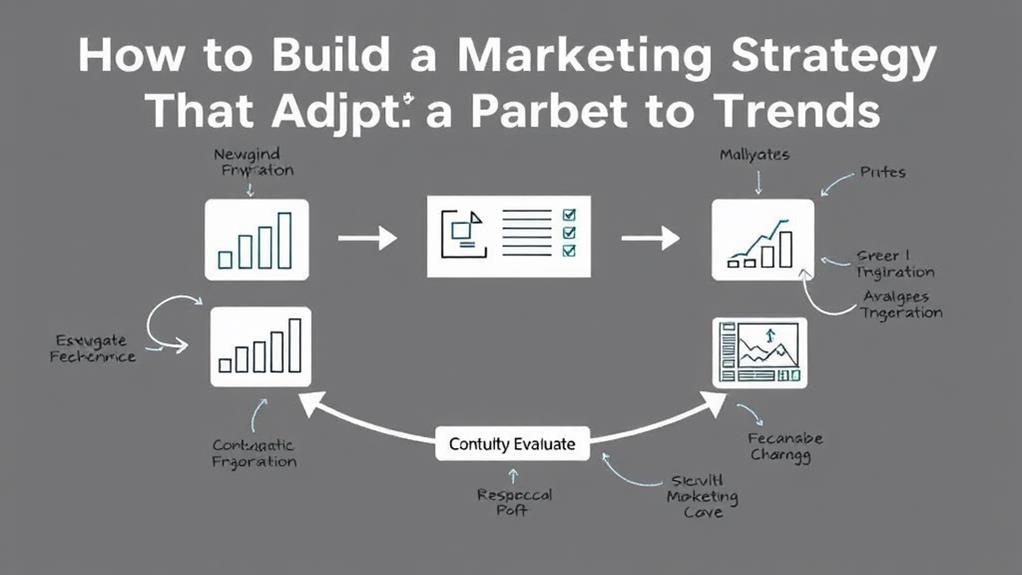
In the dynamic landscape of marketing, the need for continuous evaluation and adjustment is paramount to success. A marketing strategy that remains static can quickly become obsolete in the face of emerging trends and evolving consumer preferences.
Businesses must embrace a culture of agility, driven by real-time data and insights. This involves establishing robust feedback loops to gather customer input and market sentiments, which can inform necessary adjustments.
To effectively navigate this fluid environment, consider the following strategies:
- Trend Forecasting: Stay ahead of industry trends by analyzing market data and consumer behavior, allowing your strategy to remain relevant.
- Competitor Analysis: Regularly assess your competitors' moves, strengths, and weaknesses to identify opportunities for differentiation.
- Customer Segmentation: Continuously evaluate customer segments to refine targeting, ensuring that your messaging resonates with diverse audience groups.
- Strategic Pivots: Be prepared to pivot your strategy based on performance metrics and market conditions, ensuring alignment with evolving business goals.
- Market Responsiveness: Foster a culture that prioritizes adaptability, empowering teams to implement changes swiftly as market dynamics shift.
Frequently Asked Questions
What Are the Best Tools for Monitoring Trends Effectively?
To effectively monitor trends, leveraging tools that facilitate trend analysis and social listening is essential.
Platforms such as Google Trends and BuzzSumo provide valuable insights into emerging topics, while social media monitoring tools like Hootsuite and Brandwatch enable real-time engagement tracking.
Utilizing these resources allows marketers to swiftly adapt to changes, guaranteeing agility in strategy formulation.
Embracing a proactive approach guarantees that businesses remain aligned with their audience's evolving preferences and sentiments.
How Often Should I Review My Marketing Strategy?
How often should one review their marketing strategy to guarantee its effectiveness?
Regular reviews, ideally on a quarterly basis, foster strategic flexibility and responsiveness to changing market dynamics. This approach not only enhances adaptability but also empowers teams to seize emerging opportunities with agility.
By instilling a culture of continual evaluation, businesses can navigate shifting landscapes with confidence, enabling a proactive stance that ultimately drives innovation and growth.
Regular engagement guarantees sustained relevance in an ever-evolving marketplace.
What Role Does Customer Feedback Play in Marketing Adjustments?
Customer feedback is instrumental in refining marketing strategies. By establishing robust feedback loops, organizations can capture customer insights that reveal preferences and pain points.
This real-time data empowers marketers to make agile adjustments, thereby enhancing customer engagement and satisfaction.
In an environment where consumer needs evolve rapidly, leveraging feedback enables brands to maintain relevance and drive innovation, ensuring that marketing efforts resonate with their target audience's desires and expectations.
How Do I Prioritize Trends to Follow for My Brand?
Steering through the vast ocean of trends can often feel like sailing without a compass.
To prioritize trends effectively, focus on trend relevance—assessing how they resonate with your target audience. Align these trends with your brand values and mission to guarantee cohesion and authenticity.
Is There a Budget Limit for Agile Marketing Practices?
Agile marketing practices inherently allow for budget flexibility, emphasizing the need for dynamic resource allocation.
While there may be no fixed budget limit, organizations must prioritize strategic investments based on current trends and audience insights.
This requires an analytical approach to evaluate return on investment while creatively reallocating funds to capitalize on emerging opportunities.
Ultimately, the goal is to maintain an adaptable financial framework that fosters responsive and innovative marketing initiatives.
Conclusion
In the constantly changing landscape of marketing, strategies must flow like a river, adapting to the twists and turns of consumer behavior and industry dynamics. Embracing flexibility and creativity fosters a vibrant ecosystem where innovative ideas can flourish. Continuous evaluation serves as a compass, guiding brands through shifting tides. By cultivating a landscape ripe with data-driven insights and collaborative energy, organizations can navigate the market with agility, ensuring alignment with trends while leaving an indelible mark upon their audience.