How to Develop a Marketing Strategy for Content Distribution
To develop a successful marketing strategy for content distribution, start by identifying your target audience through demographic and psychographic profiling. Set clear, measurable objectives using the SMART criteria to guide your initiatives. Analyze content types preferred by your audience, leveraging diverse formats like videos, infographics, and podcasts. Choose the right distribution channels, including social media and email marketing, to enhance reach. Create a flexible content calendar that incorporates seasonal trends and allows for adaptability. Don't forget to optimize for SEO and regularly measure performance metrics to refine your strategy. Explore further insights to elevate your content distribution efforts.
Key Takeaways
- Identify your target audience by analyzing demographics, psychographics, and behavioral insights for accurate segmentation.
- Set clear, SMART objectives that guide your marketing efforts toward measurable and relevant goals.
- Analyze and leverage various content types and their performance metrics to maximize audience engagement.
- Choose appropriate distribution channels that align with your audience's habits and increase your content's reach effectively.
- Create a content calendar that incorporates seasonal trends, utilizes analytics, and remains flexible to changes in consumer behavior.
Identify Your Target Audience

Identifying your target audience is akin to a compass guiding a ship through uncharted waters; without it, your marketing efforts may drift aimlessly. A thorough understanding of who you are trying to reach is critical to crafting a tailored marketing strategy that resonates with your audience's core values and needs.
Demographic analysis serves as the foundational layer, offering insights into age, gender, income, and location. However, moving beyond mere numbers through audience segmentation reveals more nuanced insights. By employing behavioral insights, marketers can discern how potential customers interact with various platforms and content types, highlighting engagement patterns that inform strategic decisions.
Furthermore, psychographic profiling elevates audience understanding by delving into motivations, beliefs, and lifestyles. This deeper analysis enables the creation of detailed buyer personas that encapsulate your ideal customers, guiding tailored content distribution strategies designed to captivate and engage.
Interest mapping helps visualize the connections between different audience segments and their affinities, providing a clearer picture of potential groupings. To refine this process further, rigorous market research is essential, revealing both current trends and underlying market demands that inform strategic positioning.
In a landscape where the desire for authenticity and freedom drives consumer choice, understanding your target audience is not merely an exercise in data collection; it is a strategic imperative. This approach not only positions your marketing efforts for success but empowers you to forge meaningful connections that resonate with freedom-seeking consumers.
Set Clear Objectives
Establishing clear objectives serves as the backbone of an effective marketing strategy, guiding every initiative and action toward measurable outcomes. When setting these objectives, it is essential to guarantee they align with your long-term vision. A well-defined aim not only charts the course but also facilitates a more focused approach to content distribution.
Employing the SMART criteria—Specific, Measurable, Achievable, Relevant, Time-bound—will enhance the clarity of your objectives. This methodology guarantees that your goals are robust and can be periodically evaluated for effectiveness, and so aiding a dynamic marketing strategy.
Consider the following elements when formulating your objectives:
- Specificity: Clearly outline what you want to achieve to eliminate ambiguity.
- Measurability: Implement metrics that provide quantitative insights into progress.
- Achievability: Set realistic targets that consider available resources and capabilities.
- Relevance: Confirm alignment with your overarching long-term vision to maintain strategic coherence.
This meticulous approach fosters an environment of accountability as well as adaptability, enabling you to pivot or refine your efforts if the marketplace demands.
In a landscape characterized by constant change, setting clear objectives becomes indispensable, allowing for both creative freedom and resultant discipline in execution. Through diligent planning and a commitment to SMART goals, you can effectively lead your marketing strategy to resonate with your audience's desires while fulfilling organizational aspirations.
Analyze Content Types
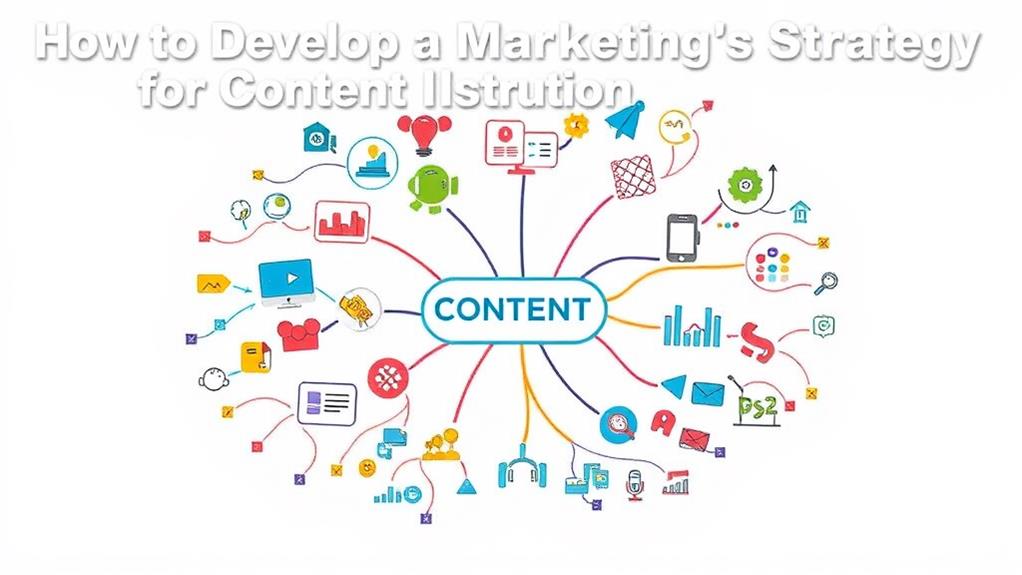
To effectively tailor your marketing strategy, it is crucial to analyze various content types and formats that resonate with your audience.
Understanding popular content formats, gauging audience preference insights, and examining channel performance metrics will provide a well-rounded perspective on what drives engagement.
This analytical approach will enable you to prioritize content that not only captivates your target market but also maximizes overall campaign effectiveness.
Popular Content Formats
When crafting a successful marketing strategy, understanding popular content formats is essential for engaging your target audience effectively.
The diverse landscape of digital content offers myriad opportunities to amplify your message and resonate with users. By focusing on key formats, brands can leverage content repurposing strategies to maximize reach and engagement.
- Infographic utilization: Transform complex data into visually appealing graphics that communicate insights quickly.
- Video storytelling: Capture attention through compelling narratives that evoke emotion and retain viewer interest.
- Podcast engagement: Create an intimate connection with audiences by delivering valuable discussions and insights in a convenient format.
- Interactive content: Encourage active participation with quizzes, polls, and other forms of engagement that invite user-generated content.
Audience Preference Insights
Understanding audience preferences is essential for crafting content strategies that effectively engage target demographics; recent studies indicate that 70% of consumers favor visual content over text-based formats. This insight underscores the necessity of analyzing content types to align with audience demographics and their diverse consumption habits.
Delving into audience-derived data reveals preferences not merely in format but also in context. For instance, younger demographics tend towards ephemeral content such as stories and quick videos, reflecting a desire for dynamic and timely interactions.
Conversely, older audiences may gravitate towards detailed articles or in-depth reports, valuing thorough insights.
Moreover, recognizing the context of consumption plays an important role in strategic content planning. Content designed for mobile devices should be succinct and visually driven, catering to on-the-go consumers seeking quick information.
Channel Performance Metrics
Evaluating channel performance metrics is crucial for optimizing content strategy and ensuring maximum engagement across platforms.
Analyzing the effectiveness of various content types empowers marketers to make informed decisions that foster growth and connection with their audience. It's essential to assess how different formats perform regarding engagement rates and conversion tracking, allowing for strategic adjustments that can elevate outreach efforts.
Key metrics to keep in mind include:
- Audience Interaction: Monitor likes, shares, and comments to gauge engagement.
- Conversion Rates: Track how effectively content drives desired actions, such as sign-ups or purchases.
- Traffic Sources: Analyze which channels bring the most visitors and retain their attention.
- Content Longevity: Evaluate how long content remains relevant and continues to attract engagement over time.
Harnessing these insights will enable brands to refine their content strategy, aligning it more closely with audience preferences while maximizing efficacy.
By focusing on measurable outcomes, marketers can embrace a transparent approach, freeing themselves from guesswork and leading to more impactful content distribution.
Through continual assessment, brands can enhance their connection with audiences, ultimately fostering a deeper sense of loyalty and engagement.
Choose Distribution Channels
Selecting the right distribution channels is critical to a brand's success, as these pathways directly impact customer reach and sales effectiveness. To optimize your content distribution strategy, you must strategically consider various channels that resonate with your target audience.
Email marketing remains a powerful tool, allowing for tailored messaging that nurtures leads and drives conversions. To amplify this, influencer partnerships can extend your brand's reach, creating authentic connections through trusted voices in your industry.
Similarly, paid advertising offers immediate visibility, enabling targeted campaigns that can lead to higher engagement rates. However, integrating organic reach into your strategy can be just as important, fostering community engagement and brand loyalty by creating valuable content that resonates with your audience.
Utilizing cross promotion strategies with complementary brands can further expand your visibility, tapping into new networks without straining your resources. Content syndication allows your material to be shared across multiple platforms, maximizing exposure.
As a result, thoughtful platform selection is paramount. Understanding where your audience spends their time and how they consume content informs this choice. Audience segmentation is also essential; delivering tailored messages that speak directly to different segments can greatly improve reception.
Create a Content Calendar
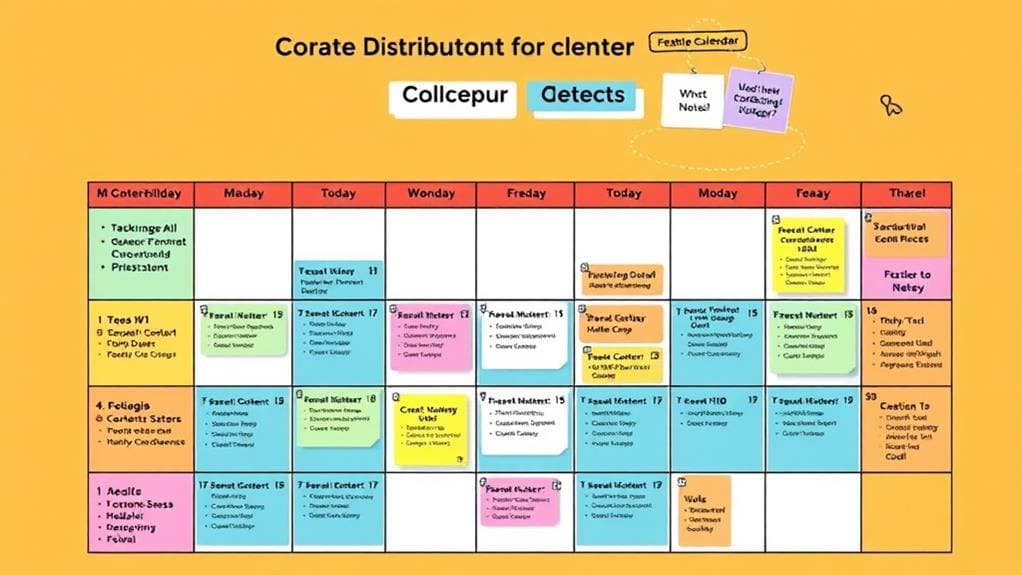
Creating a content calendar is vital for maintaining a consistent and strategic marketing approach. It allows marketers to visualize their content distribution efforts throughout the year, guaranteeing alignment with content themes and seasonal trends.
A well-structured calendar not only helps in organizing your content but also enables you to anticipate key dates and optimize your messaging for maximum impact.
To effectively create a content calendar, consider the following:
- Define Content Themes: Establish overarching themes that resonate with your target audience. These themes should reflect your brand's voice and values, guiding content creation across various platforms.
- Incorporate Seasonal Trends: Periodically update your calendar to include relevant seasonal trends and holidays. This guarantees your content remains timely and aligned with market demands.
- Utilize Analytics: Regularly assess past performance metrics. This analytical approach allows you to adjust your content calendar based on what has resonated most with your audience, improving future engagements.
- Leave Room for Flexibility: While planning is vital, maintaining the ability to pivot allows your marketing strategy to stay responsive to sudden changes in consumer behavior or industry trends.
Optimize for SEO
To maximize your marketing strategy's effectiveness, optimizing for SEO is essential.
This involves mastering keyword research techniques, implementing on-page optimization tips, and adhering to content structure best practices.
Keyword Research Techniques
Effective keyword research techniques serve as the backbone of a successful SEO strategy, enabling marketers to identify and target the terms that their audience actively searches for.
This foundational step empowers businesses to design content that resonates with their desired audience, ultimately expanding their reach and influence online.
To effectively harness the power of keyword research, consider the following strategies:
- Utilize Long Tail Keywords: Focus on specific phrases that are less competitive but highly relevant to your niche audience, improving your chances of ranking higher.
- Conduct Competitor Analysis: Study your competitors' keyword usage to uncover gaps in your own strategy and identify opportunities to differentiate your content.
- Leverage Keyword Research Tools: Utilize tools like Google Keyword Planner, SEMrush, or Ahrefs to discover popular search queries and trends within your market.
- Prioritize User Intent: Understanding the intent behind keywords—whether informational, navigational, or transactional—can guide your content creation and enhance user engagement.
On-Page Optimization Tips
On-page optimization serves as a significant component of any successful SEO strategy, directly influencing how search engines perceive and rank your website. By focusing on fundamental on-page elements, you can maximize your content's performance and enhance user experience, leading to higher engagement and retention.
One key element is content readability. Crafting well-structured, easily digestible content is essential—utilize headings, bullet points, and short paragraphs to break up text. This not only makes your content more appealing but also improves user engagement. Incorporating relevant keywords naturally throughout your content is important, guaranteeing they align with search queries while maintaining readability.
Another important aspect is optimizing meta tags, including the title and description. These short yet impactful elements help search engines and potential visitors understand the content's value. Additionally, alt text for images can enhance accessibility and provide context, further assisting with SEO.
Lastly, verify your website load speeds are optimized, as slow pages can drive users away and affect rankings. By strategically enhancing these on-page elements, you empower your content to thrive in the competitive digital landscape, granting you the freedom to connect meaningfully with your audience.
Content Structure Best Practices
Creating a well-organized content structure greatly enhances both user experience and search engine optimization efforts. By establishing a clear content hierarchy, you facilitate navigation and guarantee that users can easily find relevant information.
This clarity not only serves your audience but also allows search engines to index your content effectively, boosting visibility.
Implementing best practices in content structure includes:
- Utilizing headings and subheadings: Clearly define sections using H1, H2, and H3 tags to create a logical flow.
- Incorporating internal links: These guide users to related content, enhancing engagement and time on site.
- Prioritizing essential information: Place key messages at the top to capture attention quickly.
- Utilizing content repurposing: Transform existing content into different formats (e.g., blog posts, infographics, videos) to reach diverse audiences and enhance your online presence.
The strategic layout of your content not only appeals to users but also reinforces your brand's authority.
Promote on Social Media

Harnessing the power of social media is vital for any modern marketing strategy seeking to build brand awareness and engage with a wider audience. Effective promotion on these platforms requires a nuanced understanding of various engagement tactics and the intricacies of platform algorithms that dictate visibility and interaction.
To optimize your content distribution, it is essential to tailor your approach to each individual social media platform. Each has unique characteristics that can be leveraged to your advantage. For instance, visually driven platforms like Instagram and Pinterest are ideal for showcasing products through engaging imagery, while Twitter thrives on succinct, timely engagement. Understanding these nuances allows you to craft content that not only aligns with user expectations but also resonates more deeply with specific demographics.
Moreover, employing engagement tactics such as interactive polls, questions, and user-generated content can greatly enhance your visibility. These methods encourage audience participation, fostering a community around your brand and amplifying your message organically.
It is vital to keep in mind the role of platform algorithms in your content strategy; algorithm-driven feeds prioritize engagement and relevance. As a result, regularly monitoring the performance of your posts and adjusting your strategy according to real-time feedback can lead to sustained visibility and growth.
Incorporating these elements into your social media strategy will empower you to connect authentically with your audience, harnessing the full potential of social channels to not only promote your content effectively but to elevate your brand's presence in a crowded marketplace.
Measure Performance Metrics
How can businesses guarantee their marketing efforts are truly effective? The answer lies in diligent measurement of performance metrics. By analyzing key indicators, organizations can gauge the success of their content distribution strategies and align them with overall business goals. Among the most important metrics to evaluate are engagement rates and conversion tracking.
To make the most out of your marketing strategy, focus on these essential performance metrics:
- Engagement Rates: Measure how audiences interact with your content. High engagement indicates that your message resonates.
- Conversion Tracking: Assess how well your content persuades users to take desired actions, whether it's signing up for a newsletter or making a purchase.
- Traffic Sources: Identify where your audience is coming from to optimize your distribution channels effectively.
- Content Shares: Track how often your content is shared. This serves as an indicator of its value to your audience and can greatly expand reach.
By implementing these metrics into your strategy, you not only gain insight into your audience's preferences but also refine your content for maximum impact.
Moreover, regular analysis allows businesses to adapt and evolve to stay aligned with audience expectations. With the freedom to implement changes based on solid data, enterprises can confidently navigate the complexities of content distribution.
Ultimately, measuring performance metrics equips businesses to make informed decisions, ensuring that their marketing efforts yield considerable results.
Adjust Strategy as Needed

Adjusting a marketing strategy is not merely a reactive measure; it is a proactive approach to optimizing overall effectiveness. This iterative process requires the establishment of feedback loops that facilitate continuous improvement and adaptation.
Regular performance reviews enable marketers to assess whether their content distribution strategies resonate with the intended audience, adjusting accordingly to meet shifting preferences and needs.
Audience testing plays a significant role in this framework. By collecting and analyzing data from diverse audience segments, marketers can identify emerging patterns that inform strategic pivots.
Leveraging insights from competitor analysis is equally important, as understanding market trends and competitive movements can lead to timely content refreshes that distinguish your brand from the rest.
As the marketing landscape evolves, so should your approach. Engaging with real-time feedback mechanisms guarantees that your strategy remains aligned with audience expectations and market dynamics.
This not only mitigates risks but also positions your content to seize opportunities that arise from changing consumer behaviors.
Strategic pivots are often necessary in a fluid market environment; flexibility should be a cornerstone of your content distribution plan.
By meticulously tracking performance and being attuned to external conditions, marketers can execute thoughtful, agile strategies that promote long-term growth and relevance.
Fundamentally, the key to a successful marketing strategy lies not just in its initial formulation, but in its ongoing adjustment and refinement as insights and conditions evolve.
Frequently Asked Questions
How Do I Engage My Audience During Content Distribution?
Engaging your audience during content distribution is essential for fostering loyalty and enhancing interaction.
Employing tools such as interactive polls enables participants to voice their opinions and contribute to discussions, thereby generating audience feedback. This direct engagement not only enriches the content experience but also empowers your audience by valuing their input.
What Budget Should I Allocate for Content Distribution?
"Failing to prepare is preparing to fail."
To determine the appropriate content budget, assess the effectiveness of various distribution channels.
Begin by analyzing your audience's preferences and existing engagement levels. Allocate funds based on the anticipated return on investment—prioritize channels that demonstrate high engagement.
Consider your overall marketing objectives and financial resources to guarantee a strategic approach, allowing for flexibility to adjust as audience insights and market dynamics evolve.
Can I Repurpose Old Content for Distribution?
Repurposing old content is an effective strategy, often termed content recycling.
This approach not only maximizes the value of your existing assets but also enables precise audience targeting. By reformatting or updating older content, such as transforming a blog post into an infographic or video, you can reach diverse segments of your audience.
This method not only saves resources but also maintains relevance in a rapidly evolving digital landscape, empowering your brand's visibility and engagement.
How Often Should I Update My Distribution Strategy?
To guarantee peak effectiveness, updating your distribution strategy should occur at regular intervals, informed by frequency analysis and strategy evaluation.
A quarterly review is advisable, allowing for adjustments based on performance metrics and audience engagement.
Additionally, remain flexible to adapt your strategy in response to sudden shifts in market trends or consumer behavior.
This proactive approach not only maximizes reach but also empowers your brand to resonate with its audience authentically and dynamically.
What Tools Can Assist in Managing Content Distribution Effectively?
Incorporating effective tools for managing content distribution can dramatically enhance reach; studies show that businesses utilizing scheduling tools see a 23% increase in engagement rates.
Tools like Hootsuite or Buffer enable content scheduling across multiple platforms, ensuring timely delivery.
Performance analytics offered by these platforms provide valuable insights, allowing marketers to refine strategies based on actual audience interactions.
Conclusion
In the domain of content distribution, a meticulously crafted strategy serves as a compass guiding messages through the vast digital landscape. By identifying target audiences and aligning objectives, content becomes a beacon that attracts engagement. Regular measurement of performance metrics acts as a crucial pulse check, ensuring the approach remains agile and responsive. As adjustments are made, the marketing strategy transforms into a dynamic tapestry, weaving together insights and creativity to illuminate pathways toward success and brand resonance.