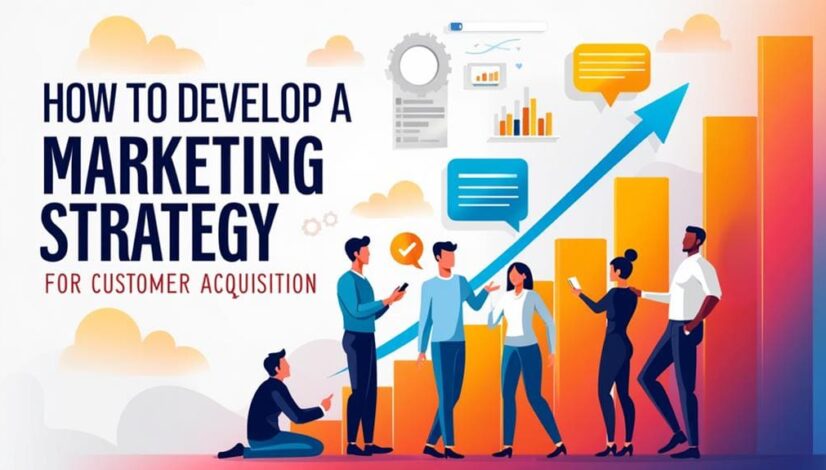
How to Develop a Marketing Strategy for Customer Acquisition
To develop an effective marketing strategy for customer acquisition, begin by understanding your target audience through demographic and behavioral analysis. Set clear SMART objectives to guide your efforts and avoid resource wastage. Conduct a competitive analysis to identify market gaps and pricing strategies. Choose ideal marketing channels, leveraging social media and email for outreach. Craft compelling messaging that resonates with your audience's values and challenges. Implement targeted lead generation tactics, and continuously analyze performance metrics to inform optimizations. This strategic approach will guarantee sustainable growth and engagement, laying the groundwork for further insights and tactics.
Key Takeaways
- Understand your target audience by analyzing demographics, behavior patterns, and values to tailor marketing initiatives effectively.
- Set clear, SMART objectives to guide your strategy and ensure focused resource allocation.
- Conduct competitive analysis, including SWOT, to identify market positioning and consumer preferences.
- Choose the right marketing channels, such as social media and email, to maximize outreach and engagement.
- Develop compelling messaging that resonates with your audience, maintaining consistency across all platforms.
Understand Your Target Audience
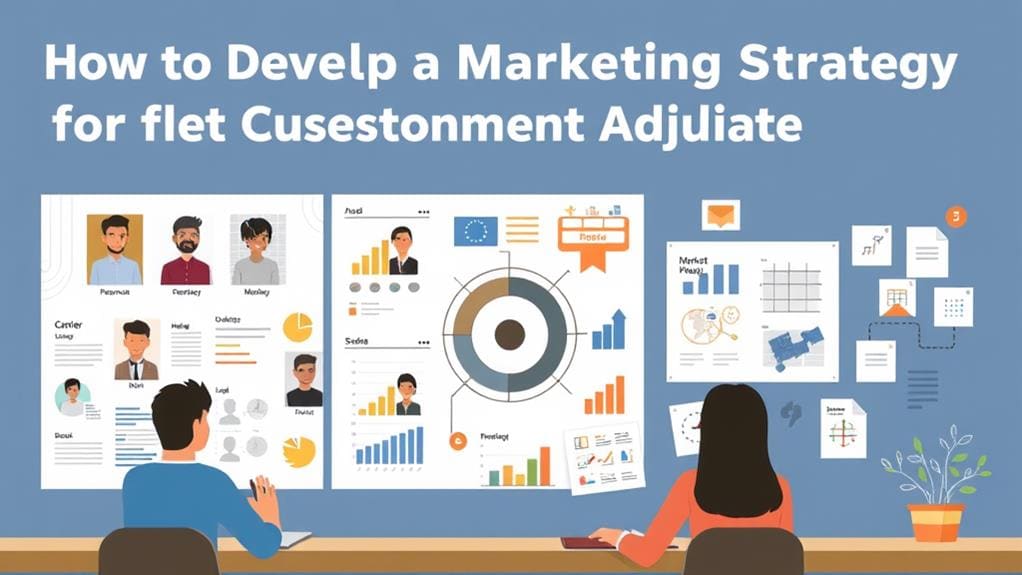
Understanding your target audience is pivotal for crafting an effective marketing strategy that drives customer acquisition. It is crucial to leverage demographic insights and behavior patterns to create a nuanced understanding of potential customers. This analytical approach empowers marketers to tailor their messaging and channels to resonate with the distinct desires and values held by their audience, thereby engendering a sense of connection.
Demographic insights provide foundational information such as age, gender, income level, and education, which serve as a framework for identifying specific market segments. However, delving deeper into behavior patterns—how individuals interact with brands, their purchasing habits, and their media consumption—further enriches this understanding. For example, analyzing purchasing trends might reveal that a substantial segment makes impulsive buying decisions during promotional events. Armed with this knowledge, brands can strategically position their offers to incentivize such behavior.
In the pursuit of attracting a free-spirited audience, marketers must guarantee their messaging aligns with the values of freedom, individuality, and self-expression. By utilizing a combination of demographic insights and behavior patterns, businesses can articulate value propositions that resonate on a personal level.
This tailored approach not only enhances the relevance of marketing initiatives but also fosters loyalty and encourages brand advocacy among customers. Ultimately, understanding the intricacies of your target audience can cultivate an environment where customers feel seen, heard, and respected, driving effective customer acquisition strategies that resonate beyond the transactional.
Set Clear Objectives
Setting clear objectives is the cornerstone of an effective marketing strategy for customer acquisition. Without defined goals, your efforts can become disorganized, leading to wasted resources and missed opportunities. By setting SMART goals—Specific, Measurable, Achievable, Relevant, and Time-bound—you equip your team with a precise roadmap to follow. This focus cultivates a culture of accountability and drives results.
Consider these four key objectives when crafting your marketing strategy:
- Increase Brand Awareness: Aim for a specific percentage increase in brand visibility within a defined timeframe.
- Generate Leads: Set a target for the number of qualified leads to be generated monthly through your marketing initiatives.
- Improve Conversion Rates: Define a percentage increase in your conversion rates, ensuring a clear pathway from customer engagement to acquisition.
- Enhance Customer Retention: Identify a target for improving customer retention rates, ensuring that your relationship with clients remains strong post-acquisition.
To gauge success, performance metrics must be identified and consistently monitored. These metrics provide invaluable insights into the effectiveness of your marketing efforts and inform necessary adjustments.
Conduct Competitive Analysis

A successful marketing strategy for customer acquisition is incomplete without a thorough competitive analysis. Understanding your competitors provides valuable insights that inform your market positioning and enhance your strategic decisions.
Conducting a detailed SWOT analysis (Strengths, Weaknesses, Opportunities, Threats) enables you to identify where your brand stands relative to others, shedding light on areas for improvement and opportunities for growth.
Competitor benchmarking is integral to this process, allowing you to compare various factors such as pricing strategies and product features. This not only highlights your competition's strengths but also reveals their vulnerabilities, which you can exploit with well-crafted differentiation tactics.
By learning how competitors adapt to market trends, you can align your offerings more closely with customer expectations, reinforcing your brand perception.
Incorporating customer feedback into your competitive analysis enriches your understanding of consumer needs and preferences. This feedback, coupled with an examination of your competitors' digital footprints, gives you valuable context to tailor your marketing approach more effectively.
Additionally, being attuned to industry standards guarantees that your strategies remain relevant and compliant.
Ultimately, the insight gained from a robust competitive analysis informs decision-making and empowers your marketing strategies. These insights are not just about surviving; they are about thriving in an environment where freedom of choice reigns, guiding potential customers towards your unique offerings.
Choose Marketing Channels
Selecting the right marketing channels is essential for effectively reaching and engaging your target audience. A strategic approach not only maximizes your outreach but also aligns your efforts with customer preferences, ultimately driving acquisition.
Here are four key channels to take into account:
- Social Media: Platforms like Instagram, Facebook, and Twitter create dynamic opportunities for community engagement and brand storytelling. Leveraging these networks to share content can create a sense of belonging among your audience.
- Email Marketing: This channel offers a direct line of communication, allowing for personalized messaging and nurturing leads over time. With compelling content marketing strategies, you can segment your audience for tailored messages, enhancing engagement.
- Influencer Partnerships: Collaborating with influential figures can amplify your brand's message. Influencers can provide authentic endorsements that resonate with their followers, thereby broadening your reach and credibility.
- Paid Advertising: Utilizing targeted paid advertising can yield immediate results by putting your brand in front of a highly specific audience. Integrating SEO tactics will guarantee that your ads are appearing in relevant search queries, maximizing their effectiveness.
Incorporating referral programs can further incentivize existing customers to promote your brand, leveraging word-of-mouth marketing.
Develop Compelling Messaging

Consistently developing compelling messaging is critical for resonating with your target audience and driving customer acquisition. At the core of effective messaging lies brand storytelling, which allows businesses to craft narratives that connect emotionally with potential customers. This emotional appeal not only captivates but also cultivates deeper relationships, motivating individuals to align themselves with your brand's vision of freedom and empowerment.
To solidify your messaging, start by defining your unique selling proposition. What sets your brand apart? Clearly articulate your value proposition, ensuring it addresses shared customer pain points.
For your messaging to be impactful, it must speak directly to the desires and challenges of your targeted audience segments. This nuanced audience segmentation helps to refine your messaging, tailoring it to resonate with varied demographics while maintaining consistency across channels.
Persuasive language plays an essential role in driving conversion. Choose words that invoke action and transformation, instilling confidence and urgency in potential customers. For instance, instead of simply stating benefits, illustrate how your product or service liberates users from their struggles.
Additionally, ensuring messaging consistency across all platforms can create a cohesive brand image, reinforcing your values and mission.
Create a Content Strategy
Effective messaging lays the groundwork for a robust content strategy, which serves as a vehicle for amplifying your brand's narrative and engaging your audience.
Developing a content strategy involves a disciplined approach that guarantees brand consistency while maximizing audience engagement across various platforms. Here are four fundamental steps to take into account:
- Identify Content Types: Determine which formats resonate with your audience, like blog posts, videos, or infographics. Diverse content types can capture attention in varied ways.
- Incorporate Visual Storytelling: Leverage visual elements to evoke emotions and simplify complex information. Compelling visuals can enhance understanding and retention, facilitating deeper connections.
- Establish a Content Calendar: Planning your content distribution is crucial. A well-structured content calendar aids in organizing your posts, guaranteeing timely delivery that aligns with anticipated trends or events.
- Focus on SEO Optimization and Social Media: Use SEO best practices to enhance your organic reach, while promoting your blog through social media. These channels are instrumental in broadening your reach and cultivating relationships with potential customers.
Incorporating these elements into your content strategy can create a holistic approach that not only boosts visibility but also fosters engagement.
Remember, the success of your content is rooted in its ability to resonate with your audience, creating a balance of informational and inspirational messaging.
Implement Lead Generation Tactics

To ignite your customer acquisition efforts, implementing targeted lead generation tactics is essential for identifying and converting potential clients. A strategic approach to these tactics guarantees that you not only attract prospects but also nurture them through well-defined stages of the buying journey.
Leveraging social media platforms enables you to engage with a vast audience, utilizing compelling content that resonates with your target market. While crafting segmented email campaigns, you can tailor your messaging to address specific pain points, creating a more personal connection that encourages conversions. Influencer partnerships amplify your reach, allowing you to tap into established trust with diverse audiences.
Landing pages designed specifically for unique offers can greatly boost your lead capture rates. By integrating effective calls-to-action and minimizing distractions, you streamline the conversion process. Implementing referral programs further encourages your existing customers to share their positive experiences, organically cultivating new prospects.
Webinars serve as a powerful tool for establishing authority and credibility while providing valuable information to participants. Through these interactive sessions, you can showcase your expertise and convert attendees into leads.
Additionally, content upgrades—such as downloadable resources or exclusive access—enhance your ability to gather contact information in exchange for value.
Analyze and Measure Performance
Regularly analyzing and measuring performance is critical to refining your customer acquisition strategy and ensuring that your lead generation efforts yield ideal results.
By employing a systematic approach to evaluate your tactics, you gain valuable insights into what works and what doesn't, allowing for proactive adjustments that drive freedom and flexibility in your marketing endeavors.
To effectively analyze your performance, consider incorporating the following strategies:
- Define Key Performance Metrics: Identify which performance metrics align with your business goals. These may include customer acquisition cost (CAC), conversion rates, and lead quality scores.
- Utilize Analytics Tools: Leverage advanced analytics tools to gather data on customer interactions and conversions. Tools such as Google Analytics or HubSpot can provide thorough insights into user behavior and the effectiveness of your campaigns.
- Monitor Engagement Levels: Track engagement metrics such as click-through rates (CTR) and social media shares. These indicators reflect how well your audience resonates with your messaging.
- Regularly Review Data: Conduct monthly performance reviews to assess the data collected. This should include comparing trends over time and adjusting your strategies accordingly.
Optimize and Iterate Strategy
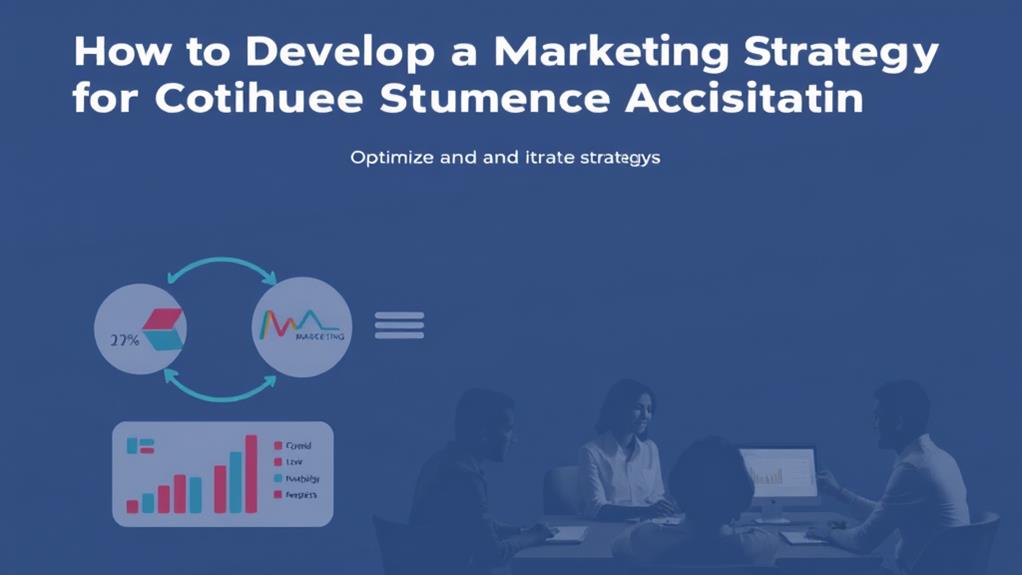
Analyzing performance metrics provides a solid foundation for optimizing and iterating customer acquisition strategies. The interplay between data analytics and customer feedback is paramount; utilizing these insights allows marketers to identify what resonates with their target audience.
By focusing on audience segmentation, businesses can tailor their campaigns to address specific consumer needs, enhancing engagement and retention.
Staying abreast of marketing trends is essential to maintain relevance. Future-oriented strategies should encompass continuous monitoring of campaign performance against established benchmarks. This enables swift adjustments based on real-time data, ensuring that resource allocation is efficient and impactful.
Employing rigorous testing methods will yield actionable insights, allowing teams to uncover what truly drives conversions.
Campaign optimization should be an ongoing commitment rather than a one-time action. By strategically incorporating customer feedback into the development of campaigns, organizations can refine their approaches and design experiences that foster a deeper connection with their audience.
Ultimately, the freedom to adapt and evolve strategies hinges on a culture of data-driven decision-making. Those who embrace iterative processes not only improve their efficiency but also cultivate resilience against the ever-changing landscape of consumer preferences.
Frequently Asked Questions
How Do I Budget for My Marketing Strategy Effectively?
Effectively budgeting for your marketing strategy necessitates a thorough understanding of cost allocation and performance metrics.
Begin by identifying key areas requiring investment, ensuring resources align with strategic objectives.
Utilize performance metrics to evaluate the efficacy of each marketing initiative, adjusting allocations accordingly for optimized returns.
This approach not only enhances financial discipline but also fosters flexibility, empowering your organization to adapt swiftly to market changes and seize new opportunities for growth.
What Tools Can I Use for Social Media Management?
In the democratic landscape of social media, tools like Hootsuite and Buffer reign supreme, offering freedom to manage your online kingdom.
These platforms enable strategic content scheduling while fostering social listening, ensuring you hear the whispers of your audience's desires.
With their analytical dashboards, one can transform the chaos of social networks into coherent strategies that resonate.
Embrace these tools not just as utilities, but as allies in the quest for authentic engagement and brand loyalty.
How Often Should I Update My Marketing Strategy?
Updating your marketing strategy should occur regularly to guarantee alignment with evolving market trends and business objectives.
A strategic evaluation at least biannually allows you to assess performance metrics, adapt to industry shifts, and optimize customer engagement.
Flexibility in your approach empowers you to seize new opportunities and mitigate risks, ultimately fostering sustainable growth.
Adopting a proactive stance towards these evaluations guarantees that your marketing strategy remains relevant and effective in a dynamic marketplace.
What Are the Best Practices for Email Marketing Campaigns?
In the field of email marketing, initiating a journey of best practices is essential for success.
Employ email segmentation to tailor your messages, ensuring they resonate with different audience segments. Emphasizing campaign personalization enhances engagement, fostering a deeper connection with recipients.
Craft compelling subject lines and maintain a consistent brand voice to establish trust.
Ultimately, these strategic elements empower businesses to nurture relationships, driving growth while allowing customers the freedom to choose their interactions.
How Do I Handle Negative Feedback During Customer Acquisition?
Handling negative feedback is essential in refining customer acquisition strategies.
Begin with thorough feedback analysis to identify underlying issues in customer responses. Utilize a strategic approach by acknowledging concerns, demonstrating active listening, and providing timely resolutions.
This not only shows commitment to customer satisfaction but also fosters trust and loyalty.
Conclusion
In summation, a successful marketing strategy for customer acquisition necessitates a nuanced understanding of the target audience, systematic setting of objectives, and strategic selection of channels. By crafting compelling content and employing effective lead generation tactics, measurable metrics can be analyzed to foster continuous improvement. Ultimately, optimizing and iterating the strategy enhances engagement and elevates overall effectiveness, ensuring a robust roadmap for reaching new clientele and achieving lasting growth in a competitive marketplace.