
How to Use AI to Improve SMB Competitive Positioning
Small and medium-sized businesses can leverage AI to enhance their competitive positioning through various strategies. By utilizing predictive analytics, SMBs can gain valuable insights into consumer behavior, tailoring marketing efforts and improving customer engagement. Automating routine tasks boosts productivity, allowing teams to focus on innovation. AI also facilitates personalized customer experiences, fostering loyalty and satisfaction. Additionally, robust performance metrics driven by AI can help identify market gaps and optimize resource allocation. Embracing these strategies is essential for SMBs to stay competitive in today's landscape, paving the way for further exploration of advanced AI applications that can elevate business performance.
Key Takeaways
- Implement predictive analytics to forecast trends and consumer demand, enabling tailored offerings that enhance customer loyalty and competitive edge.
- Leverage AI-driven marketing strategies for content personalization and targeted outreach, fostering meaningful connections with your audience.
- Automate repetitive tasks to improve operational efficiency, allowing teams to focus on higher-value activities that drive innovation and growth.
- Utilize sentiment analysis to gauge customer emotions, informing proactive engagement strategies that enhance the overall customer experience.
- Analyze consumer behavior through segmentation techniques for targeted marketing efforts, optimizing resource allocation and improving overall business performance.
Understanding AI in SMBs

As small and medium-sized businesses (SMBs) increasingly look to enhance their competitive positioning, understanding the role of artificial intelligence (AI) becomes vital. The AI fundamentals provide a framework for grasping how these technologies can be harnessed to drive innovation and efficiency. By exploring AI applications—ranging from predictive analytics to automated customer service—SMBs can identify opportunities to streamline operations and make data-informed decisions.
One of the most significant AI trends impacting SMBs is the democratization of AI tools. This development has allowed businesses, regardless of size, to access sophisticated technologies that were once the prerogative of larger enterprises. However, embracing these tools also brings AI challenges, such as the need for skilled personnel and the integration of AI systems into existing infrastructures. These challenges must be maneuvered carefully to guarantee successful AI integration.
Moreover, as businesses leverage AI, ethical considerations cannot be overlooked. AI ethics related to data privacy and algorithmic bias are vital for maintaining consumer trust and maneuvering regulatory landscapes.
Enhancing Customer Experience
Delivering exceptional customer experiences has emerged as a critical differentiator for SMBs seeking to establish a competitive edge in today's market. With the proliferation of AI technologies, SMBs can harness data-driven insights to enhance every aspect of the customer journey.
By employing personalized communication, businesses can tailor interactions to meet customer needs, creating a sense of relevance that fosters loyalty.
In this context, feedback loops play a pivotal role, allowing businesses to gather insights directly from customers, thereby facilitating continuous improvement. Implementing service automation, such as chatbots integration, not only streamlines customer interactions but also guarantees that queries are addressed in real time, enhancing user experience.
Moreover, sentiment analysis enables SMBs to gauge customer emotions and perceptions, allowing for more nuanced responses and proactive engagement strategies. This level of understanding can lead to the development of effective loyalty programs that resonate with customers, reinforcing their attachment to the brand.
Businesses also benefit from mapping the customer journey thoroughly, identifying key touchpoints that can be optimized through AI solutions. By analyzing data across various stages of the journey, SMBs can predict needs, anticipate issues, and exceed customer expectations.
Streamlining Operations
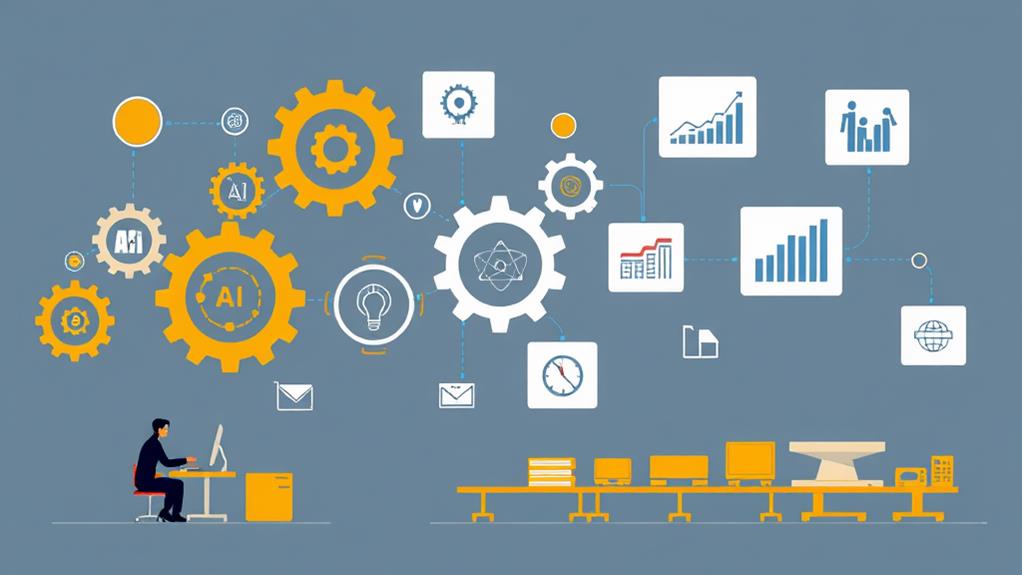
Streamlining operations has become an essential focus for SMBs aiming to enhance efficiency and reduce costs in a competitive landscape. By harnessing the power of AI and automation tools, businesses can achieve significant improvements in their operational efficiency. Here are four key strategies to take into account:
- Task Automation: Automating repetitive tasks allows employees to focus on higher-value activities, boosting overall productivity and morale.
- Workflow Management: Implementing smart workflow management systems facilitates seamless coordination among team members, enhancing collaboration and ensuring projects stay on track.
- Resource Allocation: AI-driven analytics can optimize resource allocation, ensuring the right skills and tools are deployed where they are needed most, minimizing waste.
- Performance Metrics: Establishing robust performance metrics helps businesses identify bottlenecks and opportunities for process optimization, enabling ongoing improvements.
By employing these strategies, SMBs can realize substantial cost reduction while improving their supply chain operations. Advanced automation tools streamline operations, allowing for enhanced workflow management and more effective team collaboration.
In this dynamic environment, the smart deployment of task automation provides a competitive edge, as businesses can swiftly adapt to market changes.
Additionally, as operational processes become more efficient, SMBs can redirect resources toward innovation and growth initiatives that expand their market presence.
The pursuit of operational excellence not only strengthens competitive positioning but also fosters a culture of continuous improvement, paving the way for long-term success in the evolving business landscape.
Optimizing Marketing Strategies
In today's digital age, 78% of small and medium-sized businesses (SMBs) recognize the importance of leveraging AI to enhance their marketing strategies. Embracing AI technologies allows SMBs to harness the power of data-driven insights, fundamentally transforming the ways they engage with their target audiences.
By focusing on content personalization and targeted outreach, businesses can create meaningful connections that resonate with potential customers.
Content personalization is at the core of effective marketing. AI enables SMBs to analyze customer data, preferences, and behaviors, facilitating the creation of tailored messages that speak directly to individual needs. This customization fosters a sense of relevance and urgency, increasing customer engagement and conversion rates.
For instance, utilizing machine learning algorithms, SMBs can automate content generation that aligns with specific interests, ensuring communications are not only timely but also impactful.
Moreover, targeted outreach powered by AI enhances marketing efficiency. Through predictive analytics, businesses can identify high-value segments and determine the best touchpoints for reaching them. This precision allows for the deployment of resources where they are most likely to yield results, minimizing waste and maximizing ROI.
As competition intensifies, SMBs must embrace AI-driven marketing strategies to adapt swiftly to shifting market dynamics. By leveraging content personalization and targeted outreach, they can strengthen their competitive positioning, fostering not just business growth, but also a loyal customer base that fully appreciates their individualized approach.
In the quest for market relevance, adopting AI is no longer optional, but essential.
Analyzing Consumer Behavior
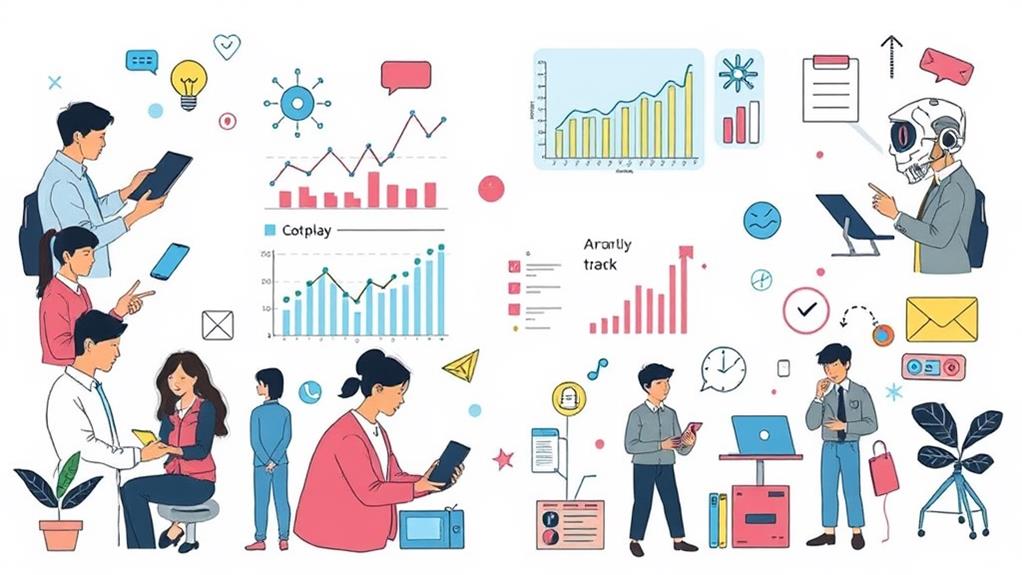
Understanding consumer behavior is essential for small and medium-sized businesses (SMBs) aiming to enhance their competitive edge.
By tracking purchase patterns, employing segmentation analysis techniques, and leveraging predictive analytics, SMBs can gain valuable insights into consumer preferences and trends.
This data-driven approach not only enables targeted marketing strategies but also fosters stronger customer relationships and improves overall business performance.
Tracking Purchase Patterns
Leveraging sophisticated AI tools for tracking purchase patterns can provide invaluable insights into consumer behavior, enabling small and medium-sized businesses (SMBs) to refine their competitive positioning. By analyzing purchase history, SMBs can uncover significant consumer insights that inform strategic decisions.
Here are four key advantages of tracking purchase patterns:
- Trend Analysis: Identify emerging trends in consumer preferences, allowing you to adjust your offerings proactively.
- Sales Forecasting: Utilize historical data to predict future sales, enabling better inventory management and resource allocation.
- Loyalty Programs: Develop targeted loyalty programs based on purchase behaviors, enhancing customer retention and brand loyalty.
- Pricing Strategies: Adjust pricing models based on consumer demand insights, maximizing revenue potential while remaining competitive.
Through data visualization, SMBs can transform raw purchase data into intuitive graphics that highlight essential patterns, aiding in market segmentation efforts.
Understanding these purchase patterns empowers SMBs to tailor marketing strategies and enhance customer experiences. During a time when agility is key to surviving, harnessing AI for tracking purchase metrics is not just an opportunity; it's a necessity for creating informed, customer-centric business strategies.
Segmentation Analysis Techniques
Identifying the right segmentation analysis techniques is essential for SMBs aiming to explore deeper into consumer behavior and tailor their marketing strategies effectively. By implementing robust segmentation models, businesses can dissect their audience into manageable categories, enabling personalized engagement and communication.
Demographic targeting is a fundamental approach, relying on age, gender, income, and location to identify potential customers. However, to gain richer insights, psychographic profiling should be integrated, as it investigates consumer values, interests, and lifestyles.
Additionally, behavioral segmentation examines purchasing habits and product usage, allowing businesses to respond to customer needs in real time. Data clustering techniques further enhance this analysis by grouping similar consumers, revealing hidden patterns that can define a market niche.
This method supports the creation of detailed customer personas, encapsulating nuanced segments that can greatly drive strategy development. The amalgamation of these segmentation techniques empowers SMBs to access valuable audience insights, positioning them to engage more effectively with their target market.
Ultimately, utilizing these analytical strategies enables SMBs to not only comprehend their customers better but also to foster enduring relationships that promote sustainable growth.
Predictive Analytics Benefits
Releasing the potential of predictive analytics allows SMBs to gain profound insights into consumer behavior, paving the way for more informed strategic decisions. Through effective implementation, organizations can harness the power of data to enhance their competitive positioning.
Here are four key benefits of predictive analytics:
- Data-Driven Forecasting: By analyzing historical data, SMBs can forecast trends and consumer demands with high accuracy, enabling proactive inventory management and tailored marketing campaigns.
- Enhanced Consumer Insights: Predictive analytics reveals detailed consumer preferences and buying patterns, allowing businesses to personalize their offerings, thereby fostering customer loyalty.
- Risk Assessment Strategies: Predictive models evaluate potential risks associated with market changes, enabling SMBs to devise strategies that mitigate financial risks and operational disruptions.
- Optimized Resource Allocation: Understanding consumer behavior guarantees better allocation of resources, leading to improved efficiency and cost-effectiveness in operations.
Embracing predictive analytics empowers SMBs to not only understand their market but also to make agile, informed decisions that resonate with the evolving preferences of their customers, consequently securing a competitive edge.
Measuring Competitive Success
How can small and medium-sized businesses (SMBs) effectively assess their competitive positioning in a rapidly evolving market? The key lies in measuring competitive success through the strategic use of advanced metrics and benchmarks. By establishing clear competitive benchmarks, SMBs can gauge where they stand against industry standards and competitors, allowing for informed decision-making.
Performance metrics serve as essential tools in this evaluative process. Tracking success indicators such as customer retention rates, conversion ratios, and sales growth not only reveals areas for improvement but also highlights strong market differentiation.
SMBs should prioritize these metrics to develop robust growth strategies that align with their unique value propositions.
Conducting thorough industry comparisons further enhances the assessment process. By analyzing competitors' market positioning, pricing strategies, and product offerings, SMBs can refine their brand positioning to resonate more effectively with target audiences.
Identifying gaps in the market allows for the crafting of tailored solutions that set them apart from larger rivals.
Additionally, utilizing AI-driven analytics can provide deep insights into customer behavior and preferences, enabling real-time adjustments to competitive strategies.
Frequently Asked Questions
What Is the Cost of Implementing AI for Smbs?
The cost of implementing AI for small to medium-sized businesses (SMBs) can vary considerably based on scope and complexity.
Conducting a thorough cost analysis is essential for effective budget planning, as initial investments may include software, hardware, and training expenses.
Ongoing costs such as maintenance and updates should also be factored in.
Ultimately, a well-structured financial strategy can provide the freedom necessary for SMBs to harness AI technologies effectively and enhance operational efficiency.
How Long Does It Take to See Results From AI Investments?
The AI implementation timeline varies considerably depending on the complexity of solutions deployed and organizational readiness.
Typically, businesses may notice initial results within three to six months, particularly when addressing specific use cases.
However, measuring AI impact accurately requires a longer timeframe, often extending to 12 months or more, to fully assess operational enhancements and strategic benefits.
Stakeholders must remain patient and committed, as enduring value emerges through iterative optimization and continuous learning.
Do I Need a Tech Background to Use AI in My Business?
As the adage goes, "necessity is the mother of invention."
Today, AI accessibility allows businesses to harness powerful tools without a technical background. While a basic understanding of technology aids in effective business integration, numerous user-friendly platforms and resources eliminate the need for extensive expertise.
Entrepreneurs can leverage AI to enhance operations, customer engagement, and strategic insight, ultimately fostering greater freedom and innovation, regardless of their initial technological proficiency.
What AI Tools Are Most Popular Among Small Businesses?
Among small businesses, popular AI tools include customer relationship management (CRM) systems like HubSpot and Salesforce, and data analytics platforms such as Tableau.
These tools enhance customer insights by analyzing consumer behavior and preferences, thereby fostering stronger relationships.
Additionally, automation tools like Zapier improve operational efficiency by streamlining repetitive tasks.
Can AI Be Used in Industries Beyond Retail and E-Commerce?
AI applications extend well beyond retail and e-commerce, demonstrated by a hypothetical case where a healthcare provider utilizes AI to analyze patient data for personalized treatment plans.
This industry example illustrates AI benefits such as improved patient outcomes and operational efficiency. Despite implementation challenges like data privacy, many sectors exhibit adaptability toward AI, as evidenced by diverse case studies, from agriculture optimizing crop yields to finance predicting market trends, underscoring the technology's transformative potential.
Conclusion
To conclude, the integration of artificial intelligence within small and medium-sized businesses presents a golden opportunity to enhance competitive positioning. By leveraging AI for customer experience, operational efficiency, marketing optimization, and consumer behavior analysis, SMBs can not only streamline processes but also uncover valuable insights. This strategic approach ultimately leads to measurable improvements in competitive success, ensuring that these businesses stay ahead of the curve in an increasingly dynamic marketplace. Embracing AI is essential for sustainable growth and innovation.