The Impact of AI on SMB Marketing Strategies
AI is notably impacting marketing strategies for small and medium-sized businesses (SMBs) by transforming raw data into actionable insights. It enhances operational efficiency and enables precise targeting through advanced customer segmentation and predictive modeling. Marketing campaigns become more effective with tailored messaging, leading to higher engagement and improved customer retention. Additionally, automation in marketing processes streamlines workflows and reduces costs. Businesses leveraging AI can achieve a competitive edge by responding swiftly to market changes. As the landscape evolves, understanding these dynamics is essential for optimizing marketing efforts and capitalizing on emerging trends. Uncover the potential benefits and strategies that AI offers.
Key Takeaways
- AI enables SMBs to harness actionable marketing analytics, enhancing strategy development and operational efficiency.
- Predictive modeling allows SMBs to anticipate customer preferences, leading to more tailored marketing efforts.
- Personalized communication driven by AI improves customer retention rates and fosters brand loyalty.
- Marketing automation streamlines lead generation and task management, optimizing overall marketing processes for SMBs.
- Real-time analytics facilitate ongoing performance tracking, enabling strategic adjustments for improved campaign effectiveness.
Understanding AI in Marketing
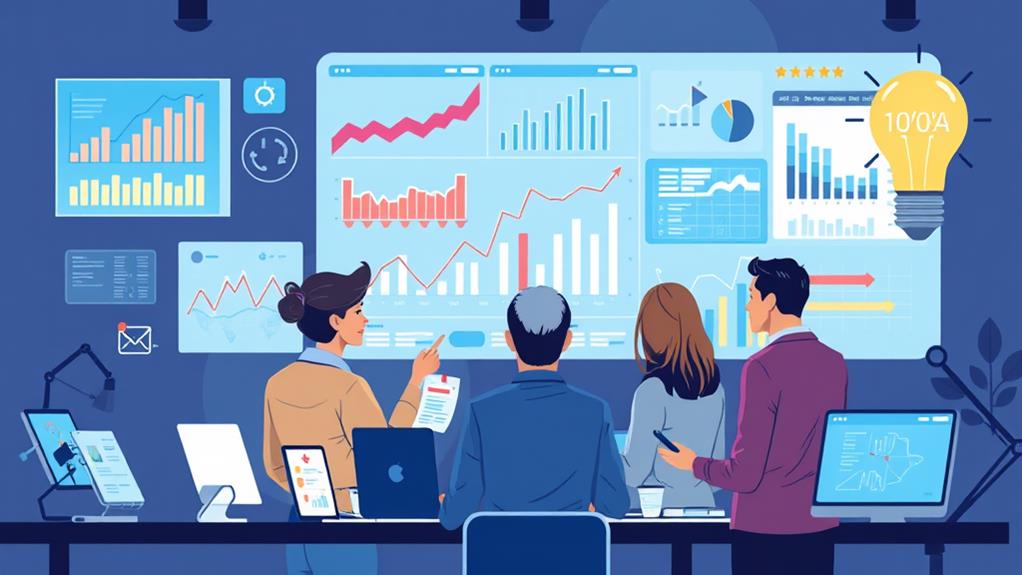
As businesses increasingly adopt digital tools, understanding the role of artificial intelligence (AI) in marketing has become paramount for small and medium-sized businesses (SMBs). AI applications in this domain facilitate the transformation of raw data into actionable knowledge, empowering companies to harness marketing analytics effectively.
By leveraging AI, SMBs can glean customer insights that were previously unattainable, enabling them to tailor their marketing strategies more precisely.
Predictive modeling, one of the cornerstones of AI, allows businesses to anticipate customer preferences and behaviors, leading to more effective engagement strategies. For instance, by analyzing historical data, marketers can predict future purchasing patterns, thereby optimizing their campaigns for heightened effectiveness.
In addition, content generation technologies enable SMBs to create personalized content at scale, ensuring that marketing messages resonate deeply with target audiences.
Social listening platforms equipped with AI offer critical insights into consumer sentiment, allowing businesses to gauge brand health in real-time. This feature also augments brand monitoring efforts, helping companies respond proactively to potential crises or opportunities for engagement.
Ultimately, the integration of AI into marketing processes can lead to significant campaign optimization, refining resource allocation and maximizing return on investment.
Benefits of AI for SMBs
AI technology offers a multitude of advantages for small and medium-sized businesses (SMBs), transforming not only how they approach marketing strategies but also enhancing overall operational efficiency. By leveraging AI tools, SMBs can glean market insights that were previously elusive, enabling them to understand customer behaviors and preferences. This knowledge allows for more tailored marketing campaigns, which in turn supports SMB growth.
A key benefit of AI is its ability to streamline lead generation processes. Sophisticated algorithms can identify potential customers, segment markets, and prioritize leads, allowing businesses to focus their resources on prospects most likely to convert. In a competitive marketplace, harnessing this technology offers a notable competitive advantage, ensuring that SMBs remain agile and responsive to market demands.
Moreover, AI plays a critical role in improving customer retention and fostering brand loyalty. Personalized communication and targeted marketing initiatives, powered by AI, can notably enhance customer experiences.
Data-Driven Decision Making

Data-driven decision making has become a cornerstone of effective marketing strategies for small and medium-sized businesses (SMBs). In a landscape where consumer preferences shift rapidly, leveraging data analytics allows SMBs to navigate these fluctuations with precision. By analyzing quantitative insights, businesses can identify trends, optimize campaigns, and allocate resources effectively, ultimately driving growth and enhancing market competitiveness.
Advanced data analytics techniques, including predictive modeling, enable SMBs to forecast customer behaviors and market conditions. This anticipatory approach allows organizations to fine-tune their marketing strategies before trends solidify, granting them the freedom to pivot accordingly without excessive resource expenditure. Predictive modeling empowers businesses to categorize customers based on past interactions, thereby increasing the relevance of targeted marketing efforts.
Moreover, by adopting a data-driven mindset, SMBs empower their teams to make informed choices rooted in empirical evidence rather than intuition. This shift enhances accountability and instills a culture of continuous improvement.
Key performance indicators (KPIs) can be tracked in real-time, affording businesses the opportunity to refine their tactics as data emerges.
Personalization and Customer Engagement
In today's competitive landscape, tailored marketing campaigns are essential for small and medium-sized businesses (SMBs) to effectively engage their target audience.
Leveraging data analytics enables companies to understand customer preferences and behaviors, facilitating the creation of personalized experiences that enhance user engagement.
Tailored Marketing Campaigns
Effective marketing strategies increasingly rely on tailored campaigns that resonate with individual customer preferences. By employing advanced customer segmentation techniques, businesses can define their target audience more accurately, allowing for precise message customization that aligns with specific needs and interests.
This tailored approach enhances content optimization, ensuring that each piece of communication is not only relevant but also engaging for the audience.
Campaign analytics play a pivotal role in evaluating the success of these tailored initiatives. By assessing engagement metrics, marketers can derive actionable insights from behavioral insights that reveal how customers interact with various marketing touchpoints.
Audience profiling further enriches this process, enabling businesses to anticipate shifts in consumer behavior and preferences proactively.
In this landscape driven by data, those who effectively harness AI will achieve superior results. Tailored marketing campaigns foster higher engagement rates and improved customer retention, as consumers feel more valued and understood.
Consequently, brands can navigate the dynamic market environment, ensuring their communications resonate authentically with their audience, thereby securing a competitive edge while honoring the individuality of the consumer.
Enhanced User Experience
As tailored marketing campaigns reshape the landscape of customer interaction, the emphasis on enhanced user experience becomes increasingly apparent. Leveraging artificial intelligence technologies, small and medium-sized businesses (SMBs) can cultivate a refined approach to personalization and customer engagement.
By employing predictive analytics, SMBs can analyze vast datasets to forecast customer behaviors and preferences, enabling them to deliver targeted content and recommendations that resonate deeply with individual consumers.
Furthermore, incorporating chatbot interactions into customer service strategies fosters immediacy and accessibility, allowing businesses to engage with customers in real-time. Studies indicate that companies using AI-driven chatbots experience up to 30% higher engagement rates, translating to enhanced satisfaction and retention.
These automated interfaces not only provide 24/7 support but also gather invaluable insights into customer inquiries and feedback patterns.
Together, predictive analytics and effective chatbot interactions represent a paradigm shift in user experience. They empower SMBs to create a distinctly personalized journey that aligns with the autonomous desires of their audience, driving both loyalty and conversion.
This fusion of technology and strategy ultimately paves the way for sustained competitive advantage in an increasingly digital marketplace.
Automating Marketing Processes
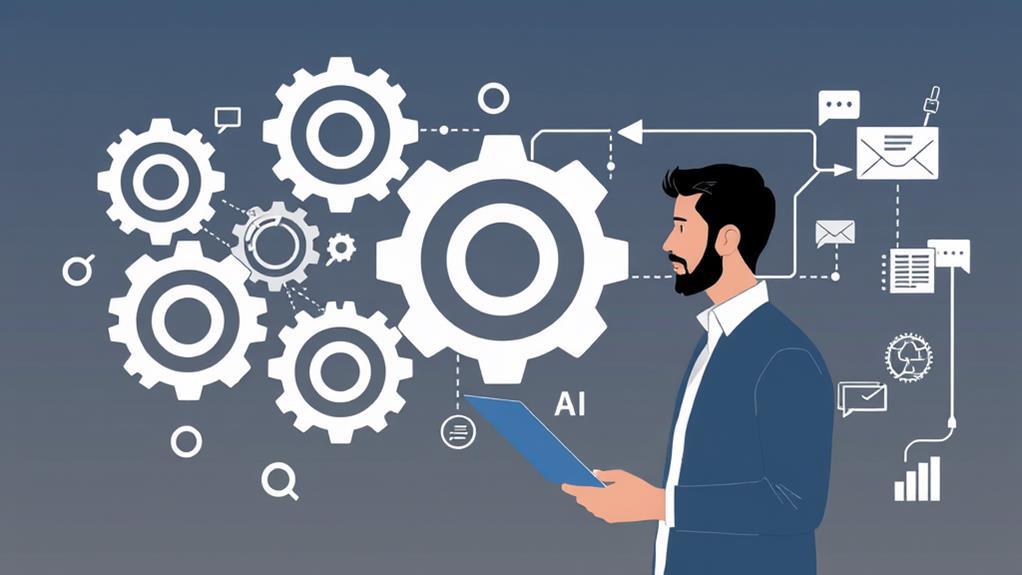
Utilizing automation in marketing processes can markedly enhance the efficiency and effectiveness of small and medium-sized businesses (SMBs). AI tools play a vital role in transforming traditional marketing strategies into data-driven practices that facilitate workflow optimization. This innovative approach not only streamlines operations but also enables improved lead generation by utilizing sophisticated algorithms that identify potential customers with precision.
Campaign automation, powered by AI, allows SMBs to deliver personalized content and communications at scale, fostering deeper relationships with their audience. By automating repetitive tasks, businesses can focus their resources on crafting unique marketing strategies, ultimately driving higher engagement rates.
Analytics integration within these automated systems enhances performance tracking, providing insights into campaign effectiveness and consumer behavior. This data-centric approach empowers businesses to make informed decisions, adapt their strategies, and recalibrate their marketing efforts as needed.
Furthermore, leveraging customer segmentation becomes more achievable with the capabilities of AI. By analyzing vast datasets, SMBs can categorize their customers based on various attributes, ensuring tailored messaging that resonates with specific segments. This targeted strategy not only improves marketing efficiency but also cultivates brand loyalty, fostering a sense of community among consumers.
In an era where agility and responsiveness are paramount, automating marketing processes allows SMBs to transcend traditional limitations, empowering them to adapt swiftly to market dynamics while liberating their teams to innovate and grow. The integration of AI tools heralds a future where SMBs can truly harness the power of automation to thrive in a competitive landscape.
Cost-Effectiveness of AI Solutions
AI solutions have reshaped the landscape of marketing for small and medium-sized businesses (SMBs) by delivering notable cost-effectiveness alongside enhanced functionality. This transformation allows SMBs to optimize resources and achieve higher profitability through AI budgeting techniques, making every dollar count. Consequently, organizations can reallocate funds to more strategic initiatives, fostering growth and innovation.
A robust ROI analysis reveals the following key benefits of utilizing AI in marketing:
- Reduced Labor Costs: AI-driven automation minimizes manual tasks, enabling teams to focus on strategic decision-making rather than repetitive assignments, thereby cutting down overtime and staffing expenses.
- Enhanced Targeting: Utilizing AI algorithms, SMBs can analyze large datasets to identify customer preferences and behaviors. This data-driven approach enables precise targeting, resulting in higher conversion rates and more efficient ad spend.
- Improved Customer Retention: AI tools facilitate personalized marketing campaigns, which notably enhance customer engagement. Retaining existing customers is essential, as reducing churn costs less than acquiring new clients.
The cost-effectiveness of AI solutions empowers SMBs not only to streamline operations but to innovate creatively in a competitive landscape.
Future Trends in AI Marketing

Anticipating the future of AI marketing reveals a landscape increasingly characterized by integration and hyper-personalization. As small and medium-sized businesses (SMBs) navigate this evolving terrain, they must leverage emerging technologies to enhance customer engagement and optimize their marketing strategies.
Importantly, voice search is set to revolutionize how consumers interact with brands. With over 50% of all searches projected to be conducted via voice by 2025, marketers will need to adapt their SEO strategies to accommodate this shift, focusing on natural language processing and conversational keywords.
Additionally, predictive analytics will play a pivotal role in shaping the AI marketing frontier. By harnessing vast data sets, SMBs can gain actionable insights into customer behavior, preferences, and future trends. This real-time analysis empowers businesses to anticipate customer needs, develop personalized marketing campaigns, and allocate resources more effectively.
According to recent research, companies utilizing predictive analytics can achieve up to a 15% increase in sales through targeted strategies.
Furthermore, integrating AI-driven chatbots into marketing funnels will enhance customer experience and streamline interactions. With capabilities for 24/7 engagement and personalized responses, these tools not only increase operational efficiency but also foster stronger customer relationships.
As AI technology matures, the convergence of voice search and predictive analytics will enable SMBs to create tailored, responsive marketing strategies that resonate with their audiences, ensuring greater autonomy and freedom for consumers to connect with brands on their terms.
Embracing these trends is essential for sustainable growth in a competitive marketplace.
Frequently Asked Questions
How Can SMBS Implement AI Without Extensive Technical Knowledge?
Small and medium businesses (SMBs) can effectively implement AI by leveraging user-friendly solutions designed for non-technical users.
Cost-effective implementation is achievable through cloud-based AI tools that require minimal setup.
Additionally, utilizing training resources available online can empower staff to harness these technologies confidently.
What Common Misconceptions Exist About AI in Marketing?
In the domain of marketing, where change can be as rapid as lightning, several AI myths have emerged. Many believe that AI solely automates processes, overshadowing the human element, which fuels innovation and creative strategy.
Additionally, automation fears hinder adoption, as marketers worry about job displacement. However, when integrated thoughtfully, AI enhances analytical capability, offering valuable insights while empowering professionals to focus on strategic initiatives, ultimately leading to more effective marketing outcomes.
Which Industries Benefit Most From AI Marketing Tools?
Industries benefiting most from AI marketing tools include retail, healthcare, finance, real estate, and travel.
Retail personalization enhances consumer experiences by tailoring product recommendations.
In healthcare, analytics drive improved patient outcomes through data analysis.
Financial forecasting aids firms in risk management and investment strategies.
E-commerce optimization increases conversion rates, while real estate insights provide market trends for informed decisions.
Travel recommendations leverage AI to curate personalized itineraries, enriching customer engagement and satisfaction.
How Can SMBS Measure the Effectiveness of AI Strategies?
To effectively measure the efficacy of AI strategies, SMBs should leverage data analytics to track performance metrics.
By collecting and analyzing customer insights, businesses can ascertain the impact of their campaigns and identify areas for optimization.
Implementing robust analytics tools enables real-time evaluation of strategies, facilitating informed decision-making.
This analytical approach empowers SMBs to refine their marketing efforts and guarantee their resources are utilized effectively in an increasingly competitive landscape.
Is AI Marketing Affordable for All Smbs?
The affordability of AI marketing for small and medium-sized businesses (SMBs) can be likened to a double-edged sword.
While innovative solutions offer significant advantages, cost considerations and accessibility challenges often create a barrier.
Many SMBs may find entry-level AI tools within their budget; however, as sophistication increases, so do expenses.
Careful analysis of ROI and tailored strategies are essential for SMBs to harness AI without compromising financial stability or operational freedom.
Conclusion
The transformative effects of artificial intelligence on small and medium-sized business marketing strategies are profound. Enhanced data analysis capabilities enable informed decision-making, while personalized customer interactions foster deeper engagement. In addition, the automation of marketing processes streamlines operations and reduces costs, allowing for resource reallocation toward innovation. As these trends continue to evolve, SMBs must adapt to harness the potential of AI, ensuring they remain competitive in an increasingly sophisticated marketplace reminiscent of the industrial revolution's impact on productivity paradigms.