The Importance of Agility in Your Marketing Strategy
Agility in marketing is crucial for organizations to thrive amid rapid market changes and evolving consumer preferences. It enables teams to adapt strategies quickly, tailoring campaigns based on real-time data and customer insights. This iterative process fosters a culture of experimentation, allowing for innovative solutions and cross-functional collaboration. By leveraging social media for responsive tactics, brands can enhance engagement and build meaningful relationships. Flexibility in campaign strategies guarantees sustained relevance, while timely adjustments to market trends can provide significant competitive advantages. Explore further to uncover key insights into building a truly agile marketing strategy.
Key Takeaways
- Agility enables marketers to quickly adapt strategies based on emerging trends and consumer preferences for sustained relevance.
- Real-time data analysis allows for informed, rapid decision-making, optimizing campaigns according to immediate customer feedback.
- Agile marketing fosters a culture of experimentation, promoting innovation and creative solutions while minimizing wasted resources.
- Responsive social media tactics enhance customer engagement by addressing feedback promptly and anticipating trends.
- Building cross-functional teams enhances collaboration and resource allocation, ensuring swift responses to market changes.
Understanding Marketing Agility
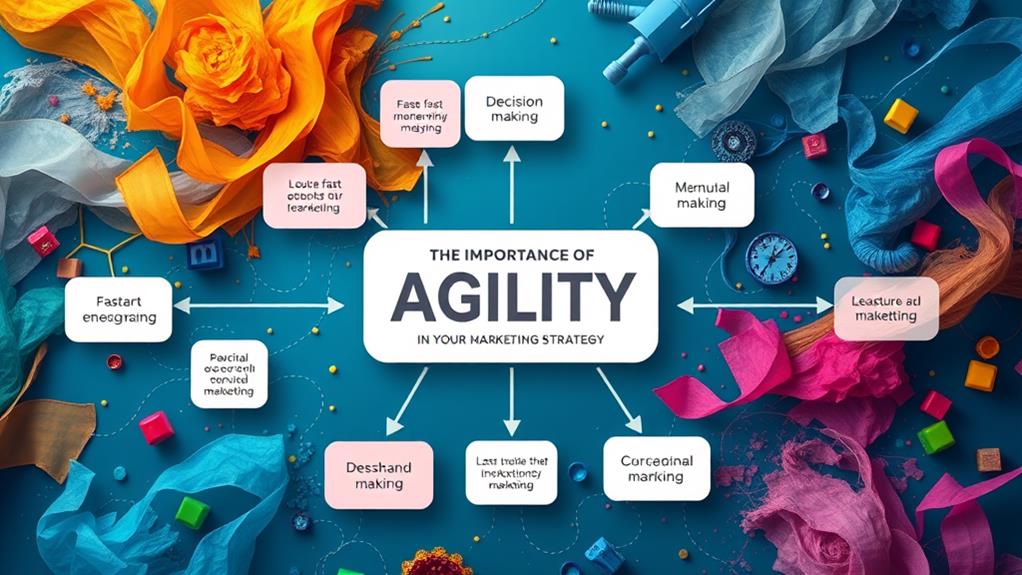
In the dynamic landscape of contemporary marketing, understanding marketing agility is essential for organizations seeking to thrive amidst rapid changes and shifting consumer preferences. Marketing agility refers to an organization's capacity to quickly adapt its strategies and tactics in response to emerging trends, competitive pressures, and evolving customer expectations. This adaptability is paramount in a world where the velocity of information and technological advancements continually redefine market landscapes.
At the heart of marketing agility lies a commitment to iterative processes. These processes allow marketers to develop campaigns that are not only responsive but also continuously refined based on real-time feedback from customers. By soliciting and analyzing customer feedback, organizations gain invaluable insights that inform their strategic pivots. This feedback loop empowers businesses to adjust their messaging, tailoring campaigns to better align with consumer needs, preferences, and behaviors.
Moreover, marketing agility encourages a culture of experimentation and learning. By embracing trial and error, organizations foster an environment where teams can innovate without the fear of rigid structures stifling creative thought. This freedom enables them to explore diverse avenues and quickly identify effective strategies.
Ultimately, understanding marketing agility is not just about adopting new methodologies; it is about embracing a mindset that prioritizes responsiveness and customer-centricity. In this ever-evolving market, organizations that harness the power of agility will invariably position themselves ahead of competitors, adapting and thriving as they navigate the complexities of modern consumer dynamics.
Benefits of Agile Marketing
Embracing marketing agility provides organizations with a multitude of advantages that extend beyond mere responsiveness. One of the most significant benefits is the ability to integrate real-time customer feedback into the strategy. This dynamic approach facilitates a deeper understanding of consumer needs and preferences, allowing marketers to tailor campaigns that resonate more effectively with their target audience. By prioritizing customer insights, businesses can elevate their relevance and foster stronger relationships.
Another key advantage is the iterative process that defines agile marketing. Unlike traditional linear methodologies, this flexible framework encourages experimentation and adaptation. Teams can quickly launch initiatives, measure their performance, and refine their tactics based on empirical data. Such an approach not only reduces waste and optimizes resource allocation but also cultivates a culture of innovation within the organization.
This adaptability empowers teams to embrace creative solutions and pivot strategies in response to shifting market conditions.
Moreover, this iterative nature fosters collaboration across departments, breaking down silos that often impede progress. When cross-functional teams unite in the agile process, they can share insights and leverage diverse perspectives, enhancing the overall efficacy of marketing efforts.
Real-Time Data Analysis

Real-time data analysis has become a cornerstone of agile marketing, enabling organizations to make informed decisions with remarkable speed and accuracy. This practice not only enriches marketing strategies but also fosters a deep understanding of consumer behavior. By harnessing real-time data, marketers can glean insights that drive immediate adjustments to campaigns, ultimately enhancing effectiveness and relevance.
At the heart of this process is data visualization, which transforms complex data sets into intuitive formats that simplify interpretation. When data is visually represented, patterns and trends in consumer behavior emerge more clearly. Marketers can quickly identify shifts in preferences or engagement, allowing them to act proactively rather than reactively. This capability is essential in an environment where consumer expectations are constantly evolving.
Moreover, the agile marketer thrives on flexibility and adaptability, leveraging real-time insights to experiment with various marketing channels and messages. By deploying A/B testing and tracking performance metrics continuously, businesses gain immediate feedback, which facilitates rapid iteration and optimization.
Such agility not only liberates marketers from the constraints of traditional planning cycles but also empowers them to cultivate more meaningful customer relationships.
Responsive Social Media Tactics
Harnessing real-time data analysis sets the stage for responsive social media tactics that resonate with today's dynamic consumer landscape. By actively engaging in social listening, brands can tap into the pulse of consumer sentiment, uncovering insights that inform their messaging and content strategies. This agility allows marketers to not only react to trends but also to anticipate them, fostering a proactive approach that appeals to a freedom-seeking audience.
Responsive social media tactics encompass swift adjustments based on audience behavior and preferences. Analyzing interactions in real time enables brands to tailor their communications to match the evolving interests and desires of their followers. For instance, if a particular type of content garners significant engagement, marketers can amplify similar themes to reinforce audience connection, ultimately driving deeper engagement.
Moreover, agility in social media extends beyond mere content adjustment; it involves robust audience engagement strategies. By participating in conversations and addressing customer feedback promptly, brands position themselves as responsive and responsible participants in the digital landscape. This creates a sense of trust and loyalty, essential for nurturing long-term relationships with consumers.
In a world characterized by rapid change, the ability to pivot messaging and interactions swiftly is invaluable. Embracing a culture of responsive social media tactics strengthens the connection between brand and audience, empowering consumers and liberating brands to evolve alongside their communities.
In this way, responsive tactics become not just a strategy, but a way to cultivate authentic engagement amidst the noise of a crowded marketplace.
Adapting to Market Changes

Adapting to market changes requires a keen awareness of emerging trends and a willingness to adjust marketing strategies swiftly.
By embracing rapid trends, organizations can tap into new opportunities that resonate with shifting consumer preferences.
Flexible campaign strategies enable brands to respond effectively to these developments, ensuring sustained engagement and relevance in a dynamic marketplace.
Embracing Rapid Trends
Marketing strategies today must keep pace with the rapid fluctuations in consumer behavior and industry dynamics. In a landscape characterized by swift change, embracing rapid trends becomes crucial. Companies that excel in trend forecasting possess an edge, allowing them to anticipate shifts in consumer preferences and tailor their offerings accordingly.
Adapting to new trends requires a keen understanding of the pulse of the market. Organizations that actively monitor evolving consumer behavior can pivot swiftly, crafting brand messages that resonate with contemporary values and desires. This dynamic approach not only strengthens brand relevance but also fosters an environment of innovation, aligning products and services with the ever-changing expectations of consumers.
Moreover, agility in recognizing and responding to trends translates to opportunities for engagement. A brand that can introduce a timely campaign or product in response to trends shows consumers that it values their preferences and aspirations.
Flexible Campaign Strategies
Flexibility stands as a cornerstone of effective campaign strategies in an ever-evolving market landscape. As consumer preferences shift and new technologies emerge, marketers must adopt a mindset that embraces change and innovation.
Implementing flexible campaign strategies enables brands to quickly pivot and optimize their efforts in real-time, ensuring they remain relevant and compelling.
Dynamic content plays a pivotal role in this adaptable framework. By tailoring messaging to specific audience segments based on current trends or engagement data, marketers can foster a deeper connection with consumers.
This approach not only captures attention but also encourages ongoing interaction, ultimately driving conversions.
Incorporating iterative testing into the campaign lifecycle is equally essential. Through continuous experimentation and analysis of performance metrics, businesses can identify successful elements and eliminate underperforming components swiftly.
This cycle of testing allows teams to refine their strategies, leading to more effective outcomes without sacrificing creative freedom.
Building a Flexible Team
An effective approach to building a flexible team is crucial for organizations seeking to thrive in an ever-changing market landscape. Central to this endeavor is the understanding of team dynamics, which serves as a foundation for fostering cross-functional collaboration. This collaboration allows individuals from diverse backgrounds to come together, enhancing creativity and adaptability in responding to market shifts.
Adaptive leadership plays a critical role in this process, as it encourages leaders to facilitate an environment conducive to role flexibility. Leaders who champion agility empower team members to wear multiple hats, enabling swift adjustments in resource allocation based on immediate needs. This strategic alignment guarantees that the team functions as a cohesive unit, responding to challenges with agility and precision.
Furthermore, embracing continuous feedback is essential for honing skills and guaranteeing that every member remains aligned with organizational goals. This iterative process not only promotes skill diversification but also builds a culture that values ongoing development.
When teams engage in regular feedback loops, they can recalibrate their objectives and approaches, creating a cycle of improvement and innovation.
Case Studies of Agile Success

Agile methodologies have transformed the landscape of business strategy, offering compelling examples of success across various industries. Companies employing agile frameworks have witnessed remarkable improvements in their marketing strategies through iterative processes and enhanced responsiveness to customer feedback.
For instance, a prominent tech giant utilized agile practices to revamp its product development cycle, implementing cross-functional teams that operated in sprints. This restructuring not only facilitated faster roll-outs but also encouraged robust team collaboration, enabling members to harness their diverse skill sets toward a common goal.
In another case, a leading consumer brand embraced continuous improvement by integrating feedback loops into its marketing campaigns. The company systematically collected performance metrics to assess campaign effectiveness, allowing for real-time adjustments based on stakeholder involvement. Such a responsive approach empowered the marketing team to pivot swiftly, crafting messages that resonated profoundly with their target audience.
Furthermore, a nimble startup demonstrated the power of agile strategies by forming small, focused teams that operated within a framework of autonomy, fostering creativity and innovation. This environment encouraged experimentation and risk-taking, ultimately leading to breakthrough solutions that surpassed traditional marketing efforts.
These case studies reflect the transformative potential of agility within marketing. By prioritizing flexibility and responsiveness to the ever-changing marketplace, organizations can reveal significant competitive advantages and establish long-term customer loyalty.
The evidence is clear: embracing agility is not merely a strategic choice—it is an essential condition for thriving in today's dynamic business environment.
Frequently Asked Questions
How Can Small Businesses Implement Agile Marketing Effectively?
Small businesses can implement agile marketing effectively by prioritizing customer feedback and engaging in rapid experimentation.
This approach allows for a continuous cycle of learning and adaptation. By actively soliciting input from customers, businesses can better understand their needs and preferences, facilitating timely adjustments to marketing strategies.
Additionally, employing rapid experimentation enables small businesses to test new ideas quickly, ensuring they remain responsive to market dynamics and fostering a culture of innovation and flexibility.
What Tools Support an Agile Marketing Strategy?
To support an agile marketing strategy, businesses can leverage collaboration tools such as Slack or Trello, which facilitate seamless communication and project management.
Additionally, data analytics platforms like Google Analytics or Tableau provide real-time insights, enabling teams to adapt strategies based on performance metrics.
This combination empowers marketers to respond swiftly to market changes, fostering an environment of creativity and adaptability, ultimately enhancing the effectiveness of their campaigns and execution.
How Does Agile Marketing Differ From Traditional Marketing?
Agile marketing is akin to steering a swiftly flowing river, whereas traditional marketing resembles a fixed path through the forest.
Utilizing agile methodology, teams embrace marketing flexibility by allowing rapid adaptations to consumer feedback and market changes. This iterative approach fosters collaboration and responsiveness, breaking away from rigid plans typical of traditional marketing.
Consequently, marketers can pivot strategies efficiently, ensuring that campaigns remain relevant and effective in a dynamic environment.
What Skills Are Essential for Agile Marketers?
Essential skills for agile marketers include robust data analysis capabilities, enabling them to interpret market trends and consumer behavior swiftly.
Cross-functional collaboration is equally critical, as it fosters innovative solutions and enhances responsiveness across teams.
Additionally, adaptability is paramount; marketers must embrace change and pivot strategies as necessary.
Creative problem-solving skills are also valuable, allowing agile marketers to devise unique approaches that resonate with diverse audiences, ultimately driving engagement and results.
Can Agile Marketing Benefit Non-Profit Organizations?
"Measure twice, cut once."
Agile marketing can profoundly benefit non-profit organizations by fostering adaptive strategies that enhance stakeholder engagement and impact measurement.
By embracing iterative processes, non-profits can swiftly respond to community needs and optimize resource allocation.
This dynamic approach not only increases the effectiveness of campaigns but also empowers organizations to demonstrate tangible impacts, ultimately attracting more support and fostering a deeper connection with their audience, thereby promoting greater freedom and collaboration.
Conclusion
To sum up, the cultivation of marketing agility fosters a framework for fluctuating functions and fast adaptations in an ever-evolving environment. By prioritizing responsive strategies and leveraging real-time insights, organizations can navigate nuances of the marketplace with nimbleness. The synthesis of flexible teams and proactive planning enhances the potential for progressive performance. Ultimately, embracing agility in marketing not only aligns with consumer expectations but also amplifies a brand's competitive advantage, ensuring sustained success in a dynamic landscape.