The Role of AI in Enhancing SMB Customer Insights
Artificial intelligence markedly enhances customer insights for small and medium-sized businesses (SMBs) by employing advanced data analytics tools. These tools facilitate real-time processing of customer data, enabling robust segmentation and tailored marketing strategies based on consumer behaviors. Predictive analytics further anticipates customer needs through historical data patterns, fostering timely and relevant engagement. Additionally, natural language processing enhances understanding of customer sentiment, while automation streamlines feedback collection. By leveraging insights from social media, SMBs can sharpen their strategies and products. Such multifaceted approaches highlight AI's transformative potential, paving the way for deeper engagement and improved business outcomes. Exploring further reveals interesting strategic insights.
Key Takeaways
- AI analytics tools enable SMBs to uncover actionable insights from vast customer data, enhancing understanding of consumer behaviors and preferences.
- Predictive analytics allows SMBs to anticipate customer needs and refine marketing strategies based on emerging trends and purchase patterns.
- Personalization through AI-driven recommendation algorithms significantly improves customer engagement by delivering tailored marketing messages to specific consumer segments.
- Natural Language Processing (NLP) applications analyze customer feedback, providing insights that inform decision-making and enhance brand perception.
- Social media insights collected via AI help SMBs understand audience demographics, evaluate content performance, and strengthen customer relationships and brand loyalty.
Understanding Customer Data

In today's data-driven landscape, a significant amount of customer data is generated daily, offering small and medium-sized businesses (SMBs) a wealth of insights into consumer behaviors and preferences. To harness this data effectively, SMBs must implement robust customer segmentation strategies that cater to the diverse needs and profiles of their audience. This requires an adept understanding of demographic analysis techniques, allowing businesses to categorize consumers based on relevant attributes such as age, location, and purchasing habits.
Behavioral data interpretation plays a vital role in discerning patterns in consumer behavior, while real-time data processing enables companies to act swiftly on these insights. Engagement metrics evaluation is essential for evaluating the effectiveness of marketing strategies, guiding businesses in adjusting their approaches to enhance customer engagement and drive revenue.
Moreover, retention strategy development is increasingly informed by qualitative feedback analysis, offering invaluable insights into customer satisfaction and areas needing improvement. Multi-channel data integration allows SMBs to consolidate data from various touchpoints, providing a holistic view of the customer journey. As a result, companies can utilize data visualization tools to present and analyze this information effectively, ensuring that decision-makers can interpret critical insights without ambiguity.
However, balancing these analytical practices with data privacy considerations is paramount. SMBs must be vigilant in ensuring that customer data remains secure, transparent, and compliant with regulations, fostering trust and loyalty among their clientele.
Addressing these challenges, SMBs can forge stronger connections with customers while capitalizing on the actionable insights provided by their data.
AI-Powered Analytics Tools
Harnessing the power of AI-powered analytics tools is transforming how small and medium-sized businesses (SMBs) interpret customer insights. These advanced solutions integrate machine learning algorithms that analyze complex datasets, leading to actionable business intelligence. By sifting through vast amounts of data, AI analytics can uncover hidden patterns and trends within consumer behavior, providing a more nuanced understanding of the target market.
The value of AI-powered analytics tools can be summarized in three key areas:
- Enhanced Data Visualization: These tools facilitate intuitive visual representations of data, enabling SMBs to easily comprehend and communicate insights. Engaging dashboards transform raw data into meaningful stories, making it simpler for decision-makers to achieve clarity.
- Predictive Analytics: Utilizing machine learning, AI tools empower businesses to anticipate customer needs and preferences by identifying patterns from historical data. This forward-looking approach helps SMBs remain ahead of changing market dynamics.
- Real-Time Reporting: Operating in an increasingly fast-paced business environment, real-time analytics provides immediate insights that allow for rapid adjustments in strategy. This agility is essential for SMBs aiming to adapt to evolving customer demands.
Incorporating these AI-powered analytics tools into their operations enables SMBs to leverage data-driven insights proactively. This transformative shift towards informed decision-making not only fosters better customer engagement but also enhances overall business performance, ultimately leading to sustainable growth and competitive advantage.
Personalization Through AI
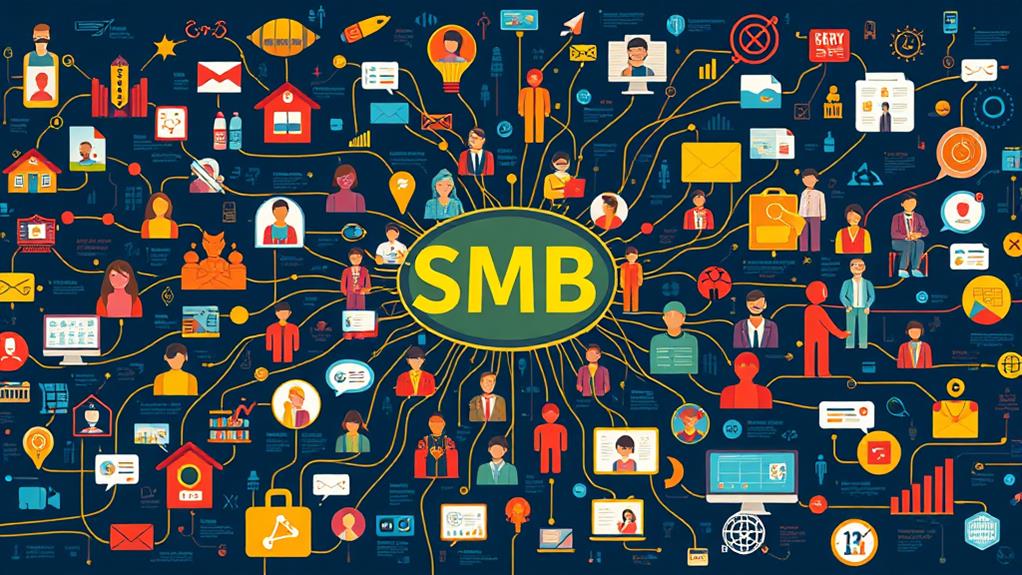
Personalization through AI hinges on the implementation of tailored recommendation algorithms that analyze consumer behavior and preferences.
Additionally, enhanced data analysis techniques allow businesses to process vast amounts of customer data effectively, identifying patterns that inform personalized marketing strategies.
Tailored Recommendations Algorithms
The effectiveness of tailored recommendation algorithms lies at the core of enhanced customer engagement strategies for small and medium-sized businesses (SMBs). These algorithms utilize sophisticated techniques such as collaborative filtering and content-based recommendations to align offerings with user preference modeling.
By leveraging adaptive learning algorithms, SMBs can refine their strategies over time to meet evolving customer needs.
Key elements of successful tailored recommendation algorithms include:
- Dynamic Segmentation: Identifying and grouping customers based on specific behaviors and preferences to deliver personalized marketing messages.
- User Feedback Integration: Actively incorporating customer input to enhance the accuracy of recommendations and to maintain algorithmic transparency.
- Contextual Recommendations: Analyzing situational factors to offer insights that are timely and relevant, thereby increasing engagement.
Enhanced Data Analysis Techniques
Artificial intelligence (AI) drives the evolution of data analysis techniques, allowing small and medium-sized businesses (SMBs) to gain deeper insights into customer behavior and preferences. Through advanced machine learning algorithms, AI enhances data integration capabilities, enabling seamless aggregation of diverse data sources. This facilitates real-time insights, empowering SMBs to respond swiftly to emerging trends.
Data visualization tools are essential in presenting complex data in an intuitive manner, enhancing the user experience. Customized dashboards enable decision-makers to identify patterns and anomalies quickly, thereby improving anomaly detection processes.
As SMBs harness these data analysis techniques, ethical considerations surrounding data governance must also be prioritized. Ensuring data integrity and responsible use is vital for maintaining customer trust.
Moreover, cloud solutions provide scalable resources for data management, further enhancing the analytical capabilities of SMBs. The ability to leverage these cutting-edge technologies not only optimizes operational efficiency but also cultivates a more personalized customer engagement strategy.
Predictive Customer Behavior
Predictive customer behavior analysis leverages data to uncover underlying purchase patterns that inform strategic decision-making for small and medium-sized businesses (SMBs).
By identifying emerging trends and signals in consumer behavior, SMBs can refine their marketing strategies to align with customer preferences more effectively.
This analytical approach not only enhances customer engagement but also drives profitability by anticipating future buying behaviors.
Understanding Purchase Patterns
Understanding purchase patterns can greatly enhance how small and medium-sized businesses (SMBs) interact with their customers. By leveraging AI, SMBs can analyze various factors influencing buying decisions, ultimately strengthening customer loyalty and optimizing sales strategies.
Key insights derived from purchase patterns can inform predictive customer behavior and support tailored marketing initiatives.
- Customer Segmentation: By analyzing demographic shifts and purchase frequency, businesses can identify distinct customer segments, allowing for targeted promotions that resonate more effectively with their audiences.
- Seasonal Trends: Understanding seasonal trends enables SMBs to forecast fluctuations in demand driven by economic factors, ensuring they maintain appropriate inventory levels and maximize promotional effectiveness.
- Product Preferences: AI tools help businesses track customer preferences over time, allowing them to adjust product offerings in alignment with changing brand perception and competitive analysis.
Identifying Trends and Signals
Leveraging insights gained from understanding purchase patterns, SMBs can further improve their customer interactions by identifying trends and signals that indicate future buying behaviors. Effective trend identification hinges on robust market analysis and the interpretation of data insights, enabling businesses to decode underlying consumer behavior.
By closely monitoring behavioral signals, SMBs can detect emerging trend patterns that precede shifts in customer preferences, enhancing their strategic agility.
Through advanced predictive analytics, trend forecasting becomes not just a possibility but a necessity. AI-driven tools allow for detailed customer segmentation, ensuring nuanced understanding of distinct groups within the larger market.
By employing accurate signal detection methodologies, businesses can anticipate customer needs and craft proactive engagement strategies.
For instance, recognizing temporal patterns in purchasing frequency or correlating specific demographic attributes with buying trends enables SMBs to nurture stronger relationships and foster loyalty.
Signal interpretation creates actionable insights, empowering businesses to capitalize on new opportunities effectively. In a dynamic marketplace, the ability to identify these subtle trends and signals becomes instrumental for SMBs that aspire to thrive and maintain a competitive edge.
Tailoring Marketing Strategies
Data-driven marketing strategies have emerged as pivotal tools for small and medium-sized businesses (SMBs) seeking to enhance customer engagement and drive sales. By leveraging AI to predict customer behavior, SMBs can refine their approaches, focusing on individual preferences and buying patterns. This level of insight allows for the implementation of tailored marketing campaigns that resonate with target audiences.
To achieve effective tailoring of marketing strategies, businesses should adopt the following approaches:
- Customer Segmentation Strategies: Utilize advanced analytics to segment customers based on demographics, interests, and behaviors, enabling personalized communication.
- Predictive Analytics: Implement AI algorithms to forecast future buying behaviors, allowing businesses to anticipate customer needs proactively.
- Campaign Optimization Techniques: Continuously monitor and adjust marketing campaigns in real-time, ensuring alignment with customer preferences and maximizing ROI.
Natural Language Processing Applications
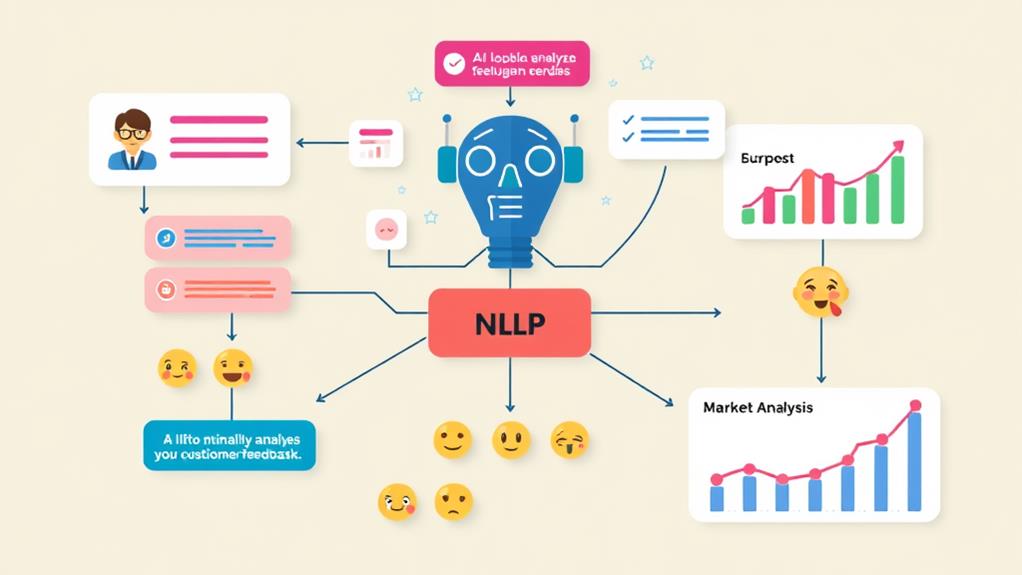
Natural Language Processing (NLP) has revolutionized how small and medium-sized businesses (SMBs) gather and interpret customer insights, enabling them to make informed decisions based on rich, qualitative data. Leveraging advanced language models, SMBs can analyze vast amounts of customer feedback with unprecedented efficiency, allowing for nuanced understanding of consumer needs and preferences.
Sentiment analysis stands out as a pivotal application, offering insights into customer emotions and attitudes towards products or services. By interpreting tone and intention within customer interactions, SMBs can develop targeted strategies that resonate with their audience. Additionally, text summarization techniques streamline the process of extracting key information from lengthy feedback, facilitating quicker decision-making.
The integration of chatbots enhances customer interactions, allowing businesses to address queries promptly, gather feedback, and provide tailored responses. This not only improves customer satisfaction but also enriches the data pool for subsequent analysis.
Voice recognition technology further supports this by enabling hands-free interactions and expanding accessibility for customers with diverse needs.
Moreover, topic modeling and conversation analytics empower SMBs to identify emerging trends and patterns in customer dialogues, fostering adaptability and proactive engagement. Semantic search capabilities enhance the discovery of relevant content, connecting customers to the information they seek more intuitively.
Enhancing Customer Engagement
To enhance customer engagement, SMBs are increasingly turning to innovative AI technologies that foster more meaningful interactions. This shift promotes stronger emotional connections between brands and customers, which are essential for building customer loyalty.
AI-driven insights enable businesses to refine their communication strategies, creating tailored experiences that resonate deeply with their audience. Effective engagement is rooted in the analysis of engagement metrics and the implementation of feedback loops that guide ongoing improvements.
Here are three significant ways AI enhances customer engagement:
- Interactive Content Creation: AI enables SMBs to develop dynamic and personalized content that captivates users, driving greater interaction and brand affinity.
- Targeted Outreach: By leveraging data analytics, companies can identify specific customer preferences, allowing for more effective and relevant marketing campaigns that align with individuals' needs and desires.
- Community Building: Utilizing AI to facilitate online communities strengthens brand trust. This collaborative environment fosters consumer relationships and encourages brand advocates who actively participate, thereby enhancing user experience across platforms.
Ultimately, embracing AI for customer engagement not only cultivates brand trust but also streamlines communication strategies, allowing SMBs to forge durable connections with their audience.
Automating Customer Feedback

Automating customer feedback is pivotal for small and medium businesses (SMBs) seeking to streamline data collection and enhance operational efficiency.
By leveraging advanced AI tools, organizations can systematically gather feedback, minimizing manual effort while ensuring thorough data coverage.
Additionally, the analysis of sentiment trends derived from this feedback allows SMBs to gain actionable insights, driving informed decision-making and strategic improvements.
Streamlining Data Collection
Effectively gathering customer feedback is essential for small and medium-sized businesses (SMBs) seeking to enhance their customer insights and improve overall satisfaction. Streamlining data collection through automated methods can greatly improve the efficacy of this endeavor. By leveraging advanced technologies, SMBs can implement robust systems that facilitate seamless data integration solutions.
Key strategies to take into account include:
- Automated Data Collection: Utilizing tools that automate feedback collection guarantees timely responses, providing real-time data monitoring and reducing manual intervention.
- Survey Optimization Techniques: Employing optimized surveys can increase response rates. This involves designing user-friendly interfaces that invite customer participation and maintain engagement.
- Multi-Channel Data Strategies: Integrating mobile data collection with cloud-based data storage allows for thorough insights across various platforms, enhancing the richness of data collected.
However, as SMBs adopt these technologies, they must prioritize data privacy considerations to safeguard customer information.
Analyzing Sentiment Trends
Harnessing sophisticated sentiment analysis tools allows SMBs to extract meaningful insights from customer feedback, thereby identifying trends and understanding consumer emotions more accurately.
By employing sentiment analysis, businesses can interpret feedback through the lens of emotional intelligence, enhancing their understanding of consumer psychology. These tools facilitate opinion mining, enabling SMBs to capture the nuances of brand perception across various platforms through social listening.
The analysis explores response variability, which helps businesses discern distinct communication trends among different customer segments. By examining sentiment trends, SMBs gain behavioral insights that inform strategy adjustments, enhancing customer engagement and satisfaction.
This data-driven approach empowers businesses to respond proactively to shifts in consumer sentiment, thereby adapting their offerings to align with customer expectations.
Ultimately, automating customer feedback interpretation through advanced sentiment analysis not only streamlines data collection but also equips SMBs with the intelligence necessary to cultivate deeper relationships with their audience.
Leveraging Social Media Insights
Amid the growing influence of social media on consumer behavior, small and medium-sized businesses (SMBs) can access a wealth of customer insights by systematically analyzing online engagement patterns.
By leveraging advanced AI tools, these businesses can effectively practice social listening to monitor brand sentiment and audience reactions, allowing them to make informed decisions based on real-time data.
To maximize the potential of social media insights, SMBs should focus on the following key areas:
- Audience Segmentation: AI can analyze demographic insights to categorize audiences based on their interests, purchase history, and online behaviors. This enables more targeted marketing campaigns.
- Content Performance: Evaluating engagement metrics allows SMBs to assess the effectiveness of different types of content—be it posts, videos, or ads. This analysis aids in optimizing future content strategies for maximum impact.
- Trend Monitoring: Keeping an eye on emerging trends provides SMBs with pivotal information that influences product development and promotional strategies. By understanding what resonates with consumers, businesses can stay ahead of the competition.
Incorporating competitive analysis into their social media strategy further enhances campaign effectiveness, allowing SMBs to evaluate influencer impact and adapt messaging that aligns with current market trends.
Ultimately, by harnessing the power of social media insights through AI, SMBs can build more meaningful connections with their customers, fostering brand loyalty and driving sustainable growth.
Case Studies in AI Success

As SMBs leverage social media insights to refine their customer engagement strategies, examining successful implementations of AI can provide valuable lessons and inspiration.
Case studies from various sectors illustrate the diverse paths SMBs can take when integrating AI into their operations. For instance, a retail SMB employed AI-driven analytics to personalize marketing efforts, considerably improving customer engagement and sales. However, they grappled with common AI implementation challenges such as integrating new systems with existing platforms and addressing data privacy concerns.
Measuring AI success in this situation can be achieved through metrics like conversion rates and customer retention, providing a tangible framework for evaluating cost versus benefit.
In another example, a healthcare SMB harnessed AI for streamlining patient interactions. This industry-specific application required careful AI tool selection to guarantee compliance with ethical AI use standards while maintaining customer trust in data handling practices.
Notably, addressing employee training needs proved essential, as staff required upskilling to leverage new tools effectively.
The case studies underscore that success hinges not solely on technology but also on a thorough understanding of customer trust issues and the ethical dimension of AI use.
Future Trends in AI for SMBs
While the current landscape of AI is already transforming the operational capabilities of small and medium-sized businesses (SMBs), upcoming trends indicate an even more profound evolution in how these organizations leverage technology to enhance customer insights.
As AI advancements continue to unfold, SMBs will face both opportunities and challenges that will shape their strategic direction.
- Industry-Specific Applications: Customized AI solutions will emerge, enabling SMBs to address unique industry challenges. Tailored applications can enhance user experience, driving customer loyalty by catering specifically to niche markets.
- Integration Strategies: As AI becomes increasingly crucial, effective integration strategies will be essential. This includes maneuvering through scalability issues and aligning AI tools with existing CRM and ERP systems to enhance data-driven decision-making processes seamlessly.
- Ethical Considerations and Data Privacy: As AI's footprint grows, ethical considerations regarding customer data privacy will take center stage. SMBs must proactively adopt robust data protection policies to maintain customer trust and comply with regulations, ensuring that AI practices do not infringe on privacy rights.
These trends will not only dictate how SMBs steer through current challenges but also influence their future workforce dynamics.
A strategic approach toward AI will empower businesses to enhance customer insights while balancing cost implications. By fostering ethical practices and integrating solutions that prioritize user experience, SMBs can thrive in an ever-evolving digital landscape.
Frequently Asked Questions
How Do I Choose the Right AI Tool for My Business?
Choosing the right AI tool requires an extensive analysis of your business needs. Start by identifying specific pain points and objectives, ensuring alignment with technological capabilities.
Evaluate various AI solutions based on scalability, ease of integration, and cost-effectiveness. Additionally, consider user feedback and performance metrics to gauge effectiveness.
A thorough AI tool selection process will empower your business to enhance operational efficiency and achieve targeted outcomes while maintaining strategic freedom.
What Are the Costs Associated With Implementing AI Solutions?
Implementing AI solutions is akin to planting a seed in fertile soil; nurturing it requires both an initial investment and ongoing maintenance.
One must consider training requirements to cultivate expertise within teams, address integration challenges to guarantee compatibility with existing systems, and evaluate scalability options for future growth.
Additionally, careful vendor selection is essential to minimize risk.
Ultimately, the cumulative costs shape the potential for innovation and adaptability in a rapidly evolving business landscape.
Can AI Tools Handle Multiple Data Sources Simultaneously?
AI tools are adept at handling multiple data sources simultaneously, facilitating robust data integration.
By leveraging advanced algorithms, these tools perform real-time analysis, seamlessly synthesizing data from diverse origins. This capability empowers organizations to derive actionable insights rapidly, enhancing decision-making processes.
Additionally, the ability to process various data types concurrently fosters an extensive understanding of complex datasets, ultimately driving improved outcomes and promoting operational efficiency in a dynamic business environment.
How Will AI Impact Customer Service Staff Roles?
AI will greatly transform customer service staff roles by enhancing service efficiency and streamlining customer interactions.
As technology integration advances, staff adaptation will be essential, necessitating AI training in data interpretation and system operation. This evolution empowers employees to focus on complex issues while AI handles routine queries, ultimately redefining their responsibilities.
Embracing this shift will enhance overall productivity, enabling staff to deliver more personalized and effective service experiences, thereby improving customer satisfaction.
Are There Privacy Concerns Related to AI Customer Insights?
Privacy concerns related to AI customer insights encompass several critical dimensions.
Data protection measures must be robust to prevent unauthorized access and misuse of consumer information.
Ethical considerations arise from the need for transparency in AI algorithms, ensuring users understand how their data is utilized.
Additionally, consent management is essential; customers should have clear options to control their data sharing preferences, fostering a sense of autonomy and trust in AI-driven systems.
Conclusion
In a landscape dominated by artificial intelligence, small and medium-sized businesses find themselves armed with unparalleled tools for customer insight. Ironically, as companies endeavor for deeper understanding through advanced analytics and personalization, the human element risks becoming obscured, reducing customers to mere data points. The potential for enhanced engagement may inadvertently foster a disconnect, revealing that in the pursuit of greater insight, the challenge remains: can technology truly augment genuine relationships, or does it simply simulate understanding?