
The Role of AI in SMB Data Security
AI greatly enhances data security for small and medium-sized businesses (SMBs) by automating critical processes such as threat detection, vulnerability management, and incident response. Advanced algorithms utilize anomaly detection and behavioral analysis to proactively identify potential threats, while automated solutions expedite vulnerability assessments and remediation efforts. Additionally, predictive analytics empower SMBs to anticipate and mitigate risks before they are exploited. The cost-effectiveness of AI solutions also makes them a practical choice for resource-constrained SMBs. To further appreciate the multifaceted benefits of AI in bolstering data security, one can explore the evolving challenges and strategies in the cybersecurity landscape.
Key Takeaways
- AI automates vulnerability identification and remediation, reducing human error and enhancing the speed of threat responses for SMBs.
- Predictive analytics utilize historical data to foresee potential threats, allowing SMBs to address vulnerabilities before exploitation occurs.
- AI systems employ anomaly detection and behavioral analysis to proactively identify and mitigate cyber threats in real-time.
- Automated monitoring and incident simulation improve organizational readiness by optimizing incident response strategies for SMBs.
- Integration of AI with existing security measures enhances overall data protection and risk mitigation for small and medium-sized businesses.
Understanding SMB Data Security Challenges
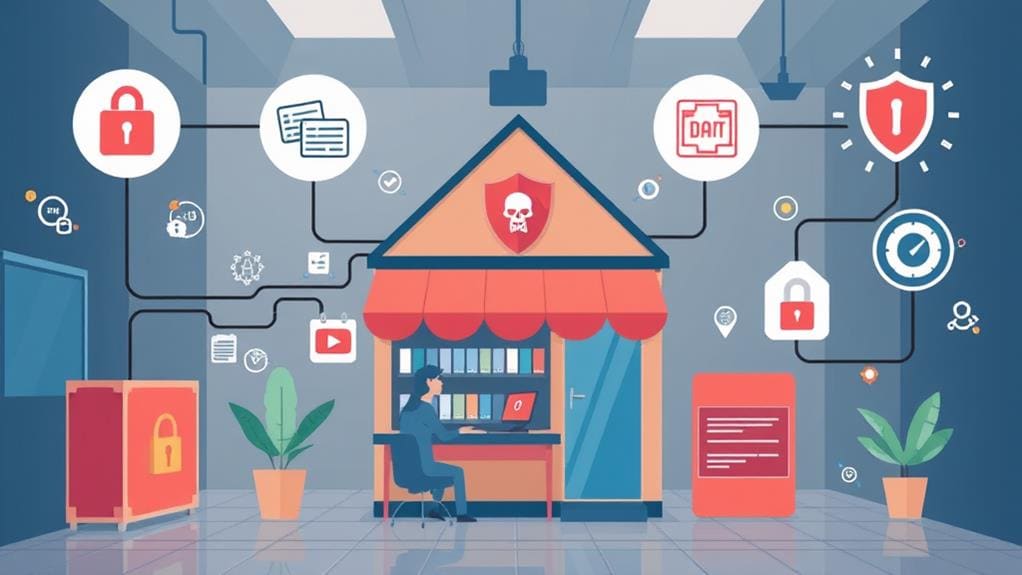
Guiding through the complexities of data security poses significant challenges for small and medium-sized businesses (SMBs). The rapid evolution of digital landscapes necessitates a profound commitment to data privacy and regulatory compliance, which are often perceived as formidable for these organizations.
The vulnerability of SMBs to cyber threats is exacerbated by a lack of robust cybersecurity awareness and insufficient investment in employee training.
To effectively mitigate these risks, an extensive risk management strategy is imperative. Security audits serve as a critical tool for identifying vulnerabilities and ensuring that existing protocols align with best practices in data protection.
Key components of this strategy must include stringent access controls, which limit data visibility and manipulation to authorized personnel only, thereby reducing the potential attack surfaces.
Data encryption plays a pivotal role in safeguarding sensitive information, converting it into codes that render it unreadable without the appropriate decryption key.
Additionally, a well-defined incident reporting framework is essential for prompt responses to breaches, facilitating damage control and restoring data integrity.
Moreover, engaging third-party security partnerships can enhance the overall security posture of SMBs, ensuring that external service providers adhere to the same stringent standards of data privacy and cybersecurity.
AI-Powered Threat Detection
AI-powered threat detection systems are increasingly essential for SMBs seeking to enhance their cybersecurity measures. These systems leverage advanced techniques such as anomaly detection and behavioral analysis to identify and respond to potential threats proactively.
By employing automated monitoring and integrating threat intelligence, SMBs can greatly improve their defense mechanisms and minimize vulnerabilities.
Key features of AI-powered threat detection include:
- Anomaly Detection: This involves identifying unusual patterns of behavior within a network that could indicate a security breach.
- Behavioral Analysis: By analyzing user behavior, AI systems can establish baselines and detect deviations that may signal malicious activity.
- Automated Monitoring: Continuous monitoring of network traffic allows for rapid identification of threats, ensuring timely response actions.
- Threat Intelligence Integration: Combining threat intelligence with detection methods helps in anticipating potential attacks and enhances the overall security posture.
Additionally, the implementation of network segmentation, data encryption, and access controls further strengthens SMBs' defenses.
AI systems facilitate security automation, streamlining response actions and reducing human error. By integrating these strategies, businesses can not only detect threats more effectively but also empower their teams to focus on strategic initiatives rather than routine tasks.
AI in Vulnerability Management
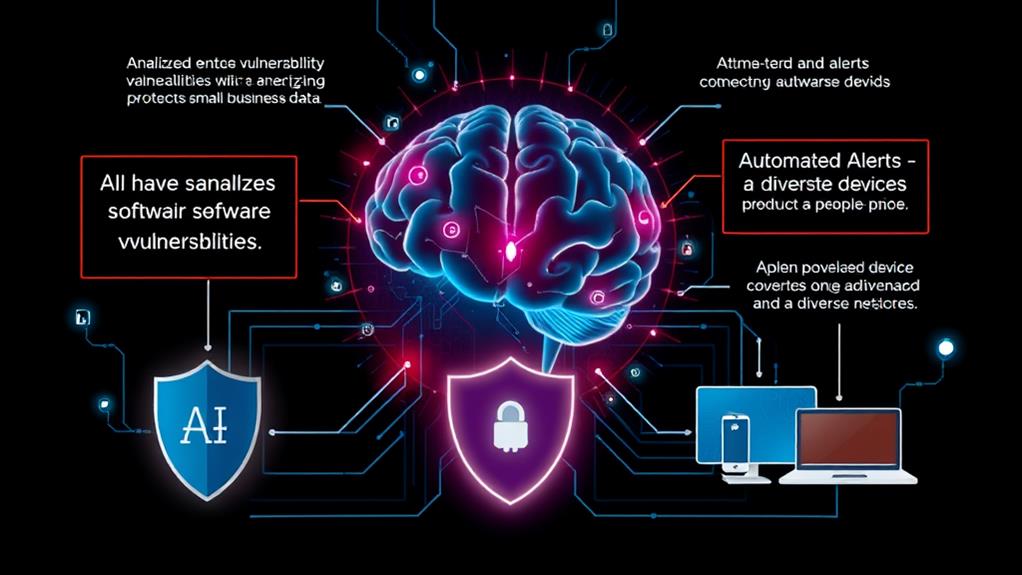
Vulnerability management is critical for SMBs aiming to protect their digital assets in an increasingly complex threat landscape. Effective vulnerability assessments are fundamental to identifying potential weaknesses in IT systems. AI tools enhance this process by automating the identification of vulnerabilities through advanced algorithms that analyze system configurations and usage patterns. This integration of technology not only saves time but reduces human error in the assessment phase.
Moreover, AI-driven automated remediation solutions tackle vulnerabilities by applying security patches and updates without manual intervention. Through security automation, SMBs can maintain their systems more efficiently and guarantee continuous compliance management with industry regulations. Risk prioritization becomes more precise with AI tools, enabling organizations to focus on the vulnerabilities that pose the most significant threat to data integrity and security.
Adopting AI technologies allows for better threat modeling, which addresses how vulnerabilities may be exploited. This proactive approach to security requires robust system hardening practices, where AI assesses current configurations and suggests improvements to minimize exposure.
Furthermore, AI streamlines patch management, guaranteeing that all necessary updates are applied promptly, thereby mitigating the risk of data loss. By leveraging these AI capabilities in vulnerability management, SMBs enhance their security posture while fostering an environment of operational efficiency.
Embracing such advancements enables businesses to navigate a complex security landscape, driving freedom through informed decision-making.
Enhancing Incident Response With AI
In today's fast-paced digital landscape, organizations must prioritize their incident response capabilities to effectively address and mitigate security threats. AI plays a pivotal role in enhancing these capabilities by automating workflows, facilitating proactive monitoring, and improving system adaptation to emerging threats.
Key components of an effective AI-driven incident response framework include:
- Automated Workflows: Streamlining incident response processes to reduce reaction times and improve efficiency.
- Incident Simulation: Conducting realistic scenarios to test response strategies, leading to improved readiness.
- Data Enrichment: Augmenting incident data with contextual information for better risk prioritization and informed decision-making.
- Collaboration Tools: Facilitating real-time communication among teams to enhance coordination during incidents.
Additionally, AI enables advanced forensic analysis, thereby providing insights into the root causes of incidents and aiding in ongoing response training. The integration of communication strategies is vital, ensuring stakeholders are informed and aligned throughout the response process.
These methodologies not only enhance tactical response efforts but also improve strategic planning by identifying vulnerabilities and refining risk prioritization.
As organizations adapt to a landscape characterized by sophisticated cyber threats, deploying AI in incident response becomes a necessity rather than an option. By leveraging these innovative technologies, small and medium-sized businesses can considerably reduce their exposure to risks and create robust defenses against potential incidents, fostering a culture of resilience and proactive security management.
Predictive Analytics for Cybersecurity
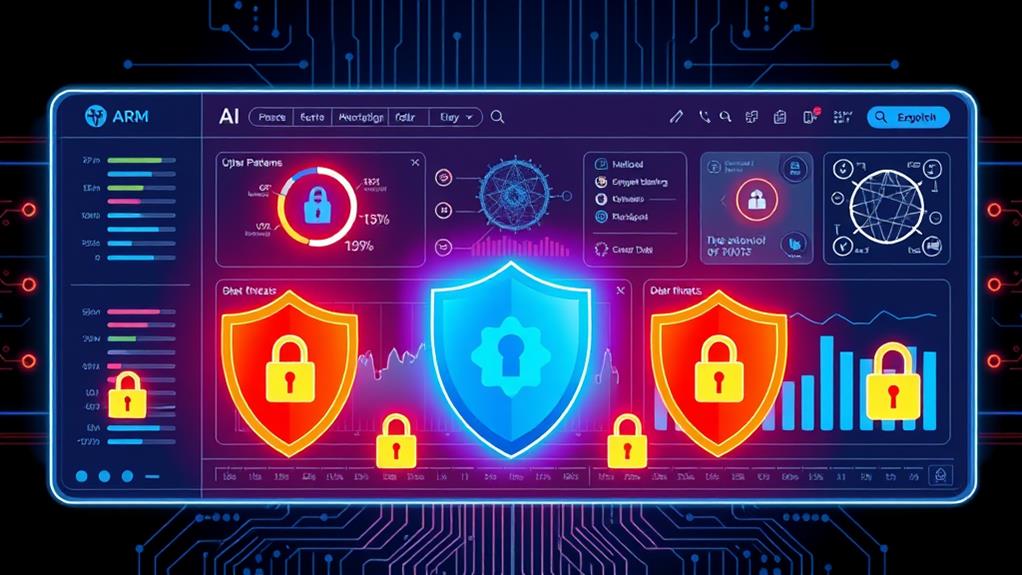
Predictive analytics plays a critical role in cybersecurity by enabling the identification of threat patterns through historical data analysis, allowing organizations to anticipate potential risks.
This proactive approach facilitates real-time risk assessment, ensuring that vulnerabilities are addressed before they are exploited.
Additionally, integrating predictive analytics into incident response strategies enhances optimization, streamlining the reaction process to emerging threats.
Threat Pattern Identification
Identifying threat patterns through predictive analytics represents a crucial advancement in cybersecurity, particularly for small and medium-sized businesses (SMBs) that often lack extensive security resources.
With the increasing sophistication of cyber threats, employing techniques such as anomaly detection and behavioral analysis becomes imperative in enhancing security posture.
The integration of machine learning algorithms facilitates the identification of potential vulnerabilities and indicators of compromise through effective pattern recognition.
Key components of threat pattern identification include:
- Data Collection: Aggregating data from various sources to understand normal behavior within the organization.
- Predictive Modeling: Leveraging historical data to forecast potential threats, thereby increasing the reliability of threat intelligence.
- Risk Mitigation: Developing strategies that address identified risks and potential insider threats before they escalate into data breaches.
- Security Automation: Streamlining responses through automated systems that can act upon identified threats without human intervention.
Real-Time Risk Assessment
Amid the evolving landscape of cybersecurity threats, real-time risk assessment has emerged as a pivotal component for safeguarding small and medium-sized businesses (SMBs). By leveraging predictive analytics, organizations can conduct automated assessments that identify vulnerabilities in their systems and prioritize risks with precision. This proactive approach enhances data classification, allowing SMBs to categorize sensitive information effectively and maintain robust compliance monitoring.
Integral to real-time risk assessment is the analysis of user behavior, which, when combined with anomaly detection techniques, can highlight deviations from established norms. This capability empowers SMBs to respond swiftly to potential threats, minimizing their exposure to cyberattacks.
Additionally, the integration of threat intelligence feeds ensures that assessments are not conducted in a vacuum; rather, they are informed by the latest insights on emerging threats.
Utilizing established security frameworks, organizations can align their risk assessment processes with industry standards, fostering a thorough understanding of their cybersecurity posture.
Ultimately, real-time risk assessment enables SMBs to adapt continuously to the shifting threat landscape, guaranteeing that they protect both their assets and their clientele effectively.
Incident Response Optimization
As real-time risk assessment effectively highlights vulnerabilities and prioritizes threats, the next step in bolstering cybersecurity for SMBs involves optimizing incident response through the application of predictive analytics.
This process enhances incident analysis and streamlines recovery efforts, allowing businesses to respond more effectively to emerging threats. By leveraging predictive insights, SMBs can develop structured incident response frameworks that facilitate prompt actions during security breaches.
Key components of this optimization include:
- Automated Recovery: Implementing systems that enable rapid restoration of services while minimizing downtime.
- Team Training: Ensuring that personnel are well-versed in communication protocols and equipped with the skills necessary for effective incident handling.
- Resource Allocation: Aiding IT departments in efficiently distributing resources based on predictive models and potential threat levels.
- Simulation Exercises: Practicing real-world scenarios to refine response strategies and fortify against future incidents.
Cost-Effectiveness of AI Solutions
Releasing the potential of AI solutions in data security for small and medium-sized businesses (SMBs) extends beyond improved protection; it also encompasses significant cost-effectiveness. Effective budget considerations are vital when adopting AI technologies, as initial expenses can be a limiting factor. Conducting a thorough ROI analysis allows SMBs to evaluate the tangible benefits against these upfront costs, revealing the potential for long-term savings.
The scalability of AI solutions is an important factor in enhancing cost-effectiveness. As businesses grow, these solutions can be adjusted to meet varying security needs without the necessity for a complete overhaul. However, implementation challenges can arise; therefore, careful vendor selection becomes paramount to guarantee that the chosen solutions align with organizational goals and budgetary constraints.
Moreover, SMBs must anticipate training costs and maintenance expenses, which can impact overall budget allocation. Developing effective integration strategies is vital to minimizing disruptions during adoption, guaranteeing that the AI systems work in harmony with existing security measures.
Furthermore, exploring funding options, such as grants or partnerships, can alleviate financial pressure and facilitate the incorporation of advanced AI technologies. By adopting a strategic approach to AI investments, SMBs can realize not only immediate benefits but also sustainable, long-term advantages that enhance overall security posture while remaining conscious of their financial limitations.
This proactive stance fosters a resilient environment that aligns with an organization's aspirations for security and growth.
Future Trends in AI Security

A notable shift in the landscape of AI security is anticipated as technologies evolve, with several key trends expected to shape the future of data protection for SMBs.
These trends not only promise to enhance security measures but also aim to address the growing complexities of the threat landscape.
- AI Ethics and Transparency: As AI technologies advance, ethical considerations and the need for AI transparency will become paramount. Ensuring that AI systems operate without bias will be critical.
- Regulatory Compliance: As governments enforce stricter data privacy regulations, SMBs will increasingly focus on integrating compliance into their cybersecurity frameworks, ensuring that they meet legal requirements effectively.
- Employee Training and Awareness: Employee training will evolve to include insights about AI-driven security tools. This will enhance incident preparedness and empower staff to utilize technology effectively.
- Technology Integration and Risk Mitigation: The future will see heightened integration of AI with existing security measures, enhancing risk mitigation efforts. By leveraging predictive analytics, SMBs can proactively address potential security incidents and adapt to emerging threats swiftly.
These trends illustrate that the future of AI security will require a thorough approach that balances technological advancement with ethical considerations and workforce empowerment.
Frequently Asked Questions
How Can SMBS Choose the Right AI Solution for Their Needs?
To choose the appropriate AI solution, SMBs should establish clear AI evaluation criteria, focusing on functionality, scalability, and integration capabilities.
Budget considerations must align with the anticipated ROI and resource allocation.
Additionally, the importance of user training cannot be overstated, as effective implementation relies on user competence.
What Are Common Misconceptions About AI in Data Security?
In the domain of data security, one might draw parallels to the mythical phoenix, rising from the ashes of misunderstanding.
Common misconceptions surrounding AI's effectiveness often stem from its misunderstood capabilities, leading to overreliance without proper risk management.
Additionally, security automation is perceived as a panacea, overshadowing implementation challenges and potential costs.
Such perceptions can hinder organizations from leveraging AI effectively, ultimately misconstruing its role in enhancing cybersecurity frameworks.
How Does AI Integration Impact Existing IT Staff Roles?
The integration of AI into IT practices greatly influences existing staff roles, necessitating AI skill enhancement for effective collaboration with advanced technologies.
This evolution results in IT professionals shifting from traditional maintenance tasks to more strategic functions, such as systems analysis, data interpretation, and proactive cybersecurity measures.
Consequently, IT personnel must embrace continuous learning and adapt to an increasingly automated landscape, ensuring they remain indispensable in managing and optimizing these emerging technologies.
What Are the Privacy Implications of Using AI for Data Security?
The privacy implications of using AI for data security are multifaceted, encompassing data ethics and compliance challenges.
Effective risk management necessitates robust user consent mechanisms to guarantee individuals are informed about data usage.
Additionally, algorithm bias can result in inconsistencies that compromise fairness, further complicating transparency issues.
Organizations must navigate these aspects carefully, balancing AI's capabilities with ethical responsibilities to maintain trust and protect personal data rights in an evolving technological landscape.
Do Ai-Powered Solutions Require Regular Updates and Maintenance?
AI-powered solutions indeed require regular updates and maintenance to guarantee peak functionality and security.
As technology evolves, AI maintenance becomes essential to address emerging vulnerabilities and to integrate new features that enhance performance.
AI updates facilitate improvements in algorithms, which can further enhance the accuracy and efficiency of these systems.
Consequently, organizations must prioritize a structured schedule for updates and maintenance to fully leverage their AI investments while maintaining robust data security.
Conclusion
To summarize, the integration of artificial intelligence in SMB data security represents a transformative shift in the approach to cybersecurity. A notable statistic reveals that 61% of small and medium-sized businesses experienced a cyberattack in the past year, highlighting the urgency for effective solutions. By leveraging AI-powered tools for threat detection, vulnerability management, and incident response, SMBs can greatly enhance their security postures and protect critical data against increasingly sophisticated threats in the digital landscape.