
The Role of AI in SMB Resource Management
AI markedly enhances resource management in small and medium-sized businesses (SMBs) by improving operational efficiency and enabling data-driven decision-making. With advanced tools, AI automates routine tasks, streamlining workflows and reducing costs. Predictive analytics allows SMBs to forecast trends and optimize resource allocation, ultimately driving competitive advantage. Effective employee training and implementation strategies are essential to overcome challenges and maximize the benefits of AI. By reshaping traditional processes, AI fosters innovation and agility. Understanding the full potential of AI tools can reveal further opportunities for growth and efficiency in resource management. Insights into this topic reveal more impactful strategies.
Key Takeaways
- AI enhances operational efficiency in SMBs by automating routine tasks and streamlining workflows, leading to significant cost savings.
- Predictive analytics enables SMBs to forecast trends and customer behaviors, improving decision-making and strategic planning.
- Advanced AI tools optimize resource management by analyzing data for effective inventory tracking, workforce planning, and vendor management.
- Employee training in AI technologies ensures maximum benefits and minimizes disruptions, fostering a culture of innovation within the organization.
- Automating administrative processes allows employees to focus on strategic tasks, enhancing productivity and overall organizational performance.
Understanding AI in SMBs

In the domain of small and medium-sized businesses (SMBs), understanding the integration of artificial intelligence (AI) is imperative for enhancing operational efficiency and decision-making capabilities. AI fundamentals revolve around the use of computational methods to analyze data, predict outcomes, and automate processes.
However, many SMBs face significant challenges, such as limited budgets, lack of technical expertise, and resistance to change. These hurdles often stem from AI misconceptions that AI is only suited for larger enterprises or requires extensive investment.
To successfully implement AI, SMBs must adopt well-structured implementation strategies that encompass technology adoption and integration. This involves not only selecting appropriate AI solutions but also guaranteeing alignment with business objectives.
Moreover, employee training is essential as it enables staff to maximize the benefits of AI applications while minimizing operational disruptions.
Cost considerations are integral to the AI conversation for SMBs. Businesses must balance the initial investment with potential long-term savings and efficiency gains.
Additionally, the ethical implications of AI usage cannot be overlooked. Responsible deployment of AI tools is necessary to maintain trust and guarantee compliance with emerging regulations.
Industry-specific applications of AI are increasingly available, providing tailored solutions that address targeted needs within sectors such as retail, healthcare, and manufacturing.
Ultimately, a thorough understanding of these elements is critical for SMBs to navigate the complexities of AI integration and harness its potential effectively.
Key Benefits of AI Implementation
The integration of artificial intelligence (AI) brings transformative benefits to small and medium-sized businesses (SMBs), fundamentally enhancing their operational capabilities. One of the most notable advantages is cost savings. By automating routine tasks and streamlining workflows, AI allows SMBs to allocate resources more efficiently, reducing overhead and minimizing labor costs.
Additionally, AI provides a competitive advantage by enabling businesses to anticipate customer needs and respond quickly with tailored solutions. This agility can greatly enhance customer satisfaction, fostering loyalty and long-term engagement. Moreover, by utilizing AI-driven insights, SMBs can develop informed innovation strategies that propel them ahead in their industries.
However, the path to AI implementation is not without its hurdles. Integration challenges and scalability issues can arise, requiring thoughtful planning and investment. Addressing these challenges is critical for successful technology adoption, ensuring that AI systems can grow alongside the business.
Furthermore, AI can revolutionize employee training by delivering personalized learning experiences. This targeted approach not only enhances skill acquisition but also boosts overall workforce productivity, aligning employee goals with company objectives.
In this situation, SMBs can harness AI to create a dynamic, engaged workforce prepared to navigate the rapidly evolving market landscape.
AI Tools for Resource Management
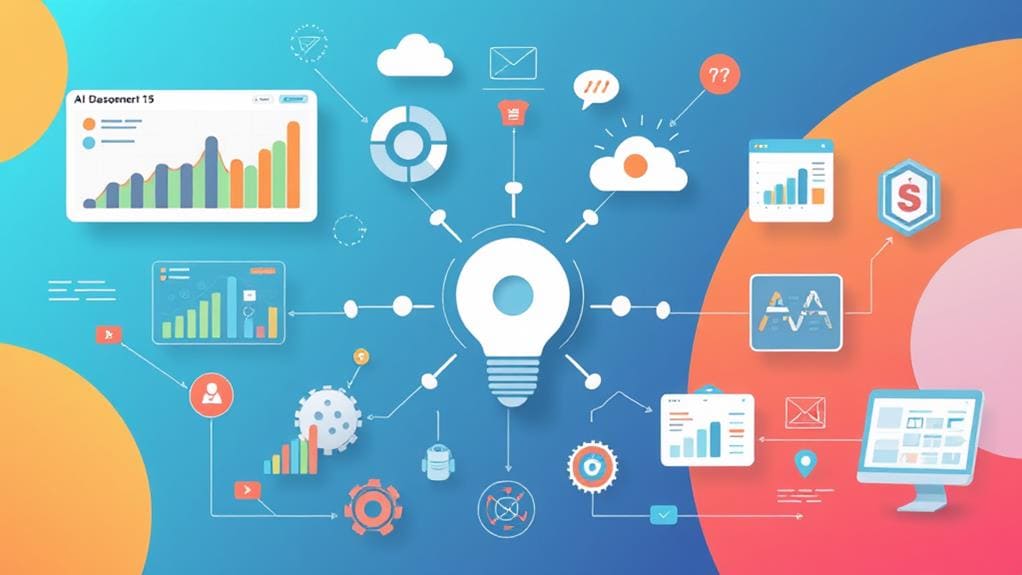
Leveraging advanced AI tools can notably enhance resource management strategies for small and medium-sized businesses (SMBs). The deployment of specialized AI software enables firms to achieve resource efficiency, driving efficiencies that can lead to considerable cost reduction. These tools streamline processes across various domains, facilitating better time management and maximizing productivity.
For inventory tracking, AI solutions utilize real-time data to predict stock needs, thereby minimizing holding costs and avoiding stockouts.
In project management, AI tools enhance workflow coordination, allowing teams to allocate resources dynamically based on performance metrics. This capability considerably improves project outcomes while ensuring that every team member operates at peak efficiency.
Workforce planning also sees a transformation through AI integration, as these systems analyze employee performance and availability to craft ideal schedules. This not only supports staff satisfaction but also enhances overall operational effectiveness.
Additionally, sophisticated vendor management tools can streamline procurement processes, ensuring that businesses foster strong relationships with suppliers while monitoring performance and compliance.
The versatility of AI tools also offers scalability solutions, allowing SMBs to adapt their resource management strategies as they grow. By employing these cutting-edge technologies, companies can maintain agility in a rapidly changing market landscape.
Data Analysis and Forecasting
Predictive analytics is reshaping how small and medium-sized businesses (SMBs) approach data analysis and forecasting. By utilizing advanced analytics tools evaluation, SMBs can effectively leverage historical data analysis to uncover patterns that drive decision-making. This process enables companies to identify key performance metrics and measure their operational effectiveness against industry benchmarks.
Data visualization techniques play a crucial role in making complex data accessible and comprehensible. When businesses adopt these visualization strategies, they enhance their capability to communicate insights derived from statistical modeling approaches and trend identification methods. Such clarity fosters informed discussions around forecasting accuracy improvement, allowing organizations to anticipate market fluctuations with greater precision.
The integration of decision support frameworks further empowers administrators to make data-backed decisions. With robust analytics tools, businesses can conduct a thorough performance metrics assessment, ensuring alignment with overall strategic objectives. However, data integrity considerations must be prioritized; inaccurate or incomplete data can lead to misguided conclusions and diminish the reliability of analyses.
Moreover, the adoption of data mining strategies is essential for extracting actionable insights from vast datasets. As SMBs navigate the complexities of the marketplace, the ability to forecast effectively becomes increasingly critical.
Automating Routine Tasks
Automating routine tasks represents a significant opportunity for small and medium-sized businesses (SMBs) to enhance operational efficiency.
By streamlining administrative processes, organizations can allocate resources more effectively and focus on strategic productivity efforts.
This shift not only reduces workload but also empowers teams to concentrate on value-driven activities that foster growth.
Streamlining Administrative Processes
Many small and medium-sized businesses (SMBs) find that streamlining administrative processes considerably enhances operational efficiency. By leveraging AI-driven administrative automation, SMBs can achieve significant workflow efficiency and process optimization, which are essential for thriving in competitive environments.
The integration of digital transformation initiatives facilitates improved task prioritization, allowing employees to focus on higher-value responsibilities.
Key advantages of streamlining administrative processes include:
- Time Management: AI automates routine tasks, freeing up employee time for strategic initiatives.
- Compliance Management: Automated systems help guarantee adherence to regulations, reducing the risk of non-compliance.
- Communication Enhancement: Centralized platforms improve communication across departments, fostering collaboration and resource tracking.
As SMBs embrace these advancements, they witness elevated levels of employee engagement, as team members become increasingly productive and empowered in their roles.
The overall impact of these transformations not only supports immediate operational goals but also positions businesses for sustainable growth and innovation in the long term.
Enhancing Productivity Efforts
While routine tasks can often weigh down productivity, implementing AI-driven automation presents a compelling solution for SMBs aiming to enhance their efficiency. By automating mundane operations, businesses can free up valuable time, allowing employees to focus on creative and strategic endeavors that foster engagement and innovation.
AI tools optimize workflows by streamlining task prioritization and improving resource visibility. Employees can benefit from enhanced time management as automation systems facilitate project tracking and provide accurate performance metrics, empowering them to measure progress effectively.
Furthermore, these solutions promote workload balancing, ensuring that team collaboration remains unhindered, even during peak demands.
Utilizing advanced communication tools, SMBs can enhance the clarity and speed of interactions among team members. As repetitive tasks are handled by AI, employees experience a marked reduction in stress, which in turn leads to higher employee engagement and morale.
Optimizing Resource Allocation
Streamlining resource allocation through automation is essential for small and mid-sized businesses (SMBs) seeking to maximize operational efficiency. By implementing AI-driven solutions, SMBs can enhance resource optimization, leading to more effective allocation strategies.
Automation plays a pivotal role in minimizing manual interventions, which often hinder workload balancing and impact overall utilization efficiency.
By adopting automated systems, businesses can benefit in several key areas:
- Performance Metrics: Real-time insights into resource performance allow for informed decision-making.
- Capacity Planning: Predictive analytics help anticipate resource needs, ensuring availability aligns with demand.
- Asset Tracking: Automated tools provide accurate visibility of resources, enabling better management and reduction in costs.
Ultimately, the integration of automated processes streamlines cost management while supporting resource allocation efforts.
This, in turn, fosters a more agile business model, allowing SMBs to adapt swiftly to changing market demands. Embracing this technology not only boosts operational effectiveness but also provides freedom from manual processes, empowering teams to focus on strategic objectives that drive growth.
Enhancing Decision-Making Processes
In the domain of resource management, enhancing decision-making processes through AI involves leveraging data-driven insights and predictive analytics.
These tools not only improve the accuracy of projections but also enable businesses to anticipate market trends and customer needs effectively.
Data-Driven Insights
Data-driven insights are pivotal for enhancing decision-making processes in small and medium-sized businesses (SMBs). The integration of artificial intelligence allows these companies to analyze vast amounts of data efficiently, transforming raw information into actionable strategies.
By leveraging data visualization techniques, SMBs can better understand performance metrics, ensuring they remain agile and responsive to market trends.
Key benefits of utilizing data-driven insights include:
- Improved Customer Segmentation: Tailoring products and services to targeted audiences elevates customer satisfaction and loyalty.
- Enhanced Operational Efficiency: Analyzing resource utilization patterns leads to optimized workflows and reduced waste.
- Informed Strategic Planning: Thorough budget analysis and workforce analytics facilitate more accurate risk assessment and long-term planning.
In the fast-paced environment of SMBs, where the right decision can lead to growth and sustainability, data-driven insights stand as a cornerstone.
Predictive Analytics Benefits
Harnessing predictive analytics offers SMBs the ability to foresee trends and customer behaviors, greatly enhancing their decision-making processes. By leveraging data interpretation and trend analysis, businesses can identify patterns that inform market forecasting and allow for proactive strategies. This not only facilitates better understanding of customer behavior but also optimizes resource allocation to meet emerging demands.
Furthermore, predictive analytics plays a critical role in risk assessment, providing insights that empower SMBs to mitigate potential challenges before they manifest. By utilizing financial modeling and performance metrics, companies can evaluate various scenarios, enabling effective scenario planning that prioritizes operational efficiency.
This strategic foresight allows for more accurate and informed decisions, ultimately paving the way for sustainable growth and competitive advantage. The integration of predictive analytics facilitates a shift from reactive to proactive management, greatly enhancing agility in a rapidly changing marketplace.
In a world where data reigns supreme, adopting these analytical tools guarantees that SMBs not only survive but thrive, empowering them to make decisions based on solid evidence rather than assumptions.
Automation of Tasks
By streamlining repetitive tasks through automation, SMBs can considerably enhance their decision-making processes. The implementation of workflow automation tools allows businesses to focus on strategic initiatives rather than mundane activities. This shift fosters improved task prioritization strategies, enabling employees to engage in value-adding work and drive innovation.
Key benefits of automating tasks include:
- Repetitive task reduction: Minimizing mundane activities frees up employee time for critical thinking and strategic planning.
- Cost saving methods: Streamlining operations lowers overhead costs while maximizing productivity.
- Employee engagement impact: Enhanced focus on meaningful tasks increases job satisfaction, fostering a more motivated workforce.
However, technology adoption challenges must be navigated to guarantee seamless software integration solutions. Establishing effective time management techniques and developing operational efficiency metrics can also provide insights into automation's success.
Additionally, scalability considerations must be made during the selection of automation tools to accommodate evolving business needs.
Ultimately, successful automation not only boosts operational efficiency but also empowers employees to make more informed decisions, enhancing the organization's capacity for growth. By minimizing repetitive tasks, SMBs position themselves for sustainable success in a competitive landscape.
Case Studies of Successful Adoption
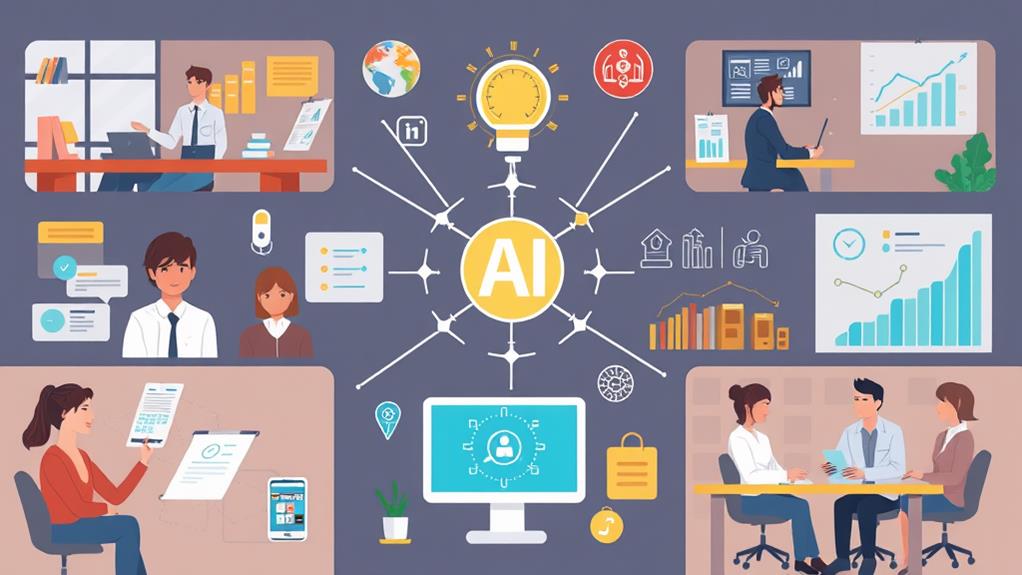
As organizations increasingly recognize the value of artificial intelligence in streamlining resource management, many small and medium-sized businesses (SMBs) have successfully implemented AI solutions to optimize operations. Several success stories illustrate how targeted implementation strategies can lead to significant operational improvements and efficiency gains.
One notable industry example is a retail chain that adopted AI-driven inventory management. By utilizing predictive analytics, the company improved its stock levels, thereby reducing excess inventory by 25% while ensuring product availability. This shift enhanced resource optimization and ultimately contributed to a 15% increase in sales over one year.
The management techniques employed included training staff to leverage AI tools, demonstrating how technology adoption is not merely about the tools, but also about cultivating a culture that embraces change.
Another case analysis involved a small manufacturing firm that implemented AI-powered demand forecasting. This approach allowed the company to respond to market fluctuations more adeptly. As a result, they experienced a reduction in operational costs by 20% and an impressive doubling of profit margins within two years.
Engaging employees in the technology adoption process proved paramount, ensuring all stakeholders understood the benefits and efficiency gains derived from AI.
These case studies highlight that SMBs harnessing AI in resource management can achieve remarkable growth metrics when they employ thoughtful implementation strategies. Emphasizing clarity in goals, training, and integration is essential for maximizing the potential of AI technologies, enabling businesses to thrive in competitive landscapes.
Challenges and Future Trends
Maneuvering the landscape of AI in resource management presents a myriad of challenges for small and medium-sized businesses (SMBs), despite the significant advantages gained from successful implementation. One primary hurdle is resource constraints, which often restrict SMBs from fully adopting advanced technologies.
Budget limitations further complicate access to necessary AI tools, hindering the scalability of solutions that could otherwise enhance efficiency.
Moreover, integration challenges arise when attempting to incorporate AI systems with existing business processes. This requires not only investment in technology but also workforce training to equip employees with the necessary skills.
Resistance to change can manifest in various forms, leading to reluctance among staff to embrace new tools. Additionally, ensuring data privacy and regulatory compliance adds another layer of complexity, particularly for SMBs operating in highly regulated sectors.
Industry-specific needs often require tailored solutions that standard AI frameworks may not provide.
As SMBs look towards the future, the following trends could shape their resource management strategies:
- Increased focus on scalable AI solutions designed for budget-conscious businesses
- Development of tailored training programs to foster workforce adaptability
- Stricter regulatory frameworks influencing AI integration and data usage
Addressing these challenges while keeping abreast of evolving trends will be essential for SMBs aiming to leverage AI effectively.
Frequently Asked Questions
How Does AI Impact Employee Morale in Smbs?
AI's impact on employee morale in small to medium-sized businesses (SMBs) greatly hinges on employee engagement and AI transparency.
When employees understand how AI tools enhance their work processes, their engagement often increases, leading to a more motivated workforce.
Conversely, a lack of transparency regarding AI's functions may breed skepticism and anxiety, negatively influencing morale.
As a result, fostering open communication about AI initiatives is essential in cultivating a supportive and productive workplace atmosphere.
What Industries Benefit Most From AI Resource Management?
In the grand tapestry of industries, certain sectors thrive under the watchful eye of AI-enhanced resource management.
Healthcare optimization facilitates timely patient care, while retail analytics sharpens inventory control.
Manufacturing efficiency is greatly augmented, enhancing production standards.
Logistics automation transforms delivery precision, and hospitality management curates guest experiences seamlessly.
Ultimately, construction scheduling benefits from AI's predictive capabilities, ensuring projects remain on track.
Together, these industries experience unprecedented growth and efficiency, ushering in a new era of innovation.
Are There Specific Regulations for AI Use in Smbs?
Yes, there are specific regulations governing the use of AI in small and medium-sized businesses (SMBs).
Compliance frameworks often emphasize ethical AI considerations, mandating transparency, accountability, and fairness in AI applications.
SMBs must navigate various legal landscapes, including data protection laws and industry-specific guidelines.
Adhering to these regulations not only mitigates risk but also fosters trust and enhances operational integrity, allowing businesses to leverage AI responsibly while respecting individual freedoms.
How Can SMBS Ensure Data Privacy When Using Ai?
To guarantee data privacy while leveraging AI, small and medium-sized businesses must prioritize both data encryption and employee training.
By implementing robust data encryption practices, organizations safeguard sensitive information from unauthorized access.
Simultaneously, thorough employee training fosters a culture of awareness and responsibility surrounding data protection.
Together, these strategies not only enhance security measures but also empower employees, fostering an environment of trust and autonomy while maneuvering through the complexities of modern technology.
What Is the Cost Range for Implementing AI in Smbs?
Implementing AI in small and medium businesses (SMBs) can vary markedly in cost, typically ranging from $10,000 to over $250,000, depending on the complexity of the solution and specific needs.
Budget considerations should include software, hardware, training, and ongoing maintenance.
In addition, it is vital for SMBs to assess potential return on investment, ensuring alignment with strategic goals while maintaining the freedom to adapt technology as their operational demands evolve.
Conclusion
To sum up, the integration of artificial intelligence in small and medium-sized businesses heralds a transformative era, paving pathways toward enhanced efficiency and strategic resource management. As organizations embrace AI tools, like skilled artisans wielding their tools, they sculpt a future characterized by improved decision-making and foresight. However, the journey is not without obstacles, necessitating thoughtful navigation amid challenges. Embracing this technological tide could ultimately redefine the landscape of resource management, illuminating opportunities previously cloaked in uncertainty.