
The Role of Brand Architecture in Managing Multiple Brands
Brand architecture plays a pivotal role in managing multiple brands by providing a strategic framework that clarifies brand relationships and positioning. It enhances brand recognition and trust through consistent messaging across various channels. By defining whether to adopt a branded house or a house of brands approach, businesses can optimize resource allocation and streamline marketing strategies. Effective brand architecture cultivates market differentiation, allowing each brand to maintain a distinct identity while benefiting from overarching brand equity. Such strategic alignment ultimately leads to improved financial performance and customer loyalty, inviting a deeper exploration of its implications and benefits.
Key Takeaways
- Brand architecture defines the hierarchy and relationships among multiple brands, enhancing organizational performance and clarity.
- It fosters brand consistency across various touchpoints, building consumer trust and loyalty among different brands.
- Effective brand architecture facilitates market differentiation, allowing each brand to maintain a unique identity in competitive landscapes.
- It streamlines resource allocation and marketing strategies, reducing redundancy and maximizing impact across the brand portfolio.
- Key metrics, like brand equity and loyalty, measure the success of brand architecture in managing multiple brands effectively.
Understanding Brand Architecture

Brand architecture serves as the foundational blueprint for a company's portfolio of brands, delineating the relationships and hierarchies among them. A well-structured brand hierarchy not only clarifies the positioning of each brand but also enhances the overall perception of the corporate entity.
By establishing clear relationships, organizations can effectively communicate brand values and benefits, fostering a cohesive identity that resonates with consumers.
The strategic implementation of brand architecture is pivotal for achieving brand consistency across multiple touchpoints. This consistency is essential in building trust and loyalty among consumers, as it guarantees that each brand within the portfolio delivers a unified message and experience.
When brand elements—such as logos, taglines, and visual identities—are aligned, they reinforce the overarching brand promise, thereby strengthening consumer recognition and preference.
Moreover, a thoughtfully designed brand hierarchy facilitates resource allocation and marketing strategies. Companies can leverage insights gained from stronger brands to support weaker ones, fostering synergy that drives growth.
This interconnectedness allows for the optimized use of marketing budgets, as successful campaigns for one brand can be adapted and applied to others within the portfolio.
Types of Brand Architecture
The structure of brand architecture can take various forms, each tailored to meet specific business objectives and market dynamics. Understanding these types is vital for organizations managing multiple brands, as the right architecture can enhance brand equity and streamline marketing efforts.
One prevalent model is the branded house, in which a single master brand encompasses related products or services. This approach fosters brand unity and leverages the strength of the master brand, creating a cohesive identity that can enhance consumer trust.
Conversely, the house of brands strategy enables parent companies to own multiple independent brands, each with distinct identities and target markets. This model allows for greater flexibility and risk management, as the failure of one brand does not inherently affect others within the portfolio.
The hybrid model combines elements of both strategies, allowing organizations to strategically position some offerings under a master brand while giving others independence. This flexibility can optimize market reach and consumer segmentation.
Integrating a sub brand strategy further refines brand hierarchy, where products are positioned as distinct entities that still benefit from the overarching brand's equity. This fosters consumer loyalty while catering to niche markets.
Ultimately, a well-structured brand portfolio is essential for maneuvering competitive landscapes. By strategically selecting the appropriate architecture—whether a branded house, house of brands, or hybrid model—companies can effectively manage their brand hierarchy and maximize their market impact.
Benefits of Effective Brand Architecture

Effective brand architecture serves as a foundational framework that greatly enhances organizational performance and market presence. By establishing a clear hierarchy and relationship among various brands, organizations can achieve brand consistency, which is essential for cultivating trust and loyalty among consumers. When audiences perceive a unified brand message, their confidence in the brand's offerings increases, leading to enhanced customer retention and advocacy.
Moreover, effective brand architecture facilitates market differentiation. In an increasingly competitive landscape, a well-defined brand structure allows businesses to carve out distinct identities for each brand, making it easier to target specific market segments. This differentiation not only attracts diverse customer bases but also minimizes the risk of brand cannibalization, thereby optimizing overall market share.
Additionally, a coherent brand architecture streamlines resource allocation, ensuring that marketing efforts are strategically aligned with business objectives. By delineating roles and responsibilities across brands, organizations can allocate resources more efficiently, reducing redundancy and maximizing impact. This strategic alignment fosters synergy among various brands, enhancing collaborative marketing initiatives and cross-promotional opportunities.
Ultimately, the benefits of effective brand architecture extend beyond operational efficiency; they are pivotal in shaping audience perception and establishing a formidable market presence. Organizations that invest in robust brand architecture are better positioned to navigate complexities, seize opportunities, and drive sustained growth in a dynamic marketplace.
Fundamentally, a strategic approach to brand architecture is not merely beneficial; it is indispensable for mastering the art of managing multiple brands.
Implementing Brand Architecture Strategies
A thorough approach to implementing brand architecture strategies is vital for organizations seeking to optimize their brand portfolio and enhance market performance. The first step in this process is establishing a clear brand hierarchy that delineates the relationships among various brands within the portfolio. By defining the levels of brand importance and roles, organizations can achieve strategic brand alignment, guaranteeing that each brand complements the others while contributing to overarching business objectives.
Achieving effective brand differentiation is essential in crowded marketplaces. Organizations must articulate unique value propositions for each brand, allowing them to target specific segments without diluting the core identity of the parent brand. This differentiation fosters brand loyalty and recognition, driving consumer preference.
Moreover, brand consistency across all touchpoints reinforces the brand promise and nurtures trust among consumers. Consistency in messaging, visual identity, and customer experience guarantees that the brand's image resonates, creating a cohesive narrative that enhances market positioning.
To effectively implement these strategies, organizations should engage in rigorous market research and consumer insights analysis to inform brand decisions. Adopting a dynamic framework allows for adjustments as market conditions evolve, guaranteeing the brand architecture remains relevant and effective.
Ultimately, a well-structured brand architecture serves as a foundation for sustainable growth. It enables organizations to navigate complexities, leverage synergies within the portfolio, and optimize their market presence, thereby achieving lasting competitive advantage.
Measuring Brand Architecture Success
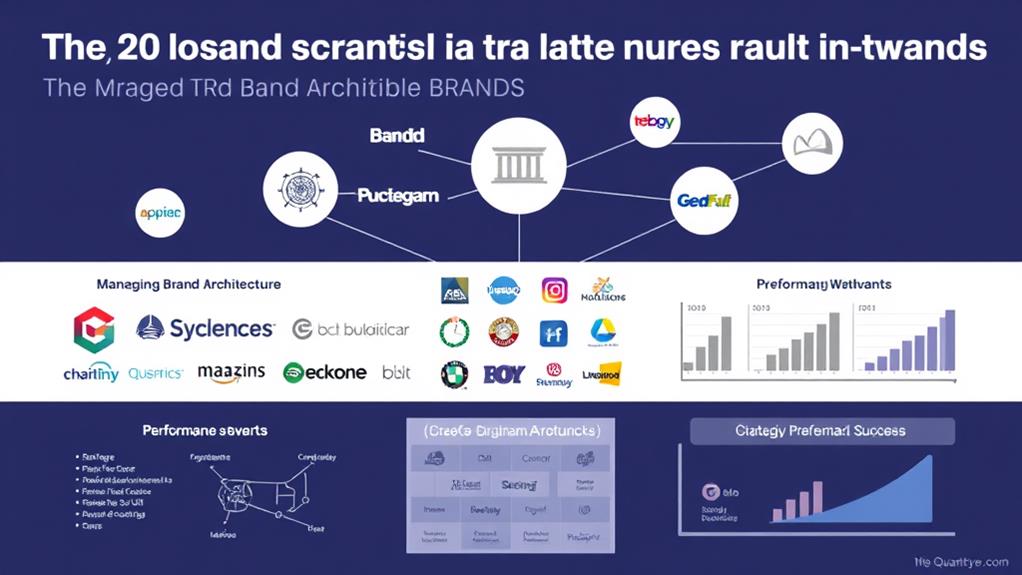
Success in brand architecture can be quantified through a variety of metrics that reflect both brand performance and consumer perception. Key indicators include brand equity, which serves as a foundational measure of how well a brand resonates with its target audience. By analyzing shifts in brand equity, organizations can assess the efficacy of their architectural strategies in fostering consumer loyalty and enhancing market positioning.
Moreover, brand loyalty is an essential metric that not only signifies repeat purchases but also indicates the strength of emotional connections between consumers and brands. Tracking changes in loyalty levels can provide insights into the effectiveness of brand synergy—how well multiple brands complement each other within a portfolio.
Financial performance metrics, including revenue growth and profit margins, should also be closely monitored. A well-structured brand architecture can facilitate competitive differentiation, allowing brands to carve out unique spaces in crowded markets. As a result, this differentiation often translates into improved financial outcomes.
Frequently Asked Questions
How Does Brand Architecture Affect Customer Loyalty Across Multiple Brands?
Brand architecture greatly influences customer loyalty by shaping brand recognition and customer perception. A well-defined structure enhances clarity, allowing consumers to easily navigate multiple offerings.
This strategic alignment fosters trust and reinforces brand value, leading to higher retention rates. Additionally, a cohesive brand strategy mitigates confusion, ensuring customers associate positive experiences with the overarching brand.
Ultimately, a robust brand architecture cultivates loyalty by creating a seamless connection between consumer expectations and brand identity across diverse products.
Can Brand Architecture Change Over Time, and How?
Indeed, brand architecture can evolve over time, akin to a symphony that adjusts its composition to resonate with changing audiences.
This evolution is often driven by brand evolution and necessitates strategic alignment with market dynamics, consumer preferences, and organizational goals.
A well-considered shift not only enhances coherence among brands but also fortifies competitive positioning, ensuring that each brand remains relevant, impactful, and aligned with the overarching vision of the organization.
What Challenges Arise When Managing Brand Architecture for Global Markets?
Managing brand architecture for global markets presents significant challenges, primarily due to cultural differences and market segmentation.
Organizations must navigate diverse consumer perceptions and preferences, which can complicate brand positioning and messaging.
Additionally, aligning product offerings with local market needs while maintaining a cohesive brand identity requires strategic insight.
Failure to address these complexities may result in diluted brand equity and ineffective market penetration, ultimately hindering overall business success in a global landscape.
How Do Mergers and Acquisitions Impact Existing Brand Architecture?
Mergers and acquisitions markedly reshape brand architecture, with over 70% of companies facing challenges in merger integration.
Effective brand consolidation requires a thorough equity assessment to maintain consumer perception and brand equity.
Strategic positioning becomes essential, ensuring identity alignment across portfolios.
This process not only facilitates portfolio optimization but also enhances market differentiation.
Ultimately, a well-executed merger can lead to a unified brand identity that resonates with consumers, driving long-term success.
What Role Does Digital Marketing Play in Brand Architecture?
Digital marketing serves as an essential component in shaping brand architecture by enhancing brand differentiation through targeted digital strategies.
Effective digital strategies leverage data analytics to identify and segment audiences, allowing brands to tailor messaging that resonates with distinct consumer needs. This precision fosters a cohesive brand identity across channels while maintaining unique brand attributes.
Consequently, a robust digital marketing approach not only reinforces the overall brand architecture but also drives engagement and loyalty among diverse consumer segments.
Conclusion
In conclusion, brand architecture serves as the backbone of a multi-brand strategy, ensuring coherence and clarity across diverse offerings. By establishing a structured framework, organizations can navigate the complexities of consumer perceptions and market positioning. Just as a well-tended garden flourishes with the right balance of plants, effective brand architecture cultivates brand equity and loyalty, driving sustainable growth. Embracing these strategies not only enhances brand visibility but also fortifies the overall brand ecosystem against competitive pressures.