
The Role of Brand Differentiation in Competitive Markets
Brand differentiation plays a crucial role in competitive markets by establishing unique identities that resonate with consumers. It begins with an extensive analysis of the target audience and competitors to identify market gaps. A strong Unique Value Proposition (UVP) articulates these unique benefits, enhancing brand loyalty and emotional connections. Additionally, personalized customer experiences and engaging storytelling cultivate lasting relationships. Effective differentiation not only builds consumer trust but also allows brands to withstand competitive pressures. Companies that master these strategies position themselves favorably within their markets, revealing deeper insights into the intricacies of brand differentiation and success.
Key Takeaways
- Brand differentiation establishes a unique market position, enabling companies to stand out amidst competition and resonate with target audiences.
- A compelling Unique Value Proposition (UVP) articulates distinct benefits, enhancing emotional connections and guiding targeted marketing efforts.
- Effective differentiation fosters brand loyalty by building trust through emotional branding and community engagement, creating lasting relationships with consumers.
- Personalized customer experiences, seamless purchase journeys, and relatable storytelling deepen consumer connections, positioning brands as preferred choices in their markets.
- Measuring the impact of differentiation helps brands refine strategies and enhance effectiveness in competitive landscapes, ultimately driving growth and customer retention.
Understanding Brand Differentiation

Understanding brand differentiation is essential for organizations aiming to establish a unique position in crowded markets. At the heart of this process lies a thorough analysis of the target audience, which informs both brand identity and the strategies employed to resonate with consumers.
By conducting an extensive competitor analysis, businesses can identify gaps within market segmentation, allowing for tailored messaging that speaks directly to the needs and desires of their audience.
Visual branding serves as a critical element in this differentiation strategy, as it encapsulates the essence of the brand while enhancing recognition. Consistent messaging across all platforms reinforces brand perception, ensuring that consumers form a cohesive understanding of what the brand represents.
Employing storytelling techniques further enhances this connection, as narratives resonate with audiences on an emotional level, fostering loyalty and engagement.
Cultural relevance cannot be overlooked in this landscape; brands must align their values and messaging with the cultural context in which they operate. This alignment not only enriches brand identity but also strengthens the bond with consumers.
Additionally, innovation strategies play a pivotal role in differentiation, enabling brands to evolve and adapt to shifting market dynamics while maintaining their unique identity.
Importance in Competitive Markets
In competitive markets, establishing a unique value proposition is critical for distinguishing a brand from its rivals.
This differentiation not only informs the market positioning strategy but also fosters brand loyalty among consumers who seek authenticity and relevance.
Ultimately, a well-defined identity enhances a brand's resilience against competition and cultivates lasting relationships with its target audience.
Unique Value Proposition
A well-defined Unique Value Proposition (UVP) serves as the cornerstone for brands attempting to carve out their space in competitive markets. It encapsulates the essence of what differentiates a brand, articulating its unique benefits and the specific value it delivers to customers.
At a time when consumers are inundated with choices, a compelling UVP becomes essential, as it not only enhances value articulation but also fosters a deeper emotional connection with the target audience.
The importance of a strong UVP cannot be overstated; it acts as a beacon of clarity amid the noise of competing messages. By effectively communicating the brand's unique strengths, businesses can secure a competitive advantage that resonates with consumers.
This strategic differentiation not only attracts attention but also cultivates loyalty, encouraging repeat business in an increasingly crowded marketplace.
Furthermore, a well-crafted UVP enables brands to focus their marketing efforts, ensuring that all messaging aligns with the core value proposition.
As a result, it becomes easier to create targeted campaigns that speak directly to the needs and desires of the audience, ultimately driving growth and establishing a formidable presence in competitive markets.
Market Positioning Strategy
Effective market positioning strategy builds upon the foundation established by a compelling Unique Value Proposition (UVP) by defining how a brand is perceived relative to its competitors. This process is essential in competitive markets, as it not only shapes brand identity but also cultivates a sustainable competitive advantage.
A well-executed positioning strategy conveys clarity, relevance, and differentiation to the target audience, ensuring that the brand resonates deeply with consumer needs.
To achieve effective market positioning, brands should focus on the following elements:
- Clarity: Clearly articulate what sets the brand apart, avoiding ambiguity that can dilute brand identity.
- Relevance: Align the positioning with consumer values and aspirations to enhance emotional connections.
- Consistency: Maintain a uniform message across all touchpoints to reinforce brand identity and build trust.
Brand Loyalty Building
Consistently cultivating brand loyalty is essential for businesses operating in competitive markets, as it fosters long-term relationships with consumers and encourages repeat purchases. In a time when choices abound, establishing brand loyalty transcends mere transactional interactions; it encompasses emotional branding and trust building.
Companies that effectively engage in brand storytelling not only create memorable narratives but also foster brand advocacy among customers who feel personally connected to the brand.
Implementing robust loyalty programs and reward systems can greatly enhance customer retention. These initiatives provide tangible incentives for repeat engagement while simultaneously deepening the emotional ties consumers have with the brand.
Additionally, experience personalization—tailoring offerings based on customer feedback—ensures that consumers feel valued and recognized, thereby enhancing their overall satisfaction.
Moreover, community engagement plays a pivotal role in nurturing brand loyalty. By fostering a sense of belonging, brands encourage customers to become advocates, sharing their positive experiences with others.
Ultimately, in competitive markets, the power of brand loyalty lies in its ability to transform customers into lifelong supporters, creating a sustainable competitive advantage that can withstand market fluctuations and evolving consumer preferences.
Key Strategies for Differentiation

In the domain of brand differentiation, companies must navigate a complex landscape of consumer preferences and competitive pressures. To stand out, organizations can adopt several key strategies that not only resonate with target audiences but also establish a distinct market presence.
- Niche Marketing: Targeting specific segments allows brands to tailor their messages and offerings, enhancing relevance and connection.
- Visual Identity: A cohesive and memorable visual identity fosters recognition and trust, acting as the foundation for a brand's presence in the marketplace.
- Storytelling Techniques: Crafting compelling narratives can engage consumers emotionally, making the brand more relatable and memorable.
Moreover, incorporating social responsibility into branding strategies can differentiate a company in a saturated market. Consumers increasingly favor brands that demonstrate a commitment to ethical practices, aligning with their values.
Additionally, leveraging influencer partnerships can amplify reach and credibility, as influencers can introduce brands to new audiences in authentic ways.
Customer segmentation plays a significant role in ensuring that marketing efforts are directed toward the right demographics, enhancing the effectiveness of campaigns.
Digital innovation, particularly in the field of experiential branding, allows brands to create immersive and interactive experiences that deepen customer engagement.
Through the thoughtful application of these strategies, brands can carve out their unique position, fostering a loyal customer base and thriving amid competition.
Each approach, when integrated effectively, contributes to a holistic differentiation strategy that resonates across multiple touchpoints.
Creating a Unique Value Proposition
A unique value proposition (UVP) serves as the cornerstone of brand differentiation, encapsulating what makes a brand distinct in a crowded marketplace. A well-articulated UVP not only highlights value creation but also reinforces the brand identity, thereby establishing a strong competitive advantage.
By identifying and addressing specific needs within targeted market segments, brands can craft messaging that resonates with their audience, ensuring clarity and impact.
To create an effective UVP, companies must first engage in thorough market segmentation, allowing them to pinpoint their ideal customers and understand their unique pain points. This paves the way for innovation strategies that align product offerings with consumer expectations, thereby enhancing customer perception.
A compelling UVP articulates how a brand uniquely solves problems or fulfills desires, setting it apart from competitors.
Moreover, the clarity of messaging in a UVP considerably affects consumer engagement. Brands must communicate their value propositions succinctly and powerfully, ensuring that potential customers immediately grasp the benefits of their offerings.
This clarity not only fosters trust but also encourages loyalty, as customers feel connected to a brand that genuinely understands their needs.
In essence, a unique value proposition is not merely a marketing tool; it is an essential element that shapes brand identity and drives business success.
Real-World Examples of Success

Demonstrating the effectiveness of a well-crafted unique value proposition (UVP) can be seen through various brands that have successfully differentiated themselves in competitive markets. These brands have employed innovative strategies, including compelling brand storytelling and a strong visual identity to resonate with their target audiences.
- Patagonia: This outdoor apparel company stands out through its unwavering commitment to social responsibility and environmental sustainability. Their storytelling emphasizes community engagement and encourages customers to participate in environmental activism, fostering a loyal customer base that shares their values.
- Apple: Renowned for its innovation culture, Apple has mastered niche targeting by creating products that deliver a seamless user experience. Through influencer collaborations and strategic marketing, they have built an aspirational brand that empowers customers to see technology as an extension of their lifestyle.
- Dove: With its "Real Beauty" campaign, Dove has reshaped perceptions of beauty standards, successfully leveraging community engagement to empower individuals. This approach not only differentiates the brand but also cultivates a deep emotional connection with consumers, positioning Dove as a leader in the personal care sector.
These examples illustrate that effective brand differentiation goes beyond products; it encompasses a holistic approach that integrates social responsibility, community engagement, and customer empowerment.
The Role of Customer Experience
In today's competitive landscape, customer experience has emerged as a critical differentiator for brands seeking to stand out.
By implementing personalized interaction strategies and ensuring a seamless purchase journey, companies can foster deeper emotional connections with their customers.
This strategic focus not only enhances loyalty but also positions brands as preferred choices in a crowded marketplace.
Personalized Interaction Strategies
Customer experience has emerged as a critical differentiator in the saturated landscape of competitive markets, where brands endeavor to capture consumer loyalty and attention.
Personalized interaction strategies play a pivotal role in enhancing customer engagement, enabling businesses to foster deeper connections with their audience. By leveraging data analytics and insights, brands can craft tailored messaging that resonates with individual preferences and behaviors.
- Customized communication that addresses specific customer needs and desires.
- Interactive touchpoints that invite feedback and participation, creating a sense of community.
- Proactive support that anticipates customer inquiries and resolves issues before they escalate.
These strategies not only enhance the overall customer experience but also position brands as attentive and responsive entities in the marketplace.
By focusing on personalized interactions, companies can cultivate a loyal customer base that feels valued and understood. This approach not only differentiates a brand from its competitors but also drives long-term profitability.
Ultimately, the successful implementation of personalized interaction strategies transforms customer experiences into meaningful engagements, solidifying the brand's position in a crowded market.
Seamless Purchase Journey
How can brands ascertain that every step of the purchase process is not only efficient but also enjoyable for consumers? The answer lies in creating a seamless purchase journey that prioritizes digital convenience and user experience.
By implementing purchase optimization strategies, brands can appreciably enhance checkout efficiency, guaranteeing that customers encounter minimal friction throughout the transaction.
Mobile accessibility plays a pivotal role, as an increasing number of consumers shop via their smartphones. Brands must ascertain that their platforms are optimized for mobile use, incorporating payment flexibility to accommodate varied consumer preferences.
This adaptability not only reduces cart abandonment rates but also fosters a sense of security and satisfaction during transactions.
Furthermore, integrating transaction security measures is essential for building trust. Consumers are more likely to engage when they feel their financial information is protected.
User feedback should be actively solicited and analyzed to continuously refine the purchase process, addressing pain points that may arise.
Finally, incorporating loyalty integration can enhance the overall user experience, rewarding repeat customers and encouraging brand allegiance.
Emotional Connection Development
What elements truly forge an emotional connection between brands and their consumers? The modern marketplace demands more than mere transactions; it seeks meaningful interactions that resonate with the consumer's values and aspirations.
Emotional storytelling emerges as a pivotal tool in this endeavor, allowing brands to weave narratives that captivate and engage, fostering loyalty and trust.
- Relatable Experiences: Stories that reflect real-life challenges and triumphs resonate deeply with consumers.
- Authentic Values: Brands that embody genuine principles inspire confidence and loyalty among discerning customers.
- Community Engagement: Creating a sense of belonging through shared experiences strengthens emotional ties.
Brand authenticity plays a critical role in this connection. When brands communicate transparently and uphold their promises, they cultivate an environment where consumers feel valued and understood.
This authenticity, coupled with compelling emotional storytelling, enables brands to transcend the commoditized landscape, establishing profound connections with their audience.
As businesses aim for differentiation, prioritizing emotional connection development can yield lasting benefits, transforming casual consumers into passionate advocates.
At its core, it is the emotional fabric of these relationships that ultimately drives sustained success in competitive markets.
Measuring the Impact of Differentiation
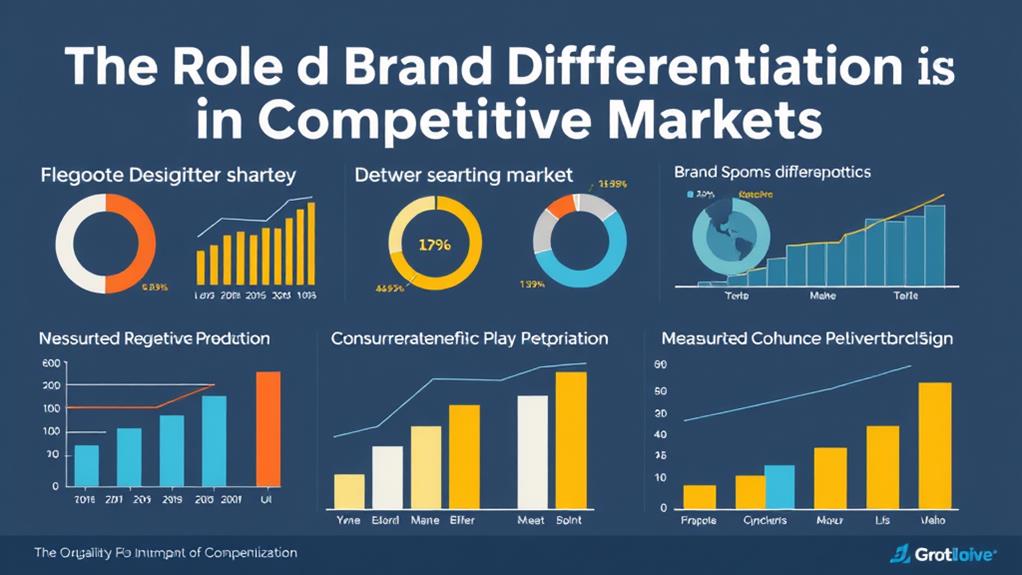
The effectiveness of brand differentiation can be quantified through a variety of metrics that illuminate its impact on market performance. By employing both performance metrics and qualitative evaluations, organizations can gauge how well their differentiation tactics resonate with consumers. Consumer perception plays a pivotal role in brand equity, as it directly influences loyalty, advocacy, and ultimately, market share.
In conducting a competitive analysis, firms should prioritize quantitative research to establish benchmarks and identify gaps where differentiation can be optimized. Metrics such as customer satisfaction scores, Net Promoter Scores (NPS), and brand recall rates provide quantifiable insights into how differentiation efforts are perceived by the target audience. An increase in these metrics often correlates with enhanced brand equity and a strengthened market position.
Moreover, understanding the nuances of consumer perception aids in refining differentiation strategies. For instance, if a brand is perceived as premium due to unique offerings or superior service, it can command higher prices and enjoy increased market share. Conversely, a negative perception can detract from brand equity, necessitating a reevaluation of differentiation tactics.
Ultimately, measuring the impact of differentiation requires a holistic approach that merges qualitative and quantitative insights. This duality not only provides a thorough understanding of consumer behavior but also equips brands with the intelligence necessary to navigate competitive landscapes effectively.
Future Trends in Brand Differentiation
Increasingly, brands are embracing innovative differentiation strategies to stay competitive in a rapidly evolving marketplace. As consumer expectations shift, businesses must adapt their approaches to remain relevant and compelling. The future of brand differentiation will be shaped considerably by several key trends.
- Digital Innovation: Leveraging emerging technologies to enhance customer experiences.
- Sustainability Practices: Integrating eco-friendly solutions that resonate with socially-conscious consumers.
- Experiential Marketing: Crafting immersive brand experiences that forge deeper emotional connections.
Brands will increasingly rely on technology integration to analyze consumer insights, enabling them to tailor offerings that reflect evolving preferences. The emphasis on cultural relevance will drive brands to engage in influencer collaborations, allowing them to tap into existing communities and amplify their visual identity.
As consumers become more discerning, the demand for authenticity will necessitate robust brand storytelling that aligns with their values, particularly concerning social responsibility.
Moreover, the rise of experiential marketing will compel brands to create memorable interactions that extend beyond traditional advertising. This approach not only enhances customer loyalty but also fosters a sense of community among consumers.
Ultimately, brands that prioritize these trends will cultivate a competitive edge, ensuring they resonate with the modern consumer's desire for meaningful engagement and ethical practices. In a world where differentiation is paramount, the ability to innovate while remaining socially responsible will define the leaders in the marketplace.
Frequently Asked Questions
How Does Brand Differentiation Affect Pricing Strategy?
Brand differentiation greatly influences pricing strategy by shaping value perception among consumers.
When a brand is perceived as unique or superior, it can justify higher pricing tiers, allowing companies to capture greater margins. Conversely, insufficient differentiation may compel brands to compete on price alone, undermining profitability.
Consequently, effective brand differentiation not only enhances customer loyalty but also empowers companies to strategically position their products within various pricing tiers, aligning perceived value with price.
What Role Does Social Media Play in Brand Differentiation?
In a world where countless brands vie for attention, social media emerges as a powerful differentiator.
A robust content strategy enhances audience engagement, while a strong visual identity captures the eye.
Influencer collaborations amplify reach, and thoughtful platform selection guarantees peak messaging consistency.
By leveraging these elements, brands can carve out a unique presence in the digital landscape, fostering loyalty and recognition that transcends mere competition.
Embrace social media's potential to redefine brand differentiation.
Can Small Businesses Effectively Differentiate Their Brand?
Yes, small businesses can effectively differentiate their brand by strategically employing niche targeting and enhancing customer engagement.
By concentrating on specific market segments, they can tailor their offerings to meet unique customer needs, thereby fostering loyalty. Engaging customers through personalized communication and interactive platforms further solidifies brand identity.
This focused approach not only distinguishes them from competitors but also cultivates a dedicated customer base, essential for sustained growth in a crowded marketplace.
How Do Cultural Factors Influence Brand Differentiation?
Cultural factors greatly influence brand differentiation by shaping cultural identity and consumer perception.
Brands that engage with local traditions through brand storytelling foster deeper emotional connections.
By leveraging market segmentation, businesses can tailor their value proposition to reflect cultural relevance, ensuring resonance within target demographics.
This alignment not only enhances brand loyalty but also positions the brand as a meaningful entity within the consumer's cultural landscape, ultimately driving competitive advantage in diverse markets.
What Are Common Mistakes in Brand Differentiation Efforts?
Many assume that brand differentiation is straightforward, yet common mistakes can undermine efforts.
Failing to align messaging clarity with audience perception often obscures a brand's unique value and market positioning. Neglecting competitor analysis can lead to ineffective strategies, while inconsistent branding erodes trust.
Additionally, overlooking customer feedback may hinder emotional connection. Effective storytelling techniques and a strong visual identity are essential; they cultivate resonance and loyalty among consumers, ultimately enhancing differentiation.
Conclusion
In competitive markets, brand differentiation emerges as a paramount strategy that can elevate a company from obscurity to iconic status. By implementing effective differentiation strategies, businesses can craft unique value propositions that resonate with consumers, ultimately enhancing customer experience and loyalty. The measurable impacts of these strategies underscore their necessity in today's dynamic landscape. As markets evolve, the significance of innovative differentiation will not merely be important—it will be the lifeblood of enduring commercial success.