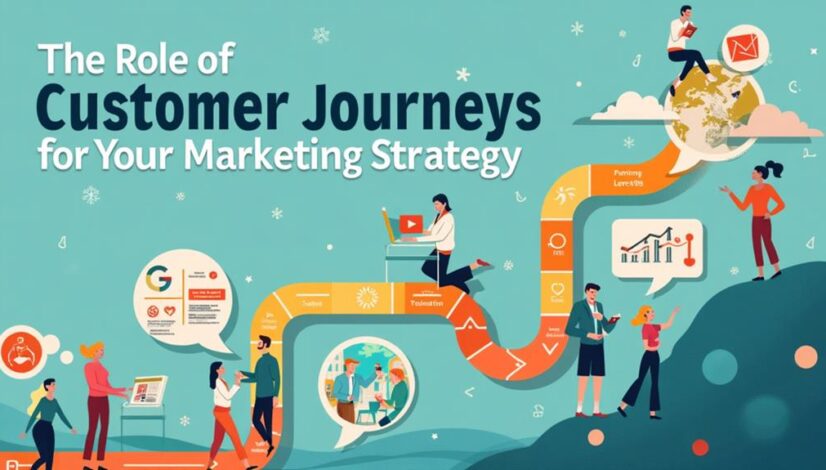
The Role of Customer Journeys in Your Marketing Strategy
Customer journeys are central to a marketing strategy, offering crucial insights into customer behaviors and emotional triggers. By mapping these journeys, businesses can identify key touchpoints and optimize interactions, enhancing user experience and fostering loyalty. Understanding the stages of awareness, consideration, and decision-making enables tailored messaging that resonates with varied customer segments. Leveraging data analytics and integrating customer feedback further refine these approaches for sustained engagement. Ultimately, prioritizing customer journeys not only improves satisfaction and conversion rates but also cultivates long-term relationships that drive brand loyalty. Exploring this topic reveals deeper strategies that can elevate your marketing efforts.
Key Takeaways
- Customer journeys reveal motivations and emotional triggers, informing tailored marketing strategies that enhance engagement and conversion.
- Mapping the customer journey identifies critical touchpoints, enabling brands to optimize user experience and foster loyalty.
- The stages of awareness, consideration, and decision-making provide insights for targeted campaigns and effective communication.
- Leveraging data analytics allows for personalized messaging, improving customer satisfaction and brand standing in the market.
- Customer feedback loops enable continuous adaptation of strategies, aligning offerings with consumer expectations and enhancing overall engagement.
Understanding Customer Journeys
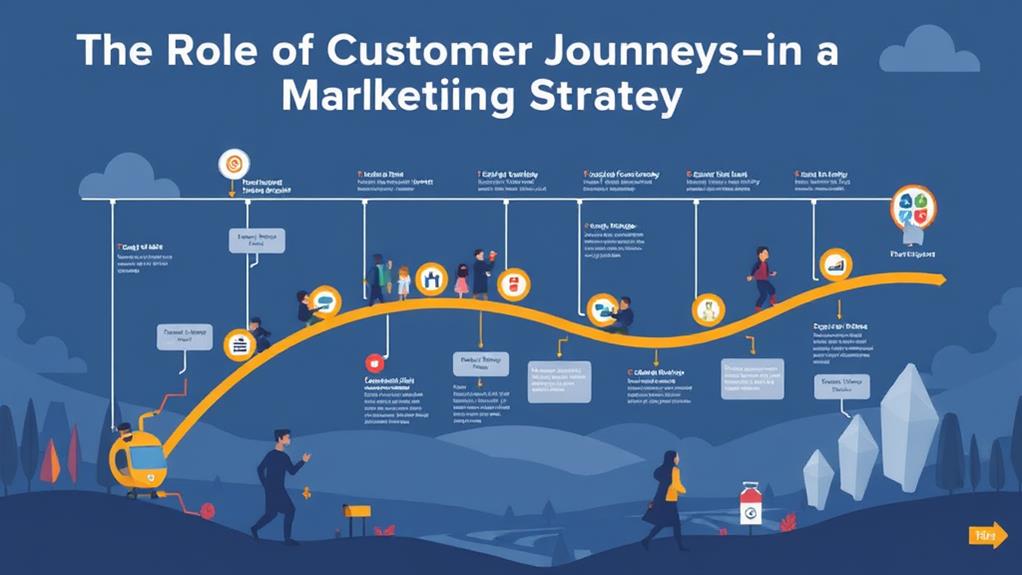
In many ways, understanding customer journeys is crucial for any effective marketing strategy. Knowing how customers interact with a product or service over time reveals the underlying customer motivations and emotional triggers that drive their purchasing decisions. The process of journey mapping allows marketers to visualize these interactions, highlighting key behavioral patterns and decision drivers that inform customer needs and preferences.
Effective user experience is rooted in understanding these journeys—marketers can fine-tune their engagement strategies by identifying critical touchpoints that influence the user's perception and interaction with a brand. Touchpoint optimization guarantees that every interaction is a positive one, fostering loyalty and encouraging repeat business.
Through tailored experience design, brands can create moments that resonate deeply, removing friction and enhancing satisfaction. Additionally, incorporating feedback loops within the journey not only aids in refining the customer experience but also builds a rapport based on responsiveness. Customers feel empowered when businesses actively seek their input, resulting in deeper relationships that extend beyond mere transactions.
In essence, a thorough grasp of customer journeys enables marketers to craft campaigns that do more than just promote a product; they foster emotional connectivity. Ultimately, by aligning brand values with customer journeys, businesses can achieve a level of freedom in their marketing efforts—one that liberates them from traditional constraints and enhances their ability to resonate authentically with their audience.
Key Stages of the Journey
The key stages of the customer journey—Awareness, Consideration, and Decision Making—are critical touchpoints that influence consumer behavior.
Each stage not only shapes the customer's perception but also determines the effectiveness of a marketing strategy.
Understanding the insights and actions relevant to each phase enables brands to tailor their approaches, ultimately enhancing customer engagement and conversion rates.
Awareness Stage Insights
Understanding the nuances of the awareness stage is essential for shaping an effective marketing strategy that resonates with potential customers. At this initial phase, the focus shifts to enhancing brand awareness and capturing consumer attention.
Utilizing engagement strategies effectively across digital touchpoints, such as social media platforms, is vital. Here, content marketing plays a pivotal role; compelling content must inform and entice the audience without being overtly promotional.
To tailor your approach, audience segmentation is critical. By understanding diverse consumer behavior and preferences, marketers can craft targeted awareness campaigns that speak directly to varied demographics.
The impact of influencers cannot be overlooked, as their endorsement can amplify reach and credibility during this stage.
Ultimately, the awareness stage serves as the backbone of the marketing funnel. If executed with precision, it lays the groundwork for consumer relationships, fostering organic interest and curiosity.
Brands must leverage educational and relatable content to guide prospects towards the next phase in their journey, ensuring that initial touchpoints are both memorable and actionable.
Consideration Phase Actions
Having successfully captured awareness, brands now face the challenge of guiding potential customers through the consideration phase. This significant stage is characterized by the exploration of options, driven by emotional triggers and a desire for informed decisions.
Brands must leverage diverse content formats—such as videos, blogs, and webinars—to engage users effectively.
Competitive analysis plays an essential role, as potential customers compare available options. As a result, showcasing influencer impact can amplify brand credibility through authentic endorsements.
Social proof emerges as a potent strategy; testimonials and user reviews establish trust signals crucial for nurturing a relationship with prospective buyers.
Additionally, crafting compelling brand storytelling allows companies to resonate personally with consumers, fostering a sense of connection and loyalty.
Investing in user experience is fundamental; seamless navigation and relatable visual elements enhance the engagement process while ensuring customers feel empowered throughout their journey.
Decision Making Factors
Maneuvering the decision-making factors within customer journeys requires brands to pinpoint key stages that influence purchasing behavior. Central to this process are emotional triggers that evoke strong sentiments, shaping consumers' attachment to brands and products.
Recognizing the power of social influences, brands can leverage peer recommendations to increase trust and credibility, enhancing overall customer confidence.
As customers approach the decision-making phase, understanding cognitive biases is crucial. These biases often skew perception and can lead to information overload, hindering effective risk assessment. Brands must streamline communication to provide clarity while appealing to purchase motivation through compelling user experiences.
Moreover, cultural factors play an essential role in decision-making, guiding brand loyalty and preference within diverse demographic segments. Tailoring marketing strategies to these cultural nuances can optimize engagement and minimize barriers to purchase.
By effectively addressing these multifaceted decision-making factors, brands can create a compelling narrative that resonates with consumers, empowering them to make informed choices.
Ultimately, this nuanced understanding facilitates deeper connections, driving conversion rates and enhancing long-term customer relationships.
Benefits of Mapping Journeys

While many businesses recognize the importance of customer experience, the real power of mapping customer journeys lies in its ability to uncover nuanced insights that drive strategic decision-making. Journey mapping allows organizations to gain a thorough understanding of their customers' paths, enabling effective customer segmentation tailored to diverse needs and preferences.
By employing behavioral analysis, marketers can identify emotional triggers that motivate consumer actions, enhancing user experience. This insight proves essential when developing engagement strategies that resonate with specific customer segments. Additionally, journey mapping facilitates the creation of sophisticated feedback loops, ensuring continuous improvement and adaptation to changing consumer behaviors.
Incorporating visual storytelling within journey maps enhances clarity and fosters cross-channel consistency, which is critical in today's omnichannel landscape. By presenting customer interactions in a visual format, teams can easily identify pain points and opportunities for journey optimization, thereby improving overall effectiveness and satisfaction.
In essence, mapping customer journeys provides essential insights that empower organizations to innovate and refine their marketing strategies. Understanding the complexities of customer interactions lays the foundation for more personalized experiences that drive loyalty and achieve business objectives.
As businesses increasingly compete on the quality of their customer interactions, journey mapping becomes a crucial tool in crafting solutions that not only meet but anticipate customer needs, truly liberating their potential for engagement and profitability.
Identifying Customer Touchpoints
Frequently, businesses overlook the critical role of customer touchpoints in shaping the overall customer journey. Understanding and identifying these touchpoints is essential for enhancing the customer experience, as they represent the various interactions where customers engage with a brand. By conducting a thorough touchpoint analysis, businesses can gain insights into how these interactions improve or detract from customer satisfaction, ultimately influencing loyalty and brand perception.
To successfully identify customer touchpoints, consider the following key areas:
- Website interactions (e.g., page views, navigation)
- Social media engagements (e.g., likes, shares, comments)
- Email communications (e.g., newsletters, promotions)
- Customer service encounters (e.g., calls, chat support)
- In-store experiences (e.g., product displays, staff interactions)
Each touchpoint serves as an opportunity to connect with customers and reinforce their choices. The quality of these interactions can greatly impact whether a customer feels valued or frustrated. Consequently, a thorough approach that scrutinizes these points is crucial, empowering businesses to refine their strategies effectively.
In the quest for deeper customer understanding, organizations must not just map touchpoints but analyze how each contributes to the customer journey. This analysis fosters a more meaningful customer experience, crafting pathways that resonate with a brand's audience.
In a landscape that increasingly values connection and authenticity, leveraging touchpoint insights becomes imperative for businesses committed to freedom in choice and satisfaction in connection.
Personalization Through Customer Insights

Effective personalization in marketing is increasingly reliant on data-driven insights that reveal customer behaviors and preferences.
By harnessing this wealth of information, organizations can craft tailored messaging strategies that resonate deeply with target audiences, enhancing engagement and fostering brand loyalty.
Ultimately, the ability to align marketing efforts with individual customer journeys paves the way for a more impactful and relevant customer experience.
Data-Driven Personalization
Recent studies indicate that data-driven personalization can greatly enhance customer engagement, demonstrating the power of leveraging customer insights in marketing strategies.
By employing methodologies such as behavioral segmentation and predictive analytics, businesses can gain profound insights into their audience's preferences and behaviors. This information is pivotal in crafting dynamic content that resonates with individual customers, thereby improving the overall user experience.
Key benefits of data-driven personalization include:
- Enhanced audience profiling for more targeted marketing efforts.
- Improved engagement metrics that track customer interactions.
- Increased customer retention through effective loyalty programs.
- Higher conversion optimization by tailoring sales strategies to different segments.
- Streamlined marketing automation that offers timely and relevant communications.
Incorporating these strategies into your marketing framework creates a foundation for sustainable growth.
When customers feel recognized and understood, their likelihood to engage increases greatly. This strategic focus on data insights not only augments customer satisfaction but also fortifies a brand's standing in overcrowded marketplaces.
Tailored Messaging Strategies
Harnessing customer insights through tailored messaging strategies enables brands to create highly relevant and impactful interactions with their audience.
By employing audience segmentation, marketers can identify distinct groups within their customer base, allowing for precise message alignment that resonates with specific needs and desires. Understanding emotional triggers further enhances the ability to craft messages that evoke engagement, leading to stronger connections and loyalty.
Incorporating channel optimization guarantees that these targeted messages reach the right individuals at the most opportune moments, enhancing timing relevance in every interaction.
Meanwhile, a focus on content relevance ensures that the information provided not only attracts attention but also maintains interest through consistency in brand voice and image.
Integrating Customer Feedback
Integrating customer feedback serves as a vital component in shaping effective marketing strategies, enabling businesses to align their offerings with consumer expectations and preferences. By actively incorporating insights gained through structured feedback loops, organizations can drive customer satisfaction and enhance service improvement initiatives.
- Enhances engagement strategies: Strengthening connections with consumers through personalized interactions.
- Utilizes survey techniques: Collecting targeted information that reflects true customer sentiments.
- Employs response analysis: Understanding patterns and trends in feedback data for informed decision-making.
- Implements sentiment tracking: Gauging emotional reactions to products and services, enabling quick adjustments.
- Aims for loyalty enhancement: Transforming feedback into actionable steps to foster lasting customer relationships.
Integrating these elements leads to experience optimization, where each touchpoint is refined based on user insights. Usability testing becomes an integral part of this process, allowing for adjustments that resonate well with target demographics.
In addition, analyzing response data not only highlights areas for improvement but also reinforces the importance of customer involvement in the product development cycle. Customers who feel valued and heard are more likely to exhibit brand loyalty, creating a reciprocal relationship.
Engaging in this continuous cycle of feedback enables businesses to not only anticipate customer needs but also to innovate proactively. Consequently, the ability to effectively integrate customer feedback propels businesses toward achieving sustainable growth and lasting success in an increasingly competitive marketplace.
Leveraging Data Analytics

Data analytics has become a cornerstone of modern marketing strategy, providing businesses with invaluable insights that inform decision-making processes. By leveraging data analytics, organizations can conduct profound customer segmentation, allowing them to tailor their marketing campaigns to specific demographics and preferences. This precision fosters deeper connections with customers and elevates user experience markedly.
Predictive modeling plays a fundamental role in anticipating customer behavior and trend forecasting, enabling marketers to stay ahead of market shifts. Behavioral analysis further enriches these models, offering insights into customer interactions and preferences. With this data, brands can implement effective A/B testing to optimize their marketing tactics, continually refining messages based on real-time engagement metrics.
Moreover, leveraging insights gained from data visualization tools allows marketers to present complex data in an easily digestible format, fostering informed strategic discussions. By focusing on funnel optimization, businesses can streamline their paths to purchase, enhancing conversion rates while minimizing drop-offs.
Retention strategies heavily benefit from these insights, as companies can proactively address customer needs and concerns. Continual analysis of engagement metrics facilitates a more personalized approach, ultimately enhancing brand loyalty and customer lifetime value.
In an era where competition is fierce and consumer expectations are ever-evolving, integrating data analytics into the marketing strategy is not merely advantageous but essential. By harnessing the power of analytics, businesses can create more effective, tailored marketing initiatives that resonate with customers, ensuring sustained growth and success.
Overcoming Common Challenges
While leveraging data analytics can considerably enhance marketing strategies, organizations often encounter a variety of challenges that can impede their effectiveness. Understanding the complexities within the customer journey aids in overcoming these obstacles. However, it requires strategic innovation and a willingness to adapt.
- Identifying customer emotions and pain points
- Implementing effective engagement strategies
- Conducting rigorous touchpoint analysis
- Refining journey optimization processes
- Establishing robust feedback loops
One of the most significant challenges is accurately mapping the customer journey. Journey mapping must account for varied customer experiences and emotions, providing insights that help to identify pain points. This is where segmentation tactics come into play, allowing for tailored interactions that resonate with specific demographics.
Moreover, the introduction of engagement strategies designed around customer needs is vital. Each touchpoint in the journey should reflect a commitment to enhancing the user experience, encouraging positive interactions that drive conversion metrics.
Another hurdle is the continual need for journey optimization. Regularly evaluating the effectiveness of various strategies through feedback loops guarantees that businesses remain aligned with customer expectations and preferences. Ignoring this element can result in stagnated growth and missed opportunities.
Therefore, by committing to thorough journey mapping and adapting engagement strategies based on continuous touchpoint analysis, organizations can not only navigate the common challenges they encounter but also foster an empowered and liberated customer experience.
Case Studies of Success
Several organizations have successfully transformed their marketing strategies through innovative customer journey mapping and engagement techniques, illustrating the tangible benefits of a keen focus on the customer experience.
One notable example is a prominent retail brand that integrated direct customer feedback into its journey mapping. By analyzing customer interactions, they discovered pain points that inhibited user engagement. Addressing these issues led to a 30% increase in conversion rates, validating the power of understanding the entire customer journey.
Another case analysis involves a tech company that utilized storytelling impact as a core component of its marketing strategy. They crafted narratives that resonated emotionally with their audience, which greatly enhanced brand loyalty. Their success metrics demonstrated a remarkable growth in repeat purchases—over 40%—as consumers felt more connected to the brand's mission and values.
Moreover, a travel service provider adopted strategic alignment by creating personalized experiences through journey mapping. By curating tailored recommendations based on previous purchasing behaviors, they witnessed a 50% rise in post-trip surveys indicating satisfaction—a direct correlation to their efforts in enhancing the customer experience.
These case studies emphatically show that success in modern marketing is strongly linked to innovative techniques and a profound understanding of customer journeys. The alignment of marketing strategies with customer insights not only drives engagement but also fosters lasting relationships that lead to sustained business growth.
In today's competitive landscape, those who prioritize customer experience will certainly reap the benefits of increased loyalty and higher conversion rates.
Frequently Asked Questions
How Do Customer Journeys Differ Across Industries?
Customer journeys vary greatly across industries, influenced by the nature of interactions and consumer expectations.
B2B journeys are often complex and relationship-driven, while B2C journeys focus on emotional engagement.
In retail experiences, immediate gratification is key, contrasting with the detailed E-commerce paths where convenience reigns.
Service interactions prioritize responsiveness, whereas healthcare navigation demands clarity.
Nonprofit engagements must evoke empathy, and hospitality touchpoints emphasize personalized experiences, highlighting the diverse landscape of customer interactions.
What Tools Can Help Visualize Customer Journeys?
Visualizing customer journeys can be akin to steering through uncharted waters, where tools like journey mapping and user personas serve as compasses guiding your strategy.
Journey mapping allows businesses to outline the customer experience step-by-step, extrapolating insights for further refinement.
User personas, on the other hand, foster a deeper understanding of distinct customer segments, enabling tailored interactions that resonate.
Together, these tools illuminate pathways, empowering organizations to enhance engagement and ultimately drive growth.
Can Customer Journeys Change Over Time?
Yes, customer journeys can indeed change over time due to evolving customer expectations and market dynamics.
As businesses engage in journey mapping, they can identify shifts in preferences and behaviors, adapting their strategies accordingly. This responsiveness not only enhances customer satisfaction but also fosters loyalty.
How Often Should We Update Our Customer Journey Map?
Updating your customer journey map should be a regular practice, ideally quarterly or semi-annually, to guarantee alignment with evolving customer feedback.
As consumer behaviors and preferences shift, the journey must reflect these changes to maintain relevance.
Regular updates not only enhance the accuracy of your insights but also empower your strategy to foster deeper connections with customers, thereby promoting a liberated experience that adapts to their needs over time.
What Are the Key Metrics to Track During Customer Journeys?
Key metrics to track during customer journeys encompass customer behavior patterns, conversion rates, engagement levels, and satisfaction scores.
These metrics are essential for journey optimization, enabling organizations to identify friction points and opportunities for enhancement.
By analyzing such data, businesses gain insights into customer preferences and pain points, fostering a more tailored experience.
Ultimately, prioritizing these metrics not only informs strategic decisions but also empowers customers to pursue their preferred pathways.
Conclusion
In the intricate tapestry of marketing strategy, customer journeys serve as the thread weaving together engagement, insight, and transformation. By illuminating the pathways traversed by consumers, businesses can reveal not only preferences but also opportunities for resonance. Embracing these journeys opens the potential for personalized experiences, fostering loyalty and advocacy. Ultimately, the mastery of customer journey mapping symbolizes a compass guiding organizations through the evolving marketplace, ensuring navigation toward sustained success and meaningful connections.