
How to Use Branding to Enhance Your Customer Journey
Branding plays a critical role in enhancing the customer journey by establishing trust and creating meaningful engagements. Start by mapping the customer journey to identify key touchpoints. Define a strong brand identity that reflects your values and resonates with your target audience. Guarantee consistent messaging across all channels, reinforcing your brand personality. Utilize visual elements effectively, as they shape perceptions and evoke emotions. Engage customers through compelling storytelling that fosters emotional connections. Finally, personalize experiences using data-driven insights, adapting your strategy as market dynamics shift. These strategies work synergistically to elevate customer experiences and drive loyalty, ultimately benefiting your brand.
Key Takeaways
- Map the customer journey to identify key touchpoints and enhance user experience through targeted branding efforts.
- Ensure consistent messaging and visual branding across all channels to build trust and reinforce brand identity.
- Utilize emotional storytelling to connect with customers on a deeper level, transforming transactions into meaningful experiences.
- Personalize customer interactions using behavioral analytics to tailor content and anticipate needs for improved engagement.
- Measure brand impact on customer loyalty through feedback metrics and adjust strategies based on data-driven insights.
Understanding the Customer Journey
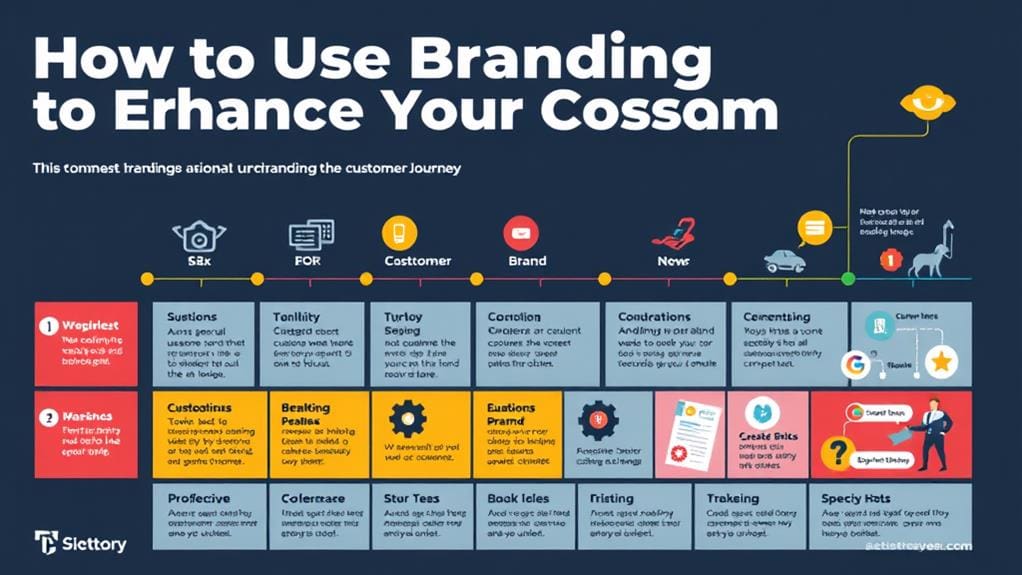
Understanding the customer journey is akin to mapping a complex landscape, where each touchpoint serves as a landmark guiding consumers from initial awareness to final purchase and beyond. In this intricate process, journey mapping becomes essential, allowing businesses to visualize and analyze the various stages consumers traverse. By identifying each customer touchpoint, organizations can create a more cohesive user experience that resonates with their target audience.
Effective journey analysis involves constructing detailed customer personas that illuminate the motivations and behaviors of distinct consumer segments. This intelligence enables brands to pinpoint pain points that may disrupt the flow of the journey. Understanding these challenges allows for strategic interaction design, ensuring that each touchpoint is optimized for engagement and satisfaction.
Moreover, incorporating feedback loops throughout the journey stages is crucial. These mechanisms not only capture consumer sentiments but also inform ongoing experience optimization efforts. By actively listening to customer feedback, brands can iteratively refine their strategies, enhancing the overall user experience.
In a landscape where consumer expectations are continually evolving, mastering the customer journey is not merely advantageous; it is necessary. Brands that invest in understanding and optimizing each interaction will foster deeper connections, turning fleeting encounters into lasting relationships.
Defining Your Brand Identity
A well-defined brand identity serves as the foundation for every interaction throughout the customer journey, shaping perceptions and influencing decisions at each touchpoint. To cultivate a compelling brand identity, organizations must articulate their brand values clearly, ensuring they resonate with the target audience. This alignment fosters brand authenticity, which is critical in building trust and loyalty within a brand community.
Brand perception is intricately linked to brand personality; a distinctive personality not only differentiates a brand from its competitors but also enhances brand positioning in the market. By strategically defining brand differentiation, businesses can communicate their unique value propositions effectively, creating memorable brand experiences that engage and inspire customers.
As brands evolve, maintaining brand consistency becomes paramount. Consistency across all channels and touchpoints reinforces brand values and personality, ensuring that customers develop a cohesive understanding of what the brand represents. This strategic coherence enhances customer trust and loyalty, ultimately driving satisfaction and retention.
In the ever-changing landscape of consumer preferences, the process of brand evolution should be intentional and reflective of the insights gathered from the audience. By embracing feedback and adapting to shifts in the market, brands can fortify their identity while remaining authentic and relevant.
Through these strategic initiatives, organizations not only enhance their brand identity but also enrich the overall customer journey, cultivating deeper connections and fostering a loyal customer base.
Aligning Branding With Customer Expectations

To effectively align branding with customer expectations, it is essential to thoroughly understand the target audience and their needs.
This understanding enables businesses to craft a consistent messaging strategy that resonates with customers at every touchpoint.
Understanding Target Audience
Aligning branding with customer expectations is important for businesses aiming to create meaningful connections with their target audience. Understanding your target market begins with rigorous demographic analysis and audience segmentation, which help identify distinct consumer behavior patterns.
By employing psychographic profiling, brands can explore deeper into the motivations, values, and lifestyles of potential customers, thereby enhancing their market research efforts.
Trend identification is critical for staying relevant in an ever-evolving marketplace. By keeping a pulse on emerging preferences, brands can adapt their messaging and offerings to resonate with their audience.
In addition, establishing feedback loops is essential for continuous improvement; soliciting insights directly from customers helps calibrate brand perception and guarantees alignment with evolving expectations.
Creating user personas based on extensive data allows brands to craft tailored experiences that speak to specific segments of their audience. This strategic approach not only enhances customer engagement but also fosters loyalty.
Ultimately, understanding your target audience is the foundation upon which effective branding is built, positioning your business to thrive in a competitive landscape.
Consistent Messaging Strategy
Establishing a consistent messaging strategy is essential for brands seeking to strengthen their connection with customers and enhance their overall journey.
When branding consistency is prioritized, customers can expect a seamless experience that reinforces their trust and loyalty. This is achieved through messaging coherence across all platforms, guaranteeing that every interaction aligns with the brand's core values and identity.
To achieve a robust messaging strategy, consider these key elements:
- Unified Tone and Voice: Maintain a distinctive voice that resonates with your audience and reflects your brand personality.
- Clear Value Proposition: Articulate the unique benefits offered consistently, helping customers quickly understand what sets your brand apart.
- Integrated Channels: Ensure that all marketing channels—social media, email, and website—communicate a cohesive narrative.
Crafting a Consistent Brand Message
Consistency in brand messaging serves as the cornerstone of customer trust and loyalty. To effectively craft a brand message that resonates, organizations must define their brand voice and establish a coherent messaging tone that aligns with their value proposition. This alignment is vital for engaging target demographics across various communication channels, whether through social media, email, or traditional advertising.
A well-articulated brand message not only reflects brand authenticity but also enhances brand perception in the marketplace. By consistently communicating core values and differentiating factors, brands can cultivate a unique identity that stands out amidst competitive differentiation. This strategic coherence fosters a deeper connection with customers, as they come to recognize and trust the brand over time.
Moreover, incorporating customer feedback into the messaging strategy is important for brand evolution. Understanding how customers perceive the brand allows organizations to refine their messaging and make sure it remains relevant and compelling. By leveraging insights from customer interactions, brands can adapt their approach to meet changing preferences, thereby maintaining consistency while remaining agile.
Ultimately, a consistent brand message strengthens customer relationships and drives loyalty. When customers encounter a unified voice and tone that resonates with their experiences, it reinforces their connection to the brand.
In this way, the journey from initial engagement to long-term loyalty is seamlessly supported by a powerful, consistent brand message that articulates not only what the brand stands for but why it matters to its audience.
Utilizing Visual Branding Elements

Harnessing the power of visual branding elements plays a crucial role in shaping customer perceptions and enhancing their journey with a brand. Effective visual branding acts as a silent communicator that conveys a brand's essence and values, fostering an emotional connection with customers.
By strategically employing design elements such as color psychology, logo design, and typography choices, brands can create a cohesive and memorable experience.
To elevate your brand's visual identity, consider the following key components:
- Color Psychology: Utilize colors that evoke specific emotions and align with your brand's personality.
- Imagery Consistency: Confirm that all visual content adheres to established branding guidelines, maintaining a uniform aesthetic appeal across platforms.
- Visual Hierarchy: Organize design elements to guide customers through content effortlessly, highlighting essential information and calls to action.
Moreover, the integration of visual storytelling enhances brand coherence by weaving narratives that resonate with your audience. A well-designed logo serves not only as a brand identifier but also encapsulates the brand's mission and values.
Thoughtfully chosen typography influences readability and sets the tone for communication.
Ultimately, a strategic approach to visual branding elements fosters a seamless customer journey, reinforcing brand loyalty and recognition. By adhering to branding guidelines and focusing on the interplay of design elements, brands can cultivate an engaging and aesthetically pleasing environment that captivates their audience and drives meaningful interactions.
Engaging Customers Through Storytelling
Storytelling serves as a powerful tool for brands to forge emotional connections with their customers, transforming mere transactions into meaningful experiences.
By crafting compelling narratives that resonate with the audience's values and aspirations, businesses can enhance customer loyalty and engagement.
This strategic approach not only captivates attention but also fosters a deeper understanding of the brand's purpose and mission.
Emotional Connection Techniques
At the heart of effective branding lies the profound ability to forge emotional connections with customers, transforming mere transactions into meaningful experiences. By harnessing emotional triggers and employing techniques like empathy mapping, brands can resonate deeply with their audience, cultivating trust and fostering connection moments.
To evoke powerful emotional responses, consider the following strategies:
- Sensory Branding: Engage multiple senses to create memorable experiences, reinforcing brand nostalgia and making your offerings unforgettable.
- Authenticity Signals: Communicate shared values transparently, ensuring customers feel aligned with your brand's mission and vision.
- Community Engagement: Foster a sense of belonging by creating platforms for customers to connect, enhancing positive reinforcement through shared experiences.
These emotional connection techniques not only enhance customer loyalty but also position your brand as a trusted ally in their journey.
By prioritizing authenticity and empathy, brands can create an environment where customers feel valued and understood.
Ultimately, when customers perceive your brand as more than just a product, they invest their emotions, cultivating long-lasting relationships that drive sustained growth and engagement.
Crafting Compelling Narratives
Three key elements define the art of crafting compelling narratives that resonate with customers: authenticity, relatability, and emotional resonance. These elements serve as the foundation for effective brand storytelling, enabling businesses to forge deeper connections with their audience.
Utilizing narrative techniques such as character development and conflict resolution, brands can create stories that are not only engaging but also reflective of the customer's own experiences. When customers see themselves in the narrative, relatability becomes a powerful tool, enhancing their investment in the brand.
Moreover, emotional resonance is paramount; stories that evoke genuine feelings foster loyalty and encourage sharing. Brands that successfully leverage these narratives can transform the customer journey from a mere transactional experience into a meaningful relationship.
Incorporating these storytelling strategies into your branding efforts can elevate your customer's experience, making it memorable and impactful. By focusing on authenticity, relatability, and emotional depth, you can create narratives that not only capture attention but also inspire action.
Ultimately, mastering the art of compelling narratives will position your brand as a trusted companion in your customers' lives, ensuring long-term engagement and loyalty.
Personalizing the Customer Experience

Understanding the unique preferences and behaviors of customers is crucial for effectively personalizing their experience. This process involves leveraging advanced strategies, such as behavioral analytics and customer feedback, to create tailored experiences that resonate deeply with your audience.
By harnessing personalization technology, businesses can segment users intelligently, allowing for targeted interactions that enhance engagement and loyalty.
To illustrate the power of personalization, consider the following:
- Dynamic Content: Adjusting website or email content in real-time based on user behavior guarantees relevance and increases conversion rates.
- Preference Tracking: Monitoring customer choices over time allows brands to anticipate needs and offer proactive solutions, enhancing satisfaction.
- Experience Mapping: By mapping out interaction touchpoints, brands can identify critical moments where personalization can markedly impact the overall journey.
Effective customer profiling is at the heart of this personalization strategy. By delving into user segmentation, businesses can tailor their messages and offerings to match the specific interests and needs of different groups.
This strategic approach not only fosters a deeper connection with the brand but also drives higher retention rates.
Incorporating these tactics into your branding efforts will transform the customer experience, turning routine interactions into meaningful engagements.
Ultimately, personalizing the customer experience is not merely an option; it is a necessity for brands aiming to thrive in today's competitive landscape.
Measuring Brand Impact on Loyalty
Consistently measuring the impact of branding on customer loyalty is essential for any organization aiming to cultivate long-term relationships with its audience. Effective branding shapes how customers perceive a company, influencing their loyalty and engagement over time. To analyze this impact, businesses must utilize brand perception metrics that capture customer insights and attitudes towards their brand.
Quantitative measures, such as Net Promoter Score (NPS) and Customer Satisfaction (CSAT) scores, offer valuable data on brand affinity and willingness to recommend. Qualitative feedback, gathered through surveys and focus groups, can further illuminate the emotional connections customers have with the brand. These insights are critical for understanding how branding initiatives resonate with the target audience.
Moreover, examining loyalty program effectiveness provides another layer of analysis. By evaluating participation rates, repeat purchase behaviors, and overall customer retention linked to loyalty programs, organizations can gauge how branding influences loyalty. A well-defined loyalty program not only enhances customer engagement but also reinforces brand values, ultimately cultivating deeper loyalty.
To maximize brand impact, companies must regularly review and adapt their branding strategies based on these metrics. Continuous evaluation enables organizations to identify strengths and weaknesses in their branding approach, allowing for data-driven decisions that align with customer expectations.
Adapting Brand Strategy Over Time

As market dynamics and consumer preferences evolve, the ability to adapt brand strategy becomes crucial for sustaining relevance and fostering loyalty. Companies must prioritize brand evolution and market responsiveness to navigate shifting landscapes effectively. This strategic agility not only enhances customer experiences but also fortifies brand equity over time.
To successfully adapt brand strategy, consider the following key components:
- Consumer Insights: Continuously gather and analyze data on customer behavior and preferences to inform your brand's direction.
- Competitive Analysis: Regularly assess competitors to identify market gaps and opportunities for differentiation, allowing your brand to stand out.
- Innovation and Flexibility: Invest in innovation and maintain flexibility within your brand strategy, enabling quick pivots in response to emerging trends or challenges.
By systematically addressing these components, brands can guarantee their strategies remain aligned with the evolving consumer landscape. Engaging in proactive brand evolution not only mitigates the risk of obsolescence but also cultivates an emotional connection with consumers.
This connection is essential for fostering loyalty and encouraging repeat engagement. Moreover, a responsive brand strategy empowers organizations to anticipate rather than react to changes, positioning them as leaders rather than followers.
In a world where consumer expectations heighten and competition intensifies, the brands that thrive will be those that embrace the continuous journey of adaptation. By doing so, they will not only enhance the customer journey but also secure their place in an ever-evolving marketplace.
Frequently Asked Questions
How Does Branding Influence Customer Decision-Making Processes?
Branding profoundly influences customer decision-making processes by fostering an emotional connection between the consumer and the brand.
A strong brand perception cultivates trust and loyalty, which are critical in guiding choices. When consumers resonate with a brand's values and identity, they are more likely to prioritize that brand over competitors.
This emotional engagement not only enhances satisfaction but also drives repeat purchases, making strategic branding an essential element of effective marketing.
What Role Does Social Media Play in Branding?
In the digital age, social media serves as the canvas upon which brands paint their visual identity.
Social platforms are pivotal in shaping perceptions, allowing brands to engage directly with audiences. Through strategic content, businesses can foster emotional connections, enhance recognition, and drive loyalty.
Can Branding Affect Customer Retention Rates?
Branding greatly impacts customer retention rates by fostering brand loyalty through the creation of an emotional connection with consumers.
Strong branding resonates with customers' values and aspirations, establishing trust and familiarity. When customers feel emotionally invested in a brand, they are more likely to remain loyal and make repeat purchases.
Strategically enhancing brand identity and messaging can cultivate this connection, ultimately leading to improved retention rates and long-term business success.
How Do Competitors Impact My Branding Strategy?
How can one ignore the influence of competitors on branding strategy?
Conducting a thorough competitive analysis is essential for effective market positioning. By understanding competitors' strengths and weaknesses, brands can identify gaps in the market and differentiate themselves.
This strategic insight allows for the development of a unique identity that resonates with target audiences, ultimately enhancing brand loyalty and ensuring a sustainable competitive advantage.
Mastery of this aspect is vital for long-term success in any industry.
What Are Common Branding Mistakes to Avoid?
Common branding mistakes often stem from a lack of brand consistency and a disjointed visual identity.
Organizations may attempt to appeal to various audiences, diluting their core message and brand recognition. Inconsistent use of logos, colors, and messaging can confuse consumers and diminish trust.
Furthermore, neglecting to adapt branding to evolving market dynamics can hinder growth.
It is essential to maintain a cohesive strategy that aligns with your brand values and resonates with your target audience.
Conclusion
In the intricate tapestry of the customer journey, branding serves as the thread that weaves connection and meaning. A well-defined brand identity, akin to a compass, guides customers through their experiences, ensuring alignment with expectations. As visual elements and storytelling enrich this journey, personalization transforms interactions into memorable encounters. By continuously measuring the impact of branding on loyalty, organizations can adapt their strategies, ultimately constructing a resilient brand narrative that resonates deeply within the hearts of consumers.