
The Importance of Customer Personas in Your Marketing Strategy
Customer personas are essential in marketing strategies as they provide a semi-fictional representation of ideal customers. These personas, shaped by demographic, behavioral, and psychographic data, enable businesses to understand their target audience more deeply. By aligning marketing efforts with customer motivations and pain points, companies can enhance communication, foster engagement, and drive brand loyalty. Additionally, regular reassessment of these personas guarantees their relevance in a dynamic market. Implementing effective customer personas elevates resource allocation and personalization, resulting in improved outcomes. Explore how these insights can transform your approach to marketing and customer engagement.
Key Takeaways
- Customer personas offer insights into ideal customers, enabling targeted marketing efforts that resonate with their specific needs and preferences.
- Regular reassessment of customer personas ensures they remain relevant, adapting to changes in consumer behavior and market conditions.
- Effective customer personas enhance product development by incorporating genuine user feedback and aligning features with market demands.
- Tailored communication strategies driven by customer personas foster deeper connections and improve brand loyalty through personalized messaging.
- Utilizing market research to create detailed personas empowers businesses to engage their target audiences, resulting in enhanced outreach and conversion rates.
What Are Customer Personas?

Customer personas are increasingly recognized as essential tools in the sphere of marketing strategy, providing a nuanced understanding of target audiences. These semi-fictional representations of ideal customers are crafted using a variety of data points, including demographic details, behavioral patterns, and, importantly, psychographic insights. By delving into customers' values, interests, and motivations, businesses can create a richer, more textured view of their clientele, moving beyond surface-level demographics to forge more meaningful connections.
The evolution of personas is a dynamic process that reflects shifts in consumer behavior, market conditions, and the competitive landscape. As society adapts and technology advances, these personas must also undergo continual refinement—acting not merely as static representations, but as evolving entities that require regular reassessment. This adaptability guarantees that marketing strategies remain relevant and resonate with the freedom-seeking desires of consumers.
Further, the development and application of customer personas facilitate targeted communication strategies, enhancing brand engagement. By aligning marketing efforts with the authentic needs and desires of the target population, organizations are positioned to establish deeper, more impactful relationships.
Benefits of Customer Personas
Understanding customer personas offers numerous advantages for businesses seeking to refine their marketing strategies.
By enabling targeted marketing efforts, enhancing product development, and improving communication strategies, these personas provide a framework that aligns a company's efforts with the needs and preferences of its audience.
Ultimately, leveraging customer personas fosters a more effective and efficient approach to engaging with consumers in today's competitive landscape.
Targeted Marketing Efforts
Effective marketing strategies hinge on the precision of targeted marketing efforts, and customer personas serve as essential tools in this regard. By utilizing well-defined personas, businesses can implement segmented outreach strategies that resonate with distinct groups of potential customers. This nuanced approach enables marketing teams to address specific pain points, preferences, and aspirations of their audience, ultimately fostering a deeper connection.
Moreover, customer personas facilitate personalized messaging tailored to individual needs and desires. In a landscape where consumers increasingly favor brands that understand and engage with them on a personal level, this level of customization can greatly enhance customer engagement. Personalized messaging not only captures attention but also builds brand loyalty, as customers feel recognized and valued.
Additionally, by analyzing data derived from customer personas, marketers can effortlessly refine their strategies, ensuring that resources are allocated efficiently towards the most promising segments. This results in higher return on investment, as targeted outreach reduces wasted efforts on less viable prospects.
Enhanced Product Development
A well-crafted product development strategy can greatly benefit from the insights provided by customer personas. By integrating user feedback into the design thinking process, organizations can create prototypes that closely align with the needs and preferences of their target audience. This alignment not only enhances user experience but also fosters a deeper connection between the product and its users, facilitating long-term loyalty.
Customer personas enable feature prioritization that reflects genuine market trends and customer insights. When companies understand their users' pain points and desires, they can develop solutions that truly resonate, driving innovation strategies that stand out in a competitive landscape.
Furthermore, the iterative process of prototype testing, grounded in personas, allows for swift adjustments and enhancements, minimizing the risks associated with product launches.
Ultimately, leveraging customer personas in product development is not just a tactical approach; it is a strategic imperative that encourages dynamic responses to changing consumer behaviors. By embracing the freedom of thought and creativity that personas afford, businesses can cultivate products that are not only functional but are also transformative, revolutionizing the user experience across various industries.
Improved Communication Strategies
Customer personas greatly enhance organizational communication strategies by providing a clear framework for understanding target audiences. By employing effective audience segmentation, businesses can identify distinct customer profiles, ensuring that communication channels are optimized for each segment's preferences. This leads to tailored message personalization, where the messaging aligns closely with the unique motivations and needs of the personas, creating a deeper connection.
Moreover, customer personas facilitate robust feedback loops, allowing organizations to grasp the nuances of the customer journey. This understanding fosters content alignment with the brand voice and drives messaging consistency across various platforms. By maintaining tone adaptation to suit diverse segments, brands can resonate more effectively, enhancing overall engagement tactics.
Ultimately, the implementation of customer personas transforms communication strategies, empowering organizations to foster genuine relationships with their audiences. This nuanced approach not only elevates brand perception but also enhances customer loyalty, as individuals feel understood.
In an age where consumers value authenticity, leveraging customer personas becomes paramount in cultivating effective communication strategies that resonate and inspire.
How Customer Personas Drive Engagement
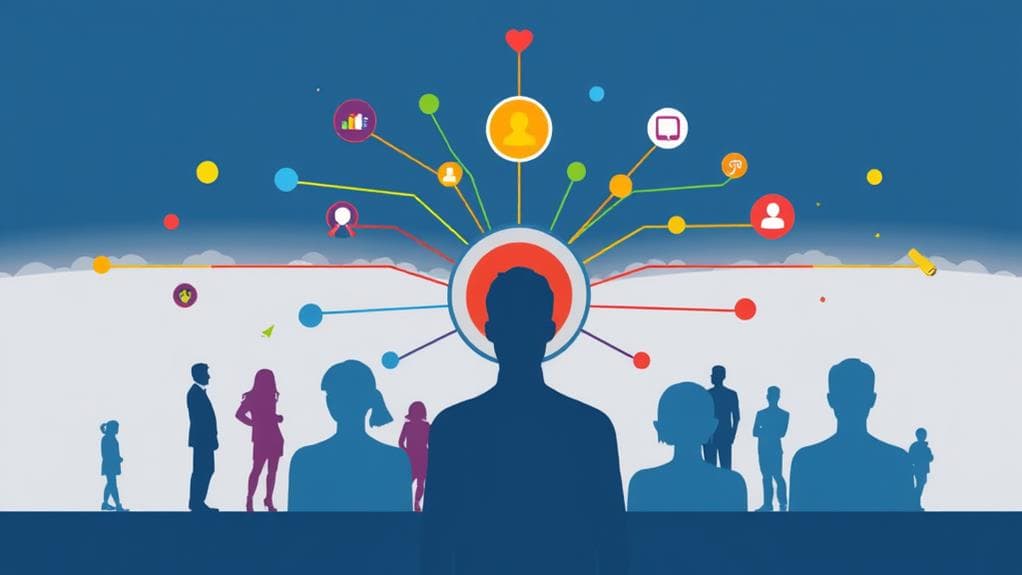
Through the lens of targeted marketing strategies, customer personas serve as critical catalysts for enhancing engagement. By developing detailed representations of your ideal customers, businesses can fine-tune their messages and content to resonate deeply with their audience, ultimately driving higher levels of interaction.
Understanding the nuances of persona segmentation allows marketers to focus their efforts precisely, thereby refining their outreach and maximizing engagement metrics.
To grasp the impact of customer personas on engagement, consider these key aspects:
- Relevance: Tailored content and offers align closely with the interests and needs of specific personas, fostering a stronger connection and encouraging consumer action.
- Emotional Resonance: Personas provide insight into the emotional drivers behind customer behavior. By addressing these drivers, brands cultivate loyalty and encourage ongoing interaction with their messaging.
- User Experience Optimization: Understanding personas enables companies to create seamless experiences across various channels. A coherent approach not only captures attention but also sustains a relationship, essential for ongoing engagement.
As marketers explore deeper into the art of persona development, they establish a framework that transforms abstract data into actionable strategies.
This alignment of communication with consumer identity allows brands to engage authentically and meaningfully. Ultimately, the mastery of customer personas not only bolsters engagement metrics but positions businesses as leaders in their respective markets, fulfilling the promise of personalized marketing in a dynamic digital landscape.
Researching Your Target Audience
Understanding your target audience is fundamental to the success of any marketing strategy. At its core, effective marketing hinges on a deep, nuanced understanding of who your prospects are and what drives them. This is where market research and audience segmentation come into play. These techniques are not mere formalities; they are essential frameworks that empower marketers to segment their audience into distinct groups, each with unique preferences and behaviors.
Market research cultivates insights that inform your approach. Surveys, interviews, and data analysis reveal critical demographics, psychographics, and behavioral trends. By leveraging these findings, businesses can create tailored messaging that resonates with each segment, fostering a more profound connection and prompting engagement.
Effective audience segmentation goes beyond basic demographics; it dives into the desires, pain points, and aspirations of your potential customers.
Moreover, understanding the diversity within your audience allows your marketing efforts to be both precise and inclusive. By ensuring that every communication reflects the values and needs of specific segments, you liberate the potential for conversion and loyalty. It's about creating freedom of choice for consumers, allowing them to see themselves reflected in your brand.
Ultimately, the process of researching your target audience is not just an analytical exercise; it's a pathway to empowerment, enabling marketers to meet, and exceed, the expectations of diverse consumer groups. In an age where personalized experiences are paramount, embracing these practices is not just wise—it's essential for thriving in a competitive landscape.
Components of Effective Customer Personas

To construct effective customer personas, it is crucial to incorporate essential demographic information alongside a detailed analysis of behavioral patterns.
Demographics provide foundational insights into the characteristics of your target audience, while behavioral patterns reveal how these individuals interact with products and services.
Together, these components create a thorough understanding of customer motivations, enabling marketers to tailor strategies that resonate deeply with their audience.
Demographic Information Essentials
A thorough grasp of demographic information is essential for crafting effective customer personas that resonate with target audiences. This information provides the foundation necessary for marketers to tailor their strategies to meet the unique needs of various segments.
Key elements in demographic profiling include:
- Age Groups: Understanding age demographics can shape your messaging and product offerings to align with the preferences of different generations.
- Income Levels: Income influences purchasing power and consumption patterns, allowing for more targeted marketing strategies that enhance customer engagement.
- Geographic Location: Geographic data helps identify regional preferences and cultural influences that can greatly affect buying behavior and lifestyle choices.
In addition to these core components, incorporating education background, marital status, occupation types, and cultural influences further enriches the persona profiles.
This multidimensional approach enables marketers to develop insights into potential customers' motivations and barriers. Ultimately, a thorough understanding of demographic information empowers businesses to communicate effectively, forging deeper connections with their audience and providing them the freedom to explore tailored solutions.
When leveraged properly, demographic data becomes a powerful tool in the strategist's arsenal, fostering customer loyalty and driving growth.
Behavioral Patterns Analysis
Demographic information lays the groundwork for building customer personas, but capturing the nuances of behavioral patterns proves equally pivotal for effective marketing strategies.
Behavioral segmentation allows marketers to categorize customers based on their purchasing habits, engagement triggers, and emotional drivers, illuminating the depth of consumer motivations that underlie their decisions.
Understanding these behavioral patterns enhances the user experience, aligning marketing efforts with the unique demands of various lifestyle influences.
For instance, feedback analysis on past campaigns reveals which strategies foster brand loyalty and which fall short. This insight is invaluable in refining the decision-making process, enabling businesses to tailor their approaches to resonate deeply with their audience.
Furthermore, acknowledging how different demographics react to behavioral influences can also guide product development and messaging, ensuring relevance and connection.
By leveraging this knowledge, marketers can foster relationships built on trust and understanding, ultimately driving conversions and encouraging long-term customer commitment.
In a world where individuals crave authentic connections, integrating behavioral patterns into customer personas is not merely advantageous but essential for cultivating a loyal customer base and achieving sustainable growth.
Creating Customer Personas Step by Step
Creating effective customer personas begins with meticulous research and analysis, as understanding the nuances of your target audience is essential for aligning marketing efforts with their needs.
The process of creating impactful customer personas can be distilled into three fundamental steps:
1. Data Collection: Utilize a combination of qualitative and quantitative research methods to gather insights on your target demographics. Surveys, interviews, and web analytics can provide a thorough view of customer behaviors, preferences, and pain points.
2. Persona Visualization Techniques: Once data is collected, employ persona visualization techniques to transform raw information into rich narratives. This involves crafting detailed profiles that encapsulate demographics, interests, motivations, and challenges.
Visual aids, such as infographics or mood boards, can enhance understanding and foster empathy within the marketing team.
3. Persona Validation Methods: Finally, validate your personas through ongoing feedback and testing. Engage with existing customers to confirm the personas reflect authentic experiences and perspectives.
A/B testing different marketing messages based on these personas can provide further insights into their accuracy and effectiveness.
Implementing Personas in Marketing Strategy

Implementing customer personas effectively within a marketing strategy can greatly enhance the relevance and impact of campaigns. By employing persona segmentation strategies, marketers can tailor their messaging, product offerings, and engagement tactics to specific audience segments, ensuring that each campaign resonates more deeply with its intended recipients.
This strategic alignment creates a more personalized experience, facilitating stronger connections between brands and their customers.
To successfully implement these personas, it is essential to utilize persona validation techniques. These techniques involve gathering feedback and analyzing customer interactions to refine and corroborate the personas initially created.
By continuously testing and validating these personas against real-world behavior, businesses can adapt their strategies promptly to reflect the evolving needs and desires of their audience.
Furthermore, leveraging technology and data analytics in persona implementation can greatly enhance campaign precision. Advanced tools enable real-time tracking of customer responses, allowing marketers to pivot and optimize their strategies based on actionable insights.
This agile approach not only improves campaign performance but also fosters an environment of freedom, where creativity can thrive within a data-driven framework.
Ultimately, implementing customer personas is more than a tactical adjustment; it is a fundamental shift towards understanding and prioritizing the customer's voice.
When done correctly, this approach empowers brands to create more effective, engaging marketing strategies that resonate profoundly, driving customer loyalty and enhancing overall brand equity.
Measuring Persona Effectiveness
Measuring the effectiveness of customer personas is essential for marketers aiming to refine their strategies and optimize campaign outcomes. By conducting an effectiveness evaluation, marketers can assess how well their personas resonate with target audiences and drive engagement. This process is crucial for ensuring that business objectives are met and that resources are allocated efficiently.
To effectively measure the success of customer personas, consider the following persona metrics:
- Engagement Rates: Analyzing how often the target persona interacts with marketing content provides insights into the resonance of the messaging. High engagement rates indicate that the persona is accurately defined and targets the right audience.
- Conversion Rates: Monitoring the percentage of persona-targeted visitors who complete desired actions (such as purchases or sign-ups) helps evaluate the efficacy of marketing strategies tailored to specific personas. Strong conversion rates signal that the personas align well with actual consumer behavior.
- Customer Feedback: Soliciting and evaluating feedback from users fitting each persona can reveal strengths and weaknesses in the persona definitions themselves. This qualitative data enriches the persona framework, reinforcing or recalibrating assumptions as necessary.
Ultimately, tracking these metrics enables a systematic approach to understanding persona effectiveness. As marketers gain insights from metrics and evaluations, they can make informed adjustments to enhance resonance and engagement, thereby harnessing the full potential of their customer personas in driving successful outcomes.
Common Mistakes to Avoid

A robust understanding of customer personas is crucial for effective marketing, yet many marketers inadvertently fall into common pitfalls that undermine their potential. One prevalent error is the misunderstanding of personas themselves. Marketers may develop personas based on assumptions rather than genuine insights gathered from research. This leads to the creation of vague or inaccurate representations of customers, which can result in misguided strategies and ultimately a disconnect from the target audience.
Another critical mistake is neglecting updates to existing personas. Markets evolve, consumer behaviors shift, and new trends emerge; therefore, a static persona quickly becomes obsolete. Failing to revisit and refine these personas can mean missing out on fresh opportunities to engage and resonate with customers, eroding the effectiveness of marketing efforts.
Additionally, some marketers become overly reliant on a single persona, treating it as a monolithic guide. However, the complexity of customer motivations and behaviors often necessitates a more nuanced approach, involving multiple personas to account for varied segments within the target audience.
To prevent these pitfalls, it is essential to commit to continuous research, gathering real-time data to guarantee personas remain relevant and accurately reflect the dynamic marketplace.
By actively engaging in persona updates and avoiding the trap of misunderstanding personas, marketers can enhance their strategies, enabling them to forge deeper connections with customers and drive meaningful results.
With these insights in mind, organizations can leverage the full potential of customer personas in crafting successful marketing initiatives.
Frequently Asked Questions
How Often Should Customer Personas Be Updated?
Customer personas should be updated regularly throughout their persona lifecycle to guarantee they remain relevant and effective.
This process should be informed by ongoing data analysis, which identifies shifts in consumer behavior and preferences. An annual review is a baseline recommendation, but more frequent updates may be warranted in fast-paced industries.
Can Customer Personas Help in Product Development?
Customer personas are integral to product development as they provide a detailed understanding of the target audience.
By leveraging these personas, businesses can gather user feedback more effectively, ensuring that products align with consumer needs and preferences.
This strategic approach fosters innovation, as it allows organizations to anticipate demands and refine offerings accordingly.
Ultimately, utilizing customer personas enables companies to enhance their product development process, leading to solutions that resonate with their intended market.
What Tools Assist in Creating Accurate Customer Personas?
Creating accurate customer personas necessitates various tools including survey tools for quantitative insights and user interviews for qualitative data.
Demographic analysis and behavioral segmentation enhance persona accuracy by identifying relevant traits and habits.
Utilizing persona templates streamlines the process, while data visualization aids in interpreting complex information.
Additionally, market research guarantees alignment with industry trends, and empathy mapping fosters a deeper understanding of customer needs, ultimately producing well-rounded and actionable personas.
Are Customer Personas Applicable to B2B Marketing?
"Know thy customer," an adage that holds true across markets. Customer personas are indeed applicable to B2B marketing, albeit with distinct differences from B2C personas.
B2B persona differences often hinge on organizational roles and decision-making processes. Effective persona development relies on diverse persona data sources, including customer interviews, market research, and digital analytics.
How Many Personas Should a Business Develop?
The ideal number of customer personas a business should develop hinges on thorough demographic segmentation and behavior analysis.
Typically, organizations benefit from creating three to five distinct personas, as this range allows for nuanced understanding without overwhelming complexity.
Each persona should reflect key audience segments, encompassing their motivations and pain points.
A judiciously crafted persona framework empowers businesses to tailor strategies, fostering deeper connections and driving engagement effectively across diverse market segments.
Conclusion
The strategic significance of customer personas within marketing frameworks cannot be overstated. By synthesizing nuanced insights into target audiences, businesses can cultivate customized campaigns that resonate with specific segments. Additionally, the continuous calibration of these personas enhances engagement and effectiveness. Ultimately, the deliberate development and deployment of detailed customer personas are indispensable in driving digital dialogue, maximizing market momentum, and fostering meaningful relationships that yield sustained success in competitive landscapes.