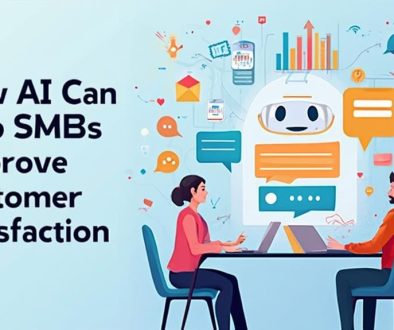
How AI Is Transforming the SMB Landscape
AI is transforming the SMB landscape by driving operational efficiency and enhancing customer engagement. Through automation, repetitive tasks are streamlined, allowing employees to focus on strategic priorities. AI-powered tools facilitate data analysis, offering actionable insights that improve decision-making and forecasting. Personalization in marketing strategies fosters deeper customer connections, while AI-enhanced support systems enable tailored interactions. Additionally, scalable solutions empower SMBs to adapt to changing market demands without significant investment. As businesses adopt AI technologies, they gain a competitive advantage that shapes their future. Discover the emerging trends and the potential challenges that accompany this technological evolution.
Key Takeaways
- AI enhances operational efficiency for SMBs by automating repetitive tasks and optimizing workflows, leading to increased productivity and resource management.
- Personalized marketing strategies powered by AI deepen customer engagement, creating meaningful interactions that drive retention and loyalty.
- AI-powered customer support systems, like chatbots, provide immediate assistance and personalize engagements based on customer needs, improving overall service quality.
- Predictive analytics within AI tools enable SMBs to anticipate market trends and customer behaviors, allowing for data-driven decision-making and agile responses to changes.
- Collaborations with AI firms foster innovation, giving SMBs access to cutting-edge technologies and resources for developing unique products and services.
Benefits of AI for SMBs

Artificial Intelligence (AI) is increasingly becoming a cornerstone of operational efficiency and competitive advantage for small and medium-sized businesses (SMBs). By leveraging AI, these enterprises can create personalized experiences that resonate with consumers, fostering stronger relationships and driving customer retention. The data-driven insights generated by AI facilitate improved decision-making processes, empowering SMBs to pivot and adapt in a competitive marketplace.
Moreover, AI contributes considerably to workforce augmentation, enabling human employees to focus on more complex tasks while machines handle repetitive duties. This symbiotic relationship leads to streamlined processes and increased productivity—a critical aspect for SMBs aiming for growth.
In a world where innovation is paramount, AI offers innovative solutions that can elevate business models, foster enhanced creativity, and allow companies to differentiate themselves within their niches. The scalability potential of AI is particularly attractive for SMBs; as market demand fluctuates, AI systems can easily adjust operations, ensuring that resources are allocated efficiently.
Additionally, effective risk management becomes feasible as AI analyzes vast datasets to identify potential threats and opportunities, allowing SMBs to stay ahead of industry shifts. Incorporating AI not only aligns with current technological advancements but also equips SMBs with the tools necessary to thrive amidst challenges.
The combination of operational efficiency, competitive advantage, and innovative problem-solving positions businesses to harness the full potential of AI, ultimately leading to sustainable growth and success in the years to come.
AI in Marketing Strategy
In the swiftly changing landscape of digital marketing, integrating AI into marketing strategies has become essential for SMBs seeking to enhance customer engagement and maximize their outreach efforts. By leveraging AI technologies, small-to-medium businesses can not only understand their customers better but also anticipate their needs through data-driven decision-making.
One of the most potent applications of AI in marketing lies in personalization strategies. Tailoring messages and offers based on individual customer behavior and preferences allows SMBs to create meaningful interactions that foster brand loyalty. AI algorithms can analyze vast datasets to determine which products are most relevant to specific segments, enabling businesses to direct their marketing efforts with unprecedented precision.
Furthermore, AI contributes considerably to content optimization. By analyzing engagement metrics and user interactions, AI systems can provide insights on how to refine content to resonate more effectively with audiences. This can include determining ideal posting times, identifying trending topics, and suggesting adjustments to tone or format. In doing so, SMBs can guarantee their marketing content not only attracts attention but also retains it.
As the digital marketplace evolves, the integration of AI into marketing strategies represents a powerful avenue for SMBs to achieve a competitive edge. By embracing these innovative technologies, businesses can transform data into actionable insights, positioning themselves to adapt quickly in a dynamic environment while ultimately enhancing their relationship with customers.
Therefore, AI not only streamlines efforts but also empowers SMBs to engage with their audiences more authentically and effectively.
Enhancing Customer Support With AI

Customer support is undergoing a considerable transformation thanks to the adoption of AI technologies, fundamentally reshaping the way small-to-medium businesses (SMBs) interact with their clients. Central to this evolution is the implementation of AI chatbots, which facilitate immediate and efficient engagement. These automated responses not only enhance accessibility but also allow for real-time assistance, ensuring that customer queries are addressed promptly.
Furthermore, AI enhances the quality of personalized interactions, allowing businesses to tailor their support strategies based on individual customer needs and preferences. Through advanced sentiment analysis, SMBs can gauge customer emotions and adjust their responses accordingly, leading to a more empathetic service experience. This level of customization empowers companies to build stronger relationships with their clients, fostering loyalty and trust.
Customer feedback mechanisms are also elevated through AI, where data collection becomes streamlined, enabling companies to gain actionable insights. By leveraging predictive support techniques, SMBs can anticipate customer needs, thereby optimizing service offer and proactively addressing potential issues before they escalate.
The integration of AI into customer support not only drives service optimization but also considerably elevates the overall customer experience. As SMBs embrace these technologies, they position themselves to adapt swiftly to market demands, ensuring that they maintain an edge in a competitive landscape.
In this way, AI not only supports but enhances the authenticity of customer engagement, ultimately paving the way for profound business growth and customer satisfaction.
Operational Efficiency Through Automation
Operational efficiency has become a central objective for small-to-medium businesses (SMBs) aiming to thrive in an increasingly competitive market. The integration of artificial intelligence (AI) into operational workflows allows these businesses to enhance workflow optimization, streamline processes, and achieve significant improvements in employee productivity.
By automating routine tasks and employing decision automation systems, SMBs can enhance time management and resource allocation, allowing staff to focus on core competencies and strategic initiatives rather than mundane responsibilities.
Task delegation becomes more sophisticated through AI applications that assess workload distribution and team capabilities, guaranteeing that efforts are aligned with business objectives. Automated systems facilitate process standardization, promoting consistency across departments and reducing human error. This not only leads to greater reliability in operations but also frees up valuable time that can be redirected toward innovation and growth.
Moreover, system integration guarantees that different technological platforms can communicate effectively, creating a seamless flow of information. This interconnectedness reinforces the effectiveness of task delegation and enhances overall operational agility.
Data Analysis and Insights
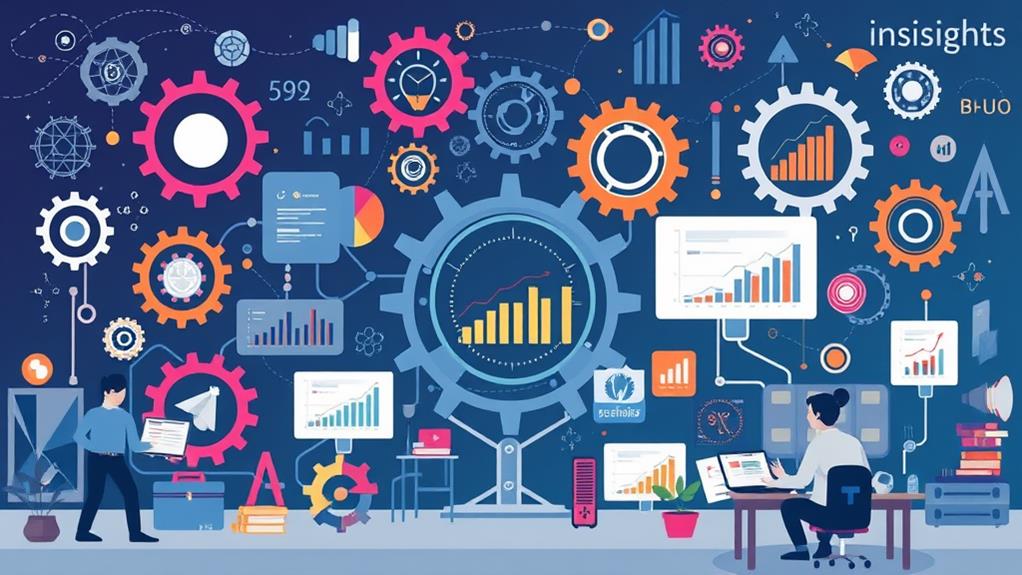
Harnessing the power of data analysis and insights has become pivotal for small-to-medium businesses (SMBs) seeking to navigate the complexities of today’s market landscape. With the advent of AI technologies, SMBs can now leverage predictive analytics to forecast business outcomes with remarkable accuracy, enhancing decision support processes. This empowers entrepreneurs to make informed choices, staying agile and responsive to shifts in consumer behavior.
Data visualization tools contribute considerably to this transformation, allowing businesses to present complex data in intuitive formats that facilitate easier interpretation. With real-time reporting capabilities, SMBs can track performance metrics and key performance indicators (KPIs) almost instantaneously, ensuring that they are equipped to address emerging opportunities and challenges promptly.
Furthermore, trend identification becomes more accessible through AI-powered analytics, enabling SMBs to uncover patterns that may have otherwise remained hidden. This insight fosters not only operational efficiency but also strategic positioning within competitive markets.
Data democratization is another critical development, ensuring that valuable insights are available across organizational levels, fostering a culture of informed decision-making. By empowering all employees with access to business intelligence, SMBs can cultivate a workforce that is not only data-literate but also motivated to contribute to the organization’s success.
AI-Powered Financial Management
Financial management is undergoing a profound transformation, driven by the integration of AI technologies that revolutionize how small-to-medium businesses (SMBs) approach their fiscal responsibilities. By leveraging advanced analytics and machine learning algorithms, SMBs can considerably enhance budget forecasting, allowing for more accurate predictions of future financial performance. This foresight empowers businesses to allocate resources efficiently, paving the way for greater financial stability.
Expense tracking has also seen remarkable improvement through AI, as automated systems can now categorize and scrutinize expenditures in real-time. This not only streamlines operations but also minimizes human error, ensuring that businesses maintain clearer visibility over their financial health.
Coupled with enhanced cash flow management solutions, AI aids in timely decision-making, enabling SMBs to seize opportunities as they arise. Financial reporting has become more dynamic with AI-driven insights, providing businesses a panoramic view of their operations and enabling better strategic planning.
In addition, risk assessment capabilities have advanced, allowing organizations to identify potential threats and mitigate them proactively. AI also plays a vital role in investment analysis, equipping businesses with predictive tools to evaluate their growth prospects accurately.
In an era where compliance management is paramount, AI simplifies regulatory adherence, ensuring that SMBs meet necessary legal obligations with greater ease.
Challenges and Considerations
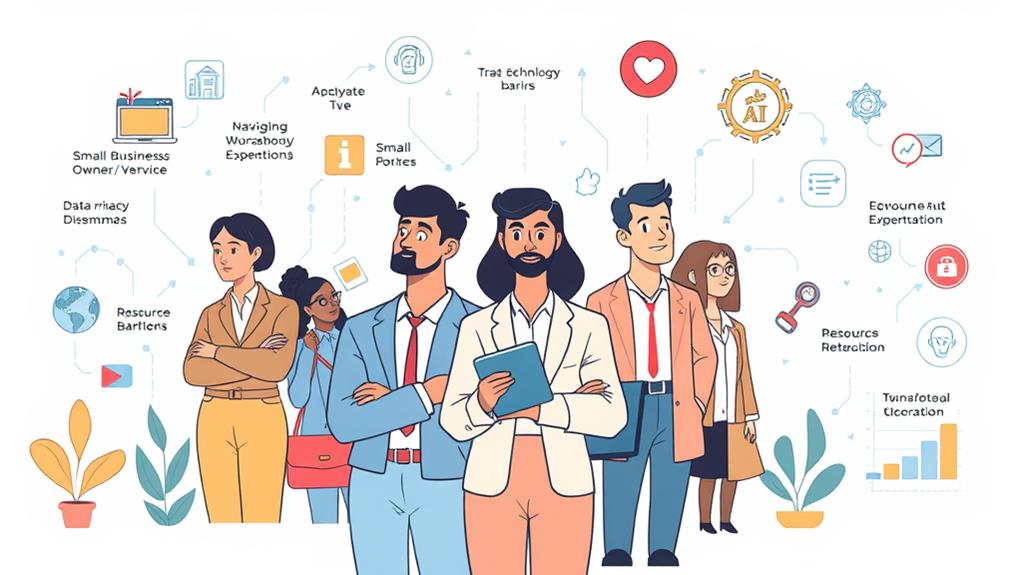
As SMBs increasingly adopt AI solutions, they face significant challenges that warrant careful consideration.
Data privacy concerns, integration complexity issues, and the need for effective cost and resource allocation not only impact the implementation of these technologies but also influence their overall success.
Addressing these challenges is essential for leveraging AI’s potential while ensuring organizational resilience and compliance.
Data Privacy Concerns
In today’s rapidly evolving digital landscape, small and medium-sized businesses (SMBs) are increasingly leveraging artificial intelligence to enhance operations and customer engagement. However, this technological advancement brings forth significant data privacy concerns that require careful consideration.
Effective data protection strategies must be developed, focusing on compliance frameworks that align with regional regulations such as GDPR or CCPA. User consent management is essential, ensuring customers are aware of how their data is being utilized.
Ethical AI practices mandate transparency measures, building trust and accountability. Additionally, organizations should prioritize privacy by design, embedding data protection into the very architecture of their systems. Employing data anonymization techniques can further safeguard personal information while still allowing for valuable insights.
To mitigate the risks of potential data breaches, SMBs must engage in routine security audits and utilize risk assessment tools to identify vulnerabilities in their infrastructure. By instilling robust data breach mitigation protocols, businesses can protect themselves while fostering customer confidence.
As they navigate these challenges, the commitment to transparency and ethical standards in AI will be pivotal in maintaining a competitive edge in today’s marketplace.
Integration Complexity Issues
Amid the promising benefits of integrating artificial intelligence into their operations, small and medium-sized businesses (SMBs) often encounter significant integration complexity issues. These challenges, often referred to as integration hurdles, stem primarily from the diverse array of existing software systems that SMBs utilize. Compatibility between newly implemented AI solutions and legacy systems can pose formidable obstacles, as businesses must navigate varying interfaces, data protocols, and operational frameworks.
Furthermore, the absence of standardized software compatibility protocols exacerbates these difficulties, leading to potential disruptions in workflow and productivity. SMBs may find themselves entangled in complex negotiations with multiple vendors, resulting in delays that can hinder their AI deployment timeline.
In some instances, businesses may need to resort to custom coding or third-party solutions to guarantee seamless data exchange, which can divert valuable resources from core operations.
To facilitate a successful AI integration, SMBs must prioritize evaluating their current technology stack and identifying potential compatibility issues. Emphasizing strategic planning and thorough testing will enable these enterprises to overcome integration complexity, ultimately positioning themselves to harness the full potential of AI innovations in enhancing their operational efficiencies.
Cost and Resource Allocation
The complexities of integrating AI into existing systems are not solely technical; they also bring significant financial implications for small and medium-sized businesses (SMBs). A critical concern for SMBs is budget optimization, especially when it comes to investment allocation for AI initiatives.
Effective financial planning becomes essential, as leaders must analyze resource management strategies that align with their operational goals.
Expense tracking plays a pivotal role in understanding the immediate costs associated with AI adoption. Companies must consider cost forecasting to predict future expenditures that a sophisticated system might entail.
Furthermore, optimizing workforce distribution guarantees that the right skills are aligned with AI functionalities, enhancing overall resource utilization.
SMBs need to be strategic about their procurement strategies, focusing on tools and technologies that not only fit their current needs but also have scalability in mind.
Operational budgeting must be agile, enabling companies to adapt to unforeseen challenges that arise when integrating AI.
Future Trends in AI and SMBs
As artificial intelligence continues to evolve, small and medium-sized businesses (SMBs) are poised to embrace a range of transformative trends that will redefine their operational frameworks and competitive strategies.
The future landscape of AI adoption presents SMBs with opportunities to leverage advanced technologies for enhanced productivity and growth.
Key trends that are shaping the future of AI and SMBs include:
- Predictive Analytics: Utilizing data to anticipate market trends and customer behaviors, enabling smarter decision-making.
- Personalized Experiences: Tailoring services and products to individual customer preferences using machine learning algorithms for better customer segmentation.
- Workforce Augmentation: Enhancing human capabilities with AI tools, hence allowing teams to focus on strategic tasks rather than routine activities.
- AI Ethics: Addressing ethical considerations in AI deployment, ensuring that technology adoption reflects values of fairness and transparency.
These trends signify a shift towards not only adopting scalable solutions but also fostering AI partnerships that empower SMBs to innovate.
As they deploy machine learning and analytics, businesses can gather actionable insights and craft personalized experiences that resonate with their customer base.
However, with these advancements, it is essential for SMBs to embrace AI ethics, ensuring that their strategies foster responsibility and trust.
Frequently Asked Questions
What Is the Cost of Implementing AI for Smbs?
The cost of implementing AI for small and medium-sized businesses (SMBs) involves several factors including initial investment, ongoing maintenance, and training costs.
Integration hurdles can complicate deployment, while scalability challenges may arise as needs grow.
A thorough ROI assessment is essential to guarantee that the benefits justify expenditures.
How Can SMBS Choose the Right AI Tools?
Research indicates that 70% of small to medium businesses (SMBs) report challenges in selecting appropriate AI tools.
To navigate AI tool selection effectively, SMBs should first assess their specific operational needs and objectives. Prioritizing tools that align with these needs not only enhances productivity but also guarantees seamless integration.
Additionally, engaging with user reviews and conducting trials can provide valuable insights, enabling informed decisions that empower SMBs to harness AI for their unique aspirations.
Are There Specific Industries That Benefit Most From Ai?
Certain industries stand to gain considerably from AI implementation.
In healthcare, AI enhances healthcare improvements through predictive analytics and personalized care.
Retail analytics benefit from consumer behavior insights, boosting sales.
Manufacturing efficiency is achieved via automation and predictive maintenance.
Financial forecasting becomes more accurate, enabling better investment decisions.
Marketing automation enhances targeted campaigns, while AI-driven customer service guarantees responsive support, enhancing overall customer experiences and fostering loyalty across various sectors.
What Skills Do Employees Need to Work With Ai?
In a world where machines might soon demand our coffee orders, employees must arm themselves with essential skills to navigate the AI frontier.
AI literacy and data analysis form the foundation, complemented by technical training for effective tool usage.
Furthermore, critical thinking and collaboration skills are imperative for deciphering insights from algorithms.
How Can SMBS Ensure Data Privacy With AI Use?
To guarantee data privacy with AI use, SMBs must implement robust data encryption practices and address ethical considerations in their operations.
This involves adopting advanced encryption techniques to safeguard sensitive information against unauthorized access.
In addition, establishing clear data handling policies that reflect ethical standards can help build trust with clients and partners.
Regular training sessions for employees on data privacy principles will also enhance awareness and foster a culture of responsibility regarding data protection.
Conclusion
In summary, the integration of artificial intelligence within small and medium-sized businesses represents a pivotal evolution in operational capabilities and competitive advantage. As AI technologies continue to advance, their transformative potential becomes increasingly evident, propelling efficiency and informed decision-making. However, the theory positing that AI adoption leads to inevitable success requires scrutiny, as the challenges of implementation and integration may overshadow the benefits. Therefore, a nuanced understanding of both opportunities and obstacles is essential for SMBs maneuvering this evolving landscape.