
AI as a Service for SMBs: Tools & How to Start
AI as a Service (AIaaS) is changing how small and medium-sized businesses compete — and the gap between enterprise capabilities and SMB reality is closing faster than most business owners realize. If your team is still making decisions based on gut instinct, handling repetitive tasks manually, or losing customers to faster competitors, AI as a service for SMBs is the most accessible path to fixing all three.
This guide breaks down what AIaaS actually means, which tools deliver the most impact, and how to build an adoption strategy that works for lean teams with real budget constraints.
Key Takeaways
- AIaaS gives SMBs access to machine learning, predictive analytics, and generative AI through subscription or pay-as-you-go models — no in-house infrastructure required
- 71% of SMB IT decision-makers say AI will rank among their top five business priorities in 2026, and 91% of SMBs already using AI report revenue increases
- The highest-ROI entry points for SMBs are task automation, intelligent customer support, and data-driven decision-making
- AI agents represent the next wave of SMB adoption — shifting from prompt-based tools to autonomous systems that execute multi-step workflows
- Successful adoption requires incremental wins, continuous enablement, and clean data — not a full-scale overhaul
What AI as a Service Actually Means for SMBs
Most discussions about AI for business bury the lead. Before evaluating any tool, it helps to understand the model itself — because AIaaS is fundamentally different from buying standalone software.
AI as a Service (AIaaS) refers to cloud-delivered AI capabilities — natural language processing (NLP), computer vision, predictive analytics, generative content, and AI agents — provided through subscription or consumption-based pricing by third-party platforms. Instead of building models in-house, training them on your own data, or managing the underlying infrastructure, your business accesses pre-built AI capabilities through APIs, dashboards, or embedded product features.
The contrast with traditional software is significant. When you buy a CRM or accounting platform, you’re buying a fixed set of features. When you access AIaaS, you’re subscribing to adaptive intelligence — tools that learn from data, generate new outputs, and increasingly take autonomous actions. The most widely used examples include Microsoft Copilot embedded in Microsoft 365, Amazon Bedrock for generative AI applications, and OTRS AI Services for IT service management.
For SMBs specifically, this model addresses the two problems that historically made AI inaccessible:
- Capital cost — No servers to provision, no infrastructure to maintain, and no upfront licensing fees in the hundreds of thousands
- Technical complexity — No data scientists or machine learning engineers required; just a subscription and a clear sense of where AI solves a real problem
You pay for what you use, access capabilities that were previously enterprise-only, and scale up or down without renegotiating a software contract. That’s the practical value of AIaaS for businesses running lean.
SMB AI Adoption in 2026

The data on SMB AI adoption tells a story of urgency paired with caution — and both responses are rational.
According to Salesforce research, 91% of SMBs using AI report revenue increases — and new 2026 data on AI Agents Small Business ROI shows 67% of those deploying agents saw revenue jump 20% or more. Gartner data shows that SMBs now represent 44% of all business technology spending, signaling a market shift where smaller organizations are no longer passive technology consumers. Techaisle’s 2026 SMB AI predictions point to agentic AI, AI-embedded productivity tools, and automated customer experience as the three fastest-growing adoption categories among businesses with under 500 employees.
A 2025 survey — The State of SMB ITSM for 2026, based on responses from 1,051 executives and IT professionals across 11 countries — found that 71% of respondents believe AI in IT service management is critical for success and will rank among their top five priorities for 2026. Another 30% named the introduction of AI tools as their single most important IT priority for the coming year.
What’s holding businesses back? Budget constraints were cited by 19% of respondents as the primary barrier. Lack of in-house expertise came in at 17%. Notably, only 6% said limited use cases were a concern, and just 3% saw no value in AI at all. The problem isn’t skepticism — it’s practical access, which is why understanding Why 40% of AI agent projects fail is as important as knowing why others succeed.
The same study found that 56% of SMB leaders need user-friendly AI that’s intuitive, quick to implement, and capable of delivering fast results. This is the clearest possible signal: SMBs are ready for AI, but they need the right entry points.
Top prioritized use cases from the survey:
- Asset tracking and reporting — 35%
- Automation of repetitive tasks — 34%
- Trend analysis for decision-making — 33%
- Continuous process improvement — 32%
- Predicting and preventing IT incidents — 30%
AI Agents vs. AI Tools: The Next Step for SMBs

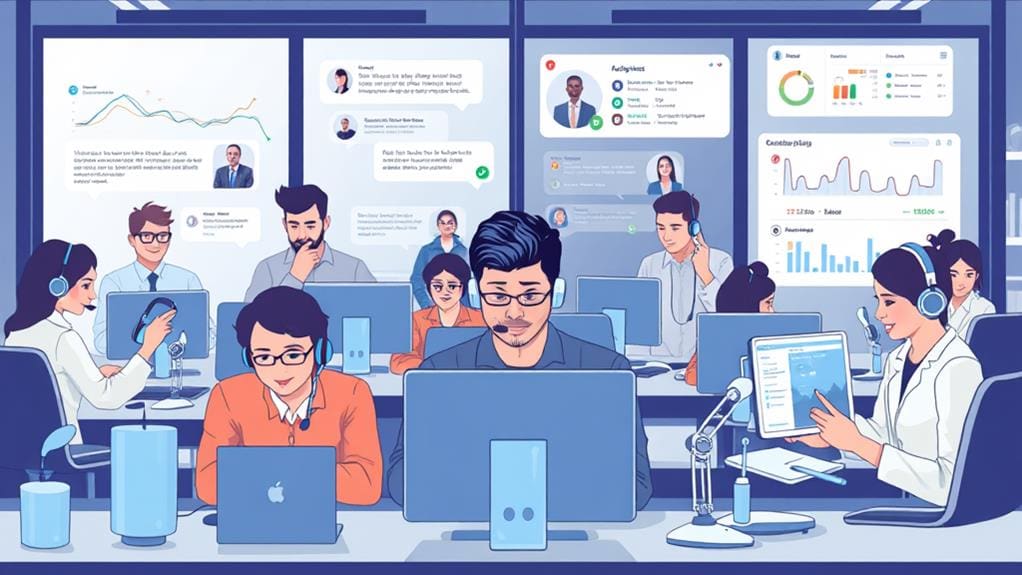
Most SMBs currently use AI tools — systems that respond when prompted. You ask a question, the tool generates an answer. You upload a document, the tool summarizes it. This is genuinely useful, but it represents only the first layer of AI capability.
Agentic AI — or AI agents — operates differently. Rather than waiting for a prompt, an AI agent pursues defined outcomes autonomously. It can execute multi-step workflows, maintain memory across sessions, use tools like calendars or databases, and make decisions within defined parameters. The shift from AI tools to AI agents is the single biggest operational change coming to SMBs over the next two years, supported by new research on AI Agents Small Business adoption showing the measurable revenue impact of making that transition.
Here are concrete examples of how AI agents are already being deployed in SMB contexts:
Autonomous sales follow-up agents — After an initial prospect interaction, an AI agent monitors engagement signals (email opens, page visits, demo requests), drafts personalized follow-up messages at optimal intervals, and escalates to a human sales rep only when a prospect meets defined qualification thresholds. A lean two-person sales team can manage a pipeline that previously required five.
HR scheduling agents — These agents handle interview coordination across multiple candidates and interviewers, send reminders, reschedule automatically when conflicts arise, and route completed feedback forms to the right decision-makers. Hours of administrative back-and-forth are compressed into minutes.
Accounts payable automation agents — An AP agent can receive invoices via email, extract line-item data using AI document processing, match invoices to purchase orders, flag discrepancies for human review, and initiate payment approvals — all without manual data entry. For SMBs processing dozens or hundreds of invoices monthly, this is a direct, measurable time and cost saving.
“The difference between an AI tool and an AI agent is the difference between a calculator and an employee. One waits for you. The other gets things done.” — Common framing among enterprise AI practitioners describing agentic workflows for SMB audiences.
The practical implication for SMBs is that the AI adoption roadmap should include not just which tools to deploy today, but how to position your organization to benefit from agentic workflows as the technology matures. Businesses that build clean data foundations, integrate AI tools with their core systems, and build internal AI literacy now will be ready to activate agents when the time comes — and research on Why 40% of AI agent projects fail makes clear that preparation is what separates winners from laggards.
The Highest-Impact AI Use Cases for SMBs Right Now

Knowing that AI is valuable is different from knowing where to start. These are the use cases where SMBs consistently see the fastest return.
Customer Support and Chatbots
AI-powered chatbots handle routine customer inquiries around the clock, route complex issues to human agents, and reduce average response times dramatically. For SMBs running lean support teams, this isn’t a luxury — it’s a force multiplier. Tools like Amazon Lex and Amazon Connect allow businesses to deploy conversational AI that integrates with existing websites, apps, and contact center systems without building custom infrastructure.
The key to making chatbots work is alignment with your brand voice and a clear escalation path. A bot that frustrates customers by failing to understand varied queries does more harm than good. Build in a feedback loop, monitor interactions regularly, and treat the bot as an evolving system rather than a one-time setup.
Automated Email Marketing and Personalization
AI-driven email marketing moves well beyond scheduled newsletters. Automated segmentation groups customers by behavior, purchase history, and demographics. Personalized sequences — welcome flows, abandoned cart reminders, win-back campaigns — run without manual intervention. Deliverability tools monitor authentication, list health, and sender reputation to keep messages out of spam folders.
The result is higher open rates, better conversion, and stronger retention — achieved without additional headcount. For SMBs competing against larger brands with bigger marketing budgets, AI-powered personalization closes the gap on customer experience.
Predictive Analytics and Data-Driven Decisions

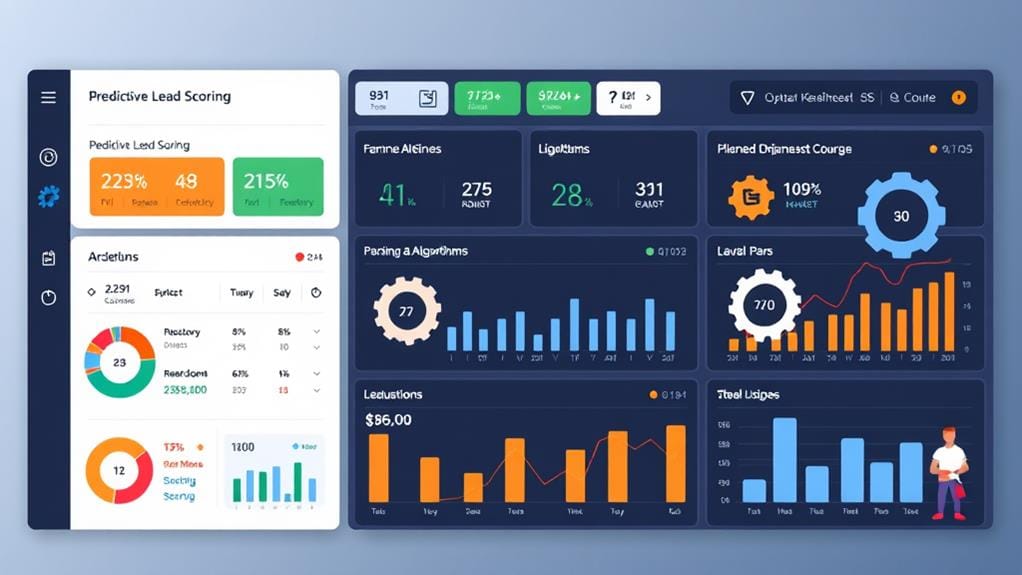
Most SMBs make critical decisions on incomplete information. AI-powered analytics tools change that by surfacing patterns in customer behavior, operational performance, and market trends that would otherwise go unnoticed.
Interactive dashboards give teams real-time visibility into performance metrics. Predictive models forecast demand, flag churn risk, and identify high-value prospects before a sales conversation even starts. Churn prediction algorithms provide customer segmentation insights that inform retention efforts, while revenue growth projections help SMBs plan with confidence rather than guesswork.
Platforms like Amazon Kendra provide AI-powered enterprise search, allowing employees to find relevant answers across internal knowledge bases instantly. Amazon Bedrock allows SMBs to build generative AI applications on top of foundation models — without managing the underlying infrastructure.
AI-Powered Content Generation and Social Media
Content creation is one of the highest-friction tasks for SMB marketing teams. AI content generation tools reduce the time required to produce blog posts, social media copy, product descriptions, and email campaigns — while maintaining a consistent brand voice.
On the social side, AI tools handle audience targeting, sentiment analysis, engagement tracking, trend monitoring, and hashtag optimization. Social listening capabilities monitor brand mentions and competitor discussions in real time. Influencer identification algorithms surface partners whose audiences align with your target customers. Visual content analysis tools help optimize image and video performance across platforms.
Predictive Lead Scoring
AI-powered lead scoring analyzes customer behavior, firmographic data, and CRM history to rank prospects by their likelihood to convert. This allows sales teams to focus their time where it matters most — on leads that are genuinely ready to buy.
Effective lead scoring integrates directly with your CRM, aligns marketing and sales around shared qualification criteria, and builds buyer personas that improve targeting over time. The upstream benefit is more accurate sales forecasting and a shorter, more efficient sales cycle.
Invoice and Expense Management
AI invoice management automates the generation, routing, and tracking of invoices. Receipt scanning and expense categorization eliminate manual data entry. Financial forecasting tools analyze spending patterns and surface budget variances before they become problems. For SMBs where the owner is still handling bookkeeping, automating these workflows reclaims hours every week — and reduces the risk of costly errors.
Inventory Management
Advanced AI inventory tools use historical sales data, market trend analysis, and seasonal demand patterns to optimize stock levels. Real-time visibility into inventory health helps SMBs avoid both stockouts and overproduction. Supply chain optimization features monitor supplier performance and flag potential delays before they affect customers. You can learn more about ai streamline operations and how these tools connect across business functions.
AIaaS Pricing Models: What SMBs Should Expect to Pay
Cost is the number one barrier to AI adoption for SMBs — which makes understanding pricing structures a practical priority before committing to any platform. The table below outlines the three primary models and typical monthly cost ranges by business size.
| Pricing Model | How It Works | Micro (1–10 Employees) | Small (11–50 Employees) | Medium (51–249 Employees) |
|---|---|---|---|---|
| Per-Seat SaaS | Fixed monthly fee per user (e.g., Microsoft 365 Copilot) | $30–$150/month | $300–$1,500/month | $1,500–$7,500/month |
| Consumption-Based | Pay only for what you use — API calls, tokens, documents processed (e.g., AWS services) | $20–$200/month | $100–$800/month | $500–$5,000/month |
| Managed AI Services | MSP or partner bundles AI implementation + ongoing support into a service agreement | $500–$1,500/month | $1,000–$4,000/month | $3,000–$12,000/month |
The right model depends on your use case and how predictably you’ll use the tool:
- Consumption-based pricing suits businesses that are testing or have variable workflows
- Per-seat SaaS works well when you want predictable costs and broad team access
- Managed AI services deliver the most value for SMBs that lack internal IT capacity and want guided implementation — not just a license
A practical starting point: many SMBs already have access to AI capabilities inside tools they’re currently paying for. Microsoft 365 Copilot Chat is included with many existing M365 subscriptions. Amazon Bedrock offers a free demo for SMBs exploring generative AI. Starting with what you already have eliminates incremental cost and builds early confidence.
Building Your SMB AI Roadmap: A Practical Approach

The research and practitioner experience both point to the same conclusion: start small, prove value quickly, and build from there. Large-scale AI overhauls are unnecessary for most SMBs — and often counterproductive.
Stage 1 — Assess your starting point. Before selecting any tool, conduct an honest review of your data quality, existing systems, and the two or three workflows that create the most friction. AI is only as good as the data it operates on. If your CRM has duplicate records and inconsistent fields, that problem needs to be addressed before you connect an AI tool to it.
Stage 2 — Deploy quick wins. Choose one or two low-complexity, high-impact applications that can deliver measurable results within 30 to 90 days — and consider how How Microsoft’s 4 New AI models are reshaping SMB workflows with tools many teams already have access to. This could be activating Copilot Chat in an existing Microsoft 365 subscription, setting up automated email sequences, or deploying a customer service chatbot. Early wins build internal confidence and justify further investment.
Stage 3 — Invest in continuous enablement. One training session is not enough. The most effective SMB AI adoptions involve ongoing peer learning, accountability check-ins, and shared success stories. In documented cases from managed AI service providers, employees who showed no engagement after initial training became the highest users in their organization after follow-up sessions where colleagues shared practical applications. The human side of adoption matters as much as the technology.
Stage 4 — Expand and integrate. Once initial tools are embedded in daily workflows, connect them to your core business data for deeper personalization and insight. Begin exploring AI agents for multi-step process automation. Set baseline metrics before launching each new initiative so you can measure ROI clearly.
Security, Data Privacy, and Responsible AI Use

One of the most common and underappreciated risks in SMB AI adoption is employees using free, public AI tools to process sensitive business data. Uploading client contracts, HR documents, or financial records to a consumer chatbot creates real compliance and data security exposure.
Enterprise-grade AIaaS platforms address this problem by operating within governed, secure environments. Microsoft Copilot keeps data inside your organization’s Microsoft 365 environment — the same space that already contains your email, SharePoint files, and OneDrive documents. AWS AI services operate within AWS’s compliance-certified infrastructure.
SMBs should:
- Establish clear policies about which AI tools are approved for work use
- Train employees on the difference between enterprise tools and personal AI applications
- Build governance into their AI strategy from the start, including role-based access controls and audit logs
- Review regularly how AI-generated outputs are being used in customer-facing contexts
Frequently Asked Questions
What Is AI as a Service and How Does It Differ From Traditional Software?
AIaaS provides cloud-based AI capabilities — including machine learning, NLP, computer vision, and generative AI — through subscription or pay-per-use pricing. Unlike traditional software with fixed features, AIaaS tools adapt based on data and can take autonomous actions. You access the capability without building or maintaining the underlying infrastructure.
How Much Does AI as a Service Cost for a Small Business?
Costs vary widely based on the pricing model and usage. Micro businesses (1–10 employees) can access meaningful AI capabilities for $20–$200 per month on consumption-based platforms, or $30–$150 per month on per-seat SaaS tools. Many SMBs already have access to AI through existing Microsoft 365 or Google Workspace subscriptions at no additional cost.
What AI Tools Should an SMB Implement First?
Start with tools that address high-friction, repetitive tasks — automated email marketing, customer service chatbots, or AI-powered document processing. If your team uses Microsoft 365, activating Copilot Chat is a zero-additional-cost starting point. Prioritize tools that integrate with your existing systems rather than adding isolated new platforms.
How Do SMBs Measure the ROI of AI Tools?
Set baselines before deployment, then track specific metrics: hours saved on target tasks, error rates before and after automation, customer satisfaction scores, lead conversion rates, and employee adoption rates. Businesses that skip baseline measurement often can’t make the case for continued investment or expansion.
What Is the Difference Between AI Tools and AI Agents?
AI tools respond to prompts — you ask, they answer. AI agents pursue defined outcomes autonomously, executing multi-step workflows, maintaining memory across sessions, and taking action within set parameters. Practical SMB examples include autonomous sales follow-up agents, HR scheduling agents, and accounts payable automation agents. Agents represent the next wave of SMB AI adoption.
How Can SMBs Address Data Quality Issues Before Deploying AI?
Start with a short data audit focused on your most important systems — typically your CRM and customer database. Standardize key fields, merge duplicate records, and identify data gaps that would undermine AI accuracy. Clean data doesn’t just improve AI performance; it improves reporting, campaigns, and audits across the entire business.
Is AI Adoption Safe for SMBs Handling Sensitive Customer Data?
Yes — when using enterprise-grade platforms within governed environments. The risk comes from employees using free consumer AI tools with sensitive data. Platforms like Microsoft Copilot and AWS AI Services keep data within secure, compliance-certified environments. Establishing clear usage policies and training employees on approved tools addresses the most common security risks.
Conclusion
The case for AI as a Service for SMBs in 2026 isn’t theoretical — it’s backed by adoption data, proven use cases, and a pricing structure that has made enterprise-grade AI accessible to businesses of any size. The SMBs that will define their markets over the next five years are not necessarily the ones with the biggest budgets. They’re the ones that identify the right problems to solve, adopt AI with a clear strategy, and build the organizational habits to sustain it.
The starting point doesn’t need to be ambitious. Activate a tool you already have access to. Automate one repetitive task. Measure the result. Then build from there. Every AI capability you develop now — cleaner data, more integrated systems, a team that knows how to use AI effectively — compounds in value as the technology continues to advance.
If you’re ready to identify the right AI entry points for your specific business, AlexCasteleiro.com offers a free 15-minute consultation to help you build a practical roadmap without the guesswork.