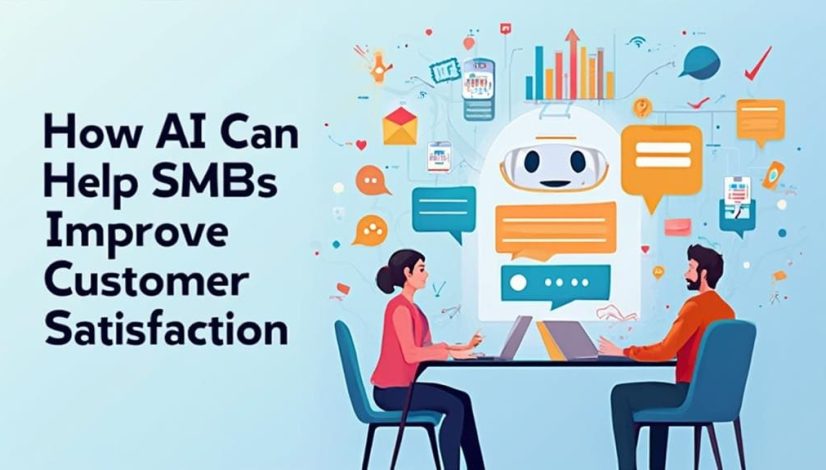
How AI Can Help SMBs Improve Customer Satisfaction
AI empowers small and medium-sized businesses (SMBs) by enhancing customer satisfaction through tailored experiences and efficient support. By utilizing advanced customer segmentation and dynamic messaging, AI can personalize interactions to meet individual preferences. Automation tools streamline customer support, providing instant, accurate responses around the clock, thereby building trust. AI-driven analysis of customer feedback and behaviors further refines services, allowing SMBs to anticipate needs and optimize marketing strategies effectively. Through these innovations, businesses can foster deeper customer relationships and improve loyalty. Discover the multitude of ways AI can further elevate your customer engagement.
Key Takeaways
- AI enhances personalization by analyzing customer data for tailored experiences, improving engagement and satisfaction.
- Automated customer support improves efficiency, enabling timely responses and allowing staff to focus on complex inquiries.
- 24/7 AI-driven assistance ensures continuous customer interaction, reducing wait times and increasing loyalty.
- Analyzing customer feedback through AI helps identify sentiments and trends for better service adjustments.
- Predictive analytics enables SMBs to understand behavior patterns, optimizing marketing strategies and anticipating customer needs effectively.
Enhancing Personalization Efforts
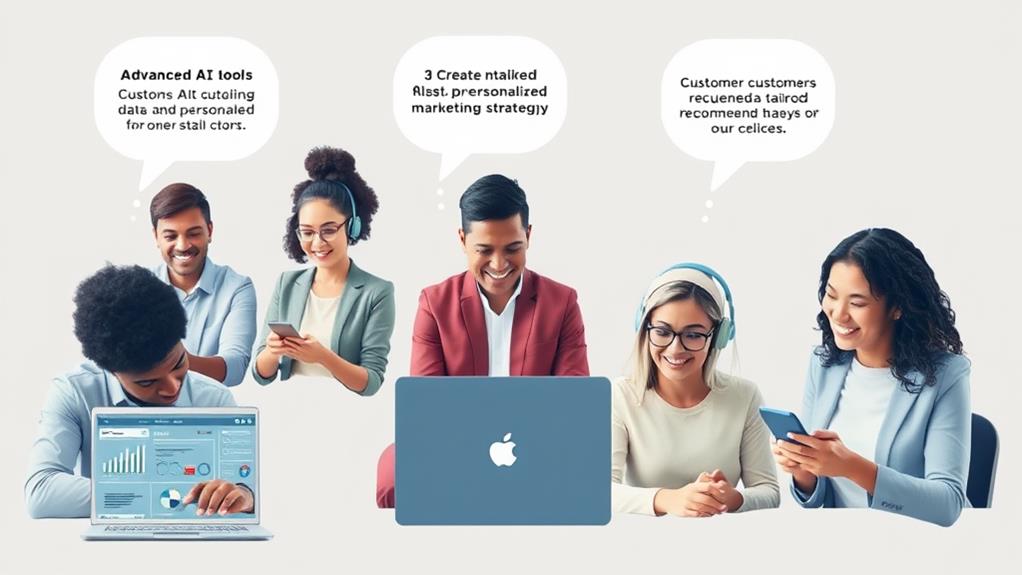
In today's competitive market, small and medium-sized businesses (SMBs) are leveraging artificial intelligence (AI) to elevate their personalization efforts and create meaningful customer experiences. By harnessing AI technologies, SMBs can enhance the customer journey with tailored recommendations that resonate deeply with individual needs and preferences. This level of personalization enhances user experience, fostering greater customer engagement and satisfaction.
AI-driven customer segmentation allows businesses to divide their audience into distinct categories based on behavior, preferences, and demographics. This insight enables the development of targeted content that speaks directly to specific consumer groups, ensuring that marketing efforts are efficient and effective.
By implementing dynamic messaging throughout various touchpoints, businesses can address individuals by name, recommend products they're likely to enjoy, and even re-engage customers who may have drifted away.
Moreover, feedback loops are essential in refining these strategies, as they offer valuable information regarding customer satisfaction and preferences. Utilizing this data, SMBs can continuously evolve their loyalty programs and engagement strategies.
Preference tracking further empowers businesses to stay in sync with consumer desires, allowing for an adaptive approach that promotes long-lasting relationships.
Ultimately, by employing AI to enhance personalization efforts, SMBs can achieve unparalleled customer loyalty and satisfaction. This commitment to understanding and catering to the unique needs of each customer not only drives sales growth but also cultivates a community of brand advocates, enthusiastic to share their experiences and recommendations.
In this landscape, the freedom to choose personalized interactions is the ticket to retaining customers and thriving in a demanding marketplace.
Automating Customer Support
Automating customer support can considerably enhance an SMB's efficiency by streamlining inquiry responses and ensuring issues are addressed promptly.
With AI-driven solutions available 24/7, businesses can provide uninterrupted assistance, catering to customers' needs at any time.
Additionally, these technologies allow for personalized interactions, fostering stronger relationships and greater customer satisfaction.
Streamlined Inquiry Responses
Many small and medium-sized businesses (SMBs) are discovering the transformative potential of AI in automating customer support, particularly through streamlined inquiry responses. In today's fast-paced market, effective inquiry management can greatly enhance customer satisfaction, leading to increased loyalty and improved sales.
By utilizing AI-driven tools, SMBs can deploy response templates specifically designed to handle common questions and issues efficiently. These templates allow businesses to maintain a consistent tone and brand voice while reducing response times. When customers receive timely and accurate answers to their inquiries, it fosters a sense of trust and reliability—essential elements for any thriving business.
In addition, AI systems can learn from interactions over time, refining these templates to guarantee they align closely with customer needs. Implementing AI solutions for inquiry management not only empowers staff to focus on more complex queries but also frees up valuable resources.
This strategic shift enables SMBs to offer personalized experiences while still benefiting from the cost efficiencies that automation provides. Embracing AI for automated inquiry responses is a key step toward meeting modern consumer expectations and gaining a competitive edge in the marketplace.
24/7 Availability Benefits
The integration of AI in customer support not only enhances the efficiency of inquiry responses but also considerably boosts availability benefits, guaranteeing that customers receive support when they need it most.
One of the foremost advantages is 24/7 support, allowing businesses to maintain continuous customer engagement, irrespective of time zones or hours of operation. This round-the-clock availability fosters positive customer experiences and enhances service accessibility.
AI-driven solutions, such as virtual assistance, guarantee that customers receive instant responses to their inquiries, eliminating long wait times that can frustrate users. Proactive messaging enables businesses to anticipate customer needs, further strengthening the connection and demonstrating attentiveness.
Additionally, real-time updates through automated systems provide customers with accurate information promptly, nurturing seamless communication between the business and its clientele.
Such responsiveness is pivotal in today's fast-paced market where minute-by-minute interactions can influence customer loyalty.
Personalization Through AI
A significant shift in customer support is driven by personalization through AI, revolutionizing the way businesses engage with their clients. By leveraging AI technologies, small and medium-sized businesses (SMBs) are able to provide more tailored experiences that foster loyalty and satisfaction.
AI's ability to analyze customer data leads to targeted recommendations and creates dynamic content that resonates with individual preferences. This not only enhances the customer journey but also streamlines support processes, resulting in more efficient interactions.
Here are key benefits of utilizing AI for personalization in customer support:
- Increased customer engagement through tailored messaging
- Efficient handling of inquiries via chatbots
- Enhanced accuracy with predictive analytics
- Continuous learning that refines recommendations over time
- Improved customer feedback gathering through personalized surveys
In this era of heightened expectations, personalized customer support is no longer optional; it is essential for SMBs seeking to differentiate themselves and gain a competitive edge.
Embracing AI-driven personalization allows businesses to cater to the unique needs of their customers, freeing them from generic solutions and fostering deeper connections.
Analyzing Customer Feedback
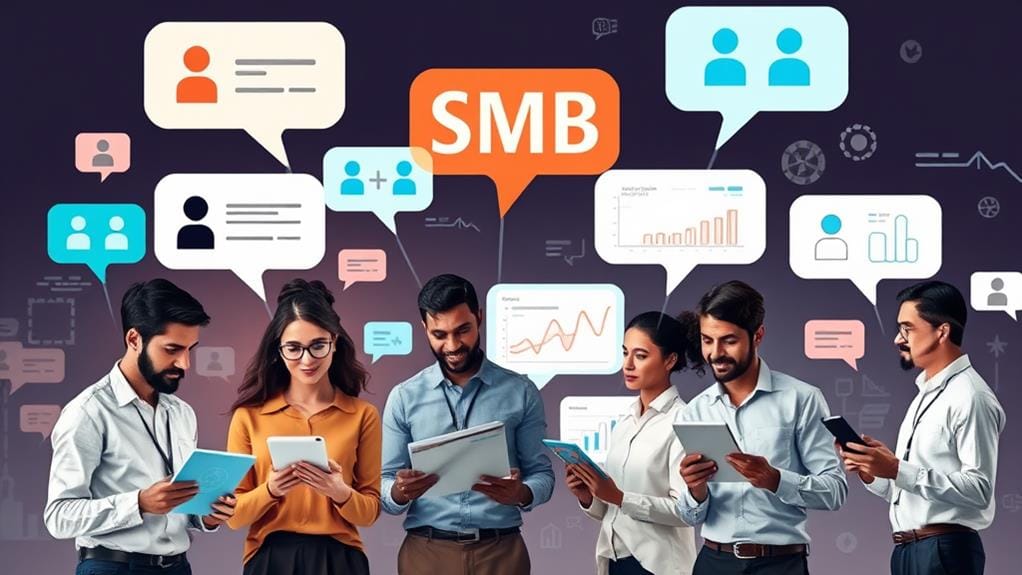
Harnessing the power of AI to analyze customer feedback can transform how small to medium-sized businesses (SMBs) understand their clientele. By implementing advanced sentiment analysis, organizations can discern not only the prevailing feelings expressed in customer reviews but also the underlying reasons behind those emotions. This capability enables SMBs to construct effective feedback loops, allowing them to respond proactively to customer sentiments and enhance satisfaction.
Moreover, AI-powered data mining techniques streamline the process of parsing vast amounts of feedback. This results in efficient customer segmentation that reveals distinct groups and preferences, fueling targeted strategies. Through trend identification, businesses can stay ahead of changes in consumer behavior, making informed adjustments to their offerings.
AI also elevates response analysis, facilitating deeper exploration of both qualitative insights and quantitative metrics. Insightful experience mapping allows for visualization of the customer journey, helping SMBs pinpoint weaknesses and opportunities for improvement. By optimizing surveys, businesses can gather more actionable data, fostering a culture of continuous improvement.
In this fast-paced environment, SMBs must leverage AI's capabilities to truly understand and respond to their customers' needs. Ultimately, analyzing customer feedback with AI empowers businesses to create a more satisfying and personalized experience, engendering loyalty and encouraging growth.
Embracing this technology means embracing freedom—the freedom to adapt, innovate, and thrive in an ever-evolving marketplace.
Optimizing Marketing Campaigns
Understanding customer sentiments through AI-driven analysis not only enhances satisfaction but also provides valuable insights for optimizing marketing campaigns. By harnessing the power of artificial intelligence, small and medium-sized businesses (SMBs) can implement more effective marketing strategies that resonate with their audiences.
AI facilitates refined customer segmentation strategies, allowing businesses to identify distinct demographics and personalize their messaging. This leads to more effective targeted advertising techniques that increase engagement. Additionally, sophisticated campaign performance analysis enables real-time adjustments, promoting agility in marketing efforts.
Key areas for SMBs to focus on include:
- Audience engagement metrics: Measure how effectively marketing efforts reach and resonate with potential customers.
- Content optimization tactics: Use feedback and data to craft messages that align with customer interests and needs.
- Channel effectiveness assessment: Evaluate which platforms yield the best results, optimizing resource allocation for maximum impact.
- Marketing automation tools: Streamline repetitive tasks, freeing up valuable time for strategic planning and creativity.
- Conversion rate optimization: Analyze the customer journey to enhance pathways leading to sales, increasing overall profitability.
With these strategies, businesses can enhance brand awareness initiatives and craft campaigns that not only connect with but also inspire loyalty among customers.
Embracing AI in marketing is not just about keeping pace; it's about creating an environment where customer satisfaction thrives, empowering SMBs to forge meaningful relationships with their audiences.
Predicting Customer Behavior

Understanding customer behavior is essential for SMBs aiming to enhance satisfaction and loyalty.
By integrating behavioral analytics, businesses can glean valuable insights that inform tailored marketing strategies and foster deeper customer connections.
This data-driven approach empowers SMBs to personalize experiences, ultimately driving engagement and increasing sales.
Behavioral Analytics Integration
A growing number of small and medium-sized businesses (SMBs) are leveraging behavioral analytics integration to predict customer behavior, considerably enhancing their ability to tailor services and improve client satisfaction.
By employing techniques such as predictive modeling and data interpretation, SMBs can gain valuable insights into customer journeys and preferences.
Utilizing behavioral analytics allows businesses to:
- Implement behavioral segmentation for targeted marketing efforts
- Analyze engagement metrics to identify user engagement patterns
- Conduct trend analysis to stay ahead of shifting customer demands
- Create robust customer profiling to better understand individual preferences
- Map customer journeys to optimize overall experience
These tools empower SMBs to anticipate customer needs, streamline interactions, and foster loyalty.
By integrating behavioral analytics, businesses can not only understand who their customers are but also predict how they will act in the future.
This deep understanding leads to enhanced service offerings, ultimately driving customer satisfaction.
As the market evolves, embracing these innovative techniques is essential for SMBs looking to maintain competitive advantage while nurturing a loyal customer base.
With behavioral analytics, freedom of choice for customers is upheld while businesses flourish.
Personalization Through Data Insights
Personalization has become an essential factor in enhancing customer experiences, as businesses increasingly rely on data insights to predict customer behavior.
By understanding the customer journey through detailed demographic insights and interaction history, SMBs can develop tailored experiences that resonate with their audience. Leveraging sophisticated segmentation techniques, companies can identify user preferences and behavioral triggers, enabling them to craft bespoke engagement strategies that foster loyalty.
Data-driven initiatives allow businesses to analyze feedback loops, ensuring that customer interactions are continually refined and optimized. For example, by monitoring past purchasing behaviors, companies can offer personalized recommendations that enhance satisfaction. This not only elevates customer experiences but also increases conversion rates.
In a marketplace where consumer freedom is paramount, personalization emerges as a vital differentiator.
SMBs that embrace these insights will find themselves not only meeting but exceeding customer expectations, creating lasting relationships built on trust and relevance.
Ultimately, the pursuit of personalization through data insights empowers businesses to thrive in an increasingly competitive landscape, ensuring that they remain responsive and attuned to the evolving needs of their clients.
Streamlining Sales Processes
How can small to medium-sized businesses (SMBs) effectively streamline their sales processes in an increasingly competitive marketplace? The answer lies in harnessing the power of artificial intelligence (AI) to automate sales tasks and enhance lead nurturing.
By integrating AI technologies, SMBs can elevate their efficiency and improve customer satisfaction.
Sales automation allows businesses to focus on what matters most: building relationships and closing deals. Here are five key strategies that SMBs can implement to streamline their sales processes:
- Automate Routine Tasks: Utilize AI-powered tools to take over repetitive sales tasks, freeing up time for sales teams.
- Enhance Lead Nurturing: Leverage AI to track customer interactions, providing tailored follow-ups that convert prospects into loyal clients.
- Implement Predictive Analytics: Use AI algorithms to analyze sales data, identifying promising leads and opportunities that drive growth.
- Integrate CRM Systems: Adopt AI-centric CRM solutions that offer real-time insights and automate communication, ensuring a smooth sales pipeline.
- Personalize Customer Interactions: Capable of analyzing data patterns, AI can help deliver personalized experiences, fostering stronger connections with customers.
Frequently Asked Questions
How Much Can SMBS Invest in AI Technology for Customer Satisfaction?
The investment in AI technology for small and medium-sized businesses (SMBs) largely depends on their budget allocation and the technology's affordability.
With a range of AI solutions available, SMBs can find options that cater to diverse budgets, ensuring they optimize their customer satisfaction efforts without overextending financially.
Emphasizing a strategic approach to investment allows SMBs to harness the potential of AI, ultimately enhancing customer experiences while maintaining financial flexibility.
What Industries Benefit Most From AI in Customer Service?
Industries such as retail and hospitality are leveraging AI to enhance customer service considerably.
Retail automation streamlines operations, providing a seamless shopping experience, while hospitality chatbots offer instant support, addressing customer inquiries around the clock.
These advancements not only improve efficiency but also empower businesses to deliver tailored experiences.
Are There Any Risks Associated With Using AI for Customer Interactions?
Ah, the marvel of AI in customer interactions! Yet, amidst the digital serenade, lurking shadows: data privacy concerns and the fragile thread of customer trust.
Companies must tread carefully, for the slightest breach can endanger the very relationship they build.
While AI promises efficiency, the risk of depersonalization threatens to alienate customers.
Striking the right balance will guarantee freedom of innovation while safeguarding the essential human touch in customer service dynamics.
How Can Employees Adapt to AI Tools Alongside Their Roles?
To successfully adapt to AI tools, employees should undergo thorough training that focuses on both the functionalities of the tools and their integration into existing workflows.
By understanding how to effectively utilize these technologies, employees can enhance productivity while maintaining their autonomy in decision-making.
Encouraging a culture of continuous learning, open communication, and feedback will foster adaptability and empower employees to embrace these innovations, ultimately contributing to a more efficient and agile workplace.
What Metrics Should SMBS Track to Measure AI Effectiveness?
Measuring the effectiveness of AI is akin to tuning a musical instrument; without the right performance indicators, harmony remains elusive.
Small to medium-sized businesses should diligently track metrics such as customer feedback scores, response times, and resolution rates.
This data not only gauges satisfaction but also illuminates areas for improvement.
Conclusion
To conclude, the integration of artificial intelligence into small and medium-sized businesses presents a transformative opportunity to enhance customer satisfaction through personalized experiences, efficient customer support, and insightful data analysis. By optimizing marketing strategies and anticipating customer behavior, SMBs can streamline sales processes to foster loyalty and retention. Ultimately, how can embracing AI technologies redefine the future of customer engagement and satisfaction in a constantly evolving marketplace? The potential for meaningful improvement is boundless.