
Cross-Channel Marketing Strategy: Complete 2026 Guide
Meta Title: Cross-Channel Marketing: The Complete Guide To Strategy, Examples & Implementation
Last Updated: June 2026
Cross-channel marketing connects your email, social media, SMS, website, and offline touchpoints into one coordinated system. Instead of running separate campaigns on each platform, you use shared data and consistent messaging so that customers experience your brand as one conversation, not a series of disconnected ads. When cross-channel marketing is set up well, people can move from channel to channel—seeing an ad, opening an email, clicking a text, visiting your site—without confusion or mixed signals.
For small and mid-sized organizations, this approach is often the most realistic way to deliver personal, relevant communication without the heavy investment required for full omnichannel setups. Cross-channel marketing improves brand recognition, raises campaign ROI, and gives you clearer insight into how prospects and customers respond across channels. This guide explains what cross-channel marketing is, how it differs from multichannel and omnichannel approaches, and how to build an integrated plan that fits your resources.
Key Takeaways
- Cross-channel marketing keeps messaging and offers aligned across email, social, SMS, web, and offline channels.
- A unified cross-channel marketing plan reduces duplicated work and confusion, helping customers recognize your brand quickly.
- Shared data from multiple channels gives you a more complete view of behavior and preferences, making testing and refinement easier.
- Coordinated campaigns improve ROI by reaching people on the channels they already use and trust, in a consistent order.
- Clear metrics and attribution help you adjust campaigns over time and tie cross-channel marketing efforts directly to revenue and retention.
Understanding Cross-Channel Marketing And Integration

Many organizations now use email, paid social, search ads, websites, and physical locations to reach people, yet treat each channel as its own world. The result is fragmented messaging and an uneven customer experience: a discount in one place, a full-price offer in another, and no clear story tying it together. Cross-channel marketing solves that problem by linking channels through shared data and consistent creative so every interaction supports the same marketing goals.
In practice, cross-channel marketing means you plan campaigns around the customer, not the channel. Someone who clicks a Facebook ad might later receive a follow-up email that references that ad, see a matching remarketing banner, and get an SMS reminder before a promotion ends. Each message reflects what the person has already done, instead of repeating random offers.
When you connect channels in this way, people can move from awareness to purchase with fewer obstacles. They do not have to re-enter information, make sense of conflicting offers, or guess whether an email and an ad are from the same brand. Over time, that consistency builds trust and lifts conversion rates. Cross-channel marketing makes these connected experiences possible at scale for businesses and nonprofits of many sizes.
Cross-Channel Vs. Multichannel Vs. Omnichannel Marketing
These three terms are often mixed together, but they describe different levels of coordination. Knowing the difference helps you decide where cross-channel marketing fits into your plans.
The table below compares the approaches across channel coordination, data sharing, customer experience goal, and ideal use case.
| Approach | Channel Coordination | Data Sharing | Customer Experience Goal | Ideal Use Case |
|---|---|---|---|---|
| Multichannel | Several channels used separately; each team plans its own campaigns | Little or no sharing between platforms | Reach as many people as possible; basic brand awareness and traffic | Organizations just starting to move beyond a single channel or testing new platforms |
| Cross-Channel | Key channels planned together with shared calendars and audiences | Customer data connects between major systems (CRM, email, ads, ecommerce) | Consistent offers and messages across channels; actions in one place shape the next touch | Growing teams that want better results from existing channels without heavy enterprise setups |
| Omnichannel | Every online and offline channel coordinated around one profile | Near real-time, centralized profiles across marketing, sales, and service | Continuous, highly personal brand experience across visits, devices, and locations | Retailers and larger brands with stores, apps, and complex product lines needing full integration |
For many small and mid-sized teams, cross-channel marketing is a practical middle ground: more connected than basic multichannel, but far easier to manage than full omnichannel execution.
Benefits Of A Unified Cross-Channel Strategy

A unified cross-channel marketing strategy strengthens brand consistency. When people see the same visual identity, tone, and core promises in email, on social, in ads, and in-store, they gain a clear sense of who you are. Research from Marq found that consistent brand presentation across platforms can increase revenue by up to 23%, which shows how much alignment matters.
Connected campaigns also improve audience interaction. Instead of one-off blasts, you build sequences where each contact follows from the previous one:
- A welcome email leads to a retargeting ad.
- A product view triggers an SMS offer.
- A loyalty sign-up prompts an in-app or on-site message.
This steady, well-timed contact encourages people to respond, share, and buy.
Channel fragmentation keeps rising. GlobalWebIndex has reported that the average social media user now interacts with around seven platforms per month, which makes it harder to rely on any single channel. Omnisend’s analysis of ecommerce brands showed that automation workflows using three or more channels can achieve purchase rates several times higher than single-channel campaigns. Cross-channel marketing helps you meet customers where they already are without spreading your message thin.
Because channels share data, cross-channel marketing reveals how people behave across your entire marketing system. You can see which paths lead to purchase, which messages get the most clicks, and where interest fades. Studies from firms such as Accenture highlight that most consumers prefer brands that recognize their needs and send relevant recommendations, and cross-channel marketing is how you meet that expectation.
Finally, coordinating channels centralizes reporting and planning. Instead of pulling numbers from five tools and guessing how they relate, you can view performance across channels on one dashboard. A structured cross-channel marketing program makes this type of planning more manageable for small teams and gives leaders clearer input for budget and creative decisions.
Key Elements Of Cross-Channel Integration
Strong cross-channel marketing does not happen by accident. It rests on several building blocks that connect channels and teams.
1. Audience Insight
Know who you are talking to on each channel. Use CRM, analytics, customer service, and sales data to identify key groups—such as new subscribers, high-value repeat buyers, or lapsed donors—and plan different sequences for each group. Even simple splits like prospects vs. existing customers can make cross-channel marketing much more relevant.
2. Consistent Content Framework
Your core message, brand voice, and visual style should stay steady while the format adjusts to each channel. A campaign theme might appear as a long-form email, a short social caption, a banner ad, and an SMS reminder, all pointing to the same offer and value proposition.
3. Shared Data And Tracking
Connect platforms so activity in one place updates others:
- Website visits stored in your CRM
- Email clicks that update ad audiences
- In-store purchases that sync back to your database
Adding UTM parameters and consistent naming across channels makes it easier to link behavior to specific cross-channel campaigns.
4. Aligned Technology
Select tools that integrate with each other and match your scale — frameworks such as How Web of Worlds whitepaper illustrates how SMEs can architect open, interoperable digital environments that support multi-channel data sharing. For smaller teams, that might mean an all‑in‑one marketing platform; larger organizations may rely on a customer data platform (CDP) plus separate tools for email, ads, SMS, and analytics. The goal is to move away from isolated systems that cannot share customer data.
5. Campaign Coordination
Plan campaigns on a shared calendar, with clear owners and timelines for each asset. Cross-channel marketing works best when teams build one combined plan instead of writing isolated briefs for email, social, and ads. Regular check-ins help keep message order, offers, and timing aligned.
Real-World Cross-Channel Marketing Examples

Well-planned cross-channel marketing can be simple and still effective. These scenarios show how different channels can work together, using real brands as reference points.
1. Retail: Recovering Abandoned Carts
- Channels: Website, email, SMS, social retargeting
- Coordination: Beauty retailers such as Sephora connect their ecommerce platform with email, SMS, and ads. When a shopper leaves items in a cart, the system records the products and passes that data to the messaging tools. Within a few hours, the customer receives a reminder email with the exact items. If the cart stays open, a short SMS reminder goes out the next day, followed by social retargeting ads that show the same products.
- Outcome: More shoppers return to finish checkout, recovered revenue rises, and the team gains clearer data about which reminder mix (email only vs. email + SMS + ads) works best.
2. Local Service Business: Reducing No-Shows
- Channels: Website forms, email, SMS, Facebook retargeting
- Coordination: Appointment-based brands—such as fitness chains comparable to Orangetheory Fitness—connect their booking system to email and SMS. A customer books an appointment online and immediately receives a confirmation email. Two days before the visit, an SMS reminder goes out with a link to confirm or reschedule. People who cancel are added to a Facebook retargeting audience that promotes future openings and time-limited offers.
- Outcome: Appointment attendance improves, staff time is used more effectively, and retargeting brings past visitors back at a lower cost than cold advertising.
3. Nonprofit: Growing Year-End Donations
- Channels: Email, organic social, paid social ads, SMS
- Coordination: Nonprofits such as charity: water run year-end appeals with one core story and donation ask. Supporters first receive an email series that explains the impact of giving. The same story appears on organic social posts and paid ads, using matching visuals and copy. High-intent visitors (for example, people who reach the donation page but do not complete the form) are added to a retargeting audience and receive a short SMS reminder with a direct donation link in the final week of the campaign.
- Outcome: Organizations see more repeat gifts, higher average donations, and stronger awareness among followers who may give later.
4. B2B SaaS: Nurturing Leads To Demo
- Channels: LinkedIn ads, webinars, email, remarketing banners
- Coordination: A B2B SaaS company similar to Asana runs LinkedIn campaigns to promote educational webinars. Registrants enter an email sequence with reminders and post‑webinar resources. Those who attend but do not request a demo are added to remarketing audiences that show banners with case studies and a clear “Book A Demo” call-to-action. Follow-up emails reference both the webinar content and the ads, so the experience feels cohesive.
- Outcome: Sales teams receive warmer leads, demo rates rise, and marketing can trace which channel combinations produce the most qualified pipeline.
These examples show how cross-channel marketing uses consistent creative and shared data to connect touchpoints without overwhelming customers.
Challenges In Putting Cross-Channel Marketing Into Practice
Cross-channel marketing can feel hard to set up, especially for teams that grew channel by channel over several years. The first major obstacle is data stuck in separate systems. When website analytics, email lists, point-of-sale data, and ad platforms do not connect, it is nearly impossible to see how one touch leads to the next.
Budget and staffing are another pressure point. Many organizations spread their marketing budget thinly across too many platforms, yet have little time to plan connected campaigns. Focusing on a few high-impact channels and reusing creative across them often produces better results than trying to be everywhere at once.
Outdated or disconnected tools also hold cross-channel marketing back. Legacy email systems, custom databases, or local spreadsheets can refuse to sync with modern advertising and automation platforms. At some point, you may need to replace key tools or add a lightweight customer data platform to build reliable connections — for financial and banking contexts especially, resources like Treasury’s New AI Risk tools guidance highlights the urgency of adopting connected, compliant technology infrastructure.
Finally, internal structure can get in the way. If separate teams own website content, email, social, and paid ads, no one feels accountable for the full customer experience. Regular cross-team planning sessions and shared reporting help create one view of the plan and a shared definition of success.
How To Build A Cross-Channel Marketing Strategy

You do not need enterprise resources to start. The steps below outline a practical way to design cross-channel marketing for a small or mid-sized organization, from channel audit through attribution tracking.
Audit Your Current Channels And Customer Paths
List every channel you use—email, SMS, paid search, social, direct mail, events, in-store—and sketch how a typical prospect moves from first contact to purchase or donation. Note where people drop off and where communication feels disjointed.Connect And Clean Your Customer Data
Bring data from your website, ecommerce or donation platform, CRM, and email tool into a central view, even if that begins as a simple data warehouse or a CDP. Standardize fields (for example, email, phone, consent status) so you can reliably trigger cross-channel campaigns based on behavior.Segment Your Audience
Group contacts by behavior and value, not just demographics. Helpful segments include:- New subscribers
- High-value customers
- Recent purchasers
- Lapsed customers
- Event or webinar attendees
Cross-channel marketing becomes much more effective when each segment receives messages that reflect what they have already done with your brand.
Choose And Prioritize Channels
Look at performance data and customer feedback to decide which channels matter most. Concentrate first on two to four core channels—such as email, SMS, website, and one paid media channel—rather than spreading efforts across every option.Design A Few Simple Cross-Channel Flows
Start with high-impact use cases such as welcome sequences, cart or form abandonment, and win-back campaigns. Map the order of messages across channels—for example, email first, then remarketing ad, then SMS—and set clear timing rules so you do not overwhelm people.Create Content And Set Up Automation
Use your marketing automation or CRM platform to trigger messages based on behavior and timing rules. Reuse creative across channels with small adjustments to fit each format. Test subject lines, offers, visuals, send times, and channel order so you can see which variations improve results.Implement Attribution And Tracking
Add tracking parameters to every link, use channel-specific promo codes where helpful, and create dashboards that show how contacts move from first touch to conversion. Compare single-channel efforts to cross-channel campaigns so you can see the lift from integrated work.Review, Learn, And Iterate
Plan regular review cycles—monthly or quarterly—to evaluate performance, retire sequences that no longer pull their weight, and expand flows that work well. Over time, this loop of analysis and adjustment keeps your cross-channel marketing aligned with customer expectations.
Measuring Success Of Cross-Channel Marketing

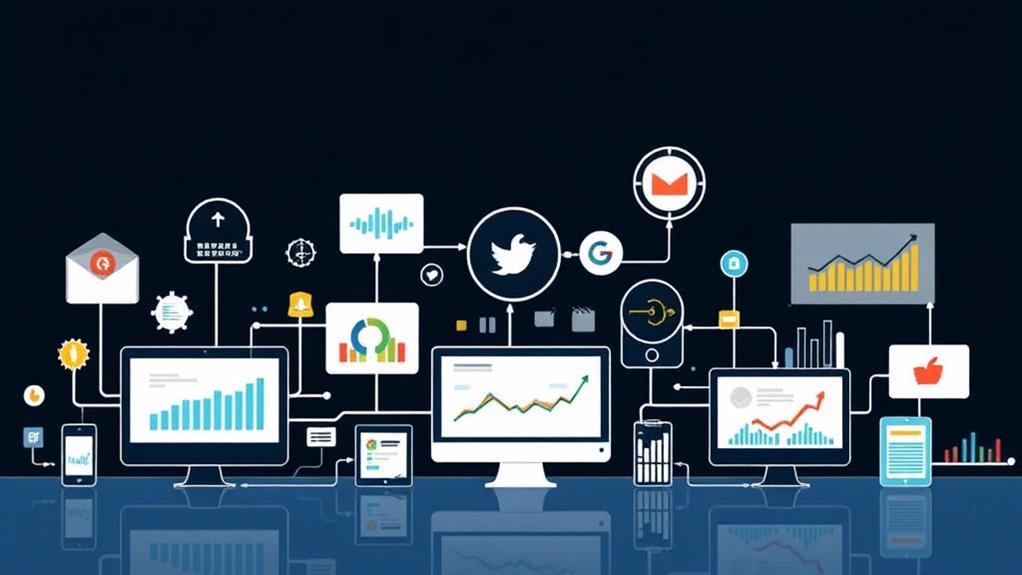
Cross-channel marketing only delivers long-term value if you track how well it works. Clear metrics keep teams aligned and highlight where to refine campaigns.
A focused measurement approach might include:
- Customer Behavior Analysis: Review data from all channels together to identify common paths to purchase, pages or emails that lose attention, and segments that respond best to cross-channel marketing.
- Return On Investment (ROI): Compare revenue, donations, or qualified leads generated by each channel and by combined campaigns. Look at cost per acquisition and customer lifetime value rather than only clicks or impressions.
- Channel Interaction Review: Study how channels influence each other. For example, track whether people who see both a social ad and an email convert at a higher rate than those who see only one touch.
- Retention And Loyalty Metrics: Monitor repeat purchase rates, subscription renewal, or donor retention for contacts who are part of cross-channel marketing programs compared with those who are not.
“What gets measured gets managed.”
— Peter Drucker
Quantitative data tells part of the story; qualitative feedback from surveys, reviews, and customer interviews adds detail that numbers can miss. Together, they show whether your cross-channel marketing makes life easier for customers and supports your business goals.
Conclusion
Cross-channel marketing turns isolated campaigns into a connected system that feels clear and consistent from the customer’s point of view. When email, SMS, social media, paid ads, and in-person contact all tell the same story, people find it easier to choose you and stay with you.
You do not have to start big. Connect the tools you already use, focus on a small set of channels, design a few key flows such as welcome, cart or form recovery, and win-back, and measure how each piece contributes to revenue and retention — insights from How an AI-Connected Visitor experience research offer a practical model for sequencing these touchpoints effectively. As your data and processes improve, you can expand cross-channel marketing across more of your customer lifecycle.
Handled this way, cross-channel marketing supports both short-term results and long-term loyalty for businesses and nonprofits across many sectors.
Frequently Asked Questions
How Does Cross-Channel Integration Affect Customer Path Mapping?
Cross-channel integration greatly improves customer path mapping by tying together data from every touchpoint. Instead of looking at email, social, and website activity separately, you see how people move across channels on their way to a purchase or donation.
This combined view exposes gaps—such as strong ad performance but weak onsite conversion—and highlights moments where an extra message, reminder, or support contact would help. With better path maps, you can adjust cross-channel campaigns so that each step feels logical and helpful to the customer.
What Tools Can Help With Cross-Channel Integration?
Several categories of tools support cross-channel marketing:
- Customer Relationship Management (CRM) Systems record contact history and sales activity.
- Marketing Automation Platforms send triggered email, SMS, and in-app or on-site messages based on behavior.
- Integration Tools And Connectors pass data between systems when a direct integration does not exist.
- Analytics Platforms track traffic, engagement, and conversions across channels and devices.
Together, these tools help you move data between channels, trigger campaigns automatically, and measure the impact of cross-channel marketing on revenue and retention.
Are There Specific Industries That Benefit More From Integration?
Some sectors feel the impact of cross-channel marketing especially strongly:
- Retail And Ecommerce, where shoppers move between ads, email, mobile, and stores before buying.
- Hospitality And Travel, where bookings, confirmations, and upsells span email, SMS, and apps.
- Financial Services And Insurance, where trust-building requires consistent, compliant communication across branches, email, and digital channels.
- Subscription Businesses And SaaS, where renewals and upgrades depend on ongoing education and reminders.
Any organization with repeat interactions and more than one marketing channel can gain value from cross-channel marketing, but these industries often see faster returns.
How Can I Adjust Messages For Different Channels?
Start by defining the core message and offer for your campaign. Then adjust format and tone for each channel while keeping that core consistent:
- Email can carry more context and detail.
- SMS should stay short, time-sensitive, and focused on a single action.
- Social posts often benefit from visuals and concise copy.
- Ads need clear headlines, strong imagery, and direct calls-to-action.
Cross-channel marketing works best when people can recognize the same idea across channels, even though wording and layout shift to match each platform.
What Role Does Social Media Play In Cross-Channel Integration?
Social media often acts as both a discovery and reinforcement channel within cross-channel marketing. People may first hear about you via an organic post or ad, then join your email list or visit your site.
Social platforms also supply valuable signals: comments, shares, and clicks reveal which topics interest your audience. You can use this data to shape email content, landing pages, and SMS offers. In addition, social ad platforms allow you to build retargeting audiences from website visitors or email lists, helping you reconnect with people who interacted with your brand elsewhere.