
AI for SMBs: How Small Businesses Are Using AI in 2026
Artificial Intelligence has evolved from an enterprise-only luxury into a fundamental business tool for small and medium-sized businesses. In 2026, AI adoption is no longer a question of “if” but “how fast” — and SMBs that embrace these technologies are discovering competitive advantages that were once reserved for corporations with massive R&D budgets.
The shift is dramatic: AI-powered tools now automate customer service inquiries, generate marketing content, forecast cash flow, screen job candidates, and analyze sales patterns — all without requiring a data science team. For SMBs operating with lean teams and tight budgets, AI represents an opportunity to operate with the sophistication and efficiency of much larger organizations.
This comprehensive guide explores how small businesses are deploying AI across every major business function in 2026, the measurable results they’re achieving, and the practical strategies for overcoming adoption barriers.
Key Takeaways
AI adoption among SMBs accelerated dramatically in 2025-2026, with 62% of businesses now using AI tools and 91% of AI-adopting SMBs reporting revenue growth
Small businesses are implementing AI across five core functions: customer service, sales automation, marketing, finance, and human resources
Embedded AI within existing software platforms (Microsoft 365, Google Workspace, Salesforce) provides the safest and most cost-effective adoption path for most SMBs
Primary adoption barriers include cost concerns, implementation complexity, employee resistance, and data privacy — each addressable through strategic planning
Agentic AI represents the next evolution, enabling systems to complete multi-step workflows independently rather than requiring constant human prompting
The SMB AI Revolution: Current Adoption Data

The numbers tell a compelling story about AI’s penetration into the small business sector. According to SMB Group’s 2025 technology trends report, AI ranked as the #1 technology priority for small and medium-sized businesses — a position it has maintained into 2026. This isn’t merely aspirational interest; it reflects actual deployment and investment.
Salesforce research reveals that 91% of SMBs using AI report revenue growth directly attributable to these technologies. Meanwhile, investment patterns show that 35% of SMBs are moderately accelerating their technology spending due to AI capabilities, while 27% are significantly accelerating investments. For businesses with 20 or more employees, this acceleration is even more pronounced.
What’s driving this surge? SMBs cite three primary motivations:
Automating repetitive tasks that consume valuable staff time
Uncovering deeper insights from customer and operational data
Reducing costs to remain competitive against larger rivals
The democratization of AI through user-friendly interfaces and embedded features in familiar software has eliminated many traditional barriers to entry.
The competitive playing field has shifted fundamentally. Small businesses that deploy AI effectively can now deliver customer experiences, operational efficiency, and data-driven decision-making that rivals what enterprise competitors offer — leveling what was previously tilted heavily toward organizations with larger budgets and technical teams.
AI in Customer Service: Transforming Support Operations

Customer service represents one of the most visible and impactful applications of AI for small businesses. Modern AI-powered customer service tools extend far beyond the clunky chatbots of previous years, offering sophisticated options that handle complex inquiries while maintaining a human touch.
Intelligent Chatbots and Virtual Assistants
Today’s AI chatbots use natural language processing to understand customer intent, context, and sentiment. Unlike rule-based systems that require exact keyword matches, these tools can interpret variations in phrasing, handle multi-turn conversations, and escalate to human agents when appropriate. For SMBs, this means providing 24/7 support without maintaining round-the-clock staffing.
Platforms like IBM watsonx enable small businesses to build custom virtual assistants tailored to their specific products, services, and customer base. These systems learn from each interaction, continuously improving their ability to resolve common issues like order status inquiries, product recommendations, and basic troubleshooting.
Contact Center Routing and Optimization
For SMBs that maintain small customer service teams, AI-powered routing systems analyze incoming inquiries and direct them to the most appropriate agent based on expertise, availability, and customer history. This intelligent distribution reduces wait times and improves first-contact resolution rates.
Cisco Webex AI enhances remote customer service operations with real-time transcription, sentiment analysis, and automated meeting summaries. These features allow service managers to monitor quality, identify training opportunities, and ensure consistent customer experiences even with distributed teams.
Proactive Support and Predictive Service
Advanced AI systems analyze customer behavior patterns to identify potential issues before customers even report them. For example, an e-commerce SMB might use AI to detect when a customer’s order is delayed and proactively send updates and compensation offers, turning a potential negative experience into a demonstration of attentiveness.
“The best customer service is proactive, not reactive. AI gives small businesses the ability to anticipate problems and address them before they escalate.” — Customer Experience Research, 2026
The result is measurable: SMBs implementing AI customer service tools report 30-40% reductions in response times and significant improvements in customer satisfaction scores, all while allowing small teams to handle volumes that would traditionally require much larger staffs.
Sales Automation: Accelerating Revenue Generation

Sales teams at small businesses often wear multiple hats — prospecting, qualifying leads, managing relationships, and closing deals. AI tools are transforming each stage of this process, allowing lean sales teams to operate with the efficiency of much larger organizations.
Automated Quote Generation and Proposal Creation
AI-powered tools integrated into CRM systems can generate customized quotes and proposals in minutes rather than hours. By analyzing customer requirements, historical pricing data, and competitive positioning, these systems produce professional documents that address specific client needs while maintaining consistent branding and messaging.
Microsoft Dynamics 365 Business Central incorporates AI features that automatically pull relevant product information, calculate pricing based on volume and customer history, and even suggest upsell opportunities based on patterns from similar deals. For small manufacturers or distributors, this automation eliminates hours of manual work per quote.
CRM Intelligence and Lead Scoring
Modern CRM platforms use AI to analyze lead behavior and assign priority scores based on likelihood to convert. Salesforce Einstein, for example, examines factors like email engagement, website visits, content downloads, and demographic data to predict which prospects deserve immediate attention versus long-term nurturing.
This predictive capability is particularly valuable for SMBs with limited sales resources. Rather than treating all leads equally or relying on gut instinct, sales teams can focus their efforts on opportunities with the highest probability of closing, dramatically improving conversion rates and shortening sales cycles.
Conversational AI for Sales Outreach
AI writing assistants help sales teams craft personalized outreach emails at scale. Tools integrated into Google Workspace (Gemini) or Microsoft 365 (Copilot) can analyze a prospect’s LinkedIn profile, company website, and recent news to generate customized introductions that reference specific pain points and relevant recommendations.
These systems go beyond simple mail merge — they adapt tone, length, and messaging based on the recipient’s role, industry, and previous interactions with your company. The result is outreach that feels genuinely personalized without requiring sales reps to spend hours researching and writing individual emails.
Sales Forecasting and Pipeline Analysis
AI analyzes historical sales data, seasonal patterns, and current pipeline status to generate accurate revenue forecasts — a workflow transformation highlighted in research on how Microsoft’s 4 new AI models are reshaping small business operations end to end. For SMB owners making decisions about hiring, inventory, or expansion, these predictions provide confidence that was previously only available through expensive business intelligence tools.
The systems identify patterns humans might miss — for example, that deals involving certain stakeholders tend to close faster, or that proposals sent on specific days of the week have higher win rates. These insights allow sales leaders to optimize their processes continuously.
Marketing Automation: Scaling Content and Campaigns
Marketing represents one of the most resource-intensive functions for small businesses, requiring constant content creation, campaign management, and performance analysis. AI tools are democratizing sophisticated marketing capabilities that were once available only to enterprises with large agencies or in-house teams.
AI-Powered Content Generation
Generative AI tools have transformed content marketing for SMBs. Platforms like Microsoft 365 Copilot and Google Workspace Gemini assist with blog post drafts, social media content, email campaigns, and ad copy. While these tools don’t replace human creativity and strategic thinking, they dramatically accelerate the production process.
A small business marketing manager can now generate multiple variations of ad copy in minutes, test different messaging approaches, and iterate based on performance data — all without hiring additional copywriters. The AI analyzes top-performing content in your industry and suggests headlines, calls-to-action, and messaging frameworks that resonate with your target audience.
Visual Content Creation
Adobe Creative Cloud’s AI features enable non-designers to produce professional-quality graphics, edit photos, and even generate custom illustrations. Features like generative fill, background removal, and automated layout suggestions mean that SMBs can maintain consistent, high-quality visual branding without employing full-time designers.
For social media marketing, these tools are particularly valuable. A restaurant owner can quickly create daily specials graphics, a consultant can design professional presentation slides, and a retail shop can produce seasonal promotional materials — all in-house and on-demand.
Audience Segmentation and Personalization
AI analyzes customer data to identify distinct audience segments based on behavior, preferences, and purchase history. Rather than sending the same email blast to your entire list, you can deliver personalized messages that speak to specific customer needs and interests.
These systems automatically adjust segmentation as customer behavior evolves, ensuring your marketing remains relevant. For example, a customer who frequently purchases a particular product category might receive targeted recommendations and exclusive offers for related items, increasing both engagement and lifetime value.
Campaign Performance Optimization
AI continuously monitors campaign performance across channels and automatically adjusts bidding, targeting, and creative elements to maximize ROI. For SMBs running paid advertising on limited budgets, this optimization ensures every dollar works as hard as possible.
The systems identify which ad variations perform best with specific audience segments, what times of day generate the highest engagement, and which landing pages convert most effectively. This level of continuous optimization would require a full-time analyst if done manually — AI makes it accessible to businesses of any size.
Financial Management: Smarter Money Decisions

Financial operations consume significant time for small business owners and their teams. AI tools are automating routine tasks while providing predictive insights that improve cash flow management and strategic planning.
Automated Invoice Processing
AI-powered accounting systems can extract data from invoices, match them to purchase orders, flag discrepancies, and route approvals — all without manual data entry. Tools integrated into platforms like QuickBooks use optical character recognition (OCR) and machine learning to process invoices in seconds rather than minutes.
For SMBs processing dozens or hundreds of invoices monthly, this automation eliminates hours of tedious work while reducing errors. The systems learn your approval workflows and vendor patterns, becoming more accurate over time.
Cash Flow Forecasting
AI analyzes historical financial data, seasonal patterns, outstanding invoices, and upcoming expenses to generate accurate cash flow projections. These forecasts help small business owners make informed decisions about when to make large purchases, whether to take on new projects, and how much working capital to maintain.
The predictive models identify potential cash crunches weeks in advance, allowing proactive measures like accelerating collections, negotiating payment terms, or securing short-term financing. This foresight is particularly valuable for businesses with variable revenue or long payment cycles.
Expense Categorization and Anomaly Detection
AI automatically categorizes expenses based on vendor, amount, and description, ensuring accurate financial reporting without manual review. More importantly, these systems flag unusual transactions that might indicate errors, fraud, or policy violations.
For example, if an employee expense report includes a charge that’s significantly higher than typical transactions with that vendor, the system flags it for review. This automated oversight provides financial controls that small businesses often lack without dedicated accounting staff.
Financial Reporting and Analysis
AI-powered dashboards transform raw financial data into actionable insights. Rather than spending hours building reports in spreadsheets, business owners can ask natural language questions like “What were our most profitable product lines last quarter?” and receive instant visualizations and analysis.
These tools identify trends, compare performance against budgets, and highlight areas requiring attention. The democratization of financial intelligence means that SMB owners without accounting backgrounds can still make data-driven financial decisions.
Human Resources: Building Better Teams
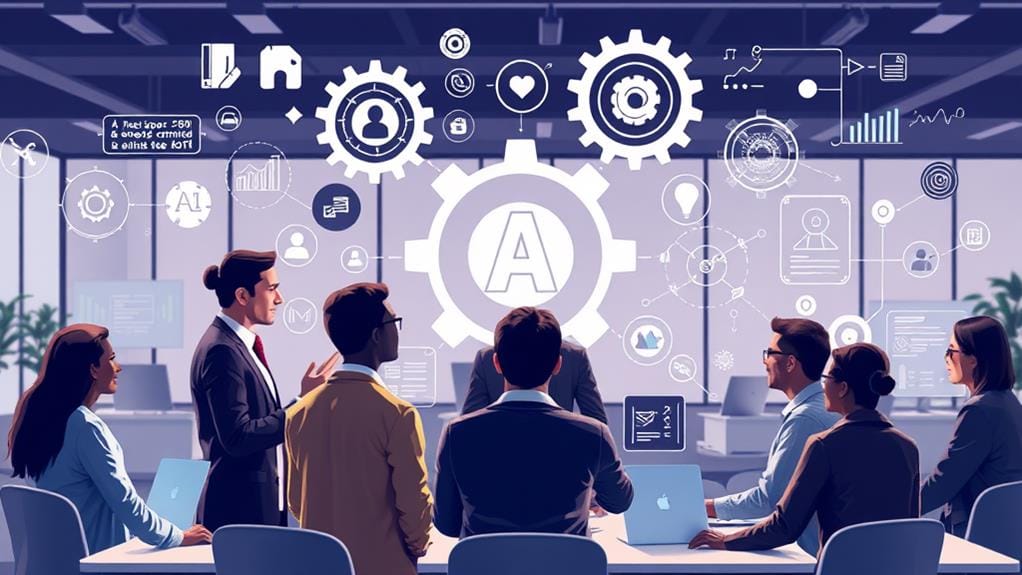
Human resource management for SMBs involves recruiting, onboarding, performance management, and employee development — all typically handled by small teams or even individual HR professionals. AI tools are multiplying the effectiveness of these limited resources.
Intelligent Recruitment and Candidate Screening
AI-driven recruitment platforms transform how small businesses identify and evaluate talent acquisition. Resume parsing technology automatically extracts relevant information from applications, scoring candidates against job requirements and identifying top prospects for human review.
These systems analyze far more than keywords — they evaluate experience progression, skill combinations, and even writing quality in cover letters. For SMBs receiving dozens or hundreds of applications per position, this automated screening ensures that qualified candidates don’t get overlooked due to volume.
Modern AI recruitment tools also reduce unconscious bias by focusing on objective qualifications rather than factors like names, schools, or employment gaps that might trigger human biases. This promotes diversity while ensuring the best candidates advance.
Enhanced Interview Processes

AI interview platforms create structured, consistent evaluation processes. Video interview tools analyze not just what candidates say but how they communicate — assessing factors like confidence, clarity, and engagement. While these insights supplement rather than replace human judgment, they provide valuable data points for hiring decisions.
Scheduling automation eliminates the back-and-forth of coordinating interviews across multiple stakeholders. AI assistants find mutually available times, send calendar invitations, and provide candidates with preparation materials — creating a professional experience that reflects well on the organization.
Performance Management and Development

AI-powered performance management systems continuously collect feedback, track goal progress, and identify development opportunities. Rather than relying solely on annual reviews, these platforms provide ongoing insights into employee performance and engagement.
The systems analyze performance data to identify high performers who might be ready for advancement, employees who might benefit from additional training, and team members showing signs of disengagement. This proactive approach allows small HR teams to address issues before they escalate and recognize achievements in real-time.
Learning and Development Optimization
AI personalizes employee training by recommending courses, resources, and development paths based on individual roles, skills gaps, and career aspirations. Rather than one-size-fits-all training programs, employees receive customized learning experiences that address their specific needs.
The systems track which training methods prove most effective for different learning styles and adjust recommendations accordingly. This data-driven approach to employee development ensures that training investments generate measurable improvements in performance.
Automated Administrative Tasks
AI streamlines routine HR tasks like payroll processing, benefits administration, and compliance tracking. Automated systems ensure that tax withholdings are calculated correctly, benefits enrollments are processed accurately, and required documentation is maintained.
For small businesses without dedicated HR staff, these automated systems reduce the risk of costly compliance errors while freeing up time for strategic HR activities like culture building and talent development.
Challenges of AI Adoption for SMBs
Despite the compelling benefits, small businesses face real obstacles when implementing AI technologies. Understanding these challenges and their mitigation strategies is essential for successful adoption.
Cost Barriers and Budget Constraints
Many SMB owners perceive AI as prohibitively expensive, associating it with enterprise-level investments in custom development and infrastructure. This perception creates hesitation even when affordable options exist.
Mitigation Strategy: Start with embedded AI features in existing software subscriptions. Microsoft 365 Copilot, Google Workspace Gemini, and AI features in CRM and accounting platforms provide powerful capabilities for modest incremental costs. Begin with one high-impact use case, measure ROI, then expand gradually. Many AI tools offer free trials or usage-based pricing that aligns costs with value received.
Implementation Complexity
Small businesses often lack dedicated IT staff to evaluate, implement, and maintain AI systems. The technical complexity of some AI platforms can feel overwhelming, leading to analysis paralysis or abandoned initiatives.
Mitigation Strategy: Prioritize “no-code” and “low-code” AI options designed for business users rather than developers. Focus on AI embedded in familiar tools rather than standalone platforms requiring integration. Partner with managed service providers (MSPs) who can handle technical implementation while your team focuses on defining business requirements and use cases. Many software vendors offer implementation support and training as part of their packages.
Employee Resistance and Change Management
Team members may fear that AI will replace their jobs or resist learning new tools and workflows. This resistance can undermine adoption efforts even when the technology itself works well.
Mitigation Strategy: Frame AI as augmentation rather than replacement — emphasizing how it eliminates tedious tasks and allows employees to focus on higher-value work. Involve employees in identifying pain points and selecting AI options. Provide thorough training and celebrate early wins to build confidence. Share specific examples of how AI makes their jobs easier rather than threatening their roles.
Data Privacy and Security Concerns
SMBs worry about where their data goes when using AI tools, whether proprietary information might be used to train public models, and how to maintain customer privacy when deploying AI-powered systems.
Mitigation Strategy: Evaluate vendor data policies carefully, prioritizing platforms that offer private AI foundations where your data remains isolated. Implement basic data governance practices, including classification of sensitive information and access controls. Use AI tools with clear data retention and deletion policies. For highly sensitive applications, consider on-premises or private cloud AI options. Establish guidelines for what information employees can input into AI tools.
The Embedded AI Advantage: Working With Existing Tools
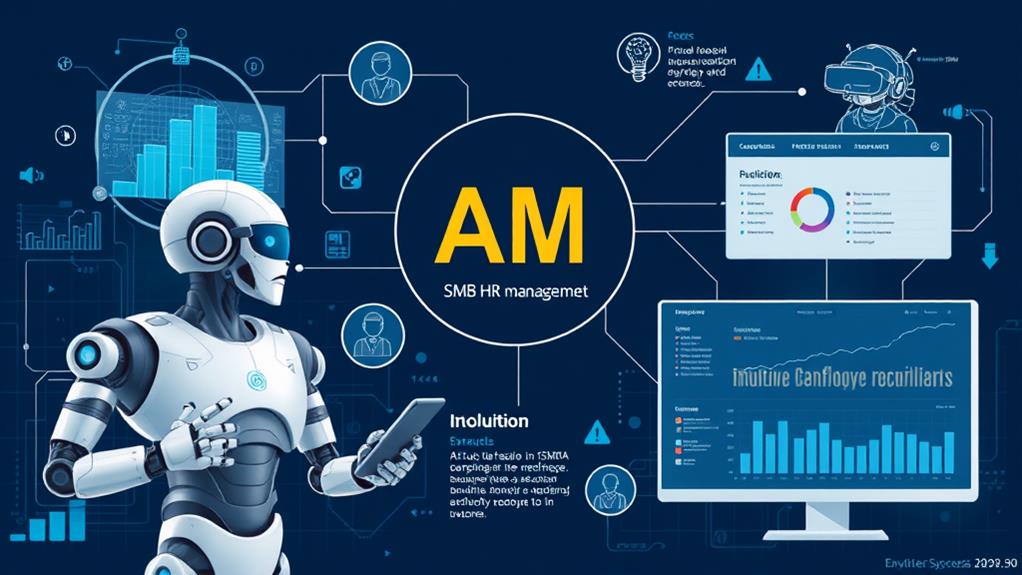
For most SMBs, the most practical path to AI adoption involves using capabilities already embedded in software they use daily. This approach minimizes learning curves, reduces integration complexity, and provides immediate value.
Microsoft 365 Copilot integrates directly into Word, Excel, PowerPoint, Outlook, and Teams. Business users can generate document drafts, analyze spreadsheet data, create presentations, draft emails, and summarize meetings — all within familiar interfaces. The AI understands context from your files and communications, providing relevant suggestions without requiring detailed prompts.
Google Workspace with Gemini offers similar capabilities across Docs, Sheets, Gmail, and Meet. The AI functions as a research assistant, content creator, and data analyst, helping users accomplish tasks faster without switching between applications.
Salesforce Einstein brings AI to customer relationship management, providing lead scoring, opportunity insights, and automated data entry. Sales teams benefit from AI guidance without learning separate tools or changing their workflows.
Adobe Creative Cloud embeds AI throughout design and marketing tools, enabling non-designers to produce professional results. Features like generative fill, smart selection, and automated layout suggestions democratize creative capabilities.
This embedded approach offers several advantages:
Users work within familiar environments
Data flows seamlessly between applications
Incremental costs are typically lower than standalone AI platforms
For resource-constrained SMBs, starting with embedded AI provides quick wins that build confidence and demonstrate value before expanding to more specialized tools.
The Evolution Toward Agentic AI
While most SMBs currently use AI for specific tasks like content generation or data analysis, the technology is evolving toward “agentic AI” — systems capable of completing multi-step workflows independently.
Unlike current AI assistants that require prompting for each action, agentic AI receives a goal and determines the necessary steps to achieve it. For example, rather than asking AI to draft an email, analyze a spreadsheet, and update a CRM record separately, you might instruct an AI agent to “research this prospect, prepare a customized proposal, and schedule a follow-up call.”
VMware’s Private AI Foundation with NVIDIA offers “NIM Agent Blueprints” that include digital human workflows for customer service. These agents can handle complete customer interactions from initial inquiry through problem resolution, escalating to humans only when necessary.
For most SMBs, agentic AI will arrive through managed services and partnerships rather than in-house development. The focus shifts from “prompting” AI to “managing” AI agents that perform specific business roles. This evolution promises even greater productivity gains but requires thoughtful implementation to ensure agents align with business objectives and maintain appropriate oversight.
Strategic Implementation Framework for SMB Leaders

Successfully implementing AI requires a structured approach that balances ambition with pragmatism. Follow this framework to maximize your chances of success:
Audit Current Capabilities: Begin by identifying AI features already available in your existing software subscriptions. You may discover that tools you’re already paying for include AI capabilities you haven’t activated or explored.
Define Specific Use Cases: Rather than implementing “AI” broadly, identify concrete problems you want to solve: reducing customer response times, accelerating proposal creation, improving cash flow forecasting. Specific use cases allow you to measure ROI and demonstrate value.
Start Small and Measure: Choose one high-impact, low-complexity use case for your initial implementation. Measure results carefully, document lessons learned, and share successes with your team. This builds momentum and confidence for broader adoption.
Assess Vendor Roadmaps: Before renewing software contracts or investing in new platforms, review vendors’ AI development plans. Understanding what features are coming helps you avoid building custom options for problems that will soon be solved by your existing tools.
Establish Data Governance: Implement basic policies about what information can be shared with AI tools, how to handle sensitive data, and who approves AI-generated content before it reaches customers. These guardrails prevent problems while allowing productive use.
Invest in Training: Allocate time and resources for team members to learn AI tools through hands-on experimentation. The most effective training focuses on practical use cases relevant to daily work rather than abstract technical concepts.
Monitor and Iterate: AI capabilities evolve rapidly. Regularly reassess your tools, explore new features, and adjust your implementation based on results. What seemed impossible six months ago may now be straightforward.
Frequently Asked Questions
What Is the Minimum Budget Needed for SMB AI Implementation?
Many SMBs can begin AI adoption with minimal additional investment by using embedded features in existing software. Microsoft 365 Copilot adds approximately $30 per user monthly, while Google Workspace AI capabilities are included in certain subscription tiers. For businesses starting fresh, comprehensive AI-enabled productivity suites begin around $20-40 per user monthly. Specialized tools for specific functions (CRM, accounting, marketing) typically range from $50-200 monthly for small teams. Most SMBs can launch meaningful AI initiatives for $500-2,000 monthly depending on team size and scope.
How Long Does AI Implementation Typically Take for Small Businesses?
Implementation timelines vary by scope and complexity. Activating embedded AI features in existing tools can happen within days — simply enabling Copilot or Gemini and providing basic training. Implementing specialized AI platforms for specific functions typically requires 4-8 weeks including vendor selection, configuration, data migration, and training. Enterprise-grade custom AI options may require 3-6 months, though most SMBs achieve better results with off-the-shelf tools. The key is starting small with quick wins rather than attempting comprehensive change simultaneously.
Will AI Replace Human Employees in Small Businesses?
AI functions as augmentation rather than replacement for the vast majority of SMB roles. The technology excels at automating repetitive tasks, analyzing large datasets, and generating initial drafts — activities that consume time but don’t require human judgment, creativity, or relationship skills. This allows employees to focus on strategic thinking, customer relationships, and complex problem-solving. While AI may reduce the need for certain administrative roles, it simultaneously creates demand for employees who can effectively use these tools. Forward-thinking SMBs use AI to make small teams more productive rather than to eliminate positions.
How Do I Choose Between Building Custom AI or Using Off-the-Shelf Options?
For most SMBs, off-the-shelf options provide the best balance of capability, cost, and implementation speed. Custom AI development makes sense only when your business processes are highly specialized and no existing tool addresses your specific needs — typically relevant for specialized manufacturers or businesses with proprietary workflows. Even then, consider whether adapting your processes to work with standard tools might be more efficient than custom development. If you currently use custom software for core operations, you may need to incorporate AI into those systems, but partner with experienced developers rather than attempting in-house development without specialized expertise.
What Security Measures Should SMBs Take When Using AI Tools?
Implement these essential security practices:
| Security Measure | Implementation |
|---|---|
| Vendor Review | Carefully review vendor data policies to understand how your information is used and stored. Prioritize vendors offering private AI foundations where your data remains isolated. |
| Data Classification | Classify your data by sensitivity and establish clear policies about what information can be entered into AI tools. |
| Access Controls | Use AI platforms with robust access controls and audit trails to monitor who accesses what information. |
| Employee Training | Train employees on AI security risks including prompt injection attacks and data leakage. |
| Output Review | Regularly review AI-generated outputs for accuracy before sharing externally. |
| Backup Systems | Maintain backups of critical data independent of AI systems and establish procedures for AI system failures. |
Conclusion
AI has transitioned from futuristic concept to practical business tool for small and medium-sized businesses. The technology now delivers measurable improvements across customer service, sales, marketing, finance, and human resources — functions that form the foundation of every successful SMB.
The businesses thriving in 2026 are those that approached AI adoption strategically — and data on AI Agents Small Business outcomes confirms that starting with embedded tools in familiar software, focusing on specific high-impact use cases, measuring results carefully, and expanding gradually based on demonstrated value is the winning formula. They recognized that AI success doesn’t require data science teams or massive budgets — it requires clear thinking about business problems and willingness to experiment with new approaches.
The competitive playing field has fundamentally shifted. SMBs deploying AI effectively now operate with capabilities that rival much larger organizations, delivering sophisticated customer experiences, data-driven decisions, and operational efficiency that were once exclusive to enterprises. The question is no longer whether small businesses should adopt AI, but how quickly they can implement it to maintain competitiveness.
The opportunity is substantial, the tools are accessible, and the early results from SMB AI adopters are compelling. The businesses that will lead their industries in the coming years are those taking action now — starting small, learning quickly, and scaling what works. The AI revolution isn’t coming to small business; it’s already here.