The Benefits of AI-Driven Sales Strategies for SMBs
AI-driven sales strategies offer small and medium-sized businesses (SMBs) transformative benefits, including enhanced customer insights and streamlined sales processes. By leveraging data analytics, SMBs can identify market trends and improve lead generation, fostering more effective, personalized communication. Additionally, AI automates repetitive tasks, increasing sales efficiency while optimizing resource allocation and reducing costs. This technology also enhances competitive analysis and scalability of sales efforts, positioning SMBs to respond swiftly to market dynamics. Ultimately, embracing AI empowers SMBs to make data-driven decisions that drive growth and sustainability, paving the way for deeper insights into their unique challenges.
Key Takeaways
- AI enhances customer insights, enabling SMBs to understand behavior and preferences through advanced data analysis and segmentation.
- Improved lead generation through AI optimizes outreach efforts and boosts conversion rates with automated processes and targeted strategies.
- Streamlined sales processes reduce manual errors and increase efficiency, allowing sales teams to focus on closing deals rather than administrative tasks.
- Personalized customer experiences foster brand loyalty and engagement by delivering relevant content tailored to individual preferences and needs.
- Data-driven decision making leveraging predictive analytics allows SMBs to forecast sales and identify market trends, informing strategic growth initiatives.
Enhanced Customer Insights
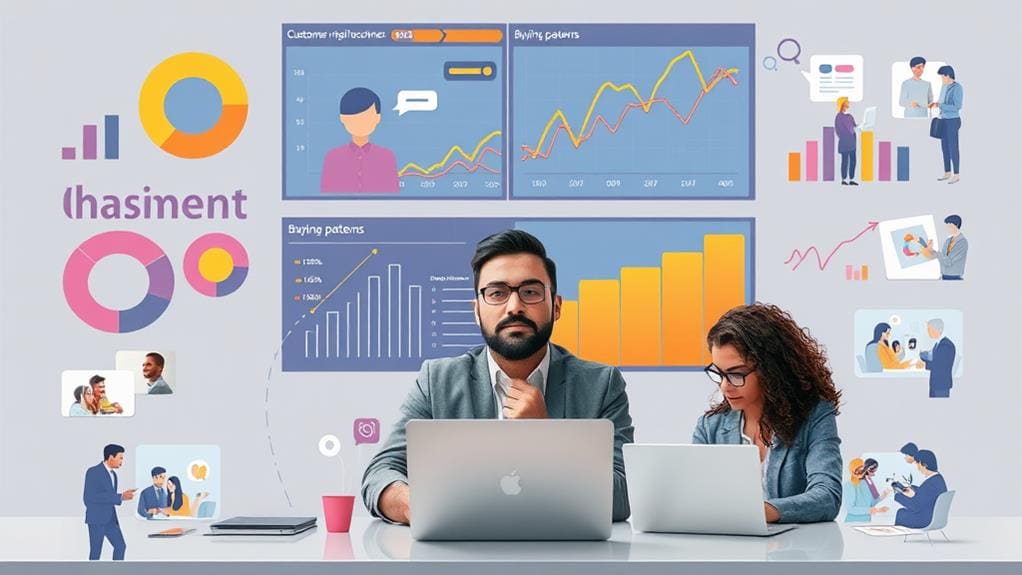
In today's competitive landscape, businesses must leverage every available tool to understand their customers better, and AI has emerged as a critical ally in this endeavor. The integration of AI technologies facilitates enhanced customer insights, which empower small and medium-sized businesses (SMBs) to decode customer behavior with unprecedented clarity.
By harnessing sophisticated algorithms, companies can analyze vast datasets to identify market trends, ultimately refining their sales forecasting.
AI-driven analytics deliver critical consumer segmentation, allowing businesses to classify customers based on specific feedback analysis that captures individual preferences and characteristics. With this approach, SMBs can tailor their marketing strategies to align more closely with unique purchase patterns and buying triggers, fostering deeper engagement metrics and customer loyalty.
Additionally, demographic insights gleaned from AI tools enable businesses to develop a more nuanced understanding of their target audience. By employing sentiment analysis, organizations can gauge consumer attitudes and emotions, transforming qualitative feedback into actionable data. This level of analytical sophistication not only informs product development but also enhances customer relationship management.
Ultimately, the implementation of AI in deciphering customer behavior cultivates an environment of informed decision-making. As SMBs harness the power of AI, they position themselves to navigate market dynamics adeptly, ensuring they remain relevant and competitive in a world that values personalized customer experiences.
Adopting AI-driven approaches to gain enhanced customer insights is not merely an opportunity; it is a necessity for those aiming for freedom in the marketplace.
Streamlined Sales Processes
Many organizations are discovering that streamlined sales processes can greatly enhance operational efficiency and boost overall performance. By leveraging AI-driven sales strategies, small to medium-sized businesses (SMBs) can harness the power of sales automation to eliminate redundancies and reduce manual errors. This facilitates workflow optimization, ensuring that sales teams can focus their efforts on high-value tasks rather than administrative burdens.
Key to this transformation is seamless CRM integration which allows for the unification of customer data, enhancing team collaboration across departments. When sales professionals have instant access to thorough insights, they can engage in effective task prioritization, ensuring that the most promising leads receive immediate attention. Lead scoring, bolstered by AI algorithms, enables teams to identify which prospects are most likely to convert, refining their strategies and response times.
Moreover, AI can enhance sales forecasting through analyzing historical performance metrics, allowing businesses to predict trends accurately and align their pipeline management accordingly. Process mapping further clarifies efficient pathways for sales activities, reducing friction and enabling swift decision-making.
In this new paradigm, SMBs experience an unprecedented level of agility within their sales operations. The combination of automation, data analytics, and collaborative tools not only drives productivity but empowers teams to adapt to changing market conditions with freedom and confidence.
Improved Lead Generation

Effective lead generation stands as a cornerstone of any successful sales strategy, particularly for small to medium-sized businesses (SMBs) seeking a competitive edge. In an increasingly saturated marketplace, the ability to identify and engage potential customers efficiently becomes paramount. AI-driven solutions enhance this aspect markedly through advanced target audience identification, allowing businesses to pinpoint their ideal clients with precision. By analyzing vast datasets, AI can uncover patterns in buyer behavior, demography, and purchasing trends, facilitating a deeper understanding of who is most likely to convert.
Moreover, the implementation of sophisticated lead scoring techniques is another critical advantage offered by AI. By assigning values to leads based on their engagement levels and fit with the target audience, SMBs can prioritize their outreach efforts. This data-driven approach enables sales teams to focus on high-potential leads, thereby improving conversion rates and optimizing resource allocation.
In essence, the combination of accurate target audience identification and effective lead scoring not only streamlines the sales process but also empowers SMBs to engage prospects meaningfully. These AI-driven capabilities liberate sales teams from time-consuming, manual lead qualification processes, freeing them to concentrate on building relationships and closing deals.
Consequently, the integration of AI into lead generation enhances sales outcomes and paves the way for sustainable business growth. Ultimately, embracing these technologies allows SMBs to harness their innate freedom to innovate and thrive in an ever-evolving commercial landscape.
Personalized Customer Experiences
In today's competitive landscape, personalized customer experiences are integral to driving sales for small and medium-sized businesses (SMBs).
By employing tailored marketing approaches that utilize customer data, businesses can enhance buyer engagement, fostering stronger relationships and loyalty.
This strategic shift not only caters to individual preferences but also positions SMBs to capitalize on emerging opportunities in an ever-evolving market.
Tailored Marketing Approaches
Crafting personalized customer experiences has become essential for small and medium-sized businesses (SMBs) seeking to distinguish themselves in a competitive marketplace. By integrating AI-driven solutions, SMBs can enhance their marketing strategies through effective customer segmentation strategies and dynamic content personalization. These approaches empower businesses to connect meaningfully with their target audience.
Key benefits include:
- Improved Customer Understanding: Unpacking customer data allows for more accurate segmentation, enabling tailored outreach.
- Enhanced Engagement: Dynamic content personalization guarantees customers receive relevant messages that resonate with their unique preferences.
- Increased Conversion Rates: By delivering specific solutions to distinct market segments, businesses can drive higher conversion rates.
- Stronger Brand Loyalty: Personalized experiences foster deeper connections, encouraging repeat business and brand advocacy.
In the quest for operational excellence, SMBs must prioritize tailored marketing approaches. This not only meets the individual needs of consumers but also liberates businesses from generic marketing methods.
Enhanced Buyer Engagement
Many businesses recognize the essential role of enhanced buyer engagement in driving sustainable growth and customer satisfaction. By leveraging artificial intelligence, SMBs can develop sophisticated engagement strategies that align with evolving buyer behavior and preferences. These strategies allow businesses to tap into their customers' unique communication preferences, thereby fostering more meaningful interactions.
AI enables the personalization of content, which greatly elevates user experience. Through data analysis, businesses can adjust their techniques based on engagement metrics, ensuring that they resonate with their audience. Implementing robust feedback mechanisms enhances this process, providing insights that refine offerings and deepen trust factors.
Moreover, emotional intelligence plays an important role in relationship building; AI enhances this by predicting the needs and feelings of potential clients, ultimately personalizing the communication. Increased interaction frequency, tailored to individual preferences, nurtures long-term relationships that underpin loyalty.
In a landscape where buyers increasingly seek personalized experiences, AI-driven enhancements not only facilitate deeper engagement but also position SMBs for competitive advantage. With these tools, businesses can foster an environment of trust and understanding, essential for sustainable success in today's marketplace.
Data-Driven Decision Making
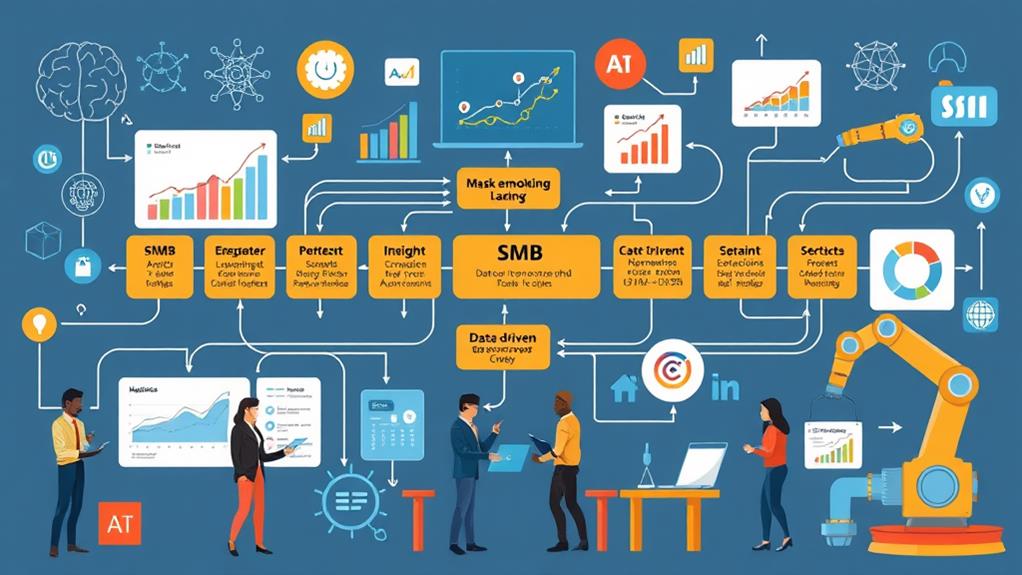
Data-driven decision making has emerged as a vital pillar for small and medium-sized businesses (SMBs) seeking growth and competitive advantage in a crowded marketplace. By leveraging data, SMBs can uncover insights that drive strategic decisions, enhance operational efficiency, and better align with customer needs. The effective use of data enables businesses to apply decision frameworks that are grounded in analytical rigor, fostering an environment of evidence-based management.
Utilizing AI-driven sales strategies, SMBs can harness the power of data for various important areas:
- Trend Identification: Recognizing market trends helps businesses stay ahead of competition.
- Customer Segmentation: Distinguishing between customer types allows for tailored marketing strategies.
- Sales Forecasting: Accurate predictions of sales trends guide resource allocation and strategy.
- Risk Assessment: Identifying potential risks early can lead to more informed decision-making.
Moreover, data visualization tools enhance communication of complex data, making it easier for decision-makers to grasp key insights quickly. Performance metrics illuminate areas for improvement, while behavioral analytics explore deeper into customer actions, providing a clearer picture of their preferences.
In addition, thorough market research lays a strong foundation for opportunity analysis, ensuring SMBs capitalize on potential growth avenues.
Incorporating data-driven decision making not only cultivates a proactive mindset but also empowers SMBs to navigate uncertainties and seize opportunities in a rapidly evolving landscape. By embracing these principles, SMBs can transform their decision-making processes into a strategic advantage, ultimately leading to sustained growth and success.
Predictive Analytics Benefits
During a time when informed decision-making is essential, predictive analytics has emerged as a transformative tool for small and medium-sized businesses (SMBs) looking to enhance their sales strategies. By leveraging sophisticated algorithms and historical data, SMBs can engage in accurate sales forecasting, ensuring that they anticipate demand rather than merely react to it.
The benefits of predictive analytics extend beyond simple forecasts; they enable trend identification that illuminates emerging market opportunities. SMBs can segment their customer base more effectively, tailoring marketing and sales efforts to meet the unique needs of various groups. This targeted approach enhances customer engagement and drives conversion rates.
Moreover, predictive analytics facilitates risk assessment by allowing businesses to evaluate potential obstacles and adjust strategies accordingly. By employing behavior analysis, SMBs can glean insights into customer preferences and buying patterns, leading to more effective market predictions.
Furthermore, predictive analytics plays a vital role in revenue projection. Businesses can estimate future income more accurately, aligning their strategies with projected outcomes. This financial foresight empowers SMBs to allocate resources efficiently, ensuring ideal operational performance.
Lastly, performance monitoring through predictive analytics equips SMBs with the ability to assess their effectiveness continuously. By analyzing sales data in real-time, they can refine their tactics and achieve iterative growth.
Increased Sales Efficiency
Incorporating AI into sales processes can greatly enhance efficiency for small and medium-sized businesses (SMBs) by streamlining lead generation through targeted data analysis.
By leveraging predictive analytics, these enterprises can gain valuable insights that prioritize high-potential leads, minimizing wasted efforts.
Additionally, automated follow-up processes guarantee timely engagement, improving overall conversion rates and allowing sales teams to focus on closing deals rather than administrative tasks.
Streamlined Lead Generation
Consistently leveraging AI technology is transforming the landscape of lead generation for small and medium-sized businesses (SMBs), enhancing sales efficiency considerably.
By utilizing advanced AI tools, SMBs can streamline and automate their lead generation processes, guaranteeing that their resources are being used effectively and productively.
Key benefits of AI-driven lead generation include:
- Lead Scoring: Prioritizing leads based on their readiness to buy improves focus on high-conversion opportunities.
- Audience Segmentation: Tailoring outreach strategies to specific customer profiles enables more personalized communication and better engagement.
- Sales Automation: Eliminating repetitive tasks allows teams to allocate time to develop innovative conversion tactics, enhancing overall productivity.
- Data Integration: Drawing insights from market trends guarantees a thorough understanding of customer behavior, aiding in accurate sales forecasting.
Predictive Analytics Insights
As SMBs increasingly leverage AI-driven lead generation tools, the next logical step is harnessing predictive analytics to further enhance sales efficiency. By utilizing advanced algorithms, businesses can achieve remarkable forecasting accuracy, allowing them to anticipate customer needs and behavior with a high degree of reliability. This not only streamlines the sales process but also empowers SMBs to allocate resources more effectively.
Predictive analytics excels in trend identification, helping to uncover patterns that may not be immediately apparent. For instance, understanding seasonal fluctuations in demand or recognizing emerging market segments can lead to timely interventions that drive sales.
By predicting which leads are most likely to convert, sales teams can focus their efforts on high-potential opportunities, thereby maximizing productivity.
Furthermore, businesses equipped with these insights can tailor their marketing strategies more precisely, ensuring that messaging resonates with the target audience.
Ultimately, integrating predictive analytics into the sales strategy transforms data into actionable intelligence, fostering an environment where decisions are made with confidence and clarity.
Embracing these capabilities not only enhances efficiency but also augments the autonomy of SMBs in maneuvering complex market landscapes.
Automated Follow-Up Processes
Automated follow-up processes have emerged as a game-changer for SMBs looking to enhance their sales efficiency. By integrating AI-driven tools, businesses can vastly improve their outreach strategies while guaranteeing a consistent and personalized approach. This level of automation allows teams to focus on high-value activities, steering through the complexities of customer engagement seamlessly.
Key advantages of automated follow-up processes include:
- Automated reminders that reduce manual errors and guarantee timely communications.
- Follow-up templates that can be customized based on customer segmentation, optimizing message effectiveness.
- Engagement tracking tools that provide critical insights into customer interactions, enabling precise response analysis.
- Timing optimization strategies informed by interaction history and communication preferences, enhancing overall engagement rates.
This all-encompassing workflow automation ultimately leverages performance metrics to refine future strategies.
Cost Savings and Resource Optimization
Cost savings and resource optimization stand as pivotal considerations for small and medium-sized businesses (SMBs) seeking to enhance their sales strategies through AI integration. By leveraging AI technologies, SMBs can implement innovative cost reduction strategies that not only reduce overhead but also streamline operational efficiencies. This shift enables businesses to redirect financial resources to areas that yield higher returns, facilitating sustainable growth.
AI algorithms can analyze vast datasets to identify wasteful spending and optimize existing resources. For instance, intelligent automation tools minimize the need for manual labor in repetitive tasks such as data entry, allowing teams to focus on more strategic activities. This change promotes a more effective use of human capital, aligning workforce efforts with high-impact responsibilities.
Moreover, resource allocation techniques powered by AI enhance decision-making processes. Machine learning models can forecast sales trends and customer preferences, enabling SMBs to allocate their budget more effectively across marketing initiatives and product development. This not only minimizes the risk of financial missteps but also maximizes the economic benefits derived from each dollar spent.
In an era where every dollar counts, the savvy adoption of AI-driven strategies empowers SMBs to achieve significant cost savings while ensuring that resources are employed in a manner that fosters innovation and competitive advantage.
The convergence of AI technology and sales strategy offers a path for SMBs not just to survive but to thrive, achieving their aspirational goals while maintaining the freedom to adapt and evolve in a dynamic marketplace.
Better Competitive Analysis

An enhanced understanding of the competitive landscape is vital for SMBs aiming to leverage AI-driven sales strategies effectively. With artificial intelligence as a powerful ally, businesses can conduct more sophisticated competitive analysis, ultimately fine-tuning their approach to gain market share and enhance revenue.
AI systems can efficiently process and analyze vast amounts of data, enabling SMBs to identify significant market trends and improve their industry positioning. Key types of analysis include:
- Competitor Benchmarking: Evaluating competitors' strengths and weaknesses in real-time allows businesses to adapt their strategies dynamically.
- SWOT Analysis: Identifying internal strengths and weaknesses while recognizing external opportunities and threats provides a thorough view that can drive strategic initiatives.
- Customer Segmentation: By understanding specific customer needs and preferences, SMBs can tailor their offerings for higher engagement.
- Sales Forecasting: AI-driven predictive analytics can enhance accuracy in forecasting future sales based on historical data and market conditions.
Additionally, advanced performance metrics reveal insights into pricing strategies and ideal sales territories, enabling businesses to refine their efforts further.
By employing these tools, SMBs not only build resilience against competitive pressures but also proactively adjust their strategies to stay ahead. Embracing AI in competitive analysis empowers SMBs, allowing them to navigate challenges with precision and foster a culture of continuous improvement.
As the competitive landscape evolves, so too must the strategies deployed—ensuring that SMBs remain agile and poised for success.
Scalability of Sales Efforts
In today's competitive marketplace, the scalability of sales efforts represents a critical factor for the growth and sustainability of small and medium-sized businesses (SMBs). As SMBs navigate an evolving landscape, the ability to adapt sales strategies in response to changes in market demands becomes paramount.
With AI-driven tools, companies can greatly enhance their sales team scalability, allowing for a more flexible response to varying customer needs while maintaining operational efficiency.
Implementing AI not only streamlines processes but also improves resource allocation efficiency. Businesses can prioritize their efforts towards the most promising market expansion opportunities, leveraging data analytics to forecast trends and customer behavior.
This data-driven approach informs growth strategy adaptability, ensuring SMBs remain competitive regardless of external pressures.
Employing revenue scaling techniques, such as targeted marketing automation and personalized outreach, further supports scalability. These techniques empower sales teams to manage larger volumes of leads without a proportional increase in workforce size.
Frequently Asked Questions
How Much Initial Investment Is Needed for Ai-Driven Sales Strategies?
Determining the initial investment for AI-driven sales strategies requires a thorough cost analysis to guarantee ideal budget allocation.
This investment typically encompasses software acquisition, implementation services, and training resources. The total cost can vary greatly based on the specific solutions chosen and the scale of deployment.
Additionally, organizations should consider ongoing operational costs to fully harness the potential of AI, making sure they maintain both financial and strategic freedom in their decision-making process.
What Types of SMBS Benefit Most From AI in Sales?
Small and medium-sized businesses (SMBs) in industries such as retail, e-commerce, and technology considerably benefit from AI in sales.
These sectors often require precise customer segmentation for effective targeting. AI enhances the ability to analyze consumer behavior, enabling tailored marketing strategies that resonate with diverse customer segments.
Additionally, organizations that adopt these innovations can experience improved efficiency and competitive advantages, allowing them the freedom to innovate and expand their market presence effectively.
Are There Specific AI Tools You Recommend for Small Businesses?
In the domain of sales, choosing the right AI tools can feel like maneuvering through a complex labyrinth. However, effective solutions exist.
For small businesses, platforms like HubSpot and Salesforce offer robust sales automation and data analysis features. Tools such as Zapier enable seamless chatbots integration, enhancing customer segmentation and lead scoring.
Furthermore, leveraging predictive analytics and personalized marketing strategies empowers businesses to understand their customers better, ultimately forging stronger connections and driving sales growth.
How Quickly Can SMBS Expect Results From AI Sales Strategies?
Small and medium-sized businesses (SMBs) can typically expect to see measurable outcomes from AI sales strategies within three to six months.
These expected timelines may vary based on implementation speed, data quality, and organizational readiness for change.
Early indicators of success often emerge through enhanced lead generation and improved customer insights, allowing SMBs to adapt and refine their approaches proactively.
Embracing this transformative technology positions businesses to achieve sustainable growth and competitive advantage.
What Are Common Challenges SMBS Face When Implementing Ai?
Small and medium-sized businesses (SMBs) often encounter significant challenges when implementing AI solutions. Chief among these are data quality issues, which can hinder the accuracy of AI insights.
Additionally, workforce training is critical to guarantee staff can effectively utilize new technologies. Budget constraints may limit options, while integration issues with existing systems can complicate deployment.
Moreover, successful technology adoption requires proactive change management strategies to alleviate resistance and foster a culture conducive to innovation.
Conclusion
Incorporating AI-driven sales strategies greatly enhances operational efficiency and customer engagement for small and medium-sized businesses (SMBs). For instance, a hypothetical SMB utilizing AI analytics may identify patterns in customer purchasing behavior, enabling tailored marketing campaigns that increase conversion rates. Such targeted efforts not only optimize resource allocation but also provide a competitive edge in the marketplace. The adoption of these innovative methodologies ultimately leads to sustainable growth and an enhanced ability to respond to dynamic market demands.