The Role of AI in SMB Talent Acquisition
AI plays an essential role in talent acquisition for small and medium-sized businesses (SMBs) by enhancing efficiency and accuracy. It automates resume screening, greatly reducing the time spent on initial evaluations while ensuring fairness through bias reduction. AI-driven analytics provide insights into candidate behavior, enabling SMBs to improve their recruitment strategies. Additionally, personalized communication enhances candidate experiences, fostering engagement and transparency. By predicting hiring trends, AI empowers SMBs to adapt agilely to the evolving job market. The integration of these advanced technologies considerably strengthens the recruitment process, leading to better hiring outcomes and a more dynamic workforce—more insights await you.
Key Takeaways
- AI enhances skill assessments, improving the match between candidates' abilities and job requirements for more effective hiring in SMBs.
- Automation of resume screening saves time and reduces biases, promoting a diverse and equitable talent selection process.
- Predictive analytics facilitate insights into candidate behavior, enabling SMBs to optimize their recruitment strategies strategically.
- Targeted job advertising allows SMBs to attract high-quality talent by directing efforts towards specific demographic segments with required skills.
- Improved candidate experience through AI-driven communication and feedback mechanisms fosters engagement and builds trust throughout the recruitment journey.
Understanding AI in Recruitment

AI has rapidly transformed the landscape of recruitment, offering small and medium-sized businesses (SMBs) innovative solutions to streamline their talent acquisition processes. By employing advanced algorithms, SMBs can enhance skill assessments and guarantee a more accurate match between candidates' qualifications and job requirements. This level of precision is vital; it not only increases efficiency but also contributes substantially to the overall quality of hires.
However, the incorporation of AI in recruitment does not come without its challenges. AI ethics must be a fundamental consideration for SMBs to prevent bias from infiltrating the hiring process. Bias mitigation strategies can be embedded in AI systems to promote fairness and equality, guaranteeing that workforce diversity is achieved. Effective implementation requires continuous monitoring and evaluation of the algorithms used to avoid inadvertently reinforcing societal biases.
Moreover, data privacy remains a pivotal concern in AI-driven recruitment. Maintaining candidate confidentiality and adhering to industry regulations boosts trust and compliance, essential elements for SMBs seeking to attract top talent.
Predictive analytics play a key role in this situation, as they provide valuable insights into candidate behavior and trends. By understanding these patterns, SMBs can proactively tailor their recruitment strategies, optimizing outcomes while safeguarding ethical standards.
Benefits of AI for SMBs
The integration of artificial intelligence into talent acquisition processes presents a distinct competitive advantage for small and medium-sized businesses (SMBs). By leveraging AI technologies, SMBs can achieve enhanced cost efficiency in recruitment, which is essential for organizations operating under tighter budgets compared to larger enterprises. AI tools facilitate accurate data analysis, allowing businesses to identify and track recruitment metrics that inform their hiring strategies.
Furthermore, artificial intelligence supports diverse hiring initiatives by minimizing biases that may unintentionally affect decision-making. This not only cultivates an inclusive workforce but also heightens employer branding, as organizations that prioritize diversity tend to attract a wider range of candidates, thereby enhancing their reputation in the competitive job market.
AI-driven skill assessment tools provide SMBs the ability to evaluate candidates effectively, ensuring matches are made based not only on experience but on actual skills. This alignment is vital for talent retention, as employees who find themselves well-matched to their roles are more likely to stay and contribute meaningfully to the organization.
Additionally, as the job market continues to evolve, SMBs must stay agile and responsive. AI empowers businesses by predicting trends and adjusting recruitment strategies accordingly, ensuring they remain at the forefront of industry developments.
To conclude, the adoption of AI in talent acquisition not only streamlines processes but fosters a more dynamic, diverse, and skilled workforce, ultimately positioning SMBs for sustainable growth and success.
AI Tools for Resume Screening

Integrating advanced technology into the recruitment process, particularly through AI tools for resume screening, marks a significant evolution in how SMBs optimize their hiring practices. These innovative solutions utilize algorithms to automate the tedious task of sifting through numerous applications, enabling recruiters to focus on higher-level strategic initiatives. By employing automated filtering, AI tools can quickly assess resumes against predetermined criteria, thereby reducing the time spent on initial candidate evaluations.
Central to the efficacy of these tools is their capability for precise skill matching. AI algorithms analyze keywords and relevant experiences within resumes to identify candidates whose qualifications align closely with job requirements. This detailed approach not only enhances the chances of finding an ideal fit but also promotes a more equitable selection process by minimizing human biases. As a result, SMBs can tap into a broader talent pool without the traditional constraints often inherent in manual screening methods.
Moreover, the integration of AI in resume screening fosters agility in the hiring process. By streamlining screenings and offering data-driven insights into candidate qualifications, SMBs can accelerate decision-making.
As organizations aim for efficiency, AI tools serve as fundamental instruments that support proactive engagement with potential hires. Emphasizing the importance of precision in recruitment, these tools encourage hiring managers to harness their creative freedom, paving the way for a more effective and holistic approach to talent acquisition. Such advancements certainly position SMBs to remain competitive in an increasingly dynamic job market.
Enhancing Candidate Sourcing
Enhancing candidate sourcing through AI involves the integration of advanced resume screening tools and targeted job advertising strategies.
These innovations not only streamline the initial selection process but also guarantee that job openings reach the most relevant potential candidates.
AI-Powered Resume Screening
How can AI-powered resume screening transform the talent acquisition landscape for small and medium-sized businesses? By innovating the way SMBs evaluate candidates, AI enables an efficient, impartial, and streamlined hiring process. Automated assessments facilitate the identification of key competencies and qualifications, empowering HR professionals to focus on candidates who align with the organization's needs.
Implementing AI in resume screening brings numerous advantages:
- Time Savings: Quickly sifting through large volumes of resumes narrows down candidates without the manual workload.
- Enhanced Quality: Focus on skill-based evaluations increases the likelihood of finding the perfect fit.
- Bias Reduction: AI algorithms can minimize unconscious biases, promoting a diverse and inclusive hiring process.
- Data-Driven Insights: Analyze trends and skills across applicants, informing strategic hiring decisions.
- Improved Candidate Experience: Streamlined processes enhance communication and engagement with potential hires.
For small and medium-sized businesses, these transformations empower them to compete with larger enterprises by optimizing their talent acquisition strategies, reducing time-to-hire, and ultimately attracting the top talent they seek.
Targeted Job Advertising Strategies
Strategic precision in job advertising is vital for small and medium-sized businesses (SMBs) endeavoring to attract high-quality talent in a competitive market. Employing targeted job advertising strategies allows SMBs to navigate the complex landscape of talent acquisition effectively. By utilizing niche targeting, organizations can direct their efforts towards specific groups of potential candidates who possess the requisite skills and cultural fit, consequently enhancing the relevance of their job postings.
Demographic analysis becomes essential in this scenario. By scrutinizing data about potential applicants' age, education, and geographic location, SMBs can better tailor their advertisements. Audience segmentation further refines this approach, enabling businesses to craft personalized messages that resonate with distinct segments of the talent pool.
Moreover, monitoring ad performance is critical. Leveraging analytical tools, firms can assess which strategies yield the highest engagement and conversion rates. This granular understanding helps optimize advertising spend and refine targeting efforts over time.
Ultimately, the integration of these sophisticated strategies empowers SMBs to elevate their candidate sourcing processes, fostering a more dynamic, engaged workforce without overwhelming the creative autonomy of potential hires.
Streamlining Interview Processes
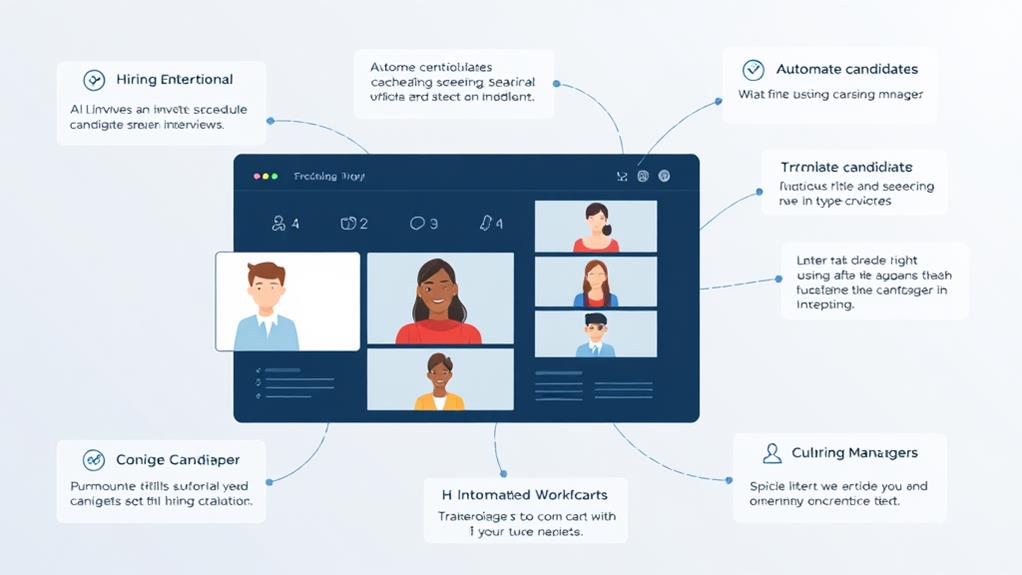
As businesses increasingly recognize the importance of efficient hiring processes, streamlining interview procedures has emerged as a critical factor in attracting and retaining top talent.
Small and medium-sized businesses (SMBs) face unique challenges in this situation, often constrained by limited resources and time. Leveraging artificial intelligence solutions can markedly enhance the effectiveness of interview processes, allowing SMBs to remain competitive in their respective industries.
To optimize these processes, SMBs should consider the following key strategies:
- Automated Scheduling: Implement tools that facilitate real-time availability matching between candidates and interviewers, dramatically reducing the back-and-forth often experienced in scheduling.
- Interview Analytics: Utilize data-driven insights from past interviews to identify patterns that correlate with successful hires, leading to more informed decision-making.
- Structured Interviews: Create standardized interview frameworks that utilize predetermined questions, ensuring consistency and fairness across candidate evaluations.
- Video Interviewing: Incorporate technology that allows for remote interviews, widening the talent pool while saving time and resources.
- Feedback Mechanisms: Establish systems for collecting and analyzing feedback from both interviewers and candidates, leading to continuous improvement of the interviewing process.
Improving Candidate Experience
In today's competitive job market, enhancing the candidate experience has become a paramount consideration for small and medium-sized businesses (SMBs) aiming to attract high-caliber talent. An effective candidate experience not only reflects well on the organization but also strengthens its employer brand.
By leveraging artificial intelligence (AI), SMBs can create a more engaging and personalized recruitment journey, setting themselves apart from larger competitors.
Key strategies for optimizing candidate experience include personalized communication and timely candidate feedback. Utilizing AI-powered chatbots, SMBs can provide instant responses to queries, guaranteeing candidates feel valued and informed.
This form of personalized communication meets candidates in their preferred channels, allowing them to engage with the recruitment process comfortably. AI can also analyze candidates' behaviors and preferences to tailor messages that resonate, enhancing the overall interaction.
Furthermore, gathering candidate feedback during and after the recruitment process is essential. AI-driven solutions can automatically solicit and analyze feedback, identifying pain points in the candidate journey.
This enables SMBs to adapt their strategies to address concerns and improve processes continuously. By fostering an open-loop system of feedback, these businesses can build trust and transparency, elements that candidates prioritize in today's employment landscape.
Ultimately, integrating AI into recruitment practices not only streamlines processes but also enriches the candidate experience. By focusing on personalized communication and actively seeking candidate feedback, SMBs can guarantee they attract and retain top talent, securing their place in a dynamic market.
Future Trends in AI Recruitment

The integration of AI in recruitment processes is not a static development but a dynamic evolution, especially as SMBs increasingly recognize the value of enhanced candidate experiences.
As technology advances, several future trends are set to reshape the landscape of talent acquisition. Predictive analytics, in particular, will play a significant role, enabling businesses to forecast hiring needs and identify potential high-performing candidates based on historical data.
Moreover, organizations will increasingly turn to AI for bias mitigation. By utilizing algorithms designed to minimize human biases, SMBs can guarantee fairer evaluation processes and a more diverse workforce.
The following trends are expected to be pivotal in the future of AI recruitment:
- Enhanced personalization: Tailored candidate communications based on preferences and behavior analysis.
- AI-assisted interviews: Virtual assistants conducting initial screeners, reducing time and enhancing efficiency.
- Data-driven decision making: Leveraging analytics for strategic workforce planning, leading to improved hiring outcomes.
- Continuous learning: AI systems evolving from feedback, adapting to new methodologies and best practices.
- Remote recruitment enhancements: Advanced remote interviewing tools that create more inclusive hiring processes.
Frequently Asked Questions
How Can SMBS Afford AI Technologies for Recruitment?
Small and medium-sized businesses (SMBs) can effectively integrate AI technologies into their recruitment processes by employing strategic budget management and exploring affordable solutions.
By prioritizing essential features and leveraging scalable AI platforms, SMBs can minimize costs while maximizing efficiency.
Collaboration with vendors offering flexible payment structures and subscription models further supports sustainable AI adoption.
Emphasizing innovative tools can empower businesses to attract top talent while freeing up resources for other critical operations.
What Skills Are Necessary to Implement AI in Hiring?
To effectively implement AI in hiring, organizations must possess skills in data analysis and machine learning.
For example, a startup that utilizes machine learning algorithms to analyze candidate data can automate the screening process, greatly improving efficiency.
This requires talent proficient in interpreting volumetric data patterns and programming algorithms that enhance decision-making.
Ultimately, embracing these competencies empowers organizations to harness AI's innovative potential, streamlining recruitment while fostering a culture of advanced analytical thinking.
Are There Risks Associated With AI in Recruitment?
Indeed, the integration of artificial intelligence in recruitment introduces several risks that warrant careful consideration.
Significantly, the potential for bias in algorithmic decision-making can perpetuate existing inequities if not adequately addressed. Consequently, implementing robust bias mitigation strategies is essential.
In addition, ethical considerations surrounding data privacy and transparency necessitate a thorough evaluation of AI systems to guarantee they align with equitable hiring practices.
Ultimately, thoughtful implementation can harness AI's potential while safeguarding fundamental rights.
How Does AI Ensure Diversity in Hiring Practices?
AI enhances diversity in hiring practices through bias mitigation techniques that identify and reduce potential prejudices in candidate sourcing.
By employing algorithms that analyze job descriptions and guarantee inclusive language, AI helps attract a broader range of applicants.
Additionally, advanced data analytics can evaluate applicant backgrounds while minimizing demographic bias, promoting equitable opportunities.
This innovative approach fosters a diverse workforce, enabling organizations to benefit from diverse perspectives and improve overall performance and culture.
What Are Common Misconceptions About AI in Recruitment?
Common misconceptions about AI in recruitment include the belief that it is infallible and free from biases, such as AI bias, which can inadvertently perpetuate discrimination.
Additionally, some assert that AI diminishes candidate experience by reducing personal interactions.
In reality, when implemented thoughtfully, AI can enhance recruitment efficiency while fostering a more personalized and engaging process, allowing organizations to better connect with diverse candidates and ultimately improve hiring outcomes.
Conclusion
Ultimately, the transformative power of AI in talent acquisition for small and medium-sized businesses emerges as a beacon of efficiency and innovation in an otherwise chaotic hiring landscape. Picture a recruitment process propelled by lightning speed, where resumes are sifted through as effortlessly as wind through leaves. The integration of AI not only revolutionizes candidate sourcing but crafts an unparalleled experience for applicants, ensuring that the future of recruitment is not merely automated but brilliantly illuminated by technological advancement.