
How to Develop a Marketing Strategy for Brand Repositioning
To develop a marketing strategy for brand repositioning, start by evaluating your current brand position and understanding consumer perceptions. Identify shifts in your target audience to tailor messaging effectively. Conduct a competitive analysis to highlight differentiation advantages. Establish clear, measurable goals to guide your efforts. Create compelling key messages that resonate with audience aspirations, and develop a diverse content strategy for engagement. Implement a performance measurement plan to track success and gather feedback. Align internal teams to maintain cohesion. This strategic approach guarantees a compelling shift, setting the stage for sustained growth and relevance. Additional insights await to enhance your strategy further.
Key Takeaways
- Regularly evaluate your current brand position to understand consumer perceptions and market trends for effective repositioning strategies.
- Conduct a competitive analysis to identify key competitors, their strengths, weaknesses, and how to differentiate your brand.
- Set clear repositioning goals with measurable objectives to guide your brand transformation efforts and track success.
- Develop key messaging that articulates your brand's new value proposition and resonates emotionally with your target audience.
- Utilize a multi-channel approach, including digital and traditional media, to effectively engage and reach diverse audience segments.
Define Your Current Brand Position
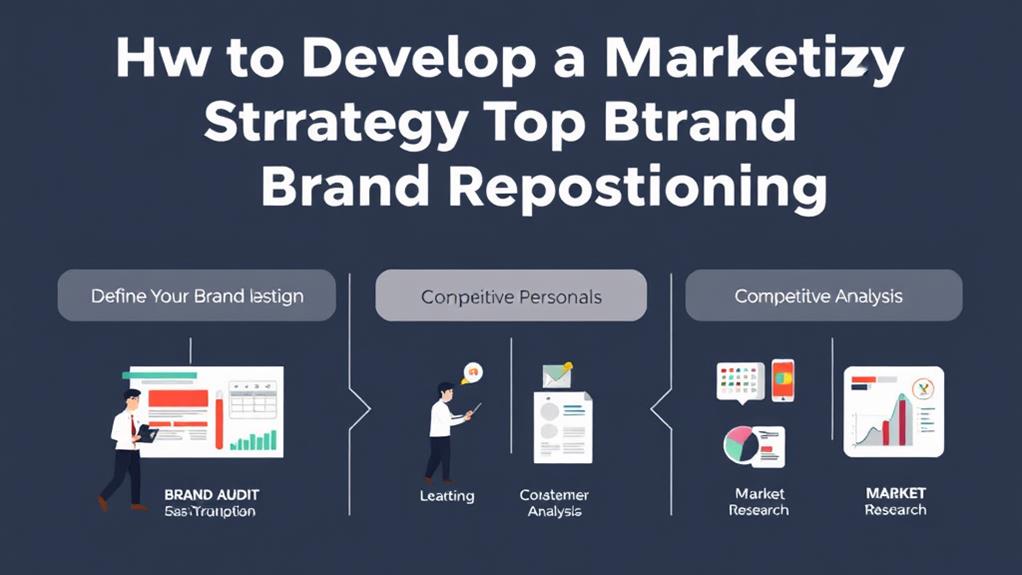
Regularly evaluating your current brand position is essential for effective brand repositioning. Your brand's perception in the marketplace hinges on numerous factors, including market trends that can shift consumer expectations and preferences.
To accurately define your brand position, audit how customers perceive your value proposition and emotional connection with your brand. Engaging with customer feedback is critical; their insights illuminate consumer behavior, revealing what resonates and what falls short.
A robust brand identity hinges on the alignment of your messaging consistency across all platforms. Discrepancies can dilute brand loyalty and confuse potential customers, undermining your differentiation strategy.
Effective repositioning requires a clear understanding of how your brand is currently positioned against competitors and what unique advantages you offer.
Assessing market trends helps you navigate the dynamic landscape, ensuring your brand does not stagnate. Identifying changes in consumer behavior allows you to adapt your strategies to foster deeper emotional connections with your target audience.
Identify Target Audience Changes
Recognizing shifts in your target audience is essential for maintaining relevance and ensuring your brand resonates in an ever-evolving market landscape. As consumer preferences shift, so do audience demographics, behavioral trends, and lifestyle changes. To successfully reposition your brand, it is critical to analyze these shifts thoroughly.
Start by refining your market segmentation approach. Identify which segments are growing or declining, and assess the factors driving these changes. Changes in psychographic profiles reveal insights into motivations, interests, and values that influence purchasing habits. Developing updated customer personas based on this information enables you to tailor offerings that align with your audience's evolving desires.
Cultural shifts play a pivotal role as well; understanding how social dynamics impact your customers can help you craft messages that resonate more deeply. For instance, a growing focus on sustainability may require brands to adapt their value propositions to address eco-conscious consumers.
Additionally, assess how technological advancements affect how your audience interacts with brands, revealing opportunities to enhance engagement and convenience.
Ultimately, adaptability in recognizing and responding to these target audience changes will strengthen your brand's relevance. Regularly evaluate new trends while listening to customer feedback, empowering your brand to maintain a genuine connection with your audience.
Conduct a Competitive Analysis

To effectively reposition a brand, a thorough competitive analysis is essential for understanding the landscape in which the brand operates.
Identifying key competitors allows for a detailed evaluation of their strengths and weaknesses, revealing opportunities for differentiation.
This strategic insight forms the foundation for crafting a compelling repositioning strategy that resonates with the target audience.
Identify Key Competitors
As organizations venture into brand repositioning, understanding the competitive landscape becomes essential, particularly when evaluating key competitors that shape consumer perceptions and market dynamics.
Identifying these competitors requires an analytical approach, focusing on factors that affect market share and brand loyalty. It's vital to discern how competitors utilize pricing strategies and promotion tactics to fortify their positions.
Consider the following aspects when identifying key competitors:
- Customer Segmentation: Observe how competitors target diverse demographics, influencing customer perception and loyalty.
- Industry Trends: Analyze prevailing trends within the sector to understand the competition's adaptability and their approach to brand differentiation.
- Value Proposition: Evaluate the effectiveness of competitors' value propositions in delivering unique benefits that captivate consumers.
Analyze Strengths and Weaknesses
Conducting a competitive analysis revolves around a thorough assessment of competitors' strengths and weaknesses, offering valuable insights into their market positioning. Implementing a SWOT analysis facilitates this process, enabling businesses to identify their competitive advantages while scrutinizing internal capabilities.
Understanding how competitors leverage resources can inform strategic resource allocation, ultimately enhancing your brand's position.
Brand perception is crafted through customer feedback; therefore, analyzing competitors' reputations provides essential context. What do consumers appreciate about their offerings? Where have their promises not met expectations? These insights reveal market trends that can be harnessed for your brand's benefit.
Moreover, exploring brand loyalty among competitors reveals opportunities for differentiation. If a competitor monopolizes a passionate customer base, understanding the nuances behind this loyalty can inform your repositioning strategy.
It's vital to recognize that the landscape is dynamic; continually revisiting competitive analyses guarantees adaptability to shifting market trends.
Ultimately, by understanding competitors' strengths and weaknesses, your brand can navigate the marketplace more effectively, positioning itself as a compelling alternative that resonates with the audience's desire for authenticity and freedom.
Set Clear Repositioning Goals
Setting clear repositioning goals is essential to effectively guide a brand's transformation, beginning with a precise definition of the target audience.
By identifying who the brand intends to connect with, organizations can tailor their messaging and offerings to resonate deeply with these consumers.
Moreover, establishing measurable objectives guarantees that the repositioning efforts can be tracked and evaluated, facilitating adjustments that lead to sustained success.
Define Target Audience
Frequently, brands undertaking a repositioning effort overlook the critical importance of clearly defining their target audience. A well-defined audience is not merely a demographic; it is a nuanced understanding that integrates various layers of consumer behavior.
To effectively reposition, brands must explore:
- Demographic Segmentation: Identify age, gender, income levels, and geographical distribution.
- Psychographic Profiling: Uncover the values, interests, and lifestyles that motivate purchasing decisions.
- Behavioral Targeting: Analyze past consumer behavior to predict future actions.
Creating detailed audience personas enables brands to engage meaningfully with their target consumers by aligning products with their desires.
Staying attuned to market trends and integrating customer feedback into the strategy fosters relevant engagement strategies, promoting loyalty and preference.
Understanding communication preferences guarantees that the brand's message resonates authentically. In a world teeming with options, consumers yearn for brands that genuinely recognize their needs and aspirations.
Defining the target audience not only sharpens focus but also cultivates a connection that empowers both the brand and its consumers—unlocking a shared journey toward freedom and fulfillment in their choices.
Establish Measurable Objectives
Establishing measurable objectives is fundamental to any successful brand repositioning effort. By formulating SMART objectives—Specific, Measurable, Achievable, Relevant, and Time-bound—you facilitate a path that guarantees clarity and direction in your strategy.
Utilize quantitative metrics to gauge market penetration, customer acquisition rates, and sales growth, while qualitative insights gathered from customer feedback can illuminate shifts in perception and engagement.
To guarantee effective performance tracking, align all objectives with broader organizational goals to maintain strategic alignment. This alignment not only enhances resource allocation, directing efforts where they're most needed, but also fosters stakeholder engagement by demonstrating accountability and transparency in your initiatives.
An effective timeline planning strategy is essential, as it lays out the phases of your repositioning effort. Define clear milestones that inform stakeholders of progress while providing a basis for ongoing evaluation.
Develop Key Messaging

At the heart of any successful brand repositioning lies the development of key messaging that resonates with the target audience. To achieve this alignment, brands must meticulously craft messaging that is clear, compelling, and reflective of their new identity. This process demands a robust messaging framework grounded in a deep understanding of the audience's needs, values, and emotional triggers.
Here are three fundamental elements to reflect upon when developing your key messaging:
- Value Proposition: Clearly articulate what unique benefits your brand offers, guaranteeing it aligns with your audience's desires and aspirations.
- Brand Narrative: Engage your audience with a mesmerizing story that embodies your brand's evolution. This narrative serves as the backbone of your messaging hierarchy and reinforces tone consistency across all communications.
- Emotional Appeal: Leverage storytelling techniques to create an emotional connection with your audience. By understanding their customer journey, you can effectively communicate how your repositioned brand aligns with their values and liberates their choices.
Utilizing audience segmentation, guarantee that your brand voice is tailored to different groups, addressing their specific preferences and pain points.
Choose Appropriate Channels
How can brands effectively navigate the complex landscape of media channels to reach their newly defined audience? The answer lies in a well-crafted, multi-faceted approach that leverages various marketing channels tailored to the preferences of the target demographic.
Digital advertising stands out as a vital component, offering precision targeting capabilities that traditional media often lacks. Within the digital sector, social media emerges as a vibrant platform for engagement, making influencer marketing a powerful strategy to harness the trust and reach of established personalities.
However, digital platforms should not overshadow the importance of email campaigns. These campaigns enable personalized communication, facilitating a sense of closeness that resonates with freedom-seeking audiences.
In conjunction with this, effective content distribution, underpinned by robust SEO strategies, guarantees visibility in a saturated online environment, allowing brands to assert their presence and attract engagement.
Furthermore, brands should consider blending in traditional media to capture broader demographics, particularly for those less inclined to engage online. This could include event sponsorships—creating organic touchpoints where consumers can experience the brand firsthand, strengthening emotional resonance.
Create a Content Strategy

To effectively engage a newly defined audience, brands must develop a thorough content strategy that aligns with their repositioned identity and resonates with consumer values. This strategy should embrace diverse content formats that not only communicate the brand's message but also foster genuine audience engagement.
Crafting this strategy involves three critical steps:
- Identify Core Themes: Determine the fundamental themes that reflect the brand's new identity. These themes should be compelling enough to connect with the audience's aspirations and emotions, driving them to engage with the content.
- Diversify Content Formats: Utilize a variety of content formats—such as blogs, videos, infographics, and podcasts—to cater to varying consumer preferences. This approach allows for an expansive reach, enhancing the likelihood of capturing the attention of diverse audience segments.
- Promote Interactive Elements: Encourage participation through interactive content, such as polls, surveys, or contests. This not only strengthens audience engagement but also creates a sense of community, fostering loyalty and long-lasting relationships.
Ultimately, a well-crafted content strategy positions the brand not just as a provider of goods or services, but as a meaningful participant in the lives of customers.
Implement a Measurement Plan
To effectively assess the success of your brand repositioning efforts, it is essential to define clear Key Performance Indicators (KPIs) that align with your strategic goals.
Regular analysis of these metrics will provide actionable insights, enabling informed adjustments to your marketing initiatives.
Define Key Performance Indicators
Frequently, organizations overlook the critical role that Key Performance Indicators (KPIs) play in the success of a brand repositioning strategy. Defining KPIs is essential for establishing a measurement framework that enables precise performance metrics and informed decision-making.
By outlining clear success indicators, brands can conduct effective strategic evaluations that inform their positioning efforts.
Consider incorporating these three essential KPIs into your measurement plan:
- Customer Engagement Rates: Track interactions with your brand across various platforms to gauge loyalty and interest, serving as a cornerstone for outcome assessments.
- Market Share Growth: Measure shifts in market share pre- and post-repositioning, allowing for benchmark comparisons that highlight progress.
- ROI Analysis: Evaluate the return on investment associated with marketing campaigns, ensuring that every dollar spent is aligned with brand objectives and supports data-driven decisions.
Establishing these performance metrics facilitates rigorous progress tracking and effectiveness measurement.
In addition, by leveraging these KPIs, organizations can navigate their repositioning journey with the confidence that they are making purposeful and impactful choices that resonate with their audience, ultimately fostering a greater sense of brand freedom.
Analyze Data Regularly
Analyzing data regularly is paramount for organizations seeking to effectively implement a measurement plan during brand repositioning. This commitment fosters a culture of data-driven decisions, enabling brands to align their objectives with market realities.
Utilizing analytics tools, organizations can leverage data visualization techniques to translate complex data sets into intuitive reporting dashboards that facilitate insight generation.
Engaging in trend analysis and customer segmentation allows businesses to pinpoint shifts in consumer preferences and behaviors. This granular understanding is critical for informed market forecasting and guarantees brands can adapt their messaging and offerings accordingly.
By employing predictive modeling, organizations can anticipate future trends and make proactive adjustments, reinforcing their relevance in an ever-evolving landscape.
Performance metrics should encompass not only traditional sales figures but also qualitative data gleaned from customer feedback. Regularly monitoring these metrics facilitates a dynamic repositioning strategy that resonates with the target audience's desires for authenticity and innovation.
Ultimately, a rigorous analysis of data enables organizations to navigate the complexities of brand repositioning confidently, assuring they not only keep pace with market changes but also liberate their brand's potential to thrive in new avenues.
Monitor Feedback and Adapt

Effective brand repositioning hinges on a continuous loop of feedback and adaptation; companies that prioritize this process often see more successful outcomes.
By diligently monitoring customer insights, developing effective feedback loops, and fostering stakeholder engagement, brands can markedly enhance their market relevance and brand perception.
To implement this adaptive strategy, organizations should consider the following:
- Analyze Sentiment: Regularly conduct sentiment analysis to gauge public opinion surrounding your brand. Understanding consumer behavior helps identify areas of strength and opportunities for improvement.
- Embrace Market Trends: Keep an eye on emerging market trends that may impact customer preferences. Staying flexible enables businesses to pivot and align offerings with evolving demands.
- Establish Response Mechanisms: Create structured response mechanisms that allow for rapid adjustment based on customer feedback. This could include surveys, focus groups, or social media listening, all designed to foster continuous improvement.
Align Internal Teams and Stakeholders
Building upon a foundation of responsive feedback mechanisms, aligning internal teams and stakeholders becomes critical for successful brand repositioning. The process begins with fostering team collaboration across various departments, guaranteeing that everyone shares a common vision and understands the strategic objectives of the repositioning effort.
To facilitate this alignment, alignment workshops should be conducted, enabling open dialogues that clarify roles and expectations while promoting role clarity. Engaging stakeholders through structured stakeholder engagement initiatives can further enhance internal communication, encouraging valuable contributions from diverse perspectives.
The incorporation of feedback loops guarantees that concerns are addressed promptly, enabling a responsive culture that embraces change rather than resists it. Encouraging interdepartmental synergy is essential; when marketing, sales, product development, and customer service are harmonized, the brand's message becomes cohesive, strengthening the overall impact of the repositioning strategy.
Cultural alignment is equally critical, as it fosters an environment where team members feel empowered and connected to the brand's mission. Ultimately, the key to effective internal alignment lies in creating a climate of trust where departments can thrive on freedom of expression, innovation, and collective ownership of the brand's future.
A unified approach not only enhances the efficiency of the repositioning process but also cultivates a sense of belonging, motivating every member to champion the brand transformation as their own.
Frequently Asked Questions
How Do I Recognize When My Brand Needs Repositioning?
Recognizing the need for brand repositioning hinges on observing shifts in your target audience and market trends.
If demographic preferences evolve or competitive forces leave your brand irrelevant, it's time to reassess.
Additionally, declining engagement metrics or negative feedback may indicate disconnects between your brand identity and consumer expectations.
Stay attuned to these signals, as they are vital in ensuring your brand remains relevant, resonates with your audience, and facilitates growth in a dynamic marketplace.
What Budget Should I Allocate for a Repositioning Strategy?
When determining an appropriate budget for a repositioning strategy, thorough budget planning and meticulous cost analysis are essential.
Consider the scope of the repositioning—whether it involves market research, creative development, or multi-channel rollout. Typically, organizations allocate 5-10% of projected revenue for this endeavor.
However, make certain that funds are proportionate to your brand's ambition and target audience, allowing room for innovative approaches that resonate with consumer freedom and desire for authenticity.
How Long Does a Brand Repositioning Take to Implement?
The timeline for brand repositioning varies greatly based on several factors, including the complexity of the changes, market conditions, and the organization's preparedness.
Typically, implementation occurs in phases, starting with research and strategy development, followed by execution and evaluation.
A successful repositioning initiative can take anywhere from several months to a few years.
Careful consideration of these timeline factors guarantees that the brand aligns with its desired identity and resonates effectively with its target audience.
What Are Common Mistakes in Brand Repositioning?
Common mistakes in brand repositioning often stem from misalignment with the target audience and inconsistencies in brand messaging.
Neglecting thorough market research can lead to misunderstandings of consumer needs.
Additionally, failing to communicate the change effectively may alienate existing customers and confuse potential ones.
Maintaining a clear, cohesive message across all platforms is essential, as is adapting to audience feedback to guarantee relevance and engagement throughout the repositioning process.
How Do I Maintain Brand Loyalty During Repositioning?
Maintaining brand loyalty during repositioning requires a strategic approach.
Focus on enhancing customer engagement by communicating transparently about the changes and their benefits.
Utilize loyalty programs to reward existing customers, reinforcing their connection to the brand.
Encourage feedback to create a sense of involvement, ensuring customers feel valued.
Conclusion
In conclusion, effective brand repositioning necessitates a thorough strategy that encompasses a deep understanding of current brand positioning, target audience dynamics, and competitive landscape. The adage "change is the only constant" underscores the importance of adaptability in marketing efforts. By setting defined goals, crafting compelling messaging, and aligning internal stakeholders, businesses can navigate the complexities of repositioning. Ultimately, systematic measurement and feedback loops will guarantee that the brand evolves in tune with market demands and consumer expectations.