How AI Is Revolutionizing SMB Client Engagement
AI is revolutionizing client engagement for small and medium-sized businesses (SMBs) by harnessing advanced analytics to understand client needs and preferences better. It enables personalized interactions that foster strong relationships, while predictive analytics helps identify churn risks and optimize marketing strategies. Additionally, AI-driven automation streamlines customer support, allowing for timely and effective responses, and chatbots enhance communication by providing 24/7 availability. These innovations not only improve engagement but also drive customer loyalty. To explore how these AI capabilities can further elevate client relationships, you may find the following insights particularly enlightening.
Key Takeaways
- AI-driven analytics provide deep insights into client needs and preferences, enhancing personalization and fostering stronger relationships.
- Automation streamlines client interactions, boosting response times and ensuring timely follow-ups, which improves client satisfaction.
- Predictive analytics enable targeted marketing and churn prediction, improving retention strategies and optimizing inventory based on future purchasing trends.
- AI-powered chatbots enhance communication with 24/7 support, offering tailored responses that improve engagement and satisfaction.
- Continuous measurement of performance metrics through AI insights allows SMBs to dynamically adjust strategies for better client experiences and loyalty.
Understanding Client Needs With AI

In the landscape of modern business, where client expectations are constantly evolving, understanding client needs has become paramount for small and medium-sized businesses (SMBs). Effective engagement hinges on harnessing data that reflects the true voice of the customer. Artificial intelligence (AI) offers SMBs a unique opportunity to decode client feedback and transform it into actionable insights.
By employing AI-driven analytics, businesses can sift through vast amounts of data to unearth behavioral insights that reveal client preferences and pain points. This proactive approach enables SMBs to anticipate customer needs, ensuring they stay ahead of the competition. For example, sentiment analysis can be utilized to gauge the emotional tone of client communications, enabling deeper understanding of their experiences and satisfaction levels.
Furthermore, AI tools can track engagement patterns, allowing businesses to tailor their offerings in real-time. In leveraging AI, SMBs can cultivate a culture of continuous improvement, centered around client feedback. This iterative process empowers businesses to refine their strategies and adapt offerings based on clients' evolving expectations.
By understanding client needs more thoroughly, SMBs can foster stronger relationships, yielding higher retention rates and maximized lifetime value. Ultimately, the integration of AI into understanding client needs not only enhances engagement but also lays the groundwork for a collaborative and responsive business model.
With data-driven insights organized at their fingertips, SMBs have the freedom to innovate and grow, ensuring they remain relevant in a rapidly changing market landscape.
Personalization Through Data Analysis
Harnessing the insights gained from understanding client needs, SMBs can further enhance their engagement strategies through personalized experiences facilitated by data analysis.
By employing a data-driven approach, businesses can craft tailored interactions that resonate with their audience, creating a more meaningful connection throughout the customer journey. This is achieved through key methodologies like:
- Behavioral Segmentation – Dividing clients into meaningful groups based on their behavior helps in understanding preferences and habits.
- Audience Profiling – Deep insights into demographics and psychographics enable better targeting, guaranteeing campaigns speak directly to the core of the audience's interests.
- Sentiment Analysis – Gauging customer sentiments from feedback allows SMBs to adjust messaging and offers, enhancing overall user experience.
- Engagement Metrics – Monitoring specific metrics guarantees businesses can refine strategies dynamically, maximizing the impact of targeted marketing efforts.
Enhancing Customer Support Efficiency
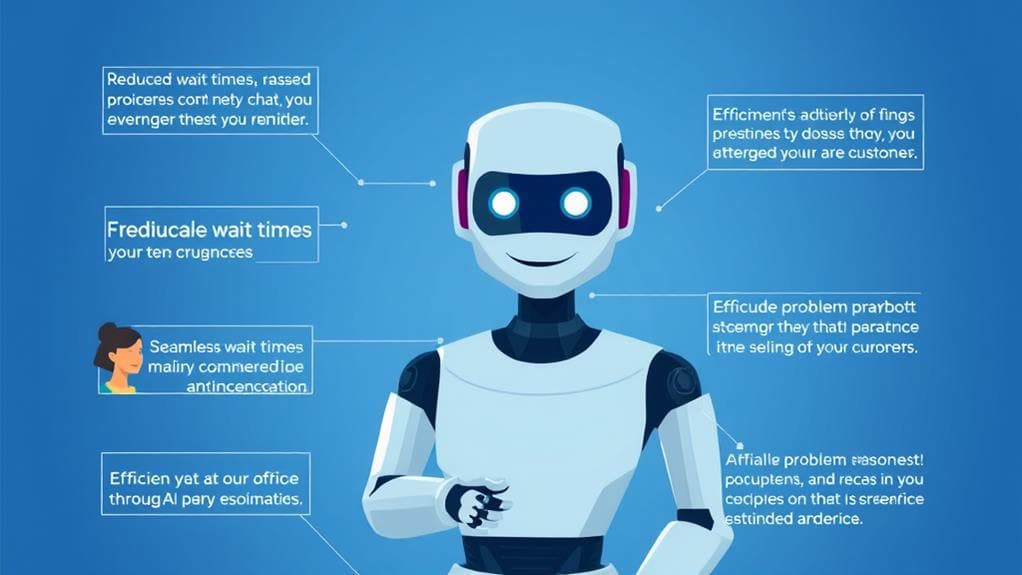
Customer support efficiency is being considerably transformed by AI technologies, which streamline operations and enhance user satisfaction. By implementing self-service solutions, SMBs enable customers to access information and resolve issues independently, greatly reducing wait times and the burden on support staff. This shift not only fosters a sense of empowerment among clients but also allows businesses to allocate resources more strategically.
AI-driven systems can analyze common customer queries and help organizations design an intuitive self-service interface, equipping users with the tools they need to troubleshoot effectively. This capability facilitates a more informed customer base and frees support agents to focus on complex issues requiring human intervention.
Moreover, the integration of real-time feedback mechanisms enhances the overall support experience. Customers can share their insights immediately after interactions, providing businesses with valuable data on support performance and customer satisfaction. By analyzing this feedback, SMBs can identify themes and areas for improvement, refining their service strategies over time. This iterative process guarantees continuous enhancement of service quality, fostering customer loyalty and retention.
Implementing AI in customer support is not merely an operational upgrade; it represents a strategic shift toward creating a more responsive and autonomous service environment. By embracing these technologies, SMBs can cultivate stronger relationships with their clients, ultimately driving growth and enhancing their competitive edge in a fast-evolving marketplace.
The freedom to access support resources at will enriches the customer experience, aligning perfectly with the desires of modern consumers.
Predictive Analytics for Better Engagement
Leveraging predictive analytics, SMBs can transform their client engagement strategies by gaining deeper insights into customer behaviors and preferences. This data-driven approach empowers businesses to anticipate needs and create tailored interactions, enhancing overall client satisfaction and loyalty.
To effectively utilize predictive analytics in engagement strategies, SMBs can focus on the following key areas:
- Customer Segmentation: By analyzing past behaviors, businesses can categorize clients based on preferences, allowing for targeted marketing campaigns that resonate more deeply with distinct demographics.
- Churn Prediction: Understanding the indicators of customer disengagement enables SMBs to preemptively address concerns, implementing retention strategies before losing valuable clients.
- Purchase Forecasting: Predictive models can identify trends in customer buying patterns, allowing businesses to optimize inventory and personalize recommendations, ensuring that clients receive timely and relevant offers.
- Feedback Analysis: By examining customer feedback through sentiment analysis, SMBs can gain insight into service improvements, ensuring that engagement efforts align with client expectations.
Incorporating these strategies enables small and medium-sized businesses to make informed, data-driven decisions that foster genuine relationships with their clients.
As SMBs embrace predictive analytics, they not only enhance engagement but also create a foundation for long-term growth in customer loyalty and satisfaction. This revolutionary approach to understanding customer behavior empowers businesses to thrive in a competitive marketplace, revealing the potential for sustained success.
Automating Client Interactions
As predictive analytics frameworks pave the way for deeper insights into consumer behavior, small and medium-sized businesses (SMBs) are increasingly turning to automation to further enhance client interactions.
Automating client interactions not only streamlines processes but also optimizes user experience across multiple communication channels. By leveraging technology, businesses can capture client feedback and interaction history to tailor engagement strategies that resonate with their audience.
One critical benefit of automation is improved response time. Automated systems can analyze sentiment data to assess customer emotions during interactions, allowing businesses to adapt quickly and effectively. This agility guarantees clients feel valued and understood, reinforcing long-term relationships.
Follow-up automation, for instance, facilitates timely messages to clients after purchases or inquiries, thereby enhancing satisfaction and encouraging repeat business.
Moreover, SMBs can harness automation tools to create personalized interactions based on historical data. By integrating client preferences into their engagement strategies, businesses can offer tailored suggestions and solutions, adding tangible value to the customer journey.
As automation continues to evolve, it empowers SMBs to maintain competitive edges without sacrificing the human touch in their communications.
In today's fast-paced digital landscape, embracing automation is no longer optional; it is crucial. By adopting automated systems for client interactions, SMBs can focus more on strategizing future growth while guaranteeing that their clients receive the timely, personalized attention they deserve.
The future of client engagement lies in this intelligent fusion of technology and human insight.
Leveraging Chatbots for Communication
In the domain of client communication, chatbots have emerged as a transformative tool for SMBs seeking to enhance engagement and streamline interactions. By integrating advanced AI capabilities, businesses can leverage chatbots to revolutionize the user experience and foster meaningful relationships with their clients.
Effective implementation hinges on several strategic considerations:
- Chatbot Training: A well-trained chatbot understands various user inquiries and can respond with contextually relevant information. Ongoing training is essential to adapt to evolving customer needs and preferences.
- Personalization: By utilizing customer data, chatbots can provide tailored responses, making each interaction feel unique. This personalization increases client satisfaction and loyalty.
- 24/7 Availability: Chatbots are not bound by time constraints, enabling SMBs to offer round-the-clock service. Clients appreciate having their questions addressed instantly, regardless of when they reach out.
- Data Collection and Analysis: Chatbots can gather valuable insights from customer interactions. This data aids in identifying trends and improving overall client engagement strategies.
Measuring Success With AI Insights

Success in client engagement through AI can be considerably measured by analyzing a variety of performance metrics that reflect the impact of technology on customer interactions. For small and medium-sized businesses (SMBs), leveraging AI insights offers a transformative approach to understanding client behavior and preferences.
By methodically tracking metrics such as response times, customer satisfaction scores, and engagement levels, businesses can pinpoint areas requiring enhancement and appreciate successful strategies.
Analyzing feedback, whether it's in the form of customer surveys or sentiment analysis from social media interactions, provides an added layer of understanding about client needs and sentiments. This feedback loop enables businesses to adapt their engagement tactics dynamically, thereby fostering a culture of customer-centricity.
Moreover, AI facilitates real-time performance tracking, allowing SMBs to assess the effectiveness of campaigns and interactions on-the-fly. By segmenting data based on various demographics, businesses can tailor their messaging and service offerings, ensuring they resonate with distinct audience segments.
Ultimately, the ability to derive actionable insights from AI-driven metrics empowers SMBs to create personalized client experiences that transcend conventional engagement methods. Clients feel valued when their preferences are acknowledged, leading to enhanced loyalty and satisfaction.
In an era where freedom of choice reigns supreme for consumers, measuring success with AI insights becomes not just a benchmarking exercise but a strategic imperative—helping SMBs navigate the complexities of client engagement in a meaningful, data-informed manner.
Frequently Asked Questions
How Does AI Improve Customer Loyalty in Smbs?
AI enhances customer loyalty in small and medium-sized businesses (SMBs) by delivering personalized experiences that resonate with individual preferences.
Through predictive analytics, businesses can anticipate customer needs and tailor offerings accordingly, fostering deeper relationships. As a result, customers feel valued and understood, which greatly increases the likelihood of repeat business.
This strategic approach not only bolsters retention rates but also empowers SMBs to compete effectively, reinforcing a sense of customer freedom in their choices.
What Industries Benefit Most From AI in Client Engagement?
Industries such as healthcare and retail are poised to gain considerably from AI in client engagement.
For instance, a healthcare analytics company utilized AI to improve patient interaction, enhancing overall satisfaction and adherence to care plans.
Similarly, retail automation enables personalized shopping experiences, while financial forecasting empowers firms to anticipate client needs.
The hospitality sector benefits from personalized interactions, and education engagement improves student experiences, showcasing the transformative potential of AI across diverse sectors.
Are There Any Ethical Concerns With Using Ai?
The implementation of AI raises significant ethical concerns, particularly around AI transparency and data privacy.
Transparency is essential to guarantee that customers understand how their data is utilized, fostering trust between organizations and clients.
Additionally, data privacy protections must be prioritized to prevent unauthorized use of personal information.
Addressing these concerns is critical for maintaining ethical standards and guaranteeing that technological advancements do not undermine fundamental rights and freedoms in client interactions.
How Does AI Impact Employee Roles in Smbs?
AI's role transformation in small and medium-sized businesses (SMBs) is redefining workforce dynamics, instilling a sense of liberation and opportunity among employees.
By automating repetitive tasks and augmenting decision-making processes, AI enhances employee productivity and fosters innovation.
As staff adapt to new technologies, they gain the freedom to focus on strategic initiatives, creativity, and personal growth, ultimately leading to a more engaged workforce that contributes to a vibrant and flourishing business environment.
What Are Common Misconceptions About AI in Client Engagement?
Common misconceptions about AI in client engagement often overlook its limitations, suggesting it can replace the human touch entirely.
While AI enhances efficiency through automation and data analysis, the emotional intelligence and personal connections fostered by human interactions remain irreplaceable.
Additionally, some believe AI can fully interpret nuanced customer needs, yet it requires human oversight to guarantee tailored solutions.
Understanding these dynamics is essential for businesses aiming for a balanced and effective client engagement strategy.
Conclusion
Artificial intelligence is fundamentally transforming small and medium-sized businesses' client engagement strategies. By harnessing data-driven insights, enhancing efficiency, and fostering personalized interactions, AI not only meets client needs but also maximizes meaningful metrics. The seamless integration of chatbots and predictive analytics further elevates engagement efforts, leading to a profound impact on customer satisfaction and loyalty. Ultimately, the strategic synergy of AI and client connectivity cultivates a competitive edge in the swiftly changing marketplace.