The Role of AI in SMB Risk Management
AI is instrumental in transforming risk management for small and medium-sized businesses (SMBs). By leveraging predictive analytics and anomaly detection, AI identifies potential risks in real-time, allowing SMBs to respond swiftly to emerging threats. Automation of compliance monitoring simplifies adherence to regulatory standards, while data-driven insights bolster strategic decision-making. AI enhances operational resilience and minimizes risk-related costs through streamlined processes. As SMBs face increasing complexities in their business environments, understanding the evolving capabilities of AI can further strengthen their risk management frameworks and improve overall performance. Insights into these advancements will illuminate their potential benefits.
Key Takeaways
- AI leverages predictive analytics to identify potential risks by analyzing historical data, enabling SMBs to proactively address vulnerabilities.
- Automation streamlines risk management processes, reducing manual oversight and allowing for real-time threat detection and incident response.
- Continuous monitoring through AI-driven solutions provides ongoing assessments of risk factors, enhancing resilience against cyber threats and compliance issues.
- Data analysis powered by AI transforms raw data into actionable insights, highlighting trends that inform strategic decision-making and risk mitigation.
- Successful AI implementation in SMBs has led to significant cost reductions and enhanced operational resilience, exemplified by real-world case studies.
Understanding Risk Management in SMBs

Effective risk management is a cornerstone of sustainable growth for small and medium-sized businesses (SMBs), functioning as both a safeguard and a strategic tool. To traverse the multifaceted landscape of business operations, SMBs must develop robust risk awareness, allowing them to identify potential pitfalls proactively. This involves implementing thorough threat evaluation mechanisms that analyze both internal and external factors affecting their operations.
An essential component of effective risk management is the establishment of compliance strategies that align with regulatory requirements. These strategies not only mitigate legal risks but also enhance overall operational integrity. Employee training is crucial in this regard, as a well-informed workforce is more adept at recognizing operational hazards and mitigating financial vulnerabilities before they escalate.
Moreover, cybersecurity measures must be prioritized, given the increasing digitization of business processes. Developing decision-making frameworks that integrate cybersecurity considerations can further bolster an SMB's resilience against breaches. Importantly, insurance considerations also play a pivotal role; by adequately evaluating insurance needs, businesses can protect themselves from unforeseen financial setbacks stemming from various risks.
SMBs face unique regulatory challenges, and maneuvering these requires a strategic approach that combines insight, foresight, and adaptability. By prioritizing a structured risk management approach, SMBs not only safeguard their assets but also position themselves for long-term success in an unpredictable business environment.
Balancing an eye towards the future with a firm grasp of present risks will empower SMBs to thrive sustainably.
How AI Identifies Risks
The integration of artificial intelligence (AI) into risk management frameworks offers SMBs innovative tools to enhance their risk identification processes. By employing advanced algorithms, organizations can uncover potential risks that may otherwise go unnoticed. AI algorithms analyze vast datasets, identify patterns, and predict future risks, enabling businesses to act proactively rather than reactively.
AI enhances traditional risk identification techniques through the following strategies:
- Predictive Analytics: AI algorithms leverage historical data to forecast potential risks, granting SMBs the foresight needed to mitigate them effectively.
- Natural Language Processing (NLP): By analyzing text data such as emails and social media, AI can detect emerging concerns and sentiment trends that may signal risks.
- Anomaly Detection: AI identifies deviations from the norm in operational processes, which can often indicate fraud, cyber threats, or other unforeseen risks.
- Continuous Monitoring: AI systems can perform real-time assessments of risk factors, allowing SMBs to remain vigilant and informed about their risk landscape.
Adopting these AI-driven risk identification techniques is not merely about technology implementation; it is a strategic approach that empowers SMBs to gain a competitive advantage.
Data Analysis and Insights
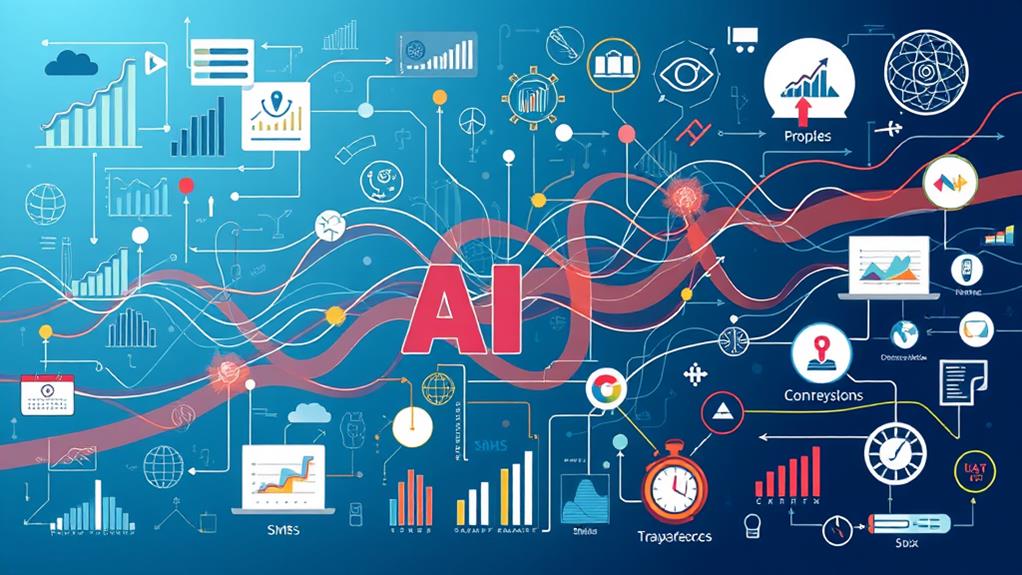
In the domain of risk management, data analysis serves as a cornerstone for deriving actionable insights that empower SMBs to navigate challenges effectively. By harnessing AI-driven analytics, organizations can identify key data trends that reveal potential threats and opportunities. Insight generation becomes a strategic priority, allowing businesses to explore deeper into risk forecasting and developing informed mitigation strategies.
Data analysis facilitates robust decision support systems. Equipped with advanced tools for anomaly detection, SMBs can promptly spot deviations from expected performance metrics, enabling rapid responses to emerging risks. The ability to visualize data through intuitive dashboards enhances comprehension and fosters agile decision-making, making complex data sets more accessible and interpretable.
Moreover, compliance tracking becomes seamless with data analysis, as it allows organizations to monitor regulatory changes and guarantee adherence to necessary standards. This analytical approach not only mitigates risks associated with non-compliance but also secures a competitive edge in the marketplace.
Ultimately, a strategic focus on data analysis empowers SMBs to transform raw data into powerful insights that drive resilience and adaptability. By understanding and leveraging the nuances of their data landscape, businesses gain the freedom to make proactive decisions, ultimately leading to sustainable growth.
Through a disciplined approach to data analysis, SMBs can confidently navigate the myriad risks present in today's dynamic environment.
Automation in Risk Mitigation
Automation emerges as a powerful ally in the domain of risk mitigation, streamlining processes that traditionally required extensive manual oversight. By leveraging advanced technologies such as machine learning, organizations can shift from reactive strategies to proactive risk management, enhancing both operational efficiency and compliance automation.
This technological evolution facilitates a more responsive approach to risk mitigation, enabling businesses to allocate resources effectively while minimizing potential threats.
Key aspects of automation in risk mitigation include:
- Threat Detection: Automated systems analyze vast amounts of data in real-time, identifying anomalies and potential risks more swiftly than human counterparts.
- Incident Response: Automation allows for rapid workflow optimization in response to identified threats, ensuring a timely approach to mitigation that often reduces the impact on business operations.
- Risk Prioritization: Utilizing data-driven insights, automated processes assist in categorizing risks based on severity and potential impact, enabling informed decision support.
- Cost Reduction: By minimizing manual labor and optimizing resource allocation, organizations can greatly lower costs associated with risk management initiatives.
Ultimately, automation not only enhances the effectiveness of risk mitigation strategies but also fosters an agile environment where SMBs can thrive.
With streamlined processes, improved threat detection capabilities, and efficient incident response mechanisms, organizations can embrace a strategic approach to risk management that aligns with their goals of freedom and innovation.
Case Studies and Success Stories
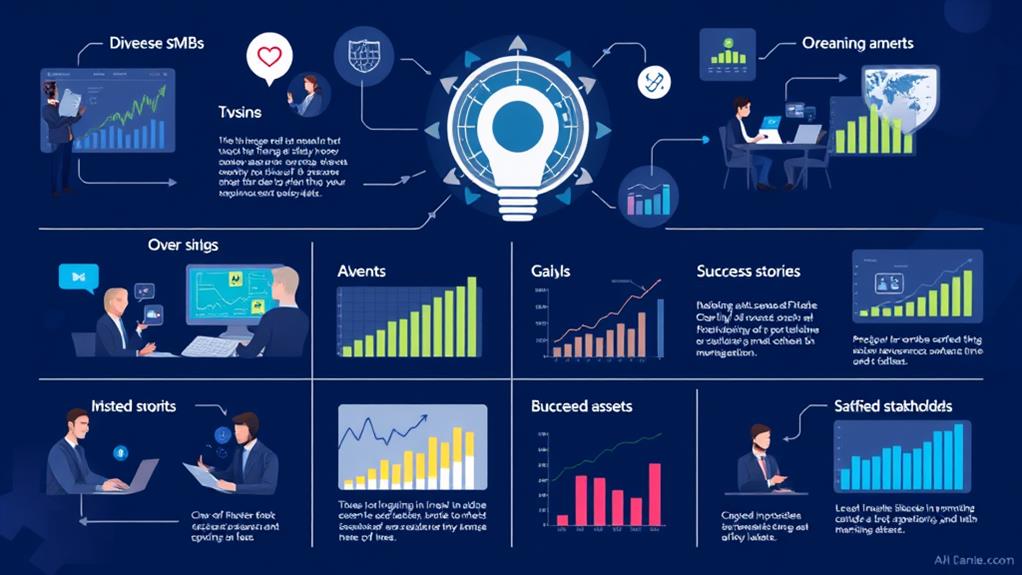
Numerous case studies illustrate how small and medium-sized businesses (SMBs) have successfully integrated AI-driven risk management strategies, yielding significant returns on investment and enhanced operational resilience.
For instance, a retail SMB adopted predictive analytics to identify supply chain vulnerabilities, demonstrating a remarkable reduction in stock-outs and a 20% increase in customer satisfaction. This case exemplifies the importance of establishing robust success metrics to evaluate the impact of AI initiatives.
However, the path to AI implementation is not without its challenges. Many SMBs encounter technology integration hurdles, especially when aligning AI tools with existing systems.
A food processing company navigated these complexities by developing thorough training requirements, ensuring employees were equipped to utilize new technologies effectively.
Stakeholder engagement strategies also play a vital role in successful AI adoption. An insurance SMB utilized collaborative workshops to address ethical considerations surrounding data use, fostering a culture of transparency and trust.
By prioritizing stakeholder input, the company improved buy-in and laid a solid foundation for future AI projects.
Cost benefit analysis further underscores the efficacy of AI applications in various sectors. A local manufacturing firm achieved a 30% reduction in risk-related costs after implementing an AI-driven monitoring system.
This case not only highlights industry-specific applications but also reinforces the need for SMBs to carefully assess AI implementation challenges to maximize outcomes.
Future of AI in SMB Risk Management
The future of AI in SMB risk management is poised for transformation through enhancements in predictive analytics, which can offer deeper insights into emerging threats.
Additionally, the integration of automated risk assessments will streamline processes, allowing businesses to respond more swiftly and effectively to potential vulnerabilities.
Coupled with real-time monitoring solutions, these advancements promise a proactive approach to risk management that can markedly improve resilience and decision-making in small and medium-sized enterprises.
Predictive Analytics Enhancements
Anticipating future risks through enhanced predictive analytics marks a significant transformation in how small and medium-sized businesses (SMBs) approach risk management. By employing sophisticated predictive modeling and analytics tools, SMBs can achieve greater insight into risk forecasting, enabling more informed decisions.
Key enhancements in predictive analytics include:
- Data Trends Identification: Understanding historical data trends allows SMBs to spot potential risks before they escalate.
- Scenario Analysis: Implementing scenario analysis improves risk probability assessments and prepares businesses for various potential outcomes.
- Algorithm Efficiency: Advances in algorithm efficiency facilitate real-time data processing, leading to quicker decision support and a more agile response to emerging threats.
- Tailored Risk Strategies: Customized risk strategies can be developed by integrating risk probabilities with predictive analytics, enhancing overall risk management protocols.
With these enhancements, SMBs position themselves strategically to navigate the complexities of an ever-evolving business landscape.
Automated Risk Assessments
Building on advancements in predictive analytics, automated risk assessments are emerging as a transformative tool for small and medium-sized businesses (SMBs) in their risk management strategies. By leveraging automated tools, SMBs can streamline their processes for risk scoring, guaranteeing that they accurately identify and assess potential threats.
This technology facilitates compliance automation, enabling businesses to adhere to regulatory standards with reduced manual oversight. Additionally, through threat modeling and risk prioritization, organizations can efficiently allocate resources where they are most needed.
Automated risk assessments provide essential decision support, allowing stakeholders to make informed choices that align with their risk appetite. Workflow integration guarantees that these assessments are seamlessly embedded within existing operational frameworks, enhancing collaboration and information sharing.
The use of automated risk assessments not only leads to significant cost reduction but also fosters efficiency gains by minimizing human error and redundant tasks. Ultimately, this strategic approach promotes continuous improvement—a critical aspect for SMBs traversing an increasingly complex risk landscape.
Embracing automated risk assessments equips businesses with the capabilities necessary to thrive while maintaining robust risk management practices that respond dynamically to evolving challenges.
Real-time Monitoring Solutions
Harnessing advancements in artificial intelligence, real-time monitoring solutions are set to redefine risk management for small and medium-sized businesses (SMBs). These technologies provide continuous oversight of critical aspects of an organization's operations, enhancing resilience against various threats while bolstering compliance with industry standards.
Key benefits of real-time monitoring include:
- Cloud Security: Continuous oversight of cloud infrastructure to detect and mitigate security breaches.
- Threat Detection: Leveraging AI algorithms to identify anomalies that may indicate cyber threats or fraud attempts.
- Incident Response: Facilitating prompt responses to incidents, thereby minimizing downtime and potential losses.
- Compliance Monitoring: Ensuring adherence to relevant regulatory standards, consequently protecting data privacy and reducing legal risks.
Real-time monitoring also addresses network vulnerabilities, ensuring that weaknesses are identified and rectified promptly.
Additionally, integrating employee training into these solutions enhances security culture within SMBs, empowering teams to remain vigilant.
As organizations increasingly rely on digital frameworks, adopting AI-driven real-time monitoring will be essential for sustaining operational integrity and fortifying risk management strategies, ultimately fostering a secure, compliant, and resilient business environment.
Frequently Asked Questions
What Are Common Risks Faced by SMBS Today?
Small and medium-sized businesses (SMBs) encounter various risks that can impact their operations and viability.
Common challenges include financial fraud, which can undermine fiscal stability, and cybersecurity threats that jeopardize sensitive data.
Additionally, supply chain disruptions can affect product availability, while regulatory compliance discrepancies may lead to penalties.
Operational inefficiencies can weaken productivity, and market volatility poses challenges in forecasting and strategic planning.
Addressing these risks is essential for sustainable growth and resilience.
How Can SMBS Afford AI Solutions for Risk Management?
In an environment where budgets are tight yet the necessity for innovation looms large, small and medium-sized businesses (SMBs) face a compelling challenge: embracing AI solutions for risk management.
Fortunately, the emergence of affordable technology offers scalable solutions that enable SMBs to harness sophisticated analytics and predictive modeling without exorbitant costs.
Are There Specific Industries Benefiting More From AI in Risk Management?
Certain industries are indeed experiencing significant advantages from the integration of AI in risk management.
In healthcare, AI enhances compliance by optimizing data management and facilitating adherence to regulations, thereby minimizing legal exposures.
Similarly, in the retail sector, AI technologies are employed to detect and mitigate fraud, enabling businesses to protect revenue and customer trust.
These industry-specific applications highlight how AI can be a pivotal tool in safeguarding organizational integrity and operational resilience.
What Skills Do Team Members Need to Implement AI in Risk Management?
Successfully implementing AI in risk management necessitates a diverse skill set among team members. Proficiency in data analysis is essential for interpreting complex datasets, enabling informed decision-making.
Additionally, a solid understanding of machine learning algorithms is vital for developing predictive models that assess potential risks. Team members should also possess strategic thinking capabilities to integrate AI-generated insights into broader risk management frameworks, fostering an environment of informed autonomy and agility in addressing emerging challenges.
How Does AI Enhance Decision-Making in SMB Risk Management?
AI considerably enhances decision-making by leveraging data analysis and predictive modeling to identify potential risks and opportunities.
By analyzing historical data, AI systems can uncover patterns that inform strategic decisions, allowing teams to anticipate and mitigate risks proactively.
Predictive modeling further refines these insights by forecasting future scenarios, enabling a more agile response to emerging challenges.
This data-driven approach empowers leaders in their pursuit of operational freedom while maintaining a strong risk management framework.
Conclusion
In the intricate dance of risk management, artificial intelligence emerges as a guiding star for small and medium-sized businesses. By harnessing the power of data-driven insights and automation, SMBs can navigate turbulent waters with greater agility and confidence. As the landscape of risk evolves, the embrace of AI marks a pivotal turning point, transforming potential pitfalls into pathways for resilience and growth. The future, illuminated by technological advancement, holds the promise of fortified foundations upon which SMBs can thrive.