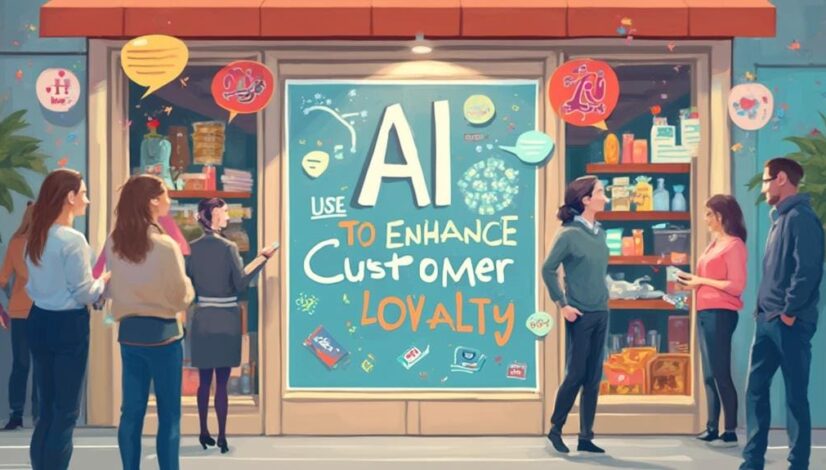
How to Use AI to Enhance SMB Customer Loyalty
To enhance customer loyalty, small and medium-sized businesses (SMBs) can leverage AI in several impactful ways. First, employing predictive analytics helps understand customer needs and tailor offerings effectively. Personalized marketing campaigns strengthen connections by delivering relevant content and targeted communication. Streamlined AI-driven customer support improves satisfaction by ensuring prompt assistance. Furthermore, automating feedback collection allows for real-time insights, enabling businesses to adapt swiftly to customer preferences. By fostering community engagement through social media and forums, SMBs can create emotional ties with their customers. Exploring these strategies further can reveal even greater potential for loyalty enhancement.
Key Takeaways
- Utilize predictive analytics to anticipate customer needs and tailor offerings, enhancing engagement and retention for high-value customers.
- Implement personalized marketing campaigns driven by customer data, creating emotional connections and increasing communication relevance.
- Automate feedback collection to gather insights on customer preferences, enabling real-time strategy adjustments for improved satisfaction.
- Enhance customer support with AI tools, such as chatbots, for instant assistance and personalized solutions that streamline the customer journey.
- Foster community engagement by leveraging social media and forums, allowing customers to share stories and interact, strengthening brand loyalty.
Understanding Customer Preferences

Understanding customer preferences is crucial for small and medium-sized businesses (SMBs) working to cultivate loyalty in an increasingly competitive market. By delving into customer behavior through effective preference mapping, businesses can gain invaluable insights into the motivations and choices of their target audience.
Demographic analysis allows SMBs to segment their customers, identifying distinct groups characterized by unique purchasing patterns. This understanding fosters a more strategic approach to building loyalty, as companies can tailor their offerings to meet the specific needs of different demographics.
Implementing feedback loops is essential, as they provide ongoing insights from customers, allowing businesses to adjust their strategies in real time. This proactive engagement helps maintain relevance amidst evolving market dynamics.
Furthermore, leveraging engagement metrics assists in evaluating the effectiveness of various initiatives, ensuring that resources are allocated efficiently. Coupled with sentiment analysis, SMBs can decode customer emotions, attuning their messaging to resonate deeply with their audience.
Identifying loyalty triggers—such as preferred products or communication styles—empowers businesses to create more compelling customer experiences.
In today's landscape, where consumers have unprecedented freedom of choice, understanding these nuances equips SMBs to forge deeper connections with their clientele. By prioritizing knowledge of customer preferences, businesses can build a dynamic relationship that not only drives sales but also fosters enduring loyalty.
In turn, this enables SMBs to thrive, reinforcing their position in the market while catering to an increasingly discerning customer base.
Personalized Marketing Campaigns
Personalized marketing campaigns are essential for small and medium-sized businesses aiming to forge lasting connections with their customers.
By implementing tailored messaging strategies informed by predictive analytics, businesses can anticipate consumer needs and preferences, driving engagement and loyalty.
This precise approach not only enhances customer satisfaction but also maximizes the effectiveness of marketing budgets.
Tailored Messaging Strategies
In today's competitive marketplace, businesses increasingly recognize the power of tailored messaging strategies to foster customer loyalty. By utilizing advanced AI technologies, small and medium-sized businesses (SMBs) can deliver dynamic content that resonates deeply with individual customers. Personalized marketing campaigns enable businesses to move beyond generic outreach, crafting messages that speak directly to the unique preferences and behaviors of their audience.
Creating an emotional connection is essential for cultivating loyalty, and tailored messaging strategies are instrumental in achieving this. By analyzing customer data, businesses can identify key interests and values, allowing them to develop targeted content that engages and inspires action. For instance, personalized email campaigns that reflect a customer's recent purchases or preferences can greatly enhance the relevance of communications, making customers feel valued and understood.
Moreover, impactful messaging fosters a sense of community, encouraging customers to advocate for your brand. By employing tailored messaging strategies, SMBs not only stand out in a crowded market but also build lasting relationships with their customers.
Embracing this approach not only drives engagement but also nurtures a loyal customer base that feels free to connect and share their experiences.
Predictive Analytics Implementation
Often overlooked, the implementation of predictive analytics is transforming personalized marketing campaigns for small and medium-sized businesses (SMBs). By utilizing predictive modeling, SMBs can anticipate customer needs, tailor product offerings, and drive engagement in ways that resonate deeply with their audience. This proactive approach not only enhances customer loyalty but also fuels sustainable growth.
Consider these benefits of predictive analytics:
- Enhanced Targeting: Identify high-value customers and tailor communication to match their preferences.
- Optimized Campaigns: Use data visualization tools to track performance metrics and refine marketing strategies in real-time.
- Increased ROI: Allocate resources effectively by focusing on strategies that yield the highest returns based on data-driven insights.
Implementing predictive analytics allows SMBs the freedom to engage customers on an individual level, creating personalized experiences that foster loyalty.
By interpreting customer data and behavior through predictive modeling, businesses can craft marketing campaigns that are not merely reactive, but strategically forward-thinking. As a result, SMBs can cultivate deeper relationships with their audience, ensuring they remain top-of-mind in an ever-competitive landscape.
Embrace the power of predictive analytics to revolutionize your personalized marketing efforts today.
Enhancing Customer Support
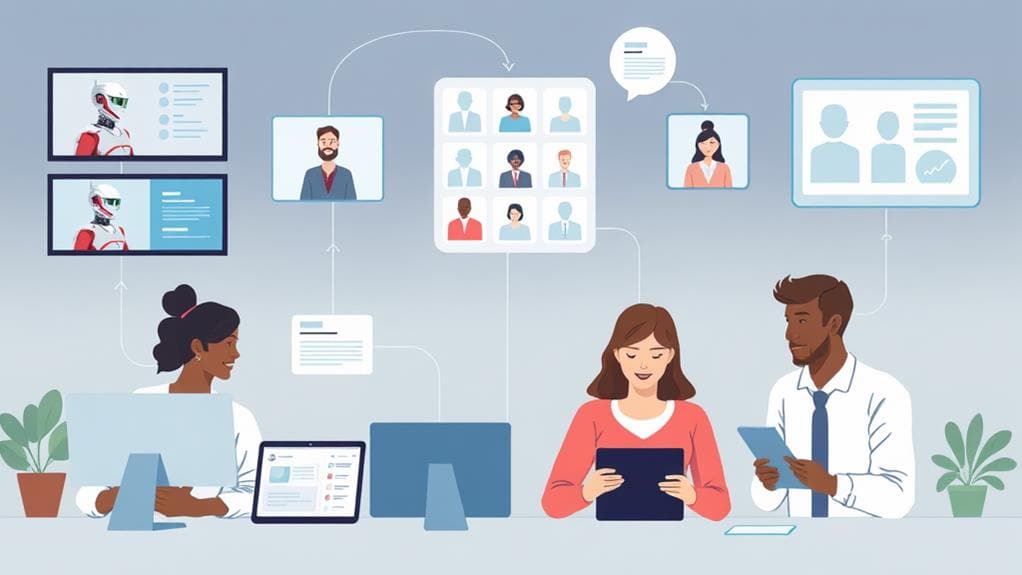
A noteworthy transformation in customer support is on the horizon, driven by the integration of artificial intelligence tools. As small and medium-sized businesses (SMBs) endeavor to enhance customer loyalty, the adoption of AI results in streamlined support automation that evolves the entire customer journey. This technology facilitates chatbot integration, which allows businesses to engage customers instantly, resolving inquiries around the clock and greatly enhancing user experience.
By leveraging AI troubleshooting capabilities, organizations can efficiently address common issues, reducing response times and increasing customer satisfaction. This proactive outreach means anticipating customer needs before they escalate into frustrations, fostering a sense of trust and loyalty among clients.
Additionally, service personalization becomes possible as AI analyzes data patterns to tailor communications and solutions uniquely suited to each customer. Sentiment analysis tools enable businesses to gauge customer feedback accurately, offering insights into sentiments that drive loyalty or dissatisfaction.
Predictive Analytics for Retention
Utilizing predictive analytics is revolutionizing how small and medium-sized businesses (SMBs) approach customer retention strategies. By leveraging advanced analytics tools, SMBs can explore deeply into customer behavior and engagement patterns, making data-driven decisions that enhance loyalty metrics and reduce churn prediction.
Predictive modeling provides insights that empower businesses to anticipate customer needs and foster long-lasting relationships.
Here are a few ways predictive analytics can optimize retention:
- Understanding Purchase History: Analyze past transactions to identify trends, tailor marketing efforts, and personalize offers that resonate with different customer segments.
- Customer Segmentation: Classify customers based on shared traits to target communication effectively, ensuring that engagement strategies resonate with very specific groups.
- Churn Prediction: Identify at-risk customers before they leave by examining changes in engagement patterns, enabling proactive intervention.
These strategies provide SMBs the freedom to deploy resources where they will have the greatest impact, turning raw data into powerful retention strategies.
By focusing on the factors that drive customer loyalty, businesses not only improve their relationships with current customers but also cultivate an environment that encourages ongoing engagement and satisfaction.
The integration of predictive analytics fosters a culture of foresight rather than hindsight, allowing SMBs to evolve and adapt in a fluid market landscape.
In the area of customer loyalty, harnessing these analytics creates opportunities for sustained growth and success.
Automating Feedback Collection
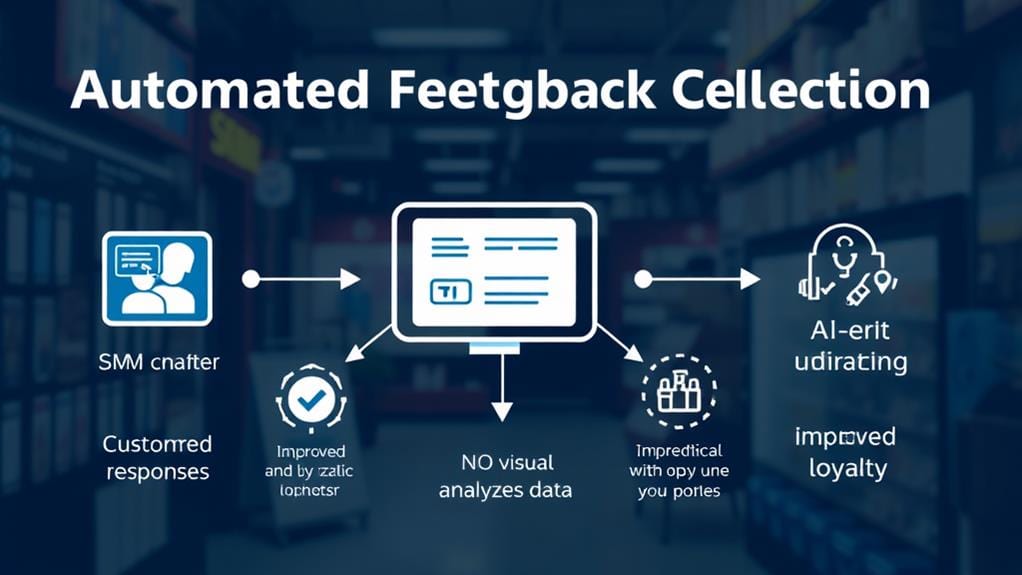
Automating feedback collection revolutionizes how small and medium-sized businesses gather and analyze customer insights.
By streamlining survey implementation, companies can effortlessly engage customers at critical touchpoints, ensuring timely and relevant responses.
Furthermore, real-time data analysis empowers businesses to make informed decisions that enhance customer loyalty and drive growth.
Streamlined Survey Implementation
Implementing streamlined survey processes has emerged as a pivotal strategy for small and medium-sized businesses (SMBs) seeking to enhance customer loyalty. By automating feedback collection, SMBs can leverage AI to focus on critical aspects of survey design, ensuring that every question is optimized for clarity and relevance.
This approach not only improves user experience but also encourages higher response rates through effective feedback incentives.
Key benefits of a streamlined survey implementation include:
- Efficient survey distribution: Utilize automated channels for reaching customers quickly, enhancing participation.
- Advanced response analysis: Integrate AI tools to interpret feedback dynamically, allowing for timely adjustments in strategy.
- Engaging data visualization: Transform raw data into actionable insights, making it easier to identify trends and customer preferences.
Real-Time Data Analysis
The integration of real-time data analysis represents a significant advancement in how SMBs can respond to customer feedback. By automating feedback collection, businesses can obtain immediate insights into customer preferences and satisfaction levels. This immediate access to data allows companies to act swiftly, adapting their strategies to align with customer desires—a hallmark of true customer engagement.
Data visualization techniques play a vital role in this process, transforming complex datasets into clear, actionable visuals. SMBs can use dashboards that highlight key metrics, enabling teams to quickly identify areas for improvement.
Furthermore, behavioral trend analysis provides deeper insights into how customer interactions evolve. By understanding these patterns, businesses can proactively enhance their offerings, creating a tailored customer experience.
In essence, embracing real-time data analysis equips SMBs with the tools to foster loyalty through agile decision-making. This approach not only strengthens customer relationships but also cultivates a culture of responsiveness that aligns with the modern consumer's expectation for immediacy.
Segmenting Customer Data
Releasing the potential of customer data is essential for small and medium-sized businesses (SMBs) looking to foster loyalty. Effective segmentation strategies allow businesses to tailor their approach, enhancing engagement and ultimately driving retention. By utilizing AI to analyze customer behavior through demographic analysis, purchase patterns, and loyalty metrics, SMBs can create personalized value propositions that resonate with their targeted audience.
To achieve meaningful segmentation, consider the following:
- Customer Behavior: Observe how customers interact with your brand, understanding their preferences and expectations.
- Market Trends: Analyze broader market data to inform your segmentation decisions, ensuring they align with emerging trends.
- Data Visualization and Engagement Tracking: Utilize advanced analytics tools to visualize customer data, making it easier to identify and track specific engagement metrics.
Trend analysis is a vital part of this process, as it provides insights into shifting consumer preferences and helps predict future behaviors. By segmenting your customer base, you can identify distinct groups and tailor experiences that enhance loyalty.
This proactive approach empowers SMBs to engage with customers on a deeper level, transforming casual buyers into devoted advocates. Implementing sophisticated segmentation strategies encourages a more liberated and fluid interaction with your customers, ultimately leading to enriched relationships and increased loyalty.
As you leverage AI to dissect customer data, remember that each segment you create represents an opportunity to forge stronger connections and nurture long-lasting loyalty across your diverse customer landscape.
Building Community Engagement
Creating a vibrant community around your brand is essential for fostering customer loyalty among small and medium-sized businesses (SMBs). By actively engaging with your customers through community forums and social media, you empower them to share experiences, provide feedback, and foster connections that extend beyond transactional relationships. This sense of belonging cultivates loyalty, as customers feel valued and appreciated.
Utilizing community forums can create an inclusive environment where customers can voice their thoughts and collaborate with one another. By moderating these discussions, you demonstrate that you value customer input and are committed to addressing their needs. Encourage storytelling and sharing among customers to amplify their loyalty, as personal narratives foster emotional connections with your brand.
Social media platforms offer another powerful avenue to build engagement. Use enthralling content—videos, polls, and live Q&A sessions—to initiate conversations and stimulate interest. Reward interactions with exclusive offers or recognize loyal customers publicly to create a sense of achievement within the community.
Employing AI tools can further enhance this process by analyzing interactions and providing tailored content. This guarantees your communications are timely and relevant, nurturing a dynamic community culture.
Ultimately, building community engagement is about creating a space where customers feel free to express themselves while forging a deeper connection with your brand. These relationships not only fortify customer loyalty but can also lead to organic growth as your community becomes a collective champion of your brand's mission and values.
Frequently Asked Questions
What AI Tools Are Best for Enhancing Customer Loyalty in Smbs?
To effectively enhance customer loyalty in small and medium-sized businesses (SMBs), various AI tools can be employed.
Utilizing personalization strategies, such as tailored recommendations and targeted promotions, fosters a deeper emotional connection with customers.
Coupled with engagement analytics, these tools provide insights into customer behavior, allowing for refined outreach and improved service delivery.
How Can AI Improve Customer Insights Without Invading Privacy?
In the intricate dance of customer relations, AI can illuminate insights without stepping on the toes of privacy protection.
By leveraging sophisticated data analysis techniques, businesses can glean valuable information on customer preferences and behaviors while adhering to robust privacy guidelines. This approach fosters a deeper understanding of customer needs, enabling companies to tailor their offerings effectively.
Consequently, AI empowers organizations to fortify connections and drive loyalty while respecting individual privacy rights.
Can AI Help in Reducing Customer Churn Rates Effectively?
AI can greatly reduce customer churn rates through the application of predictive analytics. By analyzing customer behavior and identifying patterns, businesses can proactively address potential issues before they escalate, leading to improved customer retention.
In addition, AI-driven insights allow companies to personalize their offerings, enhancing customer satisfaction and loyalty. Ultimately, leveraging AI not only empowers businesses to maintain their customer base but also fosters deeper relationships, driving sustainable growth and revenue.
What Budget Considerations Should SMBS Keep for AI Tools?
As small and medium-sized businesses navigate the complexities of implementing AI tools, the question of budget considerations becomes critical.
Performing a thorough cost analysis is essential; this not only informs decision-making but also highlights potential ROI.
Furthermore, meticulous tool selection can prevent overspending on unnecessary features.
How Do I Train Employees to Use AI in Customer Engagement?
Training employees to use AI in customer engagement requires a structured approach.
First, develop thorough AI training programs that emphasize practical applications and real-world scenarios.
Foster employee engagement by encouraging feedback and collaboration, ensuring team members feel empowered and valued.
Incorporate interactive workshops, hands-on experiences, and continuous learning opportunities to enhance skills.
Ultimately, investing in robust AI training will equip employees with the knowledge to drive customer satisfaction and strengthen relationships effectively.
Conclusion
Incorporating artificial intelligence in strategies for enhancing customer loyalty presents significant opportunities for small and medium-sized businesses. By understanding customer preferences, personalizing marketing campaigns, and enhancing customer support, these businesses can foster deeper connections. Utilizing predictive analytics for retention, automating feedback collection, and segmenting customer data can drive engagement. Building community engagement through targeted initiatives amplifies loyalty. Consequently, the integration of AI not only transforms the relationship with customers but also elevates overall business performance and sustainability.