The Role of AI in SMB Product Lifecycle Management
AI notably enhances product lifecycle management (PLM) for small and medium-sized businesses (SMBs) by optimizing efficiency and decision-making across various stages. It facilitates automated design processes, enabling quicker iterations and improved resource allocation. Additionally, AI-driven analytics provide in-depth customer insights, enhancing market research and competitive analysis. By employing predictive modeling, SMBs can better assess risks and prepare for market fluctuations. Moreover, AI improves communication and collaboration among teams, fostering transparency and responsiveness. This strategic integration allows businesses to adapt to changing demands effectively, positioning themselves for future challenges and opportunities for growth. Further exploration reveals its transformative potential.
Key Takeaways
- AI enhances product lifecycle management for SMBs by providing data-driven insights and improving decision-making processes across all product stages.
- Automation of routine tasks through AI leads to increased efficiency and reduced labor errors, allowing teams to focus on innovation.
- AI tools enable robust market research and trend forecasting, facilitating tailored solutions based on nuanced customer insights and competitor analysis.
- Predictive analytics powered by AI improve risk management, allowing SMBs to identify and address potential challenges proactively.
- Improved communication and collaboration through AI technologies streamline workflows, enhance transparency, and boost team productivity in product development.
Understanding Product Lifecycle Management
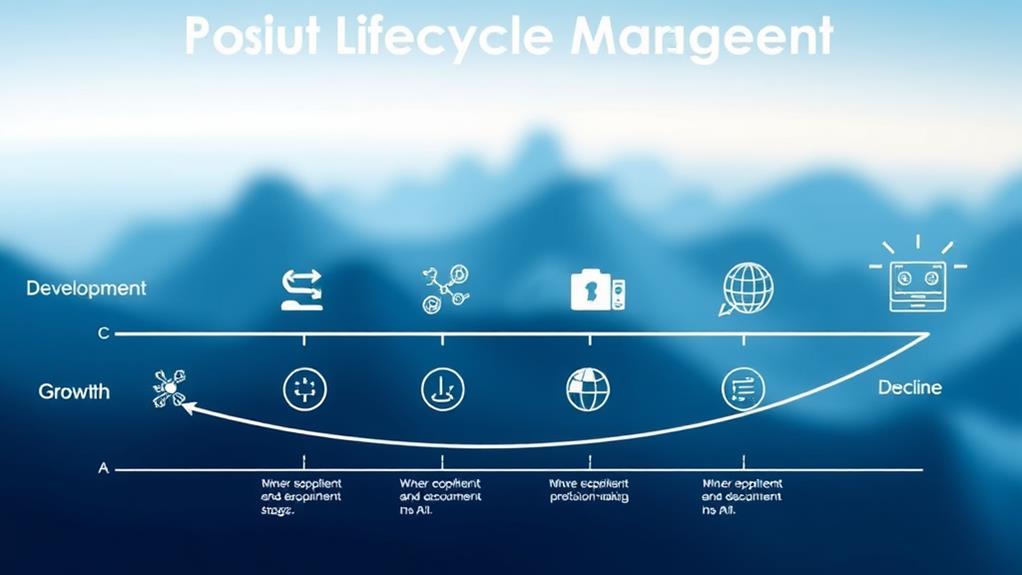
Understanding Product Lifecycle Management (PLM) entails recognizing the extensive approach businesses must adopt to efficiently manage a product's journey from conception to retirement. This all-encompassing framework encompasses several critical product stages, including design, development, introduction, growth, maturity, and decline. Each of these lifecycle phases presents unique challenges and opportunities that require tailored management strategies.
Strategically maneuvering through these phases is essential for effective market positioning. Companies must integrate product innovation at every stage, responding to shifts in consumer feedback and emerging market trends. By routinely conducting competitive analysis, organizations can identify gaps in the market and make informed decisions that foster differentiation. This agility not only enhances the product's value proposition but also fortifies its resilience within saturated markets.
Moreover, sustainability practices have become increasingly pertinent in today's business landscape. Integrating environmental considerations into PLM strategies can yield benefits that extend beyond compliance, fostering brand loyalty and aligning with consumer preferences for responsible production.
The ability to monitor and adapt PLM processes based on real-time data guarantees that businesses remain responsive and adaptive, minimizing waste and maximizing resource efficiency.
Ultimately, a robust understanding of PLM equips businesses to harness the full potential of their products, leading to enhanced profitability and a solid competitive edge. By prioritizing strategic management and innovation across the lifecycle, organizations can successfully navigate the complexities of market dynamics while guaranteeing long-term sustainability.
Importance of AI for SMBs
The integration of artificial intelligence (AI) into the operations of small and medium-sized businesses (SMBs) represents a significant opportunity to enhance product lifecycle management and overall organizational effectiveness. AI applications are increasingly being recognized as essential tools that address common SMB challenges, such as limited resources and intense market competition. By employing AI-driven analytics, businesses can gain valuable customer insights, enabling them to tailor products that meet evolving consumer demands.
One of the most compelling reasons SMBs should embrace AI is the potential for cost efficiency. Automating routine tasks reduces labor costs while minimizing errors, ultimately leading to enhanced productivity. In addition, the strategic implementation of AI can provide a competitive advantage, allowing SMBs to respond swiftly to market changes with data-driven decision-making. This agility fosters an innovative culture within the organization, promoting innovation strategies that are pivotal for growth.
Additionally, AI contributes to scalability solutions; as businesses expand, AI tools can adapt to increasing complexities without the need for significant capital investment.
However, with these advancements come concerns regarding data security. It is essential for SMBs to prioritize robust security measures to protect sensitive information, ensuring that the benefits of AI implementation do not come at the cost of customer trust.
Automating Design and Development
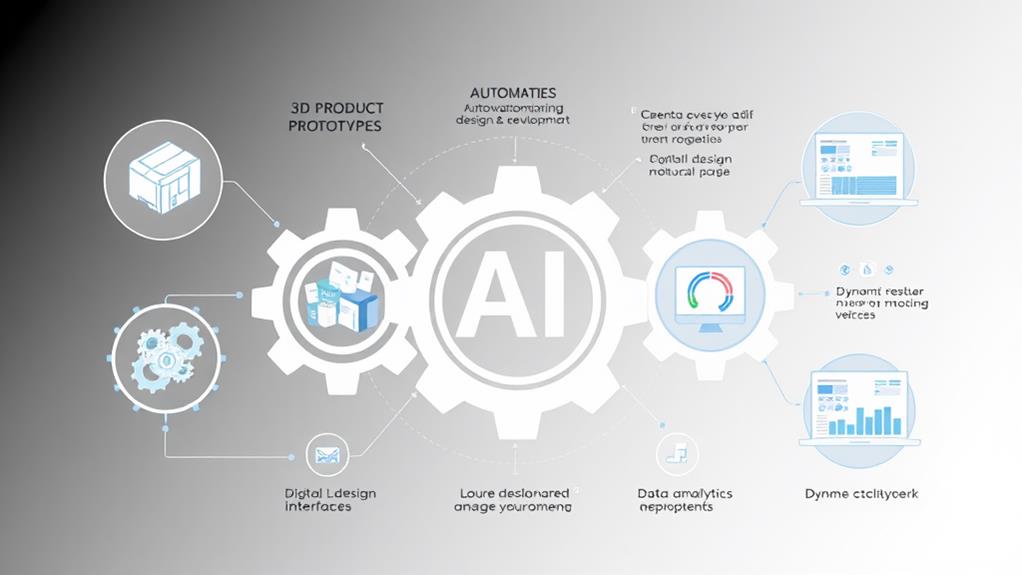
Automating design and development processes emerges as a game-changing approach for SMBs leveraging AI technologies. This strategic shift not only enhances development efficiency but also catalyzes a culture of creative collaboration. By implementing design automation tools, SMBs can streamline repetitive tasks, allowing teams to focus on innovative aspects of product design.
AI-fueled systems excel in conducting iterative testing, rapidly evaluating various design elements and making data-driven adjustments that improve prototype enhancement. This continuous cycle of design iteration facilitates a responsive approach to market demands while minimizing the time and resources typically spent on traditional development processes.
Moreover, effective resource allocation is pivotal in today's competitive landscape. AI systems can analyze project requirements and team capabilities, ensuring ideal distribution of tasks. This not only maximizes productivity but also safeguards against burnout, providing employees with a balanced workload that fosters creative output.
The integration of feedback is another critical element in the automated design sphere. AI models can synthesize end-user insights and stakeholder reviews, enabling businesses to refine their designs based on real-world reactions. This feedback integration allows for a more customer-centric approach and enhances the overall user experience.
Enhancing Market Research and Analysis
Fifty percent of successful product strategies are rooted in robust market research and analysis, making it a critical focus for small and medium-sized businesses (SMBs) that wish to remain competitive.
Leveraging artificial intelligence to enhance these processes provides SMBs with a strategic advantage that allows for more nuanced customer insights and informed decision-making.
AI-driven customer insights enable businesses to analyze user feedback with greater accuracy, identifying preferences and behaviors that inform product development. By employing behavioral analytics, SMBs can segment their target market more effectively, allowing for customized solutions that address specific needs within diverse demographic profiles.
This enhanced market segmentation improves promotional strategies, ensuring that marketing messages resonate with the intended audience.
Moreover, AI technologies offer powerful tools for competitor analysis, revealing market position and strategic movements of rivals. This level of insight is invaluable for SMBs aiming to carve out their niche.
Trend forecasting capabilities enabled by AI sift through vast amounts of data to identify emerging market trends, facilitating proactive rather than reactive strategies.
Additionally, data visualization tools streamline the interpretation of complex data sets, presenting them in accessible formats. This not only aids in internal decision-making but also enhances the presentation of insights to stakeholders, reinforcing SMBs' strategic initiatives.
Risk Management and Predictive Analytics
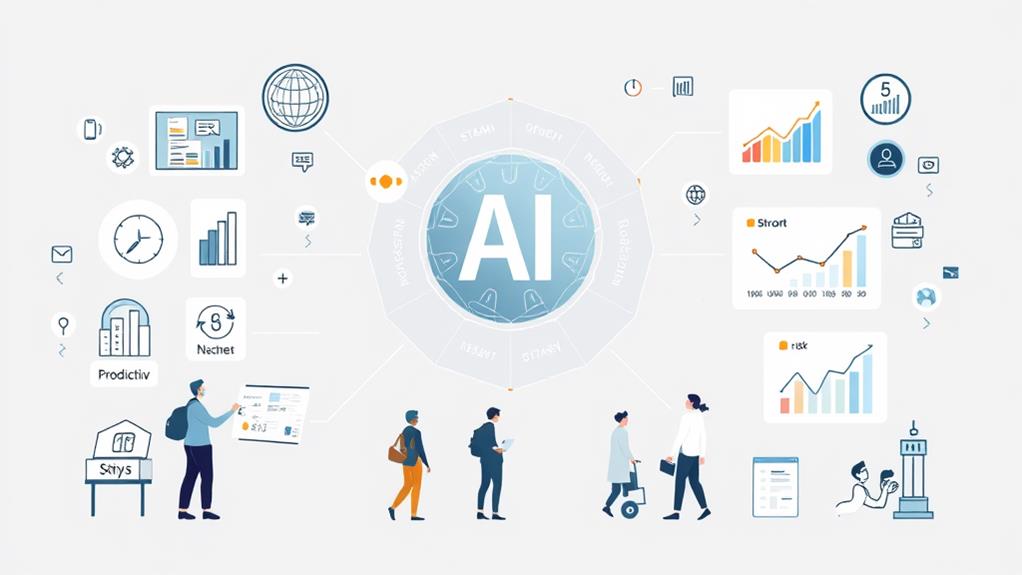
Effective risk management is critical for small and medium-sized businesses (SMBs) aiming to navigate an increasingly volatile market landscape. The integration of artificial intelligence (AI) in risk management practices empowers SMBs to implement data-driven decisions that enhance resilience and agility. By leveraging predictive modeling, businesses can identify potential risks before they escalate, allowing for timely intervention.
A robust risk assessment framework utilizing AI can analyze historical data to pinpoint vulnerabilities within the product lifecycle. Through advanced scenario analysis, SMBs can simulate various market conditions and assess their potential impacts on operations. This not only prepares businesses for unforeseen challenges but also guides the development of strategic responses.
Proactive measures derived from AI-driven insights enable SMBs to minimize disruptions. For instance, businesses can utilize decision support systems equipped with AI capabilities to evaluate the effectiveness of different risk mitigation strategies. These systems facilitate a nuanced understanding of risk factors and operational dependencies, thereby improving overall stability.
Moreover, the continuous monitoring enabled by AI applications guarantees that risk management remains a dynamic process. As market conditions evolve, AI can adjust predictive analytics accordingly, allowing businesses to maintain a competitive edge.
Improving Collaboration and Communication
Effective collaboration and communication are critical for SMBs maneuvering the complexities of product lifecycle management.
By leveraging AI technologies, organizations can enhance team coordination and facilitate real-time data sharing, leading to more informed decision-making processes.
This strategic integration not only streamlines workflows but also fosters a culture of transparency and responsiveness among team members.
Enhanced Team Coordination
In today's fast-paced business environment, fostering seamless collaboration and communication among team members is a critical imperative for small and medium-sized businesses (SMBs) engaged in product lifecycle management. Enhanced team coordination directly influences team alignment and operational efficiencies, thereby creating a strategic advantage.
To achieve ideal collaboration, utilizing advanced communication tools is essential for facilitating project tracking and ensuring real-time updates across functions. These tools support feedback loops that encourage continuous improvement and engagement within the team.
Robust task prioritization strategies, combined with clear role clarity, enable team members to focus on their individual responsibilities while contributing to collective goals.
Additionally, effectively managing scheduling efficiency mitigates potential delays and fosters cross-functional synergy, empowering teams to make timely decisions. AI-powered decision-making support systems can enhance these processes by providing data-driven insights, ultimately leading to more informed choices that align with business objectives.
Real-time Data Sharing
Seamless communication in product lifecycle management is amplified by the need for real-time data sharing among team members. Real-time sharing enables agile responses to market demands, greatly enhancing collaboration and communication across departments. To achieve this, businesses must employ effective data synchronization techniques that guarantee consistent updates across platforms.
Cloud-based solutions have emerged as powerful tools for facilitating real-time monitoring and accessibility of critical data. However, organizations must address security considerations, particularly when integrating these solutions with existing systems—an undertaking often fraught with integration challenges. Balancing security measures with accessibility is essential to safeguard sensitive information while enabling team members to collaborate freely.
Investing in user experience improvements through intuitive data visualization tools and collaborative platforms can further enhance engagement, giving teams the ability to interpret data effectively and make informed decisions.
By incorporating these technologies, SMBs can create a dynamic environment that fosters innovation and encourages proactive interaction, transforming the product lifecycle management process into a streamlined, cohesive function.
Ultimately, real-time data sharing not only boosts operational efficiency but also empowers teams to realize their full potential in an increasingly competitive landscape.
Future Trends in AI and PLM

As businesses maneuver an increasingly complex landscape, the integration of artificial intelligence (AI) with product lifecycle management (PLM) is anticipated to drive significant transformation. AI advancements will enhance PLM integration, enabling organizations to leverage predictive modeling for more accurate forecasting and decision-making. By utilizing data-driven insights, businesses can better understand market trends and consumer preferences, ultimately facilitating improved product development cycles.
Machine learning applications are projected to play a central role in automating routine tasks, thereby addressing automation challenges that currently impede operational efficiency. This shift not only streamlines processes but also enriches user experience by providing tools that are responsive to user behaviors and needs.
In addition, the scalability solutions afforded by AI will empower small and medium-sized businesses (SMBs) to adapt their PLM systems in alignment with growth and evolving market demands.
However, maneuvering the future of AI in PLM requires careful consideration of ethical considerations. Ensuring transparency and fairness in AI algorithms is essential to maintain trust and accountability in product development processes.
Additionally, offering customization options will cater to diverse business models and requirements, allowing SMBs to tailor AI functionalities to their unique operational contexts.
As we look ahead, the symbiosis of AI and PLM will likely redefine what is possible in product lifecycle management, driving innovation and competitiveness for SMBs in an era characterized by rapid technological evolution.
Frequently Asked Questions
What Types of AI Tools Are Best for SMB Product Lifecycle Management?
To enhance efficiency, small and medium-sized businesses (SMBs) should utilize AI tools that focus on predictive analytics and automated workflows.
These technologies facilitate better design optimization and informed market analysis, allowing for effective resource allocation.
Additionally, robust risk management tools can identify potential challenges throughout the product lifecycle, ensuring that SMBs remain agile and adaptive.
How Can AI Improve Customer Feedback Integration Into Product Development?
AI enhances customer feedback integration into product development through advanced feedback analysis and sentiment tracking.
By employing natural language processing algorithms, businesses can categorize and prioritize feedback, gaining insights into customer preferences and pain points.
This data-driven approach enables teams to adapt their products strategically, ensuring alignment with consumer expectations.
Ultimately, leveraging AI fosters a more responsive development process, empowering organizations to innovate effectively while maintaining a keen awareness of customer sentiment.
What Budget Considerations Are Essential for Implementing AI in Smbs?
"Measure twice, cut once" aptly applies to budget considerations in implementing AI in small to medium-sized businesses (SMBs).
Strategic budget allocation is crucial, necessitating thorough cost analysis to identify both initial investment and ongoing operational expenses.
Prioritizing expenditure on infrastructure, training, and data management guarantees that AI initiatives align with overall business goals.
Are There Specific Industries Benefiting Most From AI in Plm?
Certain industries demonstrate pronounced benefits from AI integration in their product lifecycle management.
Healthcare innovation leverages AI for improved patient outcomes and operational efficiency.
In manufacturing, AI enhances manufacturing efficiency through predictive maintenance and process optimization.
Retail optimization, facilitated by AI, allows companies to analyze consumer behavior and manage inventory more effectively.
Additionally, software development sees increased agility and faster time-to-market, driven by AI's capabilities in code generation and testing automation.
How Do SMBS Measure the ROI of AI in Product Lifecycle Management?
To navigate the vast sea of AI adoption, SMBs must chart their course by measuring ROI metrics, akin to a captain evaluating the winds and currents.
Key performance indicators, such as reduced time-to-market, enhanced product quality, and improved customer satisfaction, illuminate the path ahead.
Conclusion
The integration of artificial intelligence into product lifecycle management represents a transformative force for small and medium-sized businesses. As gears interlock within a finely-tuned machine, AI streamlines processes, enhances decision-making, and fosters collaboration. This technological partnership not only mitigates risks but also illuminates pathways to innovation. By embracing these strategic advancements, SMBs can cultivate a resilient future, maneuvering through the complexities of the market with precision and foresight. In this evolving landscape, AI emerges as the beacon guiding sustainable growth.