
Testing Optimization: Complete Marketing Strategy Guide 2026
Marketing testing and optimization are the foundation of modern, data-driven marketing success. They empower marketers to gather user feedback, align campaigns with audience preferences, and remain agile in response to evolving market dynamics. By implementing systematic testing methodologies—including A/B testing, multivariate testing, and split URL testing—organizations can refine messaging, improve segmentation, and maximize campaign performance. Furthermore, data-driven decision-making cultivates adaptability and drives measurable improvements in conversion rates and customer engagement. Without continuous testing and evaluation, brands risk disconnection from their target audience and falling behind competitors. By embracing a culture of iterative improvement and leveraging emerging technologies like AI-powered optimization, organizations can ensure sustained relevance and competitive advantage.
Key Takeaways
- Marketing testing and optimization enhance campaign effectiveness by systematically aligning strategies with user preferences and market trends
- A/B testing, multivariate testing, and split URL testing each serve distinct purposes in evaluating and improving marketing performance
- Data-driven decision-making fosters adaptability to consumer behavior shifts, leading to improved engagement and stronger conversions
- AI-powered testing tools enable automated personalization, predictive optimization, and self-healing test scenarios that reduce maintenance overhead
- Continuous feedback loops and cross-channel optimization support ongoing improvements, ensuring marketing strategies remain relevant and competitive over time
Understanding Marketing Testing and Optimization
Marketing testing and optimization serve as the backbone of an effective marketing strategy, enabling businesses to refine their approaches based on empirical data rather than assumptions or intuition. By prioritizing user feedback and systematically evaluating campaign elements, marketers can enhance user experience, ensuring that every touchpoint resonates with audience preferences and drives meaningful engagement.
Understanding market trends and conducting thorough competitor analysis are vital components that inform how businesses position their offerings in crowded marketplaces. These insights allow marketing teams to identify gaps in their current strategies and capitalize on emerging opportunities before competitors do.
Audience segmentation enables more targeted messaging, ensuring that communications are relevant, timely, and engaging for each distinct customer group. This strategic alignment within campaigns enhances message clarity, enabling brands to cut through the noise and make a meaningful impact on their target demographics.
Creative testing plays a pivotal role in this process, allowing companies to experiment with different messages, visuals, formats, and channels. By systematically testing variations, businesses can identify what truly engages their target audience and drives desired actions. Establishing performance benchmarks is equally essential to gauge the effectiveness of marketing initiatives. By comparing results against these benchmarks, businesses can quickly identify underperforming strategies and pivot accordingly, allocating resources to the tactics that deliver the strongest returns.
Timing strategies further augment this optimization; understanding when to deliver messages—whether through email, social media, or paid advertising—can significantly influence conversion rates and overall campaign success. The right message delivered at the wrong time often fails to generate the desired response, making temporal optimization a critical consideration.
“Testing is not about proving you’re right. It’s about discovering what works best for your audience.” — Conversion optimization expert
The pursuit of a data-driven approach to marketing fosters an environment where creative freedom aligns with strategic effectiveness. Embracing marketing testing and optimization empowers organizations to make informed decisions, leading to campaigns that not only attract attention but also drive sustainable growth. Without this commitment to ongoing refinement and evidence-based strategy, businesses risk stagnation in a landscape characterized by rapid change and fierce competition.
Benefits of Marketing Testing and Optimization
A robust marketing testing framework reveals significant advantages that directly contribute to superior campaign performance and return on investment. By systematically evaluating various elements of a marketing strategy—from headlines and calls-to-action to landing page layouts and email subject lines—businesses can harness customer feedback to refine their approaches and enable more effective engagement tactics.
This iterative process allows brands to adapt their messaging and channels in alignment with current market trends, ensuring content relevance and resonance with target audiences. The continuous nature of testing creates a feedback loop that keeps marketing efforts aligned with evolving consumer expectations and preferences.
Implementing innovative strategies through testing enables organizations to achieve better audience segmentation. Understanding the nuances of different demographic groups, behavioral patterns, and psychographic profiles enhances the overall user experience, fostering deeper emotional connections with consumers. When marketing messages speak directly to specific audience segments with personalized content, engagement rates increase substantially.
Well-optimized campaigns not only boost brand awareness but also improve conversion rates as prospective customers receive tailored interactions that speak directly to their needs, pain points, and aspirations. This personalization extends beyond simple demographic targeting to include behavioral triggers, purchase history, and engagement patterns across multiple touchpoints.
The continuous nature of marketing testing fosters a culture of adaptability, encouraging teams to be proactive rather than reactive in responding to shifts in consumer behavior and preferences. As brands become more attuned to the intricacies of their audiences, they can strategically pivot their efforts to maintain alignment with evolving demands. This agility translates to tangible improvements in campaign performance, as data-driven decisions lead to more impactful content and outreach efforts.
Furthermore, marketing testing reduces the financial risk associated with large-scale campaign launches. By testing concepts with smaller audience segments before full deployment, organizations can identify potential issues and optimize performance before committing substantial budgets. This approach has been shown to improve ROI by 30-100% compared to launching campaigns without prior testing, a trend echoed by recent AI Agents Small Business research highlighting measurable revenue gains from data-driven tools.
The benefits of marketing testing are clear: by leveraging insights derived from rigorous analysis, brands can implement strategies that not only elevate engagement but also drive long-term success in an increasingly competitive marketplace. Adopting this mindset empowers organizations to innovate constantly, enriching their marketing strategies while ensuring sustained growth and market relevance.
Common Marketing Testing Methods
Various methodologies exist for marketing strategy testing, each tailored to extract valuable insights and drive decision-making across different campaign objectives and organizational contexts. Among the most prevalent methods are A/B testing, multivariate testing, split URL testing, and user feedback surveys. These approaches facilitate in-depth analysis of user behavior and the corresponding impact on conversion rates, allowing marketers to refine their strategies with precision.
A/B testing, a cornerstone of experimental design, involves comparing two variations of a single marketing element—such as a headline, call-to-action button, or email subject line—to determine which performs better. This method capitalizes on hypothesis testing, providing clear, actionable results that align with predetermined performance benchmarks. A/B testing is particularly effective for optimizing specific elements within a campaign without requiring extensive traffic volumes.
Multivariate testing expands on this foundation by evaluating multiple variables simultaneously, thereby uncovering the most effective combinations that resonate with distinct audience segments. This method is ideal for complex pages or campaigns where multiple elements interact, though it requires significantly more traffic to achieve statistical significance. Multivariate testing reveals not just which individual elements work best, but how different combinations of elements perform together.
Split URL testing (also known as redirect testing) involves comparing entirely different page designs or layouts by directing traffic to separate URLs. This method is particularly valuable when testing fundamental design changes, different user flows, or completely reimagined landing page concepts that go beyond simple element variations.
Furthermore, user feedback surveys serve as a vital tool, delivering qualitative insights that quantitative metrics alone may overlook. This duality enhances user understanding and contributes to refining marketing efforts by revealing the “why” behind user behaviors and preferences. By analyzing these insights, marketers can adapt their strategies through iterative processes, ensuring continuous improvement and alignment with audience expectations.
Heat mapping and session recording tools provide additional layers of insight by visualizing how users interact with web pages, revealing attention patterns, scroll depth, and points of friction in the user experience. These tools complement quantitative testing methods by providing context for the numbers.
Testing tools play a significant role in enhancing efficiency and streamlined result analysis. Modern platforms like Optimizely, VWO, Adobe Target, and Google Optimize alternatives (following Google Optimize’s sunset in 2023) enable practitioners to track performance meticulously and facilitate swift adaptations in response to shifting user preferences. These resources provide statistical significance calculators, audience segmentation capabilities, and integration with analytics platforms.
Integrating varied testing methods not only fosters deeper audience segmentation but also cultivates a culture of freedom in decision-making. This strategic flexibility empowers marketers to pivot quickly, creating a dynamic marketing environment that embraces change and responds effectively to evolving market realities while maintaining focus on measurable business outcomes.
Comparing Testing Methodologies: A Strategic Framework
| Testing Method | Best Use Case | Required Traffic Volume | Complexity Level | Recommended Tools | Time to Results |
|---|---|---|---|---|---|
| A/B Testing | Testing single element changes (headlines, CTAs, images) | Low to Medium (minimum 1,000 conversions per variation) | Low | Optimizely, VWO, Convert, AB Tasty | 1-2 weeks |
| Multivariate Testing | Testing multiple element combinations simultaneously | High (minimum 10,000 conversions) | High | Optimizely, Adobe Target, VWO | 3-6 weeks |
| Split URL Testing | Testing completely different page designs or user flows | Medium to High (minimum 5,000 conversions per variation) | Medium | Optimizely, VWO, Unbounce | 2-4 weeks |
| Sequential Testing | Testing major changes with limited traffic | Low (can work with smaller samples) | Medium | Bayesian-based tools, Convert Experiences | Variable (adaptive) |
This comparison table illustrates that the choice of testing methodology should align with your traffic volume, the scope of changes being tested, and the complexity of insights required. Organizations with limited traffic should focus on A/B testing of high-impact elements, while those with substantial traffic can leverage multivariate testing to optimize multiple elements simultaneously.
Key Metrics to Track in Marketing Testing
Understanding and monitoring key metrics is essential for evaluating the effectiveness of any marketing strategy and ensuring that testing efforts translate into meaningful business outcomes. The right metrics illuminate the pathways through which a business can connect with its audience, driving impactful results and justifying marketing investments.
Among the most significant metrics to track are conversion rates, which reveal the effectiveness of your campaigns in turning prospects into customers. High conversion rates indicate successful audience targeting and lead generation efforts, whereas lower figures may highlight weaknesses in your sales funnel, messaging clarity, or user experience that require rectification. Conversion rate optimization should be measured not just at the macro level but also across micro-conversions such as email signups, content downloads, and product page views.
Customer engagement serves as another vital metric, underscoring how effectively your brand resonates with your target audience. Enhanced engagement—measured through metrics like time on page, pages per session, social media interactions, and email open rates—fosters brand awareness, paving the way for deeper connections and loyalty. Engagement metrics provide early indicators of campaign effectiveness before conversion data becomes statistically significant.
Click-through rate (CTR) measures the percentage of users who click on a specific link, advertisement, or call-to-action relative to the total number of users who view it. This metric is particularly valuable for evaluating the effectiveness of ad copy, email subject lines, and content headlines. A declining CTR often signals message fatigue or decreased relevance to the target audience.
Analyzing market segmentation reveals which segments of your audience are responding well, enabling more tailored strategies to meet their specific interests and needs. Segment-level analysis allows marketers to identify high-performing audience groups and allocate budget accordingly, while also revealing underperforming segments that may require different messaging or channel strategies.
Furthermore, evaluating campaign performance through metrics like return on ad spend (ROAS), cost per acquisition (CPA), and customer lifetime value (CLV) allows marketers to determine which strategies yield the best return on investment. This insight informs future allocation of resources and optimization efforts, ensuring that marketing budgets are deployed where they generate the greatest impact.
Statistical significance is a critical consideration when evaluating test results. Declaring a winner too early can lead to false conclusions, while waiting too long wastes potential gains. Most testing platforms provide built-in significance calculators, but marketers should understand that achieving 95% statistical confidence typically requires sustained performance differences over adequate sample sizes.
Additionally, focusing on user experience metrics such as bounce rate, page load time, and navigation patterns can reveal pain points within the customer journey, guiding improvements that streamline interactions and bolster satisfaction. These friction points often represent the greatest opportunities for conversion rate improvement.
“What gets measured gets managed. But what gets measured and analyzed gets optimized.” — Marketing analytics principle
In this dynamic landscape, consistently tracking these metrics is not merely an option but a necessity. By embracing informed strategies and agile adjustments based on data, brands can achieve unprecedented heights of freedom and success in their marketing endeavors, making evidence-based decisions that drive sustainable growth.
A/B Testing vs. Multivariate Testing

A/B testing and multivariate testing serve distinct purposes in evaluating marketing strategies, with each offering specific advantages depending on the campaign’s objectives, available traffic, and the complexity of insights required.
A/B testing focuses on comparing two variations of a single element—such as a headline, call-to-action button color, or email subject line—to determine which performs better in driving desired outcomes. This method provides clear, actionable insights by isolating the impact of one specific change, making it ideal for organizations with moderate traffic volumes or those seeking to validate specific hypotheses quickly.
Multivariate testing, conversely, examines multiple elements simultaneously to understand how different combinations interact and influence user behavior. For example, a multivariate test might evaluate various combinations of headlines, images, and call-to-action buttons to identify the optimal configuration. This approach fine-tunes complex interactions and reveals synergies between elements that A/B testing cannot detect.
Understanding these key differences is essential for marketers to choose the most effective method for their specific testing needs, optimizing performance and enhancing decision-making while avoiding common pitfalls that waste resources and delay insights.
Key Differences Explained
While both A/B testing and multivariate testing are vital tools in the marketer’s toolkit, they differ considerably in their approaches, applications, and resource requirements. Understanding these differences enables marketing teams to select the appropriate methodology based on their specific objectives and constraints.
Focus Area: A/B testing compares two distinct content variations, allowing for clear identification of the winning element with minimal complexity. This binary comparison makes results straightforward to interpret and implement. In contrast, multivariate testing examines multiple variables simultaneously—such as headlines, images, and calls-to-action—providing insights into how different combinations influence user experience and which specific elements drive performance improvements.
Complexity and Resource Requirements: A/B testing is straightforward and ideal for quick campaign adjustments, making it accessible to organizations with limited technical resources or testing experience. Multivariate testing is more intricate, requiring careful audience segmentation, sophisticated statistical analysis, and a substantially larger sample size to establish performance benchmarks effectively. Organizations must ensure they have sufficient traffic to achieve statistical significance across all tested variations.
Time Efficiency and Implementation Speed: A/B testing typically yields faster results, making it suitable for iterative feedback loops and rapid optimization cycles. This speed enables marketers to implement winning variations quickly and move on to testing additional elements. Multivariate testing, though more detailed and comprehensive, may take significantly longer to draw statistically valid conclusions, necessitating patience once variations are deployed across marketing funnels. The extended timeline is necessary to gather sufficient data across all possible combinations.
Choosing the Right Method
Selecting the appropriate testing method is fundamental to harnessing the full potential of marketing strategies and ensuring that testing efforts deliver actionable insights rather than ambiguous results. A/B testing and multivariate testing each possess specific advantages that can dramatically influence user segmentation and audience targeting effectiveness.
A/B testing is ideal for swift iterations and delivering clear insights from comparatively simple experimental designs, enabling marketers to quickly adjust their strategies based on result interpretation. This method works exceptionally well when testing major changes—such as entirely different landing page layouts or fundamentally different value propositions—where the impact of a single variable is likely to be substantial. However, it is limited to evaluating one variable at a time, which may overlook the complexity of user behavior and the interactions between multiple page elements.
Conversely, multivariate testing allows for more thorough examination of various variables simultaneously, thereby enhancing the testing frequency when analyzing multiple elements of a campaign. This approach fosters deeper hypothesis generation, enabling the discovery of subtle interactions among elements that might be missed through sequential A/B testing. For instance, a headline that performs poorly with one image might perform exceptionally well with another, a nuance that only multivariate testing can reveal. However, it requires a more advanced understanding of optimization tools, sophisticated experimental design, and substantially higher traffic volumes to achieve statistical validity.
The choice between these methods should align with your performance benchmarks, strategic objectives, available traffic, and technical capabilities. Organizations with limited traffic (fewer than 10,000 monthly conversions) should focus on A/B testing of high-impact elements. Those with substantial traffic can leverage multivariate testing to optimize multiple elements simultaneously and uncover complex interaction effects.
Emphasizing feedback loops will also ensure continuous improvement, allowing marketing teams to build on previous learnings and progressively refine their approach. Regardless of which method you choose, maintaining rigorous testing discipline and allowing tests to reach statistical significance before declaring winners is essential for making reliable, data-driven decisions.
AI-Driven Marketing Testing and Optimization

The integration of artificial intelligence into marketing testing represents a transformative shift in how organizations approach optimization, enabling unprecedented levels of personalization, efficiency, and predictive capability. AI-powered testing tools are revolutionizing the marketing landscape by automating complex processes, reducing human error, and uncovering insights that would be impossible to detect through manual analysis alone.
Automated Personalization Testing
AI-driven platforms can now automatically test and deploy personalized content variations across different audience segments without requiring manual configuration for each variation. These systems analyze user behavior patterns, demographic data, and engagement history to dynamically serve the most relevant content to each visitor in real-time.
Machine learning algorithms continuously learn from user interactions, automatically adjusting content, offers, and messaging based on what drives the highest engagement and conversion rates for each segment. This approach moves beyond traditional rule-based personalization to predictive personalization that anticipates user needs before they explicitly express them.
According to recent industry research, organizations implementing AI-driven personalization testing have seen conversion rate improvements of 15-30% compared to traditional A/B testing approaches — consistent with findings on AI Agents Small Business adoption showing strong revenue lifts among early implementers. The technology enables marketers to test hundreds of variations simultaneously across multiple audience segments, something that would be logistically impossible with manual testing methodologies.
Self-Healing Test Automation
One of the most significant advances in AI-powered testing is the development of self-healing test scripts that automatically adapt to changes in website structure, design, or element identifiers. Traditional automated tests break when developers change a button ID, CSS class, or page layout, requiring manual intervention to update test scripts.
AI-powered testing platforms use computer vision and natural language processing to recognize page elements based on their function and context rather than rigid technical identifiers. When a “Submit” button changes from id="btn-submit" to id="submit-form", the AI recognizes that it’s still the primary submission button based on its position, styling, and surrounding context, automatically updating the test without human intervention.
This capability reduces test maintenance overhead by up to 88%, freeing marketing teams to focus on strategy and analysis rather than technical maintenance. For organizations running continuous testing programs, this represents substantial cost savings and faster time-to-insight.
Predictive Optimization and Forecasting
Predictive analytics powered by AI enables marketers to forecast campaign performance before full deployment, reducing the risk associated with major marketing investments. These systems analyze historical campaign data, market trends, competitive intelligence, and external factors to predict which strategies are most likely to succeed.
AI models can identify patterns in successful campaigns—such as optimal send times, messaging themes, visual styles, and channel combinations—and recommend strategies with the highest probability of success. This predictive capability is particularly valuable for seasonal campaigns, product launches, and high-stakes marketing initiatives where the cost of failure is substantial.
Recent studies indicate that organizations using AI-powered predictive optimization have reduced campaign failure rates by 40-60% while simultaneously improving overall marketing ROI, though Why 40% of AI agent projects still fail underscores the importance of thoughtful implementation. The technology enables more confident decision-making by providing probabilistic forecasts rather than relying solely on historical performance or intuition.
Intelligent Test Generation and Coverage Analysis
AI systems can now automatically generate test scenarios by analyzing user behavior patterns, identifying high-traffic paths through websites, and suggesting tests for areas with high business impact but low test coverage. This capability ensures that testing efforts focus on the most critical user paths rather than distributing effort equally across all pages.
Natural language processing enables marketers to describe testing objectives in plain language, with AI systems automatically translating these goals into technical test configurations. This democratizes testing by making it accessible to marketing professionals without requiring deep technical expertise.
2025-2026 AI Adoption Statistics
The adoption of AI-driven marketing testing has accelerated dramatically:
- 67% of enterprise marketing organizations now use AI-powered testing tools, up from 34% in 2023
- AI-driven personalization has become the fastest-growing segment of marketing technology, with a compound annual growth rate of 42%
- Organizations using AI testing tools report 35% faster time-to-insight compared to traditional testing approaches
- Automated test maintenance has reduced QA overhead by an average of 52% across organizations that have implemented self-healing test frameworks
- Predictive optimization has improved campaign success rates by 28% on average, with top performers seeing improvements exceeding 50%
These statistics underscore the competitive advantage that AI-driven testing provides, and AI Agents Small Business data from 2026 confirms that 67% of adopters saw at least a 20% revenue increase. Organizations that fail to adopt these technologies risk falling behind competitors who can test faster, personalize more effectively, and predict outcomes with greater accuracy.
Implementation Considerations
While AI-driven testing offers substantial benefits, successful implementation requires careful planning — understanding Why 40% of AI agent projects fail is an essential first step before committing to deployment. Organizations should start with clearly defined objectives, ensure data quality and integration across systems, and maintain human oversight of AI recommendations. The most effective approach combines AI automation with human creativity and strategic thinking, leveraging technology to handle repetitive tasks while freeing marketers to focus on innovation and customer connection.
Integrating Optimization Into Marketing Strategy


Integrating optimization into marketing strategy requires a framework that emphasizes data-driven decision making and positions testing as a core competency rather than an afterthought. Organizations that treat optimization as an integral part of their marketing operations consistently outperform those that view it as an optional or occasional activity, much like how the question of whether Can an AI Model outperform traditional strategies ultimately comes down to disciplined, data-driven execution.
By adopting a continuous improvement approach, organizations can refine their tactics over time, ensuring that every marketing initiative is informed by real-time insights and historical performance data. This systematic approach transforms marketing from an art based primarily on intuition into a science grounded in evidence and measurable outcomes.
Additionally, employing cross-channel optimization techniques allows for a cohesive strategy that maximizes effectiveness and drives overall performance across diverse platforms, ensuring that the customer experience remains consistent and compelling regardless of touchpoint.
Data-Driven Decision Making
Organizations increasingly recognize the importance of data-driven decision making as a cornerstone for effective marketing strategies and sustainable competitive advantage. By leveraging data analysis and performance metrics, businesses can create decision frameworks that guide their marketing efforts, ensuring alignment with broader strategic objectives and market realities.
Key components of data-driven marketing strategies include:
Consumer Insights: Understanding the desires, behaviors, pain points, and motivations of various market segments allows marketers to tailor their approach for maximum impact and relevance. Deep consumer insights go beyond basic demographics to include psychographic profiles, behavioral patterns, and emotional drivers that influence purchasing decisions.
Predictive Modeling: Utilizing historical data, machine learning algorithms, and statistical analysis to forecast future trends enables businesses to allocate resources more effectively and anticipate market changes before they occur. Predictive models can identify which customer segments are most likely to convert, which channels will deliver the best ROI, and which messaging themes will resonate most strongly.
Actionable Results: Transforming data into insights that can be acted upon is essential for achieving marketing goals and driving growth. This requires not just collecting data but analyzing it within the context of business objectives, translating findings into specific recommendations, and implementing changes based on evidence rather than assumptions.
Incorporating these elements ensures that strategies are not only informed by empirical evidence but are also adaptable to evolving market dynamics and consumer preferences. By fostering a culture that values data-driven insights, organizations can optimize their performance and enhance collaboration across teams, breaking down silos between marketing, sales, product development, and customer service.
Data-driven decision making empowers businesses to navigate the complexities of the marketplace with confidence and clarity, ensuring that every marketing effort is both relevant and impactful. This approach reduces the risk of costly mistakes, accelerates learning cycles, and creates a foundation for sustainable competitive advantage in increasingly crowded markets.
Continuous Improvement Framework
While establishing a marketing strategy is essential, continuously enhancing that strategy through a Continuous Improvement Framework is vital for sustained success and market relevance. This framework fosters an environment where feedback loops stimulate growth, allowing for agile methodologies to be employed throughout the marketing lifecycle and enabling rapid response to market changes.
By integrating iterative processes, organizations can refine their tactics based on data collected from user engagement and performance reviews, aligning both strategic goals and tactical execution. This approach ensures that marketing strategies evolve in response to real-world results rather than remaining static based on initial assumptions.
Stakeholder involvement is necessary, as it not only lends diverse perspectives but also enhances commitment to the improvement process. When team members across departments contribute to testing hypotheses and interpreting results, they develop shared ownership of outcomes and deeper understanding of customer needs. Regular performance assessments create innovation cycles that empower teams to pivot quickly in response to market demands, thereby maintaining competitive advantage in fast-moving industries.
Additionally, aligning team efforts with overarching business objectives ensures that every improvement endeavor directly contributes to the overarching strategic vision. This alignment prevents optimization efforts from becoming disconnected from business goals, ensuring that improvements in metrics like click-through rates or engagement actually translate into meaningful business outcomes like revenue growth and customer retention.
Incorporating a Continuous Improvement Framework ensures your marketing strategy remains dynamic and responsive to changing conditions. By committing to this iterative approach, businesses can foster a culture of excellence, enabling them to adapt and innovate, achieving greater freedom and flexibility in their marketing endeavors while maintaining focus on measurable results.
Cross-Channel Optimization Techniques
Effective marketing strategies hinge not only on the refinement of individual tactics but also on the seamless integration of various channels to guarantee a cohesive customer experience across all touchpoints. Cross-channel optimization is essential to ensure that efforts in social media, email campaigns, paid advertising, content marketing, and offline channels complement one another, creating a unified brand narrative that drives user engagement and increases conversions.
To achieve effective cross-channel optimization, consider the following techniques:
Audience Segmentation and Consistent Messaging: Tailor your content marketing strategies to specific audience segments while maintaining consistent brand voice and value propositions across channels. This ensures that customers receive relevant, personalized messages regardless of where they encounter your brand, while the underlying message remains coherent and reinforces brand identity.
Channel Synergy and Attribution Modeling: Create a harmonized brand message across platforms, ensuring consistent user experience that reinforces your brand identity while respecting the characteristics and best practices of each channel. Implement multi-touch attribution models to understand how different channels work together in the customer path, rather than evaluating each channel in isolation.
Utilize Feedback and Performance Benchmarks: Leverage customer feedback, engagement metrics, and performance benchmarks across all channels to refine strategies holistically. Allow insights from one channel to inform optimization efforts in others, creating a learning system where successful tactics can be adapted and applied across the marketing mix.
Cross-channel optimization recognizes that modern consumers interact with brands through multiple touchpoints before making purchasing decisions. Research indicates that customers who engage with brands across multiple channels have a 30% higher lifetime value than those who interact through a single channel. By ensuring consistency, relevance, and strategic coordination across all channels, organizations can create marketing systems that are greater than the sum of their individual parts.
The Role of Data Analytics in Marketing Optimization

Data analytics serves as a cornerstone in the development and refinement of marketing strategies, as it allows organizations to derive actionable insights from vast datasets that would be impossible to interpret manually. The explosion of available data—from website analytics and social media engagement to CRM systems and advertising platforms—has created both opportunities and challenges for marketers seeking to optimize their efforts.
By leveraging data visualization tools, marketers can present complex information in an easily digestible format, enhancing understanding and decision-making across teams and stakeholder groups. Visual representations of data—including dashboards, heat maps, and trend charts—make patterns immediately apparent and enable faster identification of opportunities and problems.
This clarity fosters a strategic approach to customer segmentation, enabling brands to tailor their offerings to specific demographics, behavioral patterns, and psychographic profiles. Effective segmentation is necessary in creating personalized user experiences that resonate with individual customer needs and preferences, moving beyond one-size-fits-all marketing to targeted, relevant communications.
Predictive analytics plays a significant role in forecasting future trends, allowing marketers to anticipate customer needs and align their strategies accordingly. By analyzing historical patterns, seasonal variations, and emerging signals, predictive models enable proactive rather than reactive marketing strategies. With real-time analysis, businesses can adjust their tactics swiftly, optimizing campaigns based on immediate feedback and current performance rather than waiting for end-of-campaign reports.
This responsiveness not only improves data integrity but also enhances overall campaign effectiveness by enabling mid-flight optimizations that can salvage underperforming campaigns or scale successful ones. Dashboard reporting brings all relevant metrics together in centralized views, encouraging comprehensive trend identification that supports informed strategic planning and enables stakeholders to monitor performance at a glance.
By systematically analyzing behavioral insights, marketers can uncover patterns that lead to better engagement and retention strategies. Understanding not just what customers do but why they do it—through analysis of clickstream data, engagement patterns, and conversion funnels—enables more sophisticated optimization strategies.
The synergy of these analytical components empowers organizations to make data-driven decisions that enhance their marketing effectiveness and improve resource allocation. In an era where consumer freedom and choice are paramount, leveraging data analytics gives businesses a competitive edge by enabling them to be proactive rather than reactive, creating campaigns that resonate deeply with target audiences based on evidence rather than assumptions.
Incorporating a data analytics framework within a marketing strategy is essential for navigating the complexities of the modern marketplace, ensuring sustainability, growth, and the ability to adapt quickly to changing market conditions and consumer preferences.
Case Studies and Success Stories
Case studies and success stories serve as powerful exemplars of how innovative marketing testing and optimization strategies, underpinned by data analytics and systematic experimentation, can lead to remarkable business outcomes and competitive differentiation. By examining real-world examples, businesses can discern what strategies resonate with their target audiences, enabling them to craft impactful campaigns that not only reach but also engage effectively and drive measurable results.
Coca-Cola’s “Share a Coke” Campaign: This groundbreaking campaign personalized marketing efforts by replacing the iconic Coca-Cola logo with common first names on bottles and cans. Through extensive market testing across multiple demographics and regions, Coca-Cola identified that personalization created powerful emotional connections with consumers. The result was a 7% increase in sales in a mature market where growth had stagnated, demonstrating the effectiveness of personalization at scale. The campaign’s success was driven by rigorous testing of name selection, package design variations, and supporting digital campaigns that encouraged social sharing.
Airbnb’s Targeted Email Marketing: By utilizing sophisticated data analytics to segment their audience based on browsing behavior, previous bookings, and expressed preferences, Airbnb crafted highly targeted email campaigns that showcased tailored travel experiences for each segment. Rather than sending generic promotional emails, they tested personalized subject lines, destination recommendations, and timing based on user behavior patterns. This data-driven strategy led to a 200% increase in engagement rates and significantly improved conversion from email to booking, highlighting the effectiveness of leveraging consumer data for personalized outreach.
Nike’s “Dream Crazy” Campaign: Centered around inspiring customers and featuring controversial spokesperson Colin Kaepernick, Nike utilized extensive sentiment analysis and consumer data to understand their target audience’s values and beliefs. Despite initial backlash, testing revealed that their core demographic strongly aligned with the campaign’s message of standing up for beliefs. Supported by data on consumer sentiment and brand affinity, this impactful campaign resulted in significant social media engagement and a 31% increase in sales in the months following its launch, proving the power of aligning marketing messages with consumer values even when taking calculated risks.
HubSpot’s Landing Page Optimization: Through systematic A/B testing of landing page elements—including headlines, form length, imagery, and calls-to-action—HubSpot increased conversion rates by 24% across their lead generation pages. By testing one element at a time and allowing each test to reach statistical significance, they built a compounding series of improvements that dramatically enhanced overall performance. This case demonstrates the value of disciplined, incremental optimization over time.
Amazon’s Recommendation Engine: While not a single campaign, Amazon’s continuous testing and optimization of their product recommendation algorithm represents one of the most successful applications of data-driven marketing. By constantly testing different recommendation strategies, personalization approaches, and display formats, Amazon has created a system responsible for approximately 35% of their total revenue. This ongoing optimization demonstrates the long-term value of systematic testing and continuous improvement.
“The best marketing doesn’t feel like marketing. It feels like a conversation tailored specifically to you.” — Marketing personalization insight
These case studies reveal the necessity of constantly analyzing data and testing strategies across different contexts and objectives. In an ever-changing landscape, freedom in creativity, guided by proven analytics and rigorous testing methodologies, empowers brands to craft compelling narratives and effective calls to action, driving remarkable business outcomes and sustainable competitive advantage.
Continuous Improvement Cycle

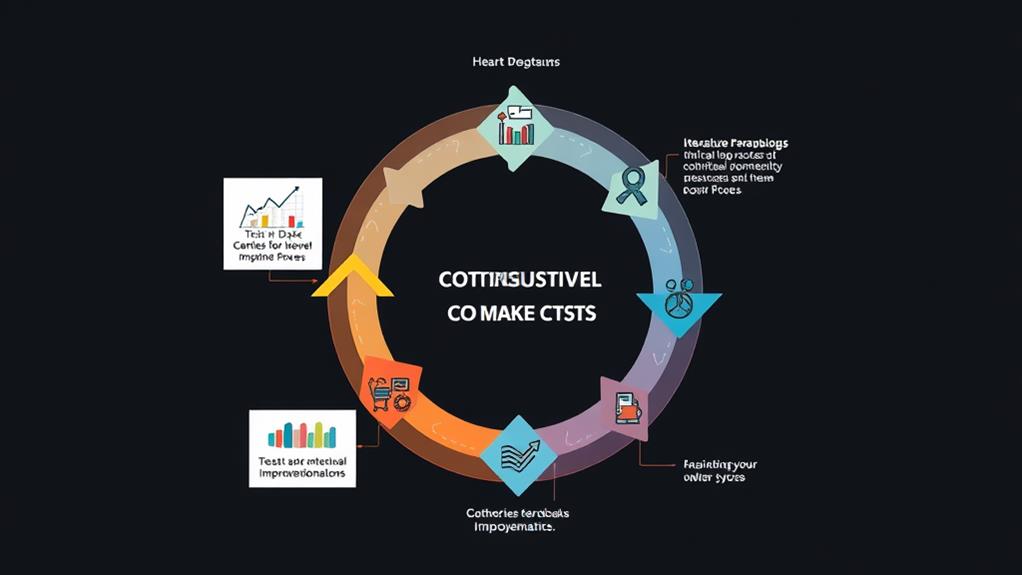
To achieve sustained success in marketing, organizations must embrace a continuous improvement cycle that systematically evaluates and enhances their strategies through ongoing testing, learning, and refinement. This iterative process allows brands to respond dynamically to shifts in consumer behavior, market conditions, and competitive landscapes, thereby optimizing user experience and driving higher conversion rates over time.
Central to this cycle is the establishment of feedback loops, which provide valuable customer insights that inform strategic adjustments and tactical refinements. These loops should operate at multiple levels—from real-time campaign monitoring to quarterly strategic reviews—ensuring that learning occurs continuously rather than only at campaign completion.
Agile marketing embodies this philosophy by prioritizing adaptability and responsiveness over rigid long-term plans. By regularly conducting performance reviews, marketers can analyze data trends, identify emerging patterns, and segment their audience more effectively. This segmentation facilitates targeted campaigns that resonate with specific customer groups, ensuring that marketing efforts yield maximum impact and efficient resource utilization.
Moreover, integrating customer feedback into the improvement cycle helps identify pain points in the user experience that may not be apparent from quantitative data alone. By addressing these concerns through systematic testing and optimization, organizations can not only enhance satisfaction but also foster brand loyalty and increase customer lifetime value. Enhanced user experiences directly correlate with improved conversion rates, making this continuous improvement imperative for competitive advantage in crowded markets.
The continuous improvement cycle typically follows these phases:
- Plan: Identify optimization opportunities based on data analysis, customer feedback, and strategic objectives
- Implement: Design and launch tests with clear hypotheses and success criteria
- Measure: Collect performance data and analyze results against benchmarks
- Learn: Extract insights from test results, understanding both successes and failures
- Optimize: Apply learnings to refine strategies and identify next testing priorities
The continuous improvement cycle is not a one-time initiative but an ongoing commitment to innovation and excellence that becomes embedded in organizational culture. It empowers organizations to remain attuned to their audience, enabling them to refine their strategies continuously and respond to market changes with agility.
In an ever-evolving market landscape, embracing this cycle will not only lead to better marketing outcomes but also align businesses with the freedom to pivot and evolve as required, ensuring long-term sustainability and success. Organizations that institutionalize continuous improvement as a core competency consistently outperform competitors who approach marketing optimization as an occasional project rather than an ongoing discipline.
Frequently Asked Questions
How Long Should a Marketing Test Run?
The optimal duration for a marketing test depends on several factors, including traffic volume, conversion rates, and the magnitude of difference between variations. As a general guideline, tests should run for a minimum of one to two complete business cycles (typically one to two weeks) to account for day-of-week variations in user behavior.
However, the more critical consideration is reaching statistical significance—typically 95% confidence level with adequate sample size. Most testing platforms provide built-in calculators that indicate when sufficient data has been collected. Prematurely ending a test can lead to false conclusions, while running tests unnecessarily long delays implementation of winning variations.
For campaigns with lower traffic, consider using sequential testing or Bayesian statistical approaches that can provide reliable results with smaller sample sizes. High-traffic websites can often reach significance in days, while lower-traffic sites may require several weeks.
What Sample Size Do I Need for Statistically Significant Results?
The required sample size depends on your baseline conversion rate, the minimum detectable effect you want to identify, and your desired confidence level. As a rule of thumb, you need a minimum of 100-200 conversions per variation to detect meaningful differences.
For example, if your current conversion rate is 2%, and you want to detect a 20% relative improvement (to 2.4%), you would need approximately 15,000 visitors per variation at 95% confidence. Online sample size calculators can provide precise estimates based on your specific parameters.
Organizations with limited traffic should focus testing efforts on high-impact pages and elements where improvements will have the greatest business effect, rather than attempting to test every possible variation.
Which Marketing Channels Benefit Most From Continuous Optimization?
All marketing channels benefit from optimization, but the channels with the highest ROI from testing efforts are typically:
- Landing Pages and Website: These represent the final conversion point for most campaigns and have the highest leverage for improving overall marketing performance
- Email Marketing: With controllable variables and measurable outcomes, email is ideal for systematic testing of subject lines, content, timing, and personalization
- Paid Search (PPC): The direct cost-per-click model makes optimization immediately measurable in financial terms, and small improvements compound quickly
- Social Media Advertising: Platform-native testing tools and detailed targeting options enable sophisticated experimentation
- Content Marketing: Testing headlines, formats, and distribution strategies can significantly impact organic reach and engagement
The key is to prioritize channels based on their contribution to business objectives and the potential impact of optimization efforts.
How Do I Get Team Buy-In for Testing Initiatives?
Securing team buy-in for testing initiatives necessitates strategic stakeholder engagement that highlights the benefits of data-driven decisions and demonstrates tangible value. Begin by illustrating how testing can enhance overall performance and support individual team goals, connecting optimization efforts to metrics that matter to each stakeholder group.
Present compelling data that emphasizes the value gained from previous initiatives or industry benchmarks, fostering confidence in the process and demonstrating ROI potential. Use case studies relevant to your industry to show concrete examples of testing success.
Encourage open dialogue to address concerns about testing overhead, implementation complexity, or potential negative results. Reinforce that optimization is a team effort aimed at increasing autonomy and maximizing outcomes rather than identifying failures or assigning blame.
Start with small, high-impact tests that can demonstrate quick wins, building momentum and credibility for larger testing programs. Empower your team by sharing ownership of testing initiatives and celebrating both successful tests and valuable learnings from unsuccessful ones.
Can Testing Be Applied to Social Media Marketing?
Testing is an essential component of social media marketing, enabling brands to enhance their strategies through systematic experimentation across multiple dimensions. A/B testing and audience segmentation are particularly valuable in social media contexts, where platform algorithms and user behaviors create complex optimization challenges.
By analyzing content performance across different platforms, marketers can identify the most effective messaging, visual styles, posting times, and content formats for each channel. Engagement metrics—including likes, shares, comments, and click-through rates—provide insights that guide campaign iteration for optimal results.
Social media platforms increasingly offer native testing tools that enable experimentation with ad creative, targeting parameters, and bidding strategies. Utilizing these methodologies not only refines marketing efforts but also empowers brands to connect more authentically with their target audience, fostering improved customer relationships and community engagement.
Testing in social media should extend beyond paid advertising to include organic content strategies, influencer partnerships, and community management approaches, creating a comprehensive optimization framework.
What Budget Should I Allocate for Testing and Optimization?
Determining the right budget for testing and optimization requires balancing investment with expected returns and organizational maturity. As a general guideline, allocate approximately 10-20% of your overall marketing budget towards testing and optimization activities, including tools, personnel time, and test traffic.
This investment enables the application of various testing metrics to fine-tune your optimization strategies and build organizational capabilities over time. Organizations new to systematic testing should start at the lower end of this range, increasing investment as they develop expertise and demonstrate ROI.
Consider that the cost of not testing—in terms of missed opportunities, inefficient spending, and competitive disadvantage—often exceeds the investment required for a testing program. The most successful organizations view testing not as an expense but as an investment that improves the efficiency of all other marketing spending.
How Often Should I Conduct Marketing Tests?
To maximize marketing effectiveness, testing should be an ongoing activity rather than an occasional project. For high-traffic websites and campaigns, conducting A/B testing continuously ensures systematic data analysis and timely adjustments based on performance metrics and evolving user behavior.
However, user feedback should continuously inform your strategy, enabling agile responses to market dynamics and emerging trends. The frequency of testing depends on traffic volume, organizational capacity, and the rate of change in your market.
Aspiring for freedom in your marketing approach means embracing flexibility and maintaining a testing calendar that balances learning velocity with operational capacity. Remain open to more frequent testing during significant shifts in customer behavior, competitive actions, product launches, or seasonal periods when user intent changes dramatically.
Establish a rhythm that works for your organization—whether that’s launching new tests weekly, bi-weekly, or monthly—and maintain consistency to build a culture of continuous improvement and evidence-based decision-making.
Conclusion
In a world where marketing strategies often resemble guesswork rather than science, the importance of testing and optimization cannot be overstated. As brands struggle in a sea of assumptions and outdated tactics, embracing data-driven methodologies emerges as the beacon of hope that separates market leaders from those left behind. Continuous refinement, driven by rigorous testing, advanced analytics, and AI-powered tools, transforms mediocre campaigns into successful endeavors that drive measurable business results.
The integration of systematic testing into marketing strategy is no longer optional for organizations seeking competitive advantage. From A/B testing and multivariate experiments to AI-driven personalization and predictive optimization, the tools and methodologies available enable unprecedented levels of precision and efficiency in marketing execution.
The difference between relevance and obscurity hinges on the willingness to embrace a culture of relentless optimization, where every campaign is an opportunity to learn, every test generates insights, and every data point informs smarter decisions. Organizations that commit to this discipline position themselves not just to survive but to thrive in an increasingly competitive and rapidly evolving marketplace, achieving sustainable growth through evidence-based strategy and continuous improvement.