How to Create a Marketing Strategy That Fosters Engagement
Creating a marketing strategy that fosters engagement requires a thorough understanding of your audience. Start by segmenting demographics and psychographics to grasp their preferences. Set clear, measurable objectives that align with your overarching goals. Choose the right channels, focusing on those where your audience is most active. Develop valuable, audience-centric content, integrating interactive experiences like quizzes or visual storytelling. Encourage user participation and facilitate sharing through referral programs. Regularly monitor engagement metrics to adapt your approach based on feedback. Employ these strategies effectively, and the results will speak for themselves, revealing deeper insights worth exploring further.
Key Takeaways
- Understand your audience through thorough segmentation and behavior tracking to tailor your marketing approach effectively.
- Set clear, specific, and measurable objectives to align marketing efforts with desired outcomes, ensuring progress can be tracked.
- Choose the right channels based on audience analysis to maximize reach and engagement across platforms where your target audience is active.
- Create valuable, audience-centric content, utilizing compelling visuals and interactive elements to enhance engagement and emotional connections.
- Foster community involvement through user-generated content and referral programs, turning customers into brand ambassadors for organic growth.
Understand Your Audience

Understanding your audience is the cornerstone of any effective marketing strategy. To truly engage individuals who yearn for autonomy and self-expression, one must explore deep into the intricacies of audience segmentation. This process involves demographic analysis that identifies age, gender, and income levels, but it extends further into psychographic profiling, which uncovers the values and lifestyles that drive potential customers' desires.
Behavior tracking plays a pivotal role in crafting user personas, illuminating how individuals interact with your brand across various platforms. By understanding their engagement motivations—be it the pursuit of knowledge, community connection, or personal growth—you can tailor your messaging to resonate with their core aspirations.
Market research equips you with insights into prevailing trends and expectations, while a thorough needs assessment uncovers gaps your offering can fill.
Moreover, the importance of feedback loops cannot be overstated. Continuous interaction with your audience through surveys or social listening fosters a dynamic exchange, allowing you to refine your understanding and respond to ever-evolving preferences.
Lifestyle insights reveal unique factors that inform consumers' purchasing decisions and reinforce their need for autonomy.
Utilizing these multifaceted approaches creates a solid foundation for a marketing strategy that is precisely calibrated for engagement. By meticulously piecing together the puzzle of your audience, you pave the way for sustained connections that celebrate their individuality and empower their choices.
Truly, when audiences feel seen, understood, and valued, their loyalty becomes a powerful catalyst for mutual growth.
Set Clear Objectives
Establishing clear objectives is essential for any marketing strategy aiming to achieve tangible results. By defining what success looks like, you can create a focused approach that aligns your efforts with your ultimate goals.
This process not only facilitates goal setting but also encourages performance tracking, allowing you to measure progress effectively and adjust your tactics as necessary.
To create impactful marketing objectives, consider focusing on the following key elements:
- Specificity: Define clear, concrete goals that can be easily understood and measured. Instead of a vague aim like "increase engagement," specify what engagement looks like, such as "boost social media interactions by 25% within six months."
- Measurability: Confirm your objectives are quantifiable, allowing for tracking and evaluation. For instance, set metrics such as website traffic numbers or conversion rates to determine if you're achieving your goals.
- Time-bound: Establish deadlines for your objectives to instill a sense of urgency. This might involve short-term goals to enhance immediate engagement or long-term milestones to foster sustained brand loyalty.
Choose the Right Channels
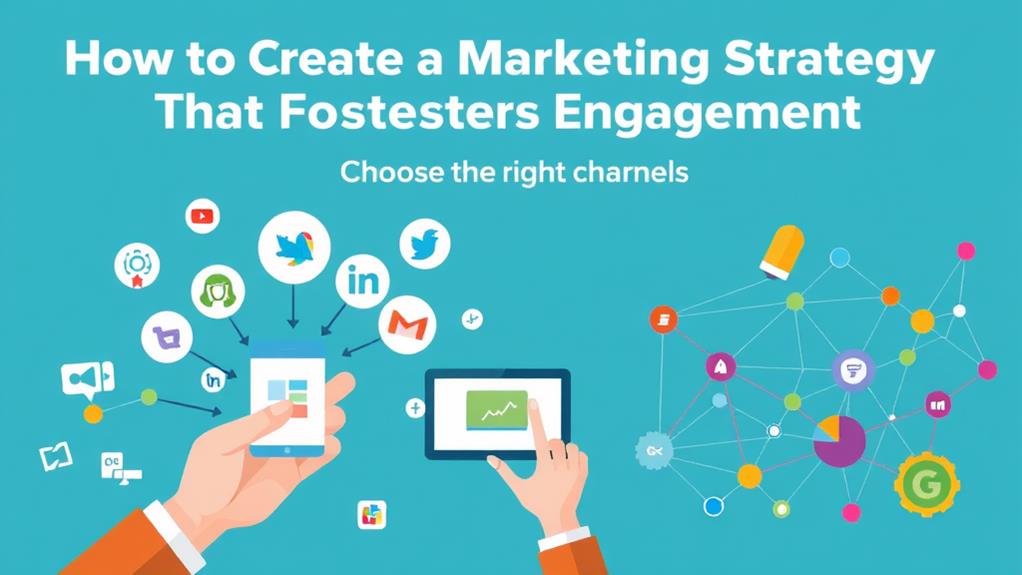
Selecting the appropriate channels for your marketing strategy is pivotal to maximizing engagement and reaching your target audience effectively. In a landscape bursting with options, strategic channel selection goes beyond mere presence; it demands a thoughtful evaluation of channel effectiveness and alignment with audience preferences.
Begin by leveraging platform analysis to identify the channels where your audience congregates. This includes evaluating the impact of email marketing, which remains a robust tool for personalized outreach, fostering a direct connection with potential customers. Equally, understanding engagement trends can shed light on the channels demonstrating the highest interaction rates, allowing for more effective content distribution.
Once the channels are identified, utilize audience segmentation to tailor messaging and multimedia integration suited to specific demographics. For instance, younger audiences may gravitate toward social media platforms, while professionals may prefer email newsletters. Craft your outreach strategy by integrating diverse formats—be it visual content, articles, or interactive elements—ensuring a cohesive narrative that resonates across channels.
Effective engagement hinges on staying responsive and adapting to changes. Regularly review analytics to evaluate which channels are thriving and which may require readjustment in approach. By fine-tuning your chosen platforms based on real-time data, you'll not only enhance your marketing efforts but also create a dialogue with your audience that empowers their choices.
Ultimately, the right channels will serve as conduits for authentic connections, transforming passive viewers into engaged advocates for your brand.
Create Valuable Content
Creating valuable content begins with a deep understanding of your target audience, as this knowledge informs the relevance and appeal of your messaging.
Incorporating compelling visuals can greatly enhance engagement, capturing attention and fostering emotional connections.
In addition, promoting sharing opportunities not only amplifies reach but also cultivates community involvement, establishing a dynamic interaction with your brand.
Understand Target Audience
Frequently, brands that prioritize understanding their target audience discover that the cornerstone of effective engagement lies in producing valuable content tailored to their specific needs and preferences.
By delving into demographic analysis, brands can identify key traits of their audience, while behavioral insights illuminate how these individuals interact with content.
To cultivate meaningful engagement, consider the following strategies:
- Audience Segmentation: Break down your audience into distinct segments, utilizing persona development and psychographic profiling to understand motivations and aspirations.
- Interest Mapping: Analyze what topics resonate with your audience throughout their user journey, ensuring that content aligns with their interests and triggers engagement.
- Feedback Loops: Encourage and analyze audience feedback to adapt your content strategy dynamically, fostering an authentic connection based on their evolving needs.
When these elements come together, brands gain clarity on audience motivations, paving the way for more compelling, valuable content.
This approach not only enhances engagement but cultivates a relationship that encourages freedom of expression and dialogue, ultimately leading to deeper brand loyalty.
Use Compelling Visuals
Engagement can be greatly amplified by leveraging compelling visuals that not only capture attention but also convey messages effectively. Visual storytelling integrates graphical elements to narrate your brand's story, fostering deeper connections with your audience.
By employing infographic design, complex information is distilled into engaging visuals that enhance understanding and retention. Brand aesthetics play a pivotal role, as consistent use of color psychology can evoke emotional appeal and influence perceptions of your brand.
Thoughtfully considered colors not only attract the eye but also resonate with your target audience's values and feelings, further bridging the gap between brands and consumers. Incorporating visual hierarchy guarantees that your messaging is communicated with clarity, guiding viewers through content seamlessly.
This can be enhanced through multimedia integration, combining videos and animations that breathe life into static graphics, making your content more dynamic. Using creative imagery alongside visual consistency fortifies brand recognition, enabling your audience to engage more intimately with your narrative.
Ultimately, strategic application of compelling visuals transforms ordinary content into a potent tool for engagement, inviting your audience to explore deeper into your brand's essence.
Promote Sharing Opportunities
How can brands effectively foster a culture of sharing among their audience? One crucial approach is to create sharing opportunities that resonate with the desires of consumers for connection and collaboration. By implementing strategic initiatives that encourage interaction, brands can enhance engagement and loyalty.
Here are three effective methods to promote sharing:
- Referral Programs: Implement sharing incentives that reward customers for promoting your brand, turning them into ambassadors who drive organic growth.
- User-Generated Content: Encourage audience participation through social contests or hashtag campaigns, where users showcase their experiences with your product, creating authentic content that speaks volumes.
- Collaborative Projects and Engagement Challenges: Foster creativity through co-creation initiatives and engagement challenges that invite your audience to contribute ideas, with audience shoutouts serving as an added motivation.
Through these strategies, brands can establish a dialogue with their consumers, making sharing an intrinsic part of their marketing strategy.
Encourage User Participation

Encouraging user participation is essential for cultivating an engaged audience and fostering brand loyalty.
By integrating interactive content creation, implementing targeted social media engagement tactics, and launching community-building initiatives, brands can transform passive consumers into active participants in their marketing narrative.
This strategic approach not only enhances user experience but also amplifies the reach and effectiveness of marketing efforts.
Interactive Content Creation
A significant aspect of modern marketing strategies involves the creation of interactive content designed to foster user participation. By employing innovative techniques, brands can cultivate deeper connections with their audience.
Here are three effective methods to achieve this:
- Interactive Quizzes: Incorporate gamification strategies through quizzes that not only engage users but also provide valuable insights into their preferences. This not only entertains but also offers content personalization opportunities.
- Live Polls: Utilize live polling during virtual events to encourage real-time audience feedback. By allowing users to voice their opinions, brands can create immersive experiences that resonate and facilitate storytelling techniques.
- User Generated Content: Inspire your audience to create content by encouraging submissions that reflect their experiences or opinions regarding your brand. This can enhance authenticity and foster a community around your offerings, while enriching your marketing narrative through dynamic infographics.
Interactive content effectively invites users into your brand's story, transforming passive consumption into active participation.
Social Media Engagement Tactics
Regularly leveraging social media for user engagement is essential for brands seeking to cultivate a vibrant online community. By strategically implementing content curation, brands can share relevant information that resonates with their audience, fostering deeper connections.
Effective audience segmentation allows for tailored messaging, guaranteeing that each group feels included in the conversation. Trend analysis plays a pivotal role in understanding what content will likely capture attention, while platform algorithms dictate how far and wide a post will reach.
Leveraging engagement incentives—such as exclusive content or giveaways—encourages participation, transforming passive viewers into active participants. Integrating brand storytelling into posts nurtures an emotional bond with followers, enhancing user engagement.
Social listening enables brands to monitor conversations and adapt content strategies according to audience feedback. Employing timing strategies guarantees that content goes live when users are most active, maximizing visibility and interaction.
Hashtag campaigns can broaden reach and stimulate discussions, while user-generated content empowers followers, making them integral to the brand narrative. Collectively, these tactics contribute to a dynamic, engaging social media presence that respects the audience's desire for freedom and connection.
Community-Building Initiatives
Fostering a sense of community is essential for brands aiming to deepen user participation and create lasting connections with their audience.
Community-building initiatives enhance brand loyalty by providing users with authentic engagement channels. These endeavors create various opportunities for individuals to connect and collaborate, ultimately empowering them to contribute meaningfully.
Here are three effective strategies to cultivate community engagement:
- Organize Community Events: Host in-person or virtual gatherings that encourage participants to share experiences and insights. These events nurture relationships, allowing for resource sharing and collaboration.
- Leverage Online Forums: Create dedicated spaces where community members can discuss, ask questions, and share feedback. Establishing feedback loops guarantees that users feel heard, fostering a culture of mutual respect and involvement.
- Develop Local Partnerships: Collaborate with local organizations to provide mentorship programs and engagement challenges that inspire community projects. Member spotlights can highlight success stories and motivate others to participate.
Leverage Social Media
Utilizing social media effectively can greatly enhance brand engagement and foster meaningful interactions with audiences. In today's digital landscape, understanding social media trends and the nuances of platform algorithms is paramount for crafting a dynamic marketing strategy. Brands that align their messaging with current trends not only capture attention but also resonate with their audiences on a deeper level, nurturing loyalty and encouraging organic sharing.
Moreover, the algorithms governing various social media platforms often prioritize content that generates engagement. Consequently, it is essential to create diverse and visually appealing content that invites interaction—be it through thought-provoking questions, compelling visuals, or shareable stories. Engaging with your audience through comments and messages further personalizes the experience, transforming passive followers into active participants in your brand narrative.
Additionally, leveraging emerging trends—such as short-form videos, ephemeral content, or interactive polls—can provide unique avenues for connection. By adapting to the evolving preferences of users, brands can escape the confines of traditional marketing and instead cultivate an environment that celebrates dialogue and creativity. This frees brands and customers alike to explore ideas collaboratively, pushing boundaries and expanding horizons.
Ultimately, a focused strategy that capitalizes on social media's capabilities serves not just as a marketing tool, but as a catalyst for genuine engagement. Embracing the freedom offered by these platforms allows brands to grow authentically while fostering a community of passionate advocates who believe in the value and mission of the brand.
Monitor Engagement Metrics

To maximize the effectiveness of your social media efforts, monitoring engagement metrics becomes indispensable in understanding the impact of your strategies.
By analyzing this data, you can glean insights that inform your engagement strategies and drive meaningful connections with your audience. Embracing a data-driven approach not only allows for content optimization but also fosters an environment where audience feedback shapes future initiatives.
Here are three key aspects to monitor:
- Engagement Trends: Track patterns in likes, shares, and comments over time. This helps identify which content resonates most with your target audience and allows for strategic audience segmentation.
- Performance Benchmarks: Set clear engagement benchmarks to evaluate your content's performance against industry standards. This enables metric analysis that reveals strengths and weaknesses in your current efforts.
- Engagement Tools: Utilize advanced engagement tools to automate and analyze your metrics effectively. These tools provide real-time insights, helping you adjust your strategies swiftly and confidently.
Adapt to Feedback
Adapting to feedback is an essential component of refining a marketing strategy for engagement.
By analyzing performance metrics, organizations can identify areas for improvement, while encouraging open communication fosters a culture of responsiveness.
Rapidly implementing changes based on this data guarantees that strategies remain relevant and effective, ultimately enhancing customer satisfaction and loyalty.
Analyze Performance Metrics
Effective analysis of performance metrics serves as the backbone of any successful marketing strategy, enabling businesses to gauge their current standing and make informed adjustments.
By leveraging data visualization tools and embracing metric analysis, companies can uncover performance trends that illuminate user behavior and clarify campaign effectiveness.
To guarantee your marketing strategy remains agile and responsive, consider the following strategies:
- Establish Engagement Benchmarks: By setting clear benchmarks, you can measure the success of your campaigns and identify areas requiring improvement, fostering healthy feedback loops.
- Utilize Benchmark Comparisons: Compare your metrics with industry standards to gain perspective on your performance relative to competitors, highlighting opportunities and threats in your market landscape.
- Implement Conversion Tracking: Accurately track conversions to understand how well your marketing efforts resonate with your audience.
This guarantees focused audience segmentation, allowing you to tailor your strategies for enhanced engagement.
Encourage Open Communication
Open communication is essential for fostering a culture of feedback that drives continuous improvement within your marketing strategy. Creating transparent dialogue encourages stakeholders to express their thoughts freely, shaping a dynamic feedback loop vital for refining your approach.
By cultivating an environment where active listening is paramount, organizations demonstrate emotional intelligence that enhances relationship nurturing.
Embracing inclusive practices within your communication framework invites diverse perspectives, ensuring that all voices are valued and heard. This not only strengthens trust building but also establishes a supportive environment where constructive criticism is welcomed rather than feared.
The ability to engage in conflict resolution through open dialogue transforms potential disagreements into opportunities for growth.
Moreover, encouraging open communication forms the backbone of a resilient marketing strategy. It allows for timely adjustments based on feedback received and demonstrates a commitment to continuous improvement.
Implement Changes Promptly
A proactive approach to implementing changes promptly based on feedback is critical for the success of any marketing strategy. Embracing agility practices allows organizations to pivot based on real-time customer feedback, guaranteeing that marketing efforts resonate with the audience.
Agile teams that prioritize collaboration can streamline processes and enhance team synergy, leading to effective change management and stakeholder involvement.
To implement changes effectively, consider the following steps:
- Continuous Improvement: Regularly analyze customer feedback to identify areas for enhancement, fostering an environment of rapid iteration and innovation.
- Process Optimization: Assess existing workflows and eliminate bottlenecks to guarantee swift implementation of changes that respond to customer needs.
- Foster Team Collaboration: Encourage cross-functional teams to communicate and share insights. This collective effort can lead to richer, more informed decision-making.
Collaborate With Influencers
Influencer collaborations represent a potent strategy for enhancing brand engagement and reaching target audiences authentically. In today's digital landscape, where consumers prioritize genuine connections and real experiences, relationship building becomes vital. By strategically selecting influencers whose values align with your brand, you can leverage their niche expertise to amplify your message and resonate more profoundly with your target audience.
Authenticity matters in influencer marketing; engaging content should reflect shared beliefs and lifestyles. When influencers authentically narrate your brand's story, it enriches the trust factor associated with your campaign. Campaign consistency is essential here; maintaining a cohesive narrative across collaborative content guarantees that your audience understands and appreciates the partnership, ultimately strengthening the emotional connection with your brand.
Audience alignment is another significant facet, as choosing influencers who genuinely engage with their followers fosters an authentic dialogue between your brand and potential customers. Through effective influencer selection, brands can tap into established communities; this access can be a powerful engagement strategy.
Furthermore, successful collaborations transcend mere promotion; they deliver value by blending entertainment and information. As a result, collaborative content that showcases both the influencer's personality and your brand's ethos holds the potential to drive a sustained interest and interaction.
In a world defined by freedom of choice, influencer partnerships that prioritize authenticity and engagement will not only elevate brand visibility but also solidify your brand's position as a trusted entity within the marketplace.
Foster Community Building
Consistently nurturing a community around your brand is a dynamic approach to foster deeper engagement and loyalty among your audience. By building a sense of belonging and connection, you empower your customers to express their preferences, needs, and values, thereby creating a vibrant ecosystem centered on your brand.
Cultivating community goes beyond mere marketing; it requires strategic initiatives that spark interest and participation.
To effectively foster community building, consider the following strategies:
- Host Community Events: Organizing events, both virtual and local, allows members to engage in real-time interaction, forging bonds while showcasing your commitment to social responsibility.
- Utilize Collaboration Platforms: Implement digital spaces where members can share resources, seek mentorship, and collaborate within interest groups. This encourages feedback loops that refine your offerings based on community input.
- Recognize Member Contributions: Celebrate the achievements of your community members through formal recognition. Acknowledging their contributions reinforces loyalty and encourages active participation, ensuring that your community thrives on shared values.
Frequently Asked Questions
How Can I Identify My Target Audience Effectively?
Identifying your target audience effectively requires a thorough demographic analysis to understand characteristics such as age, gender, income, and location.
Simultaneously, audience segmentation allows you to categorize these groups based on shared interests and behaviors.
This dual approach creates a detailed profile, enabling you to tailor your messaging and offerings.
What Tools Can Help Measure Engagement Metrics?
In a world where your tweets could be more popular than cat videos, measuring engagement metrics becomes paramount.
Employ tools like Google Analytics for thorough engagement analytics, while heatmaps from Hotjar reveal user behavior hotspots.
Social media platforms often provide their own metrics, illuminating how your audience interacts with content.
Utilize these tools to decipher the intricacies of engagement, transforming mere numbers into actionable insights that grant your marketing endeavors the freedom to flourish.
How Often Should I Update My Content Strategy?
Updating your content strategy is essential to maintaining relevance. A content refresh should be executed quarterly, allowing for adjustments based on audience segmentation and engagement analytics.
Regularly evaluating your content guarantees it aligns with evolving audience preferences and market trends, fostering deeper connections and increased engagement. This proactive approach not only boosts visibility but also enhances the perceived value of your brand, promoting a sense of freedom and adaptability in your marketing efforts.
What Are the Best Practices for Collaborating With Influencers?
In a world brimming with "authentic" influencers, the real challenge lies in discerning who truly resonates with your audience.
Prioritize influencer selection based on rigorous criteria, ensuring content alignment to reinforce your brand's message.
Authenticity is paramount; hence, choose partners who genuinely connect with their followers.
Embrace partnership transparency to foster trust, even as the irony of social media fame unfolds.
Ultimately, your audience craves authenticity, not mere illusion.
How Can I Handle Negative Feedback From Users?
Managing negative feedback is essential for fostering user engagement and protecting your brand's reputation. Addressing concerns promptly, with empathy and transparency, demonstrates your commitment to customer satisfaction.
Use negative feedback as an opportunity to improve, encouraging open dialogue and showcasing responsiveness. By actively involving users in the resolution process, you can transform dissatisfaction into loyalty, empowering both the consumer and your brand to flourish in a competitive landscape.
Conclusion
To summarize, a marketing strategy designed to foster engagement may ironically thrive on a foundation of detachment. By meticulously understanding the audience and establishing clear objectives, marketers paradoxically invite genuine connections. Selecting appropriate channels and crafting valuable content serve not merely to inform but to ensnare interest. As a result, the evolution of engagement metrics not only reflects success, but also underscores the inherent unpredictability of human interaction within community dynamics. Consequently, the very pursuit of connection can yield unexpected outcomes.