
How to Develop a Marketing Strategy That Differentiates Your Brand
To develop a marketing strategy that differentiates your brand, start by deeply understanding your target audience through demographic and behavioral analysis. Next, analyze competitors using tools like SWOT analysis to gain insights into their strengths and weaknesses. Clearly define your unique value proposition, emphasizing how your product meets customer needs. Create compelling brand messaging that fosters emotional connections through storytelling. Finally, implement robust metrics to measure your strategy's success, guaranteeing you adapt based on audience feedback. This iterative approach guarantees you remain relevant and distinctive in your market, revealing even more insights as you enhance your strategy further.
Key Takeaways
- Understand your target audience through demographic segmentation and personalized experiences to tailor your marketing messages effectively.
- Analyze competitors using SWOT analysis to identify their weaknesses and uncover opportunities for differentiation in your strategy.
- Define your unique value proposition clearly, highlighting how your offerings solve customer pain points and align with their identities.
- Create compelling brand messaging that evokes emotions and tells stories, maintaining consistency across all platforms for trust-building.
- Measure success through performance metrics and feedback loops, iterating your strategy based on insights to enhance engagement and retention.
Understand Your Target Audience

To effectively engage consumers, brands must explore the intricacies of their target audience. Understanding the target audience is a critical element of any marketing strategy, one that hinges on insightful analysis and targeted communication. A strategic approach begins with demographic segmentation, which involves categorizing consumers based on age, gender, income, education, and other characteristics. This segmentation allows brands to tailor their messages more effectively, ensuring that marketing efforts resonate with distinct segments of the population.
However, demographic segmentation alone is insufficient. Incorporating behavioral insights—such as purchasing patterns, brand loyalty, and response to marketing efforts—enables a more profound comprehension of consumer motivations. For example, a brand targeting environmentally conscious consumers must not only understand their demographics but also appreciate their commitment to sustainability and the factors influencing their purchases. By leveraging this combined approach, brands can craft personalized experiences that resonate deeply with their audience's values and preferences.
Moreover, an understanding of the audience fosters a sense of autonomy among consumers. When they feel acknowledged and understood, they are more likely to engage with the brand willingly, craving the freedom to choose products that echo their lifestyles and beliefs.
This dynamic relationship not only enhances customer loyalty but also cultivates ambassadorship, with consumers advocating for brands that genuinely reflect their identity. Consequently, investing time and resources into understanding the target audience is not just advisable; it is indispensable for brands aspiring to thrive in a competitive marketplace.
Analyze Competitors Effectively
Understanding your target audience lays a solid foundation for effective marketing, but it is equally essential to keep an eye on the competitive landscape. Analyzing your competitors allows you to map out not only their market position but also their strategy, which is critical for identifying gaps your brand can fill.
Begin by gathering data on your competitors' strengths and weaknesses. Assess their product offerings, pricing structures, and branding approaches to evaluate how well they resonate with consumers.
Utilize tools such as SWOT analysis to systematically pinpoint their competitive advantages and vulnerabilities. For instance, a competitor may excel in customer service but falter in social media engagement, presenting an opportunity for your brand to shine.
Additionally, pay attention to their marketing tactics—what resonates with their audience? Are there motifs or campaigns that repeatedly engage their base?
Market feedback is invaluable. Consumer reviews, social media sentiments, and industry reports can provide a wealth of information regarding how competitors are perceived in the marketplace. This understanding can guide you towards strategies that not only build your brand's profile but also exploit competitive weaknesses.
In an era where brands vie for consumer attention, being attuned to the competitive landscape is not merely wise; it's essential for survival. By embracing your competitors' strategies meekly, you stand a greater chance to innovate, differentiate, and ultimately lead within your niche, paving the way for your brand's growth in an ever-evolving marketplace.
Define Your Unique Value Proposition

Clarity of purpose is paramount when defining your Unique Value Proposition (UVP), as it encapsulates what sets your brand apart in a crowded marketplace. A well-articulated UVP articulates not only the distinct features of your offerings but, more critically, the customer benefits that these features deliver. It transcends mere product descriptions, addressing the core needs and aspirations of your target audience while highlighting how your brand uniquely satisfies them.
To effectively carve out a space for your brand, begin by deeply understanding both your customers and the competitive landscape. What pain points can you alleviate, and how do your services or products serve as a catalyst for change in their lives? This introspection should inform your market positioning strategy, ensuring that your UVP resonates with authenticity and relevance.
Moreover, your UVP should reflect the essence of your brand's identity, encapsulating the synergy between your values and those of your audience. This creates an emotional connection, fostering loyalty and advocacy. Brands that succeed in articulating their UVP not only stand out but cultivate an atmosphere of freedom, empowering customers to make choices that align with their identities and aspirations.
In a world driven by choice, a compelling UVP becomes a guiding star, steering customers toward your brand while delineating the profound impact you aim to have on their lives.
As a result, invest the necessary time and resources to articulate and refine your UVP—it is the cornerstone of a differentiated marketing strategy.
Create Compelling Brand Messaging
With a well-defined Unique Value Proposition (UVP) as your foundation, the next step involves crafting compelling brand messaging that resonates deeply with your target audience. Effective messaging goes beyond mere facts and features; it must forge an emotional connection that drives audience engagement and loyalty.
Storytelling techniques play a pivotal role here, allowing brands to weave narratives that encapsulate their values, vision, and purpose. Consider how storytelling evokes emotion by putting human experiences at the forefront. Consumers are not just purchasing a product; they are buying into a narrative.
Your brand's story should articulate challenges faced and triumphs achieved, encouraging your audience to see themselves as part of that journey. By utilizing relatable characters or compelling scenarios, you can create a landscape where your audience feels recognized and valued.
Additionally, guarantee your messaging remains consistent across all platforms. This coherence builds trust, as consumers come to rely on your brand's voice and identity.
Explore channels that resonate best with your target market, whether through social media, email campaigns, or immersive content experiences. Emphasizing your unique qualities through these storytelling methods positions your brand distinctively in the marketplace.
Measure and Adjust Your Strategy
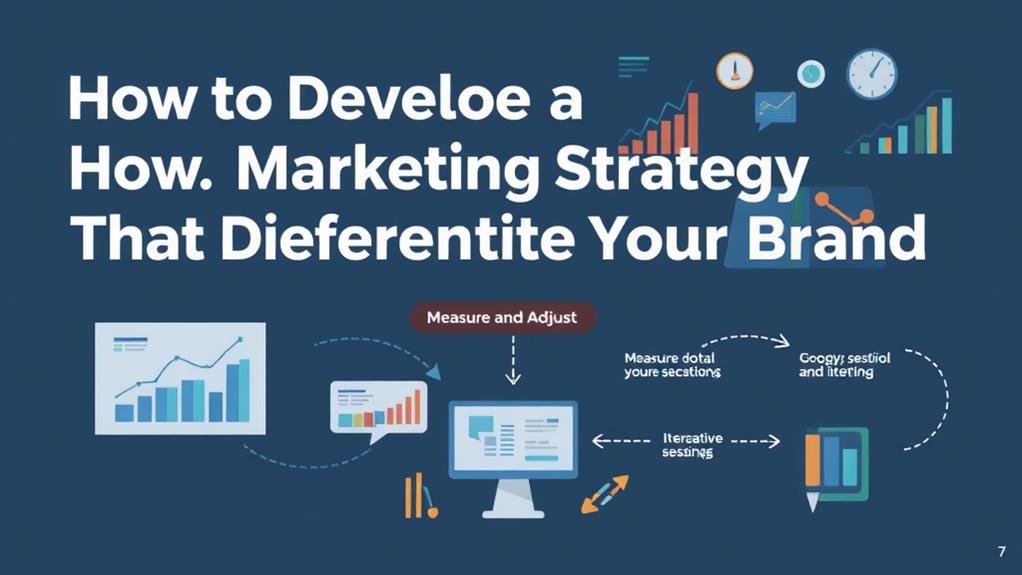
Success in any marketing strategy hinges on the ability to measure results effectively and adjust tactics accordingly. This dynamic approach is essential for fostering a brand that resonates with its audience while also maintaining the flexibility needed to adapt to changing market conditions.
Employing the right performance metrics is critical in this process; they serve not only as indicators of success but also as valuable insights that inform your decision-making.
To truly harness the power of data, integrate feedback loops into your marketing strategy. By consistently soliciting feedback from your target audience, you can gain a deeper understanding of their preferences and behaviors. This feedback empowers you to tweak your messaging, optimize your channels, and refine your overall approach, ensuring that your marketing efforts remain aligned with the desires of your audience.
Moreover, regularly revisiting and analyzing your performance metrics allows you to identify areas for improvement. By focusing on key metrics such as engagement rates, conversion ratios, and customer retention, you can allocate resources more effectively, maximizing your return on investment.
This iterative process encourages a culture of continuous improvement, giving you the freedom to explore new ideas while remaining grounded in measurable outcomes.
Frequently Asked Questions
How Do I Identify Gaps in the Market for My Brand?
Identifying gaps in the market requires a thorough approach.
Begin with market research to understand existing consumer needs and preferences. Conduct a competitor analysis to pinpoint strengths and weaknesses in their offerings.
Focus on niche identification, uncovering unique opportunities that competitors may overlook.
What Role Does Storytelling Play in Brand Differentiation?
Storytelling is integral to brand differentiation, utilizing narrative techniques to forge an emotional connection with consumers.
By weaving compelling narratives, brands can evoke authentic experiences that resonate personally, fostering consumer engagement.
This authenticity not only distinguishes a brand in crowded markets but also builds trust and loyalty among customers.
Ultimately, storytelling shapes perceptions and cultivates an environment where consumers feel empowered to align with brands that reflect their values and aspirations.
Can I Use Social Media to Differentiate My Brand Effectively?
Utilizing social media to differentiate your brand can be highly effective when aligned with current social media trends. Engaging your audience authentically fosters connection and loyalty, enabling you to stand out in a crowded market.
How Important Is Consistency in Brand Messaging?
Consistency in brand messaging is essential for establishing a coherent brand identity. When brand voice and messaging alignment are maintained across all platforms, it fosters trust and recognition among consumers.
An inconsistent message can dilute brand integrity and confuse the audience, hindering their connection to the brand. To maintain freedom in expression, it's imperative to guarantee that all communications resonate with the established voice, creating a unified narrative that captivates and engages customers effectively.
What Are Common Mistakes to Avoid When Developing a Marketing Strategy?
When developing a marketing strategy, avoiding pitfalls is essential.
Common mistakes include neglecting thorough market research, which can lead to misunderstanding your target audience. Insufficient competitive analysis may hinder effective branding elements, while poor budget allocation can result in wasted resources.
Additionally, overlooking the ideal marketing channels can stifle potential outreach. A cohesive strategy requires balancing these components to guarantee robust brand positioning and resonance with your audience's desires for freedom and individuality.
Conclusion
In a fast-paced marketing landscape, the ability to differentiate a brand stands as a cornerstone of success. By thoroughly understanding the target audience, analyzing competitors, and articulating a unique value proposition, brands can effectively carve out a niche. Crafting compelling messaging and remaining flexible to measurement outcomes guarantees relevance and resonance. Like a skilled artisan wielding a quill, the deliberate formulation of a marketing strategy ultimately shapes perception, fosters loyalty, and secures a competitive edge.