How AI Can Help SMBs Improve Process Optimization
AI empowers small and medium-sized businesses (SMBs) to enhance process optimization through automation and data analysis. By streamlining repetitive tasks, AI reduces human error and improves operational efficiency. It enables informed decision-making by providing real-time insights and predictive analytics that help identify trends and bottlenecks. Additionally, AI fosters workforce synergy, allowing teams to collaborate more effectively. The integration of AI tools for customer engagement personalizes interactions, further driving value. This blend of automation and analytical capabilities positions SMBs for sustained growth in a competitive landscape, showcasing why exploring further can reveal new opportunities.
Key Takeaways
- AI enhances operational efficiency by automating tedious tasks, enabling SMBs to focus on strategic activities.
- Predictive analytics in AI helps SMBs forecast trends and optimize resource allocation effectively.
- Real-time reporting tools provide agile decision-making capabilities by presenting data in customizable and accessible formats.
- Data-driven insights from AI eliminate guesswork, enabling informed decisions that enhance overall productivity.
- AI-driven customer engagement tools personalize marketing efforts, strengthening customer relationships and driving growth.
Understanding Process Optimization
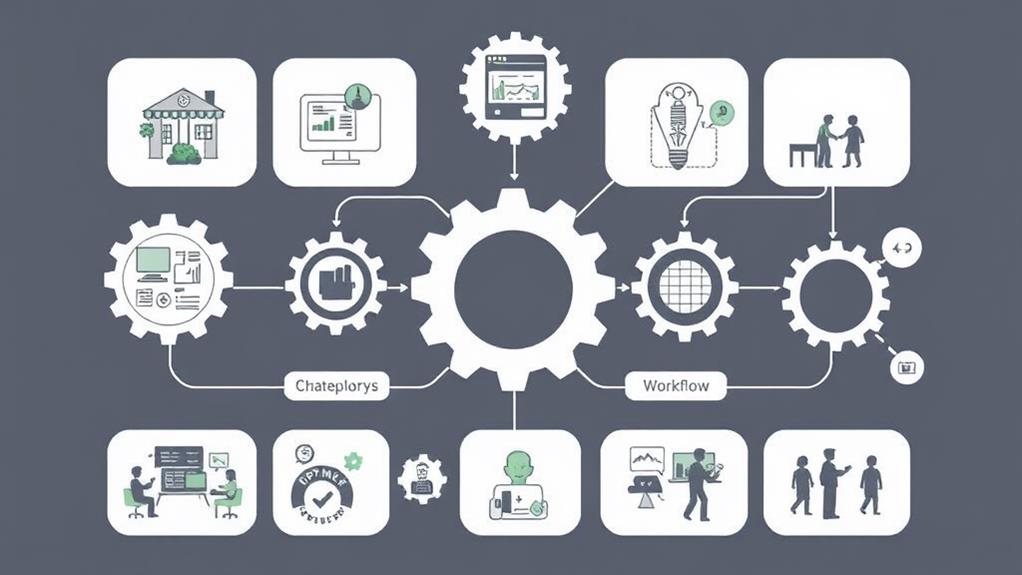
Typically, process optimization involves the systematic evaluation and enhancement of business operations to increase efficiency and effectiveness. At its core, process optimization seeks to streamline workflows and refine resource allocation, yielding measurable improvements in performance metrics.
Through methodologies such as process mapping, organizations can visualize the flow of tasks and identify bottlenecks, thereby enabling data-driven decisions that lead to operational effectiveness.
Critical to this endeavor is the establishment of clear efficiency metrics and performance benchmarks that provide a framework for continuous improvement. By comparing actual performance against these benchmarks, businesses can prioritize tasks more effectively, aligning efforts with organizational goals.
In addition, embracing workflow standardization contributes to quality control; consistent processes reduce variability and enhance output reliability.
The pursuit of value stream mapping further complements these practices, as it identifies activities that add value versus those that do not, illuminating opportunities to eliminate waste.
Continuous assessment fosters an environment predisposed to evolution, allowing businesses to remain agile in the face of market changes.
The Role of AI in SMBs
In the fast-changing landscape of business, AI emerges as a transformative force for small and medium-sized businesses (SMBs), empowering them to enhance operational efficiency and gain competitive advantage. The unique challenges faced by SMBs, such as limited resources and the pressure to innovate, make AI applications particularly valuable. By leveraging these advanced technologies, businesses can automate tedious tasks, streamline processes, and notably improve cost efficiency.
Technology adoption presents an opportunity for SMBs to integrate AI into their operations, fostering workforce integration that aligns human talent with cutting-edge tools. This synergy not only boosts productivity but also enhances employee satisfaction, as team members are freed from mundane tasks to focus on strategic initiatives.
In addition, AI provides scalability solutions, allowing SMBs to adapt their operations to market demands with agility.
One key area where AI remarkably impacts is customer engagement. Personalized marketing, predictive analytics, and automated customer service systems enable SMBs to connect with customers on a deeper level. Through tailored experiences, businesses can nurture relationships, ultimately driving loyalty and increasing sales.
Ultimately, the role of AI in SMBs transcends mere efficiency. It serves as a catalyst for growth, enabling these businesses to navigate the complexities of the modern marketplace confidently. By embracing AI, SMBs position themselves not just to survive, but to thrive, ensuring sustainable success in an increasingly competitive landscape.
Data Analysis and Insights

Harnessing data effectively is essential for SMBs seeking to optimize their processes and drive informed decision-making. By implementing robust data analysis strategies, these enterprises can leverage various data visualization techniques to present complex insights in an accessible manner. Using trend analysis methods, they can identify patterns that inform strategic pivots, ensuring agility in the marketplace.
Data integration strategies play a significant role in consolidating disparate datasets, enabling seamless access to information. Integrating machine learning applications further enhances analytical capabilities, allowing SMBs to predict customer behavior and streamline operations. For instance, employing customer feedback analysis helps businesses refine their offerings, fostering a customer-centric approach that leads to higher satisfaction rates.
However, the effectiveness of these analyses hinges on data quality assessment. Poor quality data can lead to misleading insights and decision paralysis. As a result, implementing data governance practices is essential, establishing standards for data accuracy, consistency, and integrity.
Utilizing business intelligence tools can transform raw data into actionable insights, providing a competitive edge. Additionally, investing in reporting automation solutions can reduce manual workloads, enabling teams to focus on strategic tasks rather than administrative overhead.
Lastly, SMBs must prioritize data security measures to safeguard sensitive information against breaches. Demonstrating a commitment to these practices not only builds trust with customers but also enhances overall operational resilience.
Automating Routine Tasks
Small and medium-sized businesses (SMBs) are increasingly recognizing the value of automating routine tasks to enhance efficiency and productivity. By implementing workflow automation technologies, SMBs can achieve substantial time savings, allowing teams to focus on more strategic initiatives.
Automating repetitive processes not only reduces the likelihood of human error but also enables better resource allocation, facilitating a shift in emphasis from mundane tasks to areas that drive growth.
Task delegation becomes more streamlined when routine functions are automated. This not only fosters operational consistency across departments but also empowers employees by allowing them to engage in higher-value responsibilities. Consequently, enhanced employee productivity emerges as a direct outcome of adopting these technologies, aligning well with the desire for professional freedom and autonomy.
Efficiency gains from system integration further optimize day-to-day operations. By connecting disparate systems through automation, SMBs can guarantee that data flows seamlessly, permitting instant updates and improved coordination. This leads to effective task prioritization, as teams can address critical functions that require immediate attention instead of getting bogged down in trivialities.
Ultimately, automating routine tasks positions SMBs to compete more dynamically in their industries. As these businesses embrace technological advancements, they create a culture of innovation, agility, and resilience—essential attributes for sustained success.
The path to enhanced efficiency and productivity through automation is not merely an option; it is an imperative for SMBs aiming to thrive in today's fast-paced marketplace.
Enhancing Decision-Making
In an increasingly competitive landscape, small and medium-sized businesses (SMBs) must leverage data-driven insights to enhance their decision-making processes.
Utilizing predictive analytics enables organizations to forecast trends and optimize operations while real-time reporting tools guarantee that key stakeholders remain informed and agile in their responses.
Data-Driven Insights
How can data-driven insights revolutionize decision-making for small and medium-sized businesses (SMBs)? By harnessing the power of AI, SMBs can leverage extensive data visualization tools to gain a clearer understanding of their operations.
This approach enables decision-makers to transform complex datasets into visually engaging representations, making it easier to identify patterns and outliers that might otherwise be overlooked.
Data visualization not only enhances comprehension but also accelerates the process of trend identification. SMBs can swiftly analyze historical data and detect emerging trends that inform strategic choices.
For instance, recognizing shifts in customer behavior can empower businesses to adjust their offerings proactively, ensuring they remain competitive in an ever-evolving market.
Moreover, by utilizing AI-driven analytics, SMBs can eliminate guesswork from their decision-making processes. Empowered by accurate, real-time insights, leaders can make informed choices that increase efficiency, reduce costs, and drive growth.
Ultimately, embracing data-driven insights allows SMBs to break free from traditional decision-making constraints, fostering innovation and a proactive mindset essential for sustained success in today's dynamic business landscape.
Predictive Analytics Benefits
Building on the foundation of data-driven insights, predictive analytics offers a forward-looking approach that can greatly enhance decision-making for small and medium-sized businesses (SMBs). By harnessing historical data pertaining to customer behavior, SMBs can engage in trend forecasting that yields valuable sales predictions. This empowers them to adjust strategies proactively rather than reactively, thereby fostering long-term success.
Moreover, predictive analytics plays an essential role in risk assessment, enabling businesses to identify potential pitfalls before they arise. With enhanced market analysis and demand forecasting, SMBs can optimize inventory, ensuring that resources are allocated efficiently while minimizing waste. This is particularly vital in achieving operational efficiency, as timely insights enable informed decisions that can lead to substantial cost savings.
Additionally, the integration of financial forecasting within predictive analytics equips SMBs with the forecasted financial metrics necessary to plan and strategize effectively. Such data-driven insights not only enhance day-to-day operations but also foster a culture of agility, empowering businesses to seize opportunities with confidence and independence.
In embracing predictive analytics, SMBs position themselves for sustained growth and resilience in an ever-evolving marketplace.
Real-Time Reporting Tools
Leveraging the power of real-time reporting tools, small and medium-sized businesses (SMBs) can transform their decision-making processes into more agile and informed practices.
These tools enable SMBs to utilize dashboard visualizations, providing a clear, thorough view of performance metrics that support timely decisions. The availability of customizable reports guarantees that businesses can focus on specific data points that matter most to their operations.
Automated alerts further enhance the decision-making process, allowing users to quickly respond to anomalies and capitalize on opportunities. With user-friendly interfaces, employees at all levels can easily navigate and extract insights without needing extensive technical training.
Moreover, effective integration capabilities with existing systems guarantee seamless data flow, ultimately contributing to data accuracy and reliability. The added benefit of mobile accessibility means that decision-makers can stay informed and responsive, regardless of their location.
Embracing these real-time reporting tools not only empowers SMBs by enhancing their ability to make informed decisions but fosters a culture of agility and responsiveness that is critical in today's competitive landscape.
Identifying Bottlenecks
Identifying bottlenecks is essential for small and medium-sized businesses aiming to optimize their processes and enhance productivity.
By analyzing workflow patterns, organizations can uncover critical inefficiencies and design targeted interventions.
Utilizing data-driven insights and real-time monitoring tools further empowers businesses to maintain seamless operations, ensuring they remain agile in a competitive landscape.
Analyzing Workflow Patterns
Effective workflow analysis is essential for small and medium-sized businesses (SMBs) aiming to enhance their operational efficiency. By employing pattern recognition techniques, businesses can uncover critical insights into workflow efficiency. This involves evaluating performance metrics that reflect the health of your operations, revealing hidden bottlenecks that hinder progress.
Identifying these bottlenecks requires a thorough understanding of task dependencies and resource allocation. Tools such as process mapping not only highlight problematic areas but also facilitate team collaboration, ensuring that every member is aligned and engaged in the optimization effort.
By fostering an environment of operational agility, organizations can swiftly adapt to changing conditions and improve overall performance.
Moreover, integrating workflow automation can drastically reduce manual errors, streamline processes, and enable adherence to efficiency benchmarks. This technological advancement allows for real-time adjustments based on the identified bottlenecks, leading to a cohesive and efficient workflow.
Data-Driven Insights
Through the lens of data-driven insights, SMBs can effectively pinpoint bottlenecks within their operational workflows.
Utilizing advanced analytics tools, businesses can harness data visualization techniques to create thorough visual representations of their processes. This clarity not only illuminates inefficiencies but also reveals critical trends through trend forecasting, empowering teams to recapture lost productivity.
Identifying bottlenecks involves a systematic approach, characterized by several essential actions:
- Data Collection: Gather data from multiple touchpoints across operations.
- Visualization: Utilize graphics to reveal process flows and delays.
- Trend Analysis: Examine historical data for recurring patterns.
- Root Cause Analysis: Isolate variables contributing to inefficiencies.
- Actionable Insights: Develop strategic interventions based on findings.
Real-Time Monitoring Tools
In the fast-paced landscape of small and medium-sized businesses (SMBs), the implementation of real-time monitoring tools is essential for recognizing and addressing bottlenecks as they occur. These tools provide real-time alerts that empower managers to make swift, informed decisions, inherently enhancing operational efficiency.
By leveraging performance dashboards, businesses can employ data visualization techniques to dissect complex operational data, pinpoint inefficiencies, and optimize resource allocation effectively.
Furthermore, the integration of anomaly detection capabilities allows for the identification of unexpected patterns in workflows, signaling potential issues before they escalate. Trend monitoring offers a strategic advantage, enabling SMBs to anticipate market changes and respond proactively.
The facilitation of user engagement through intuitive interfaces not only promotes user buy-in but also fosters continuous feedback loops that drive ongoing process improvement.
When effectively utilized, real-time monitoring tools unify system integration across various business functions, creating a seamless flow of information that enhances decision-making.
Personalizing Customer Experiences
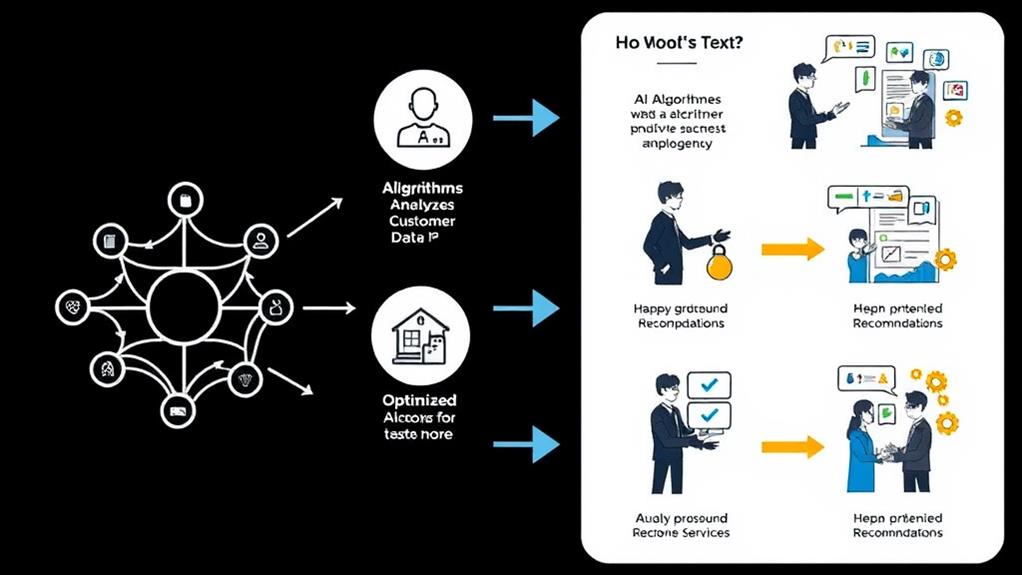
Harnessing the power of artificial intelligence allows small and medium-sized businesses (SMBs) to tailor customer experiences in ways that were previously unattainable. By employing sophisticated customer segmentation strategies, SMBs can create tailored marketing campaigns that resonate with distinct audience groups.
AI facilitates user experience personalization by analyzing behavior analytics insights, enabling businesses to understand customer preferences and deliver individualized service offerings.
To truly capitalize on personalized customer experiences, SMBs can leverage AI through the following strategies:
- Dynamic content customization: Delivering content that adapts to individual user preferences.
- Targeted communication methods: Ensuring messages reach customers based on their specific behaviors and interests.
- Engagement tracking tools: Monitoring interactions to refine strategies for deeper connection.
- Customer journey mapping: Visualizing the customer experience to identify and optimize key touchpoints.
- Feedback loop integration: Continuously gathering input to enhance the overall experience.
These AI-driven methods create a robust framework for enhancing customer interactions, promoting loyalty, and ultimately driving growth.
By employing feedback loop integration, SMBs can consistently evolve their strategies in tandem with customer needs, creating a more meaningful relationship. The effective use of engagement tracking tools combined with behavior analytics insights equips businesses with the data necessary to refine their approaches continuously.
In this shifting landscape, embracing AI for user experience personalization enables SMBs to stand out among competitors and foster an environment where customers feel valued and understood.
This alignment of interests empowers not just the businesses but also the customers, allowing for a mutually beneficial relationship that champions individual freedom.
Predictive Analytics for Growth
Predictive analytics emerges as a pivotal tool for small and medium-sized businesses (SMBs) aiming to foster growth and efficiency in an increasingly competitive market. By harnessing the power of data, SMBs can gain insights into market trends and customer behavior, enabling them to make informed decisions that drive success.
One of the most significant applications of predictive analytics lies in sales forecasting. By analyzing historical data, SMBs can anticipate future sales, thereby allowing for better inventory management. Understanding demand prediction not only optimizes stock levels but also reduces the risk of overstocking or stockouts, directly enhancing operational efficiency.
Moreover, predictive analytics aids in risk assessment and financial planning. By evaluating potential risks associated with various strategies, SMBs can judiciously allocate resources, ensuring that investments align with predicted outcomes. This proactive approach not only mitigates risks but also positions businesses for sustainable growth.
Engaging in competitive analysis becomes markedly easier with predictive analytics. By identifying patterns within the market, SMBs can discover opportunities for differentiation and leverage their findings to outmaneuver competitors.
Ultimately, the strategic implementation of predictive analytics allows SMBs to embrace a future-oriented mindset. Through enhanced customer insights and smarter resource allocation, organizations are empowered to not only meet but also anticipate the needs of their clientele, creating a robust foundation for lasting success in a dynamic marketplace.
Implementing AI Solutions Effectively
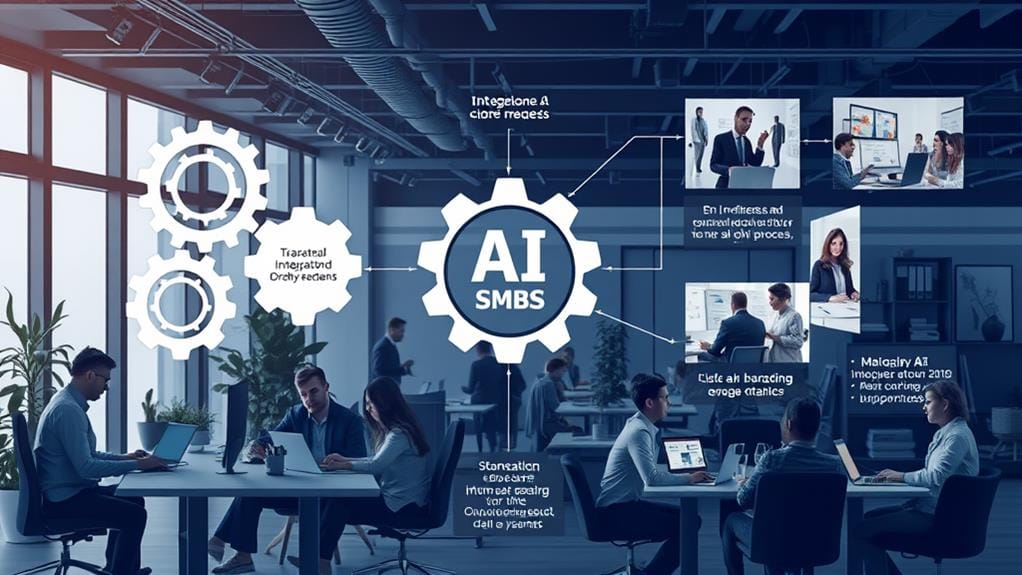
To successfully implement AI solutions, SMBs must adopt a strategic approach that prioritizes aligning technology with business objectives. This tailored integration can mitigate scalability challenges and enhance overall efficiency.
A clear roadmap must be established, underscoring the significance of change management and effective stakeholder engagement to guarantee that all members of the organization embrace the new technology.
Key AI integration strategies include:
- Thoroughly evaluating existing processes to identify areas where AI can drive significant improvements.
- Incorporating robust employee training programs that equip the workforce with the skills necessary for effective technology adoption.
- Collaborating with trusted vendor partnerships to leverage external expertise and resources while keeping cost considerations manageable.
- Implementing scalable AI solutions that can adapt as the business grows, guaranteeing long-term viability.
- Establishing ongoing feedback mechanisms to continuously refine and optimize AI applications based on user experiences.
Engaging stakeholders from the very outset fosters a culture of innovation, facilitating smoother shifts and greater acceptance of new technologies.
By prioritizing these elements, SMBs can navigate the complexities of AI implementation more effectively, thereby promoting an environment where technology enhances human capabilities rather than replaces them.
The desire for freedom in workplace processes can be achieved through conscious and well-thought-out AI strategies, fueling growth and transformation in today's competitive landscape.
Frequently Asked Questions
What Are Common Challenges SMBS Face in Process Optimization?
Small and medium-sized businesses (SMBs) frequently encounter challenges in process optimization, including resource limitations that hinder investment in advanced solutions.
Workflow inefficiencies arise due to inadequate technology adoption, while budget constraints restrict the ability to implement extensive strategies.
Additionally, staff resistance may impede necessary changes, and difficulties with data integration can obstruct a cohesive operational framework.
To overcome these hurdles, SMBs must adopt a strategic approach that leverages existing assets effectively.
How Can SMBS Measure the Success of AI Implementation?
How can businesses determine if their new initiatives are truly effective? For SMEs implementing AI, measuring success involves defining clear success metrics and performance indicators.
These could include increased operational efficiency, reduced costs, or enhanced customer satisfaction.
Regularly evaluating these indicators allows organizations to identify trends, adapt strategies, and optimize resource allocation.
Are There Specific AI Tools More Suitable for Smbs?
Specific AI tools particularly suited for small to medium-sized businesses (SMBs) include extensive AI toolkits that integrate automation solutions with data analytics for enhanced workflow management.
Additionally, decision support systems can empower SMBs by providing actionable customer insights and optimizing resource allocation.
Training platforms that harness AI capabilities further enable workforce development, ensuring employees are equipped to leverage technology effectively.
This multifaceted approach fosters innovation and ultimately drives sustainable growth within SMBs.
How Do Privacy Regulations Affect AI Use in Smbs?
In 2021, a staggering 86% of consumers expressed concerns about data privacy, underscoring the vital impact of privacy regulations on AI utilization in small and medium-sized businesses (SMBs).
Compliance strategies are essential for maintaining data security while leveraging AI technologies.
SMBs must navigate complex regulations to build consumer trust; failure to do so could lead to legal repercussions and reputational damage, ultimately threatening their operational freedom and competitive edge in a rapidly evolving market.
What Is the Cost of Implementing AI in Smbs?
The cost of implementing AI in small and medium-sized businesses (SMBs) can vary considerably based on the chosen technology and scope of integration.
Budget constraints often limit options, necessitating careful evaluation of both initial investment and long-term operational savings.
While implementation costs may appear intimidating, the potential for enhanced efficiency and competitive advantage can justify the expense.
In this regard, SMBs should strategically assess their needs to guarantee a sustainable AI adoption.
Conclusion
To sum up, the integration of AI in small and medium-sized businesses (SMBs) enhances process optimization through various mechanisms. For instance, a study by McKinsey indicates that 70% of organizations report accelerated decision-making due to AI-driven insights. This statistic underscores the transformative potential of AI, as it not only streamlines operations but also empowers SMBs to compete effectively in a saturated market. The strategic implementation of AI solutions can yield significant benefits, promoting sustainability and long-term growth.